The way the steam curls off the surface, slow and deliberate, like it’s in no hurry at all. That’s the first thing you notice about this soup. Not the smell, not the taste, but that lazy, persistent ribbon of vapor rising from the bowl, carrying the promise of something deeply satisfying. I made this for the first time on a Tuesday that felt like a Wednesday, the kind of gray afternoon where the light never quite commits. The slow cooker sat there on the counter, doing its thing, and I honestly forgot about it until the whole house started smelling like someone had bottled autumn and set it to simmer. That’s the magic of a cozy slow cooker fall harvest vegetable soup. It doesn’t demand your attention. It just waits, patiently, until you’re ready to pay attention to it.
The funny thing is, I didn’t set out to make a harvest soup. I had a butternut squash that had been sitting on the counter for a week, a few sweet potatoes that were starting to look a little sorry for themselves, and a bag of apples that were past their prime for eating raw. You know how it goes. You buy all this beautiful produce with good intentions, and then life happens. So I chopped everything up, tossed it in the slow cooker with some broth and spices, and hoped for the best. What came out of that pot was so much more than the sum of its parts. It was the kind of soup that makes you slow down, that forces you to take a real breath between spoonfuls. And that’s why this recipe stuck. Not because it’s fancy or complicated, but because it reminded me that some of the best things happen when you stop trying so hard.
This isn’t a soup you have to babysit. It’s the one you set and forget, the one that fills your kitchen with the kind of warmth that makes you want to put on a sweater and light a candle. It’s forgiving, adaptable, and honest. I think that’s what I love most about it. It doesn’t pretend to be anything other than what it is: a bowl of vegetables that somehow, magically, tastes like a hug.
Why You’ll Love This Recipe
Look, I’ve made a lot of soups in my day. Some were spectacular, some were, well, edible. But this one? This one is different. It’s the kind of recipe that makes you look like a kitchen wizard with almost zero effort. After testing this soup four times (yes, four—I wanted to get it just right), I can confidently say this version is the one. Here’s why this cozy slow cooker fall harvest vegetable soup is going to become your new cold-weather best friend.
- Completely Hands-Off: Chop your veggies, toss them in the slow cooker, and walk away. No stirring, no babysitting, no complicated steps. It’s the ultimate set-it-and-forget-it meal.
- Simple, Whole-Food Ingredients: You don’t need anything weird or hard to find. Sweet potatoes, butternut squash, apples, onion, garlic, broth—stuff you probably already have or can grab easily at the store.
- Perfect for Meal Prep: This soup gets better after a day in the fridge. Make it on Sunday, and you’ve got lunches or quick dinners all week. It also freezes beautifully.
- Naturally Sweet & Savory: The combination of roasted vegetables and a hint of apple creates this incredible balance. It’s savory but has just a whisper of natural sweetness that makes every spoonful interesting.
- Crowd-Pleaser: I’ve served this to picky kids, vegetarian friends, and meat-and-potato types. Everyone loves it. It’s one of those rare recipes that works for almost everyone.
What makes this version different from the dozens of other harvest soups out there? It’s the layering of flavors. Most recipes just dump everything in and hope for the best. I spent time figuring out the right balance of spices—smoked paprika instead of regular, a touch of cinnamon that doesn’t scream “dessert,” and a splash of apple cider vinegar at the end to brighten everything up. It’s not just another vegetable soup. It’s the best version of a vegetable soup. The kind that makes you close your eyes after the first bite and forget, just for a second, that it’s good for you.
What Ingredients You Will Need
This cozy slow cooker fall harvest vegetable soup relies on simple, wholesome ingredients that work together to create something truly special. Most of these are pantry or farmers’ market staples, and I’ve included notes on substitutions where they actually work.
- Butternut Squash (1 medium, about 3 cups cubed): Look for one that feels heavy for its size with a solid, cream-colored skin. I prefer peeling it with a sharp vegetable peeler rather than a knife—it’s safer and wastes less flesh. You can also buy pre-cut cubes to save time, just know they tend to be drier.
- Sweet Potatoes (2 medium, about 2 cups cubed): I use orange-fleshed sweet potatoes here. They break down a bit during cooking and help thicken the soup naturally. If you only have white sweet potatoes, they work too, but the texture will be slightly different.
- Granny Smith Apple (1 large, peeled and diced): The tartness of a Granny Smith is key here. It cuts through the sweetness of the squash and potatoes and adds a layer of complexity. Honeycrisp or Fuji will work in a pinch, but you’ll lose some of that bright tang.
- Yellow Onion (1 large, diced): The backbone of almost every good soup. I don’t recommend skipping this, but you could use a leek (white and light green parts only) for a milder flavor.
- Garlic (4 cloves, minced): Fresh garlic is non-negotiable here. The jarred stuff has a different, sharper flavor that doesn’t mellow the same way during slow cooking.
- Carrots (2 large, diced): They add a subtle sweetness and nice texture. I don’t bother peeling them if they’re organic—just scrub well.
- Celery (2 stalks, diced): A classic aromatic. It adds depth without being noticeable in the final soup.
- Vegetable Broth (4 cups / 960 ml): I use a low-sodium variety so I can control the salt. Homemade broth is always best, but a good-quality store-bought brand works perfectly.
- Tomato Paste (2 tablespoons): This adds umami and a slight richness that you don’t expect from a vegetable soup. It doesn’t make the soup taste like tomatoes—it just makes it taste deeper.
- Smoked Paprika (1 teaspoon): This is my secret weapon. Regular paprika is fine, but smoked gives the soup a subtle warmth that makes it feel more substantial.
- Ground Cinnamon (½ teaspoon): Just enough to hint at warmth without making the soup taste like a pie. Trust me on this.
- Dried Thyme (1 teaspoon): Earthy and slightly floral. If you have fresh, use 1 tablespoon of leaves.
- Bay Leaf (1): Adds subtle depth. Remember to fish it out before serving.
- Apple Cider Vinegar (1 tablespoon): Added at the end. It wakes up all the other flavors and keeps the soup from tasting flat.
- Salt and Black Pepper (to taste): I start with 1 teaspoon of salt and adjust at the end. Remember that broth already contains salt.
- Optional Toppings: Toasted pumpkin seeds, a swirl of heavy cream or coconut milk, fresh parsley, or a drizzle of good olive oil.
Equipment Needed
You don’t need a fancy kitchen to make this soup, but having the right tools makes the process smoother.
- Slow Cooker (5 to 6-quart): This is the star of the show. A 5 or 6-quart model is ideal for this recipe. If yours is smaller, just reduce the recipe by a third. I’ve used both a basic budget model and a fancy programmable one—both work fine. The programmable ones give you more control over the temperature, but honestly, a simple low/high setting does the job.
- Sharp Chef’s Knife (8-inch): A good knife makes prepping squash and sweet potatoes so much safer and faster. Keep it sharp, and your fingers will thank you.
- Vegetable Peeler: A Y-shaped peeler is my preference for butternut squash. It’s faster and gives you more control than a straight peeler.
- Cutting Board: A large, sturdy board is essential. I prefer wood, but plastic works fine. Just make sure it doesn’t slide around on your counter.
- Measuring Cups and Spoons: For accuracy. Eyeballing spices can lead to a soup that’s either bland or way too intense.
- Wooden Spoon or Silicone Spatula: For stirring the tomato paste and spices into the broth. A metal spoon can scratch your slow cooker insert.
- Immersion Blender (optional): If you want a partially or fully blended soup. I like to blend about half the soup for a creamy texture while keeping some chunks for heartiness. A regular blender works too, just work in batches and let the soup cool slightly first.
Preparation Method
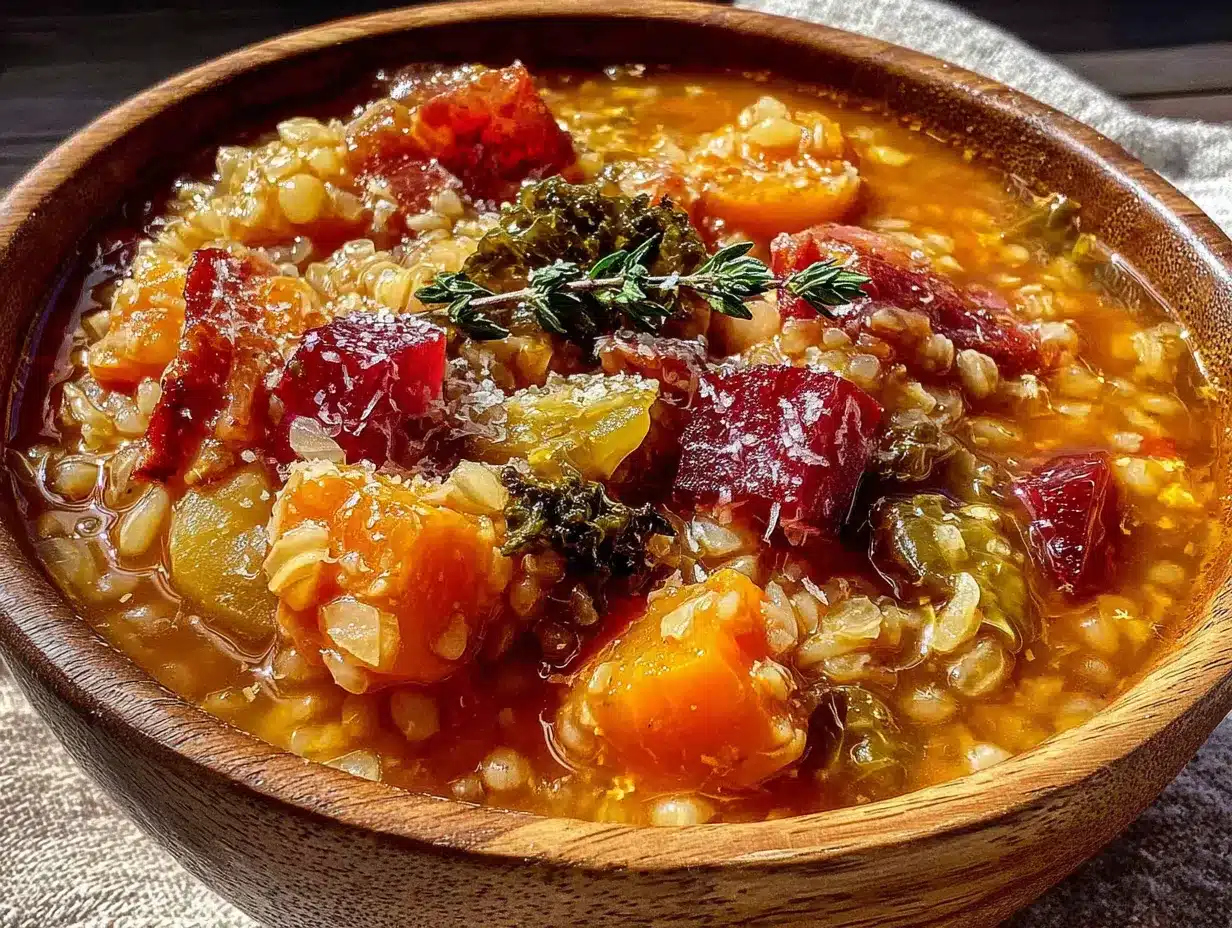
This is where the magic happens. Follow these steps, and you’ll have a pot of soup that tastes like you spent hours over the stove—even though you barely lifted a finger.
- Prep the vegetables (20 minutes): Start by peeling the butternut squash with a vegetable peeler. Cut off the top and bottom, slice it in half lengthwise, and scoop out the seeds with a spoon. Cut the flesh into 1-inch cubes. Peel the sweet potatoes and cut them into similar-sized pieces. Dice the onion, carrots, and celery into roughly ½-inch pieces. Peel and dice the apple. Mince the garlic. Take your time here—uniform pieces mean even cooking.
- Build the flavor base (5 minutes): Place the diced onion, carrots, and celery in the bottom of the slow cooker. Add the minced garlic. This aromatic layer creates the foundation of the soup’s flavor.
- Add the vegetables and apple (5 minutes): Layer the cubed butternut squash, sweet potatoes, and diced apple on top of the aromatics. Don’t stir yet—the order matters less than you think, but keeping the denser vegetables on top helps them cook more evenly.
- Mix the seasonings (3 minutes): In a small bowl, combine the smoked paprika, ground cinnamon, dried thyme, salt, and black pepper. Sprinkle this mixture evenly over the vegetables. Add the tomato paste in small dollops. Pour the vegetable broth around the edges, not directly on top of the spices—this prevents them from washing away. Tuck the bay leaf into the liquid.
- Cook low and slow (6-8 hours on LOW or 3-4 hours on HIGH): Cover the slow cooker and set it to LOW for 6-8 hours or HIGH for 3-4 hours. The soup is ready when the sweet potatoes and squash are fork-tender. Don’t rush this on HIGH if you can help it—low and slow develops deeper, more complex flavors. Your house will start smelling incredible around the 3-hour mark.
- Finish and adjust (5 minutes): Once the vegetables are tender, remove the bay leaf and discard it. Stir in the apple cider vinegar—this brightens everything and prevents the soup from tasting flat. Taste and adjust the salt and pepper. If the soup seems too thick, add a splash more broth or water until it reaches your preferred consistency.
- Optional blending step (5 minutes): For a creamier texture, use an immersion blender to partially blend the soup right in the slow cooker. I like to give it about 5-6 pulses, leaving plenty of chunky pieces for texture. If you prefer a completely smooth soup, transfer it to a regular blender in batches (don’t fill more than halfway) and blend until smooth. Be careful with hot liquids—let the steam escape by removing the center cap of the blender lid and covering it with a kitchen towel.
- Serve and garnish (2 minutes): Ladle the soup into bowls and top with your choice of garnishes. A drizzle of olive oil, a sprinkle of toasted pumpkin seeds, and a few cracks of black pepper make it look restaurant-worthy. Serve hot with crusty bread or a simple side salad.
Cooking Tips & Techniques
I’ve made this soup enough times to know where things can go wrong—and how to fix them. Here are the tips I wish someone had told me.
Don’t skip the apple cider vinegar at the end. I know it seems like a small detail, but that splash of acid is what makes the soup taste bright and finished. Without it, the soup can taste a little flat, like it’s missing something you can’t quite name. I learned this the hard way on my first test batch. The soup was good, but not great. That tablespoon of vinegar made all the difference.
Cut your vegetables uniformly. This is one of those tips that sounds fussy but actually matters. If your sweet potato pieces are twice the size of your squash pieces, they won’t cook at the same rate. You’ll end up with some mushy bits and some crunchy bits. Aim for 1-inch cubes, and use a sharp knife to make it easier.
Layer your ingredients strategically. Dense vegetables like squash and sweet potatoes take longer to cook than aromatics like onion and celery. Putting the aromatics on the bottom and the denser vegetables on top helps everything finish at the same time. It’s a small thing, but it makes a noticeable difference in the final texture.
Toast your pumpkin seeds before using them as a garnish. Raw pumpkin seeds are fine, but toasting them in a dry skillet over medium heat for 2-3 minutes (until they start popping and smell nutty) takes them from okay to amazing. It adds a crunch that contrasts beautifully with the soft soup.
If the soup tastes too sweet, add more salt or another splash of vinegar. The natural sweetness of the squash, sweet potatoes, and apple can sometimes be overwhelming. Salt and acid are your tools for balancing that sweetness. Add them gradually and taste as you go.
Variations & Adaptations
One of the best things about this cozy slow cooker fall harvest vegetable soup is how flexible it is. Here are some ways to make it your own.
Coconut Curry Version: Swap the smoked paprika and thyme for 1 tablespoon of curry powder and ½ teaspoon of ground ginger. Replace 1 cup of the vegetable broth with a can of full-fat coconut milk. Finish with a squeeze of lime juice instead of apple cider vinegar. It’s a completely different soup, but just as cozy.
Add Protein: This soup is naturally vegetarian, but you can easily add protein. Stir in 2 cups of cooked chickpeas or white beans during the last 30 minutes of cooking. Or, if you eat meat, add 1 pound of cooked, crumbled Italian sausage when you stir in the vinegar. The sausage version is especially good for heartier appetites.
Make It Creamy (Dairy or Vegan): For a richer soup, stir in ½ cup of heavy cream or full-fat coconut milk after blending. Don’t add it before blending, or it might curdle from the heat. I’ve made this with both, and honestly, I can’t pick a favorite. The coconut milk version is slightly sweeter and works beautifully with the curry variation above.
Roast the Vegetables First: If you have an extra 20 minutes, toss the cubed squash and sweet potatoes with a little olive oil and salt, spread them on a baking sheet, and roast at 400°F (200°C) for 15-20 minutes before adding them to the slow cooker. This adds a caramelized, nutty flavor that takes the soup to another level. I do this when I’m trying to impress someone.
Change the Grain: For a heartier soup, add ½ cup of pearled barley, farro, or brown rice at the beginning of cooking. You’ll need to increase the broth by 1 cup and expect a longer cooking time (closer to 8 hours on LOW). The grains absorb the broth and make the soup almost stew-like.
Serving & Storage Suggestions
This soup is incredibly versatile when it comes to serving. Here’s how to make the most of it.
Serving Temperature and Presentation: Serve the soup piping hot. Ladle it into deep bowls and top with a swirl of cream or coconut milk, a sprinkle of toasted pumpkin seeds, and a few fresh parsley leaves. A drizzle of good extra-virgin olive oil right before serving adds a fruity finish that complements the earthy vegetables. For a complete meal, pair it with crusty sourdough bread, a grilled cheese sandwich, or a simple Mediterranean chickpea and cucumber salad on the side.
Complementary Dishes and Beverages: This soup is substantial enough to be a main course, but it also works beautifully as a starter. If you’re serving it as part of a fall-themed dinner, follow it with something like sheet pan caprese chicken or a hearty roasted vegetable tart. For drinks, a dry Riesling or a crisp hard cider pairs wonderfully with the soup’s sweetness. For a non-alcoholic option, try a warm spiced apple cider.
Storage Instructions: Let the soup cool completely before storing. Transfer it to airtight containers and refrigerate for up to 5 days. The flavors actually deepen and meld overnight, so day-old soup is often even better than fresh. For longer storage, freeze the soup in freezer-safe containers or zip-top bags for up to 3 months. Leave about an inch of headspace in containers to allow for expansion. Thaw overnight in the refrigerator before reheating.
Reheating Methods: Reheat individual portions in a saucepan over medium-low heat, stirring occasionally, until warmed through (about 5-7 minutes). You can also microwave individual bowls for 2-3 minutes, stirring halfway through. If the soup has thickened during storage, thin it with a splash of broth or water as you reheat. Avoid boiling the soup, as this can dull the flavors.
Nutritional Information & Benefits
This soup isn’t just delicious—it’s packed with nutrients that make you feel good about eating it.
Estimated Nutritional Values (per serving, based on 6 servings):
- Calories: 185
- Total Fat: 3g
- Saturated Fat: 0.5g
- Cholesterol: 0mg
- Sodium: 580mg (varies based on broth)
- Total Carbohydrates: 38g
- Dietary Fiber: 7g
- Sugars: 12g (natural from vegetables and apple)
- Protein: 4g
- Vitamin A: 320% of the Daily Value (DV)
- Vitamin C: 35% of the DV
- Potassium: 800mg
Health Benefits of Key Ingredients: This soup is a powerhouse of vitamins and antioxidants. The butternut squash and sweet potatoes are loaded with beta-carotene, which your body converts to vitamin A for healthy vision and immune function. The apple provides soluble fiber (pectin), which supports gut health and helps regulate blood sugar. Garlic and onions contain allicin, a compound with anti-inflammatory and immune-boosting properties. And the carrots are rich in lutein, which is great for eye health.
Dietary Considerations: This recipe is naturally vegan, gluten-free, dairy-free, and nut-free. It’s also low in added sugars and packed with fiber, making it a great choice for anyone watching their blood sugar or trying to eat more whole foods. The only potential allergen is celery, which is uncommon but worth noting for sensitive individuals.
Conclusion
This cozy slow cooker fall harvest vegetable soup is the kind of recipe that proves you don’t need complicated techniques or fancy ingredients to make something truly memorable. It’s the soup you make when you want to feel taken care of, when the air has that crisp edge that tells you winter is coming, and when you need a meal that does most of the work for you. It’s forgiving enough for a beginner and satisfying enough for a seasoned cook. I’ve made it for sick friends, for busy weeknights, and for lazy Sundays when all I wanted was a house that smelled like comfort. It’s never let me down.
I’d love to hear how this soup turns out for you. Did you add your own twist? Did you blend it smooth or leave it chunky? Drop a comment below and let me know—your variations might inspire someone else to try something new. And if you loved this recipe, share it with a friend who could use a bowl of warmth. Happy cooking, and don’t forget to save this one for those days when you need a little extra coziness.
Frequently Asked Questions
Can I make this soup on the stovetop instead of a slow cooker?
Absolutely. Use a large Dutch oven or heavy-bottomed pot. Sauté the onion, carrots, and celery in 2 tablespoons of olive oil over medium heat for 5 minutes. Add the garlic and cook for 1 minute more. Add the remaining ingredients (except the vinegar) and bring to a boil. Reduce the heat, cover, and simmer for 30-40 minutes, or until the vegetables are tender. Stir in the vinegar and adjust the seasoning before serving.
Can I use frozen vegetables?
You can, but the texture won’t be quite as good. Frozen vegetables release more water as they cook, which can make the soup thinner and the vegetables softer. If you’re in a pinch, use frozen butternut squash and carrots, but I recommend fresh sweet potatoes and onion for the best results.
How do I make this soup more filling?
Add a can of drained and rinsed chickpeas or white beans during the last 30 minutes of cooking. You can also stir in ½ cup of cooked quinoa or farro at the end. For a non-vegetarian option, add cooked Italian sausage or shredded rotisserie chicken when you stir in the vinegar.
Can I skip the apple?
You can, but the soup will lose some of its brightness and complexity. The apple adds a subtle tartness that balances the sweetness of the squash and sweet potatoes. If you don’t have an apple, try adding an extra tablespoon of apple cider vinegar at the end, or stir in a squeeze of lemon juice.
Why did my soup turn out watery?
This usually happens for one of two reasons: you added too much broth, or your vegetables released more water than expected. If the soup is too thin, try blending a portion of it to thicken it naturally. You can also let it cook uncovered on HIGH for an additional 30 minutes to let some of the liquid evaporate.
Pin This Recipe!
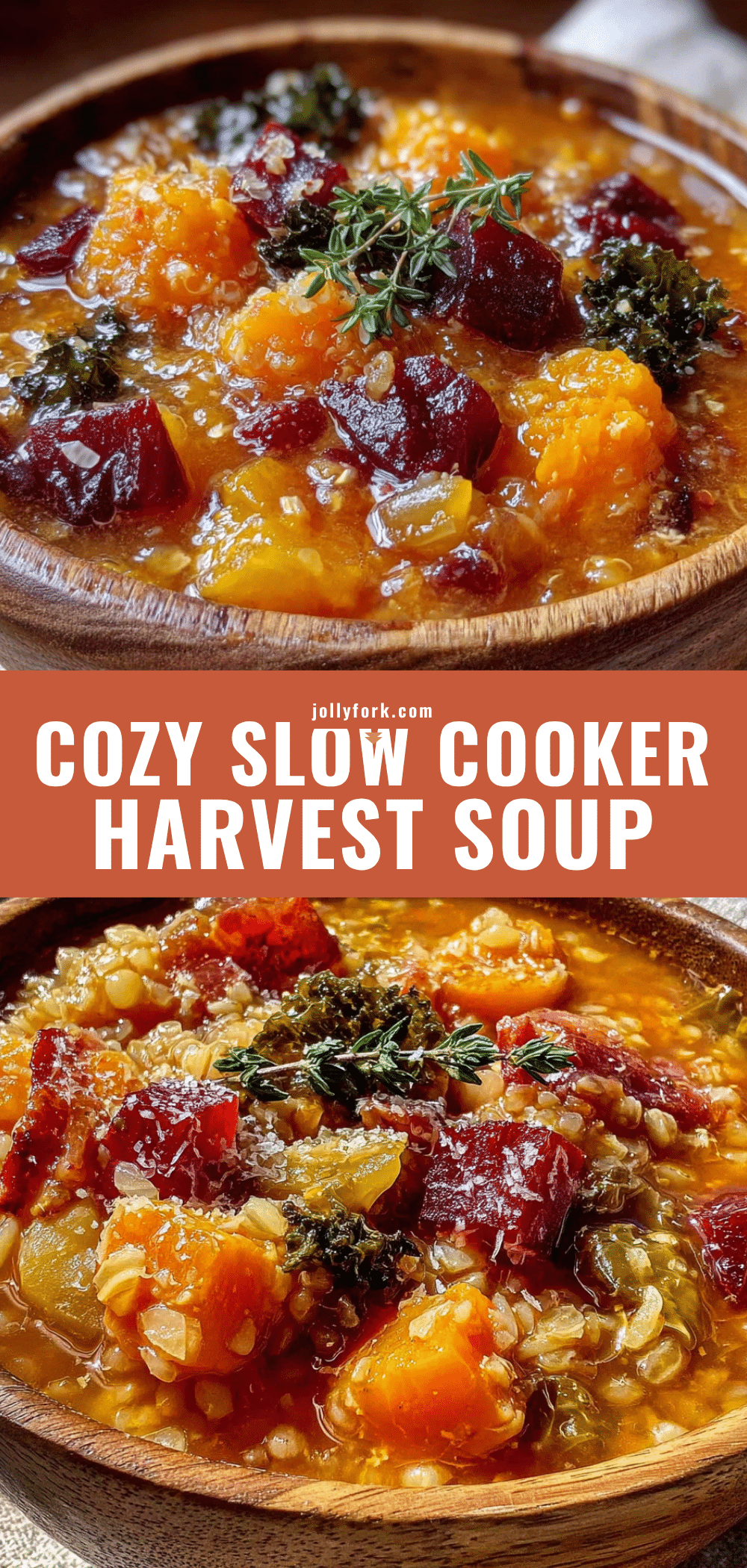
Cozy Slow Cooker Fall Harvest Vegetable Soup

A hands-off, comforting soup made with butternut squash, sweet potatoes, and apple, simmered in a savory broth with smoked paprika and cinnamon. Perfect for meal prep and cold-weather coziness.
- Prep Time: 20 minutes
- Cook Time: 6-8 hours (LOW) or 3-4 hours (HIGH)
- Total Time: 6 hours 20 minutes to 8 hours 20 minutes
- Yield: 6 servings 1x
- Category: Soup
- Cuisine: American
Ingredients
- 1 medium butternut squash (about 3 cups cubed)
- 2 medium sweet potatoes (about 2 cups cubed)
- 1 large Granny Smith apple (peeled and diced)
- 1 large yellow onion (diced)
- 4 cloves garlic (minced)
- 2 large carrots (diced)
- 2 stalks celery (diced)
- 4 cups low-sodium vegetable broth
- 2 tablespoons tomato paste
- 1 teaspoon smoked paprika
- ½ teaspoon ground cinnamon
- 1 teaspoon dried thyme
- 1 bay leaf
- 1 tablespoon apple cider vinegar
- Salt and black pepper to taste
- Optional toppings: toasted pumpkin seeds, heavy cream or coconut milk, fresh parsley, olive oil
Instructions
- Prep the vegetables: Peel and cube butternut squash and sweet potatoes into 1-inch pieces. Dice onion, carrots, celery, and apple. Mince garlic.
- Build the flavor base: Place diced onion, carrots, celery, and minced garlic in the bottom of a 5-6 quart slow cooker.
- Add vegetables and apple: Layer cubed squash, sweet potatoes, and diced apple on top of aromatics.
- Mix seasonings: In a small bowl, combine smoked paprika, cinnamon, thyme, salt, and pepper. Sprinkle over vegetables. Add tomato paste in dollops. Pour broth around edges. Add bay leaf.
- Cook: Cover and cook on LOW for 6-8 hours or HIGH for 3-4 hours until vegetables are fork-tender.
- Finish: Remove bay leaf. Stir in apple cider vinegar. Adjust salt and pepper to taste.
- Optional blending: Use an immersion blender to partially blend soup for a creamier texture, or blend in batches in a regular blender.
- Serve: Ladle into bowls and garnish with desired toppings. Serve hot.
Notes
Don’t skip the apple cider vinegar at the end—it brightens the flavors. Cut vegetables uniformly for even cooking. Layer aromatics on bottom and denser vegetables on top. Toast pumpkin seeds for garnish. If soup is too sweet, add more salt or vinegar.
Nutrition
- Serving Size: 1 serving (about 1.5
- Calories: 185
- Sugar: 12
- Sodium: 580
- Fat: 3
- Saturated Fat: 0.5
- Carbohydrates: 38
- Fiber: 7
- Protein: 4
Keywords: slow cooker, fall harvest, vegetable soup, butternut squash, sweet potato, apple, vegan, gluten-free, meal prep