I was standing in line at the hardware store, of all places, clutching a replacement faucet washer and mentally calculating how quickly I could get home, when the man behind me—retired, judging by the flannel shirt and the unhurried way he moved—started talking about apples. Not just any apples. He was describing, in the kind of detail you’d expect from a pastry chef, how his wife had made a German apple pancake the night before. “She uses a cast-iron skillet,” he said, almost to himself. “Gets it screaming hot first. The edges puff up like a soufflé.” I wasn’t expecting cooking advice from a stranger in the plumbing aisle, but there I was, listening to him describe exactly how to make a Dutch baby-style pancake studded with caramelized apples. He told me the recipe came from a woman who ran a bed-and-breakfast in the Black Forest region back in the 1970s. I never got his name, but I wrote the instructions on the back of my receipt before I even paid for the washer.
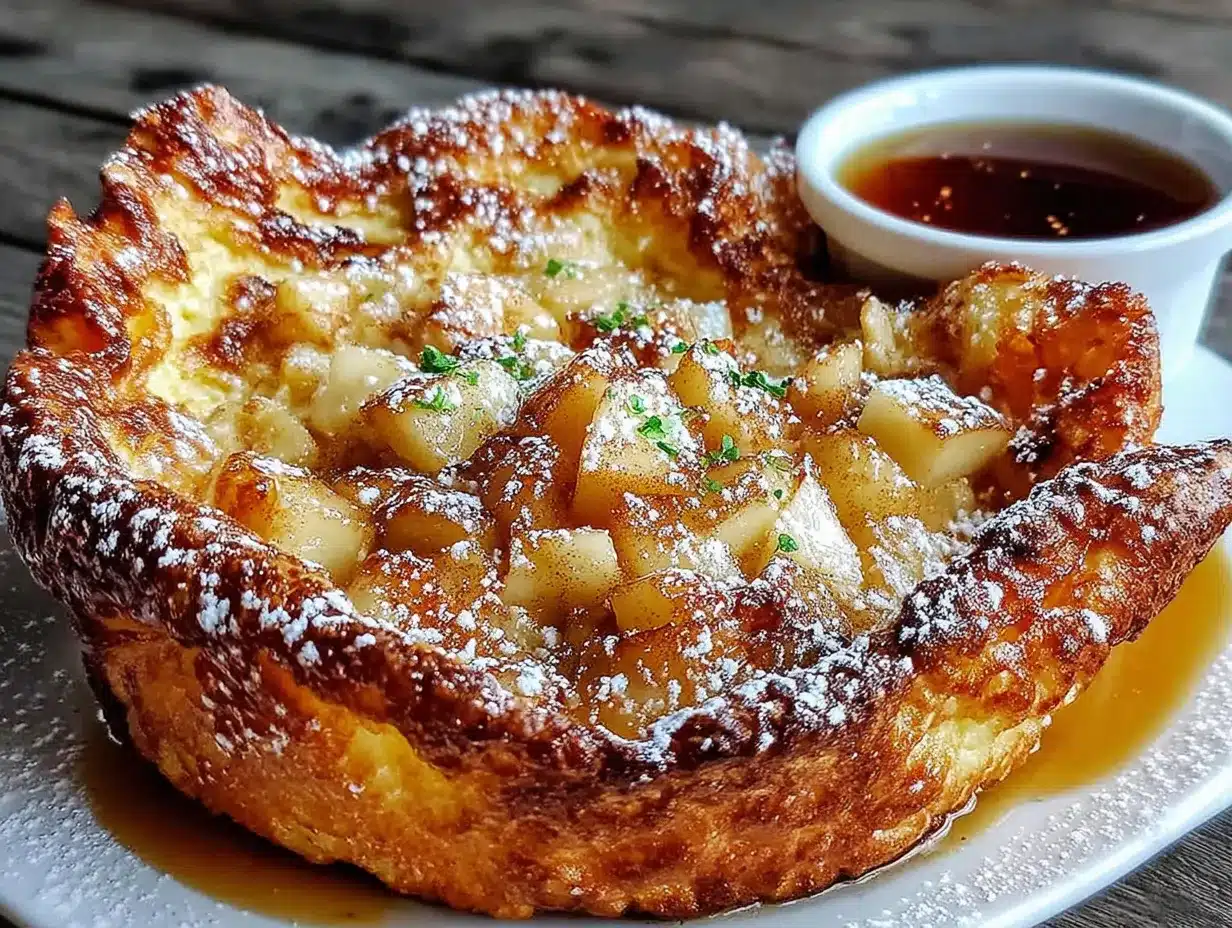
Honestly, I forgot about that scribbled receipt for a few weeks. It got buried under takeout menus and a stray screwdriver. Then one Sunday morning, I had a fridge full of apples that were starting to look a little sad, and I remembered the conversation. I found the receipt, squinted at my own messy handwriting, and gave it a shot. The first one was a little lopsided—I didn’t get the pan hot enough—but the second attempt? Let me tell you, that thing rose like a golden, buttery cloud. The apples had softened into sweet, cinnamon-kissed pockets, and the edges were crispy and dramatic.
Maybe you’ve been there, standing in an unlikely place, when a recipe just finds you. That’s exactly what happened here. This easy German apple pancake—often called a Dutch baby, even though the name is a bit of a mystery—has become my go-to for lazy weekends and busy weeknights alike. It’s the kind of recipe that feels impressive but takes almost no effort. And every time I make it, I think of that man in the hardware store and the Black Forest B&B I’ve never actually visited.
Why You’ll Love This Recipe
This isn’t just another pancake recipe. After testing this dish at least a dozen times—adjusting the butter temperature, playing with apple varieties, and yes, burning my wrist once on a hot skillet—I can confidently say this version is the one. It strikes that perfect balance between a fluffy oven pancake and a rustic, fruit-filled tart.
- Quick & Easy: From start to table in about 30 minutes. The batter comes together in a blender, so there’s almost no mess.
- Simple Ingredients: You likely have everything in your pantry right now—flour, eggs, milk, butter, and apples. No fancy extracts or obscure spices.
- Perfect for Any Occasion: It works for a cozy Sunday brunch, a quick weeknight dessert, or even a “breakfast for dinner” situation when you’re too tired to cook anything complicated.
- Crowd-Pleaser: Kids love the puffy, pancake-like texture, and adults appreciate the sophisticated apple-cinnamon flavor. I’ve served this to guests who asked for the recipe before they finished their first slice.
- Unbelievably Delicious: The contrast between the crispy, buttery edges and the soft, custard-like center is honestly next-level comfort food.
What makes this recipe different from the rest? It’s the technique. Most Dutch baby recipes skip the step of pre-cooking the apples, which means you end up with raw fruit sinking to the bottom. Here, you give the apples a quick sauté in butter and brown sugar before pouring the batter over them. This caramelizes the fruit and creates a beautiful, slightly sticky bottom layer that pulls away from the pan perfectly. It’s a small step that makes a huge difference.
This recipe isn’t just good—it’s the kind that makes you close your eyes after the first bite. It’s comfort food reimagined: faster, simpler, but with the same soul-soothing satisfaction. Perfect for impressing guests without any stress, or turning a regular Tuesday night into something a little bit special.
What Ingredients You Will Need
This recipe uses simple, wholesome ingredients to deliver bold flavor and satisfying texture without the fuss. Most of these are pantry staples, which is exactly what you want on a busy weeknight when you don’t feel like running to the store.
For the Apple Base
- 2 medium apples – peeled, cored, and sliced into thin wedges (about ¼-inch thick). I recommend Honeycrisp or Granny Smith for a good balance of sweetness and tartness. In a pinch, Fuji works well too.
- 2 tablespoons unsalted butter – for sautéing the apples. It adds richness and helps with browning.
- 2 tablespoons brown sugar – light or dark both work. Dark brown sugar gives a deeper, molasses-like flavor.
- ½ teaspoon ground cinnamon – use fresh cinnamon if you have it; the flavor is noticeably brighter.
- Pinch of salt – to balance the sweetness.
For the Pancake Batter
- 3 large eggs – room temperature is crucial here. Cold eggs won’t blend as smoothly, and the batter won’t puff up as dramatically. Let them sit on the counter for 20 minutes, or place them in a bowl of warm water for 5 minutes.
- ½ cup whole milk – also at room temperature. Whole milk gives the richest texture, but 2% works in a pinch. I don’t recommend skim milk—the pancake needs the fat for structure.
- ½ cup all-purpose flour – spoon and level it into your measuring cup. Scooping directly can pack the flour and make the pancake dense.
- 1 tablespoon granulated sugar – just a touch of sweetness in the batter.
- 1 teaspoon vanilla extract – pure vanilla extract, not imitation. It makes a noticeable difference.
- ¼ teaspoon salt
- 2 tablespoons unsalted butter – for the skillet. Don’t skimp here; the butter is what creates that crispy, golden edge.
For Serving (Optional)
- Powdered sugar – for dusting. It makes the pancake look beautiful and adds a touch of sweetness.
- Maple syrup – warm it up slightly before drizzling.
- Fresh lemon wedges – a squeeze of lemon juice cuts through the richness perfectly. I honestly prefer this over syrup sometimes.
Ingredient Selection Tip: For the apples, look for ones that are firm and free of bruises. Softer apples like McIntosh can turn mushy during cooking. I personally use Honeycrisp most of the time—they hold their shape beautifully and have a natural sweetness that lets you reduce the added sugar slightly.
Substitution Guidance: For a dairy-free version, use melted coconut oil or a plant-based butter alternative, and swap the whole milk for oat milk or unsweetened almond milk. The texture will be slightly less puffy, but still delicious. For a gluten-free option, use a 1:1 gluten-free baking flour blend. I’ve tested this with Bob’s Red Mill brand, and it worked surprisingly well—just don’t overmix the batter.
Equipment Needed
One of the reasons I love this recipe is that it doesn’t require a kitchen full of fancy tools. Here’s what you’ll need:
- 10-inch cast-iron skillet – This is the gold standard for Dutch babies. It heats evenly, retains heat beautifully, and gives you those dramatic puffy edges. If you don’t have one, a 9-inch or 10-inch oven-safe nonstick skillet works too. Just make sure the handle is metal, not plastic.
- Blender – A regular countertop blender is ideal for getting the batter smooth and aerated. A food processor or an immersion blender with a whisk attachment also works. If you’re whisking by hand, sift the flour first and whisk vigorously for a full 2 minutes to incorporate air.
- Cutting board and sharp knife – For slicing the apples. A dull knife will crush the fruit instead of cutting cleanly.
- Measuring cups and spoons – Standard set. A kitchen scale is optional but helpful for accuracy.
- Spatula – Silicone or wooden, for stirring the apples.
- Oven mitts – The skillet handle gets dangerously hot. I learned this the hard way. Trust me on this one.
Budget-Friendly Tip: If you don’t own a cast-iron skillet, check thrift stores or garage sales. I found my favorite one for $8, and it works better than any new pan I’ve ever bought. Season it properly, and it’ll last a lifetime.
Preparation Method
Let’s get cooking. This recipe moves quickly, so I recommend reading through all the steps once before you start. Trust me, it makes the process smoother.
- Preheat your oven to 425°F (220°C). Place your empty 10-inch cast-iron skillet on the middle rack while the oven heats up. You want the pan to get screaming hot—this is what creates that dramatic puff. Give it at least 15 minutes to heat.
- Prepare the apples. While the oven is heating, peel, core, and slice your apples into thin wedges, about ¼-inch thick. Don’t stress about uniformity, but try to keep them relatively even so they cook at the same rate. Set them aside.
- Make the batter. Crack the 3 eggs into your blender. Add the room-temperature milk, all-purpose flour, granulated sugar, vanilla extract, and salt. Blend on medium speed for about 20 seconds, until the batter is smooth and slightly frothy. Scrape down the sides of the blender with a spatula, then blend for another 5 seconds. Let the batter rest while you cook the apples. This resting time allows the gluten to relax, which helps the pancake rise higher.
- Sauté the apples. Remove the hot skillet from the oven (carefully!) and place it on a stovetop burner over medium heat. Add 2 tablespoons of butter and let it melt, swirling the pan to coat the bottom. Add the sliced apples, brown sugar, cinnamon, and a pinch of salt. Cook for 3-4 minutes, stirring occasionally, until the apples are softened and the sugar has created a light caramel sauce. The apples should be tender but not mushy—they’ll continue cooking in the oven.
- Spread the apples evenly. Use your spatula to arrange the apple slices in a single layer across the bottom of the skillet. Try not to overlap them too much. The caramel sauce should be bubbling gently.
- Pour the batter. Give the batter a quick stir in the blender (it may have separated slightly), then pour it directly over the apples. Don’t stir or swirl—just let the batter settle naturally. It will spread as it bakes.
- Bake immediately. Carefully transfer the skillet back to the hot oven. Bake for 18-22 minutes, until the pancake is puffed and golden brown around the edges. The center should be set but still slightly jiggly—think custard, not cake. Resist the urge to open the oven door during the first 15 minutes; the sudden temperature drop can deflate your pancake.
- Cool slightly and serve. Remove the skillet from the oven and let it cool on a wire rack for 2-3 minutes. The pancake will deflate a bit as it cools—that’s completely normal. Dust generously with powdered sugar, add a squeeze of fresh lemon juice if you like, and serve warm directly from the skillet.
Sensory Cue: When it’s done, the pancake should be deeply golden, with crispy, frilly edges that have pulled away from the sides of the pan. The apples will have risen to the surface in places, creating beautiful caramelized pockets. You’ll smell butter, cinnamon, and a faint toastiness from the browned edges.
Troubleshooting Tip: If your pancake doesn’t puff up dramatically, don’t panic. It will still taste delicious. The most common culprit is a cold skillet—make sure you preheated it for the full 15 minutes. Cold eggs or milk can also hinder the rise, so don’t skip the room-temperature step.
Cooking Tips & Techniques
I’ve made this recipe enough times to have a few spectacular failures. Here’s what I’ve learned so you don’t have to repeat my mistakes.
Hot pan, cold batter—no, wait. You want both the pan and the batter to be at the right temperature. The pan needs to be screaming hot (425°F for at least 15 minutes), but the batter should be at room temperature. If you pour cold batter into a hot pan, the temperature shock can cause uneven cooking. Let your eggs and milk sit out for 20 minutes before blending.
Don’t overmix the batter. Unlike some baked goods where you want to develop gluten, here you want a tender, custard-like texture. Blend just until smooth. Overmixing can make the pancake tough and chewy instead of light and puffy.
Use a timer, not your eyes. The first time I made this, I pulled it out of the oven too early because I was nervous about burning it. The center was still raw. Now I set a timer for 18 minutes and check it quickly through the oven window. If it needs more time, I add 2-minute increments. The pancake should be deeply golden and the edges should look crispy and dry.
Multitasking strategy: While the pancake bakes, set the table, make a simple side salad, or brew some coffee. This dish comes together so quickly that you’ll have a solid 20 minutes of hands-off time. Use it wisely.
One mistake I still make: Forgetting to dust the powdered sugar right before serving. If you dust it too early, the sugar melts into the warm pancake and disappears. Wait until you’re standing at the table, ready to cut into it, then give it a generous shower.
Variations & Adaptations
This recipe is wonderfully flexible. Here are a few variations I’ve tried and loved.
1. Berry Dutch Baby: Swap the apples for 1 cup of mixed berries (fresh or frozen). Skip the brown sugar and cinnamon, and add a teaspoon of lemon zest to the batter. The berries will burst in the oven, creating beautiful purple-red pockets. This version is perfect for summer when apples aren’t in season.
2. Savory Herb & Cheese Version: Omit the sugar and cinnamon entirely. Sauté 1 cup of sliced mushrooms and a handful of spinach in the skillet before adding the batter. Add ¼ cup of grated Parmesan cheese to the batter, and top with fresh thyme before serving. This makes an excellent light dinner alongside a simple green salad.
3. Gluten-Free Adaptation: Use a 1:1 gluten-free baking flour blend. I’ve tested this with both Bob’s Red Mill and King Arthur brands, and both worked well. The texture is slightly less airy, but the flavor is still fantastic. Add an extra tablespoon of milk to the batter if it seems too thick.
4. Vegan Option: This one takes a bit more work. Use 3 tablespoons of aquafaba (the liquid from a can of chickpeas) whisked with 1 tablespoon of cornstarch to replace each egg. Use plant-based butter and oat milk. The pancake won’t puff as dramatically, but it will still be delicious. I’ve made this for a vegan friend, and she asked for the recipe.
Personal Favorite: In the fall, I add a tablespoon of bourbon to the apple mixture while it’s sautéing. The alcohol cooks off, leaving behind a warm, woody note that pairs beautifully with the cinnamon and brown sugar. It’s a small addition that feels extra special.
Serving & Storage Suggestions
This pancake is best served warm, straight from the skillet. That’s when the edges are at their crispiest and the center is soft and custard-like. Here’s how to make the most of it.
Serving Temperature: Let it cool for 2-3 minutes after baking—no longer. If it sits too long, the steam will soften the crispy edges. Serve it on the table in the skillet (it’s beautiful) or slice it into wedges and transfer to plates.
What to Serve With It: A drizzle of warm maple syrup is classic, but I honestly prefer a squeeze of fresh lemon juice and a dusting of powdered sugar. The acidity cuts through the richness. For a more complete brunch, serve it alongside crispy bacon or breakfast sausage and a cup of strong coffee. A simple arugula salad with a lemon vinaigrette balances the sweetness if you’re serving it for dinner.
Storage: This pancake is really best eaten fresh. The texture changes dramatically as it sits—the crispy edges soften, and the center becomes denser. That said, if you have leftovers, let them cool completely, then wrap the pancake tightly in plastic wrap and store in the refrigerator for up to 2 days.
Reheating: To revive the texture, reheat slices in a 350°F oven for 5-7 minutes. The microwave will make it soggy, so avoid it if you can. I’ve also reheated slices in a dry skillet over medium heat for about 2 minutes per side—it works surprisingly well and brings back some of the crispiness.
Freezer Note: I don’t recommend freezing this dish. The texture of the apples and the custard-like center don’t hold up well to thawing. Make it fresh—it’s quick enough that you won’t miss having a frozen version.
Nutritional Information & Benefits
This recipe makes about 4 servings. Here are the approximate nutritional values per serving (based on using whole milk, unsalted butter, and a light dusting of powdered sugar):
- Calories: 285
- Protein: 8g
- Fat: 14g
- Carbohydrates: 32g
- Fiber: 3g
- Sugar: 18g
Health Benefits: Apples are a great source of dietary fiber and vitamin C. The eggs provide high-quality protein and essential nutrients like choline, which supports brain health. Using whole milk adds calcium and vitamin D. This dish is naturally vegetarian and can be adapted to be gluten-free or dairy-free as noted above.
Dietary Considerations: This recipe contains gluten, dairy, and eggs. For allergen-friendly adaptations, see the variations section above. If you’re watching your sugar intake, you can reduce the brown sugar to 1 tablespoon and skip the powdered sugar dusting—the natural sweetness of the apples will still shine through.
Personal Note: I don’t pretend this is a health food. It’s a treat, and that’s okay. But I appreciate that it uses real, whole ingredients—no artificial flavors or preservatives. It feels nourishing in a way that boxed mixes never do.
Conclusion
This easy German apple pancake has become a staple in my kitchen for a reason. It’s quick enough for a busy weeknight, impressive enough for company, and simple enough that you don’t need any special skills to pull it off. The combination of caramelized apples, buttery crispy edges, and soft custard-like center is honestly hard to beat.
I hope you give this recipe a try—and I hope you make it your own. Maybe you’ll add extra cinnamon, or swap the apples for pears, or serve it with a dollop of crème fraîche instead of syrup. That’s the beauty of a recipe like this: it’s a starting point, not a rigid set of rules.
If you make this pancake, I’d love to hear about it. Leave a comment below and let me know how it turned out, or share your own twist on the recipe. Did you use a different fruit? Add a spice I didn’t think of? I’m always looking for new ideas. And if you’re in the mood for another quick and delicious breakfast, you might enjoy my cinnamon sugar baked doughnuts or this fluffy buttermilk pancakes recipe.
Happy cooking, friends. May your skillet be hot, your apples be sweet, and your mornings be just a little bit brighter.
Frequently Asked Questions
Can I make this recipe without a blender?
Absolutely. Whisk the eggs and milk together in a large bowl, then sift the flour, sugar, and salt directly into the bowl. Whisk vigorously for about 2 minutes until the batter is smooth and slightly frothy. A few small lumps are okay—they’ll bake out.
Why didn’t my pancake puff up?
This usually happens for one of three reasons: the skillet wasn’t hot enough when you poured the batter, the eggs or milk were too cold, or you opened the oven door during baking. Make sure your pan preheats for a full 15 minutes, and let your ingredients come to room temperature before starting.
Can I use a different type of pan?
Yes, a 9-inch or 10-inch oven-safe nonstick skillet works well. Avoid glass or ceramic baking dishes—they don’t conduct heat evenly enough to create the dramatic puff. If you’re using a stainless steel pan, make sure it’s well-greased to prevent sticking.
Can I prepare the batter the night before?
I don’t recommend it. The batter loses its leavening power as it sits, and you won’t get the same dramatic rise. If you’re short on time in the morning, you can measure out the dry ingredients and have your eggs and milk at room temperature, ready to go. The actual blending takes less than 30 seconds.
How do I know when the pancake is fully cooked?
The edges should be deeply golden, crispy, and pulling away from the sides of the pan. The center should be set but still slightly jiggly—like a custard. If you insert a toothpick into the center, it should come out clean or with a few moist crumbs, not wet batter.
Pin This Recipe!
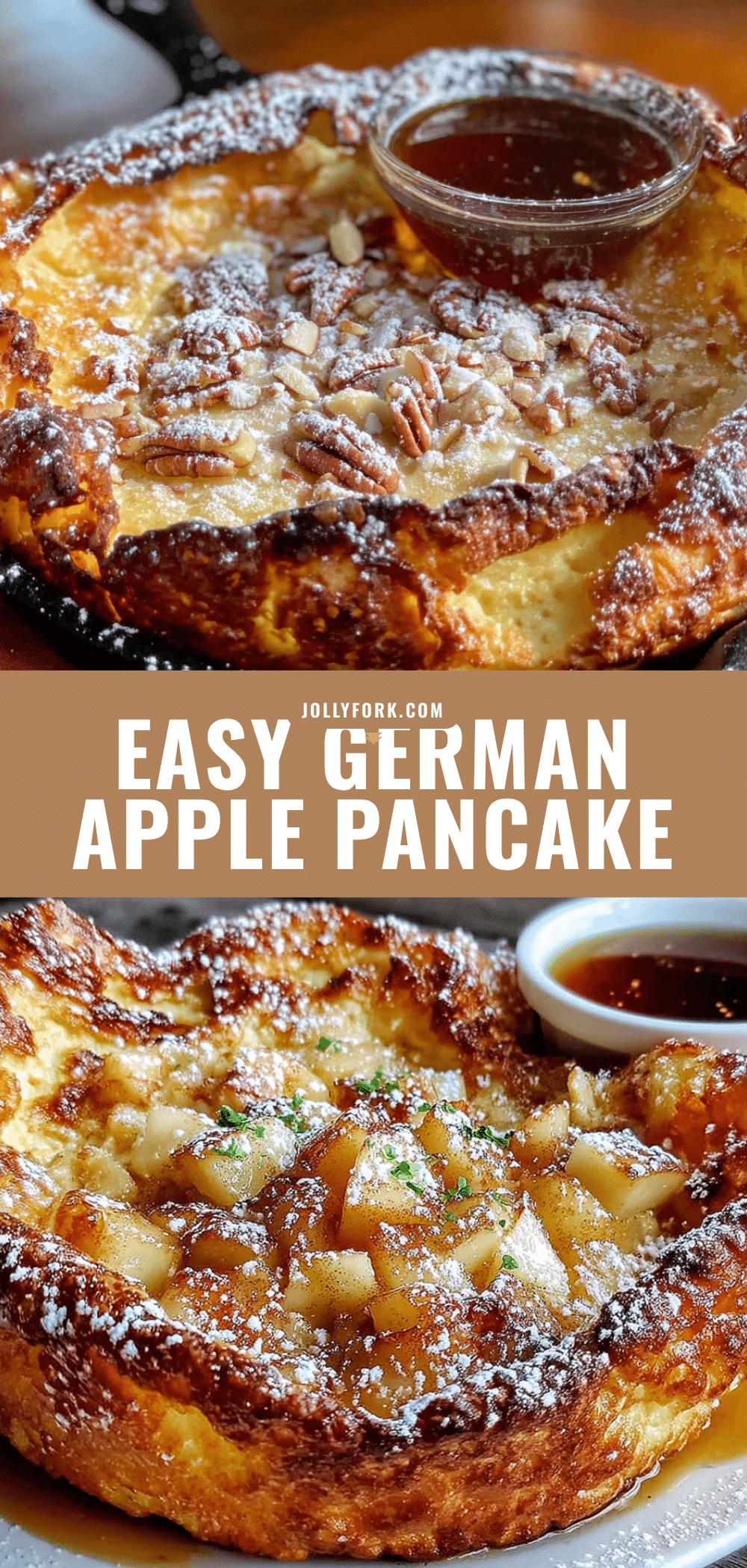
Easy German Apple Pancake: Best Dutch Baby Recipe
A quick and easy German apple pancake (Dutch baby) with caramelized apples, crispy edges, and a soft custard-like center. Perfect for brunch, dessert, or breakfast-for-dinner.
- Prep Time: 10 minutes
- Cook Time: 22 minutes
- Total Time: 32 minutes
- Yield: 4 servings 1x
- Category: Breakfast, Brunch, Dessert
- Cuisine: German
Ingredients
- 2 medium apples (Honeycrisp or Granny Smith), peeled, cored, and sliced into thin wedges
- 2 tablespoons unsalted butter (for sautéing apples)
- 2 tablespoons brown sugar (light or dark)
- ½ teaspoon ground cinnamon
- Pinch of salt
- 3 large eggs, room temperature
- ½ cup whole milk, room temperature
- ½ cup all-purpose flour, spooned and leveled
- 1 tablespoon granulated sugar
- 1 teaspoon vanilla extract
- ¼ teaspoon salt
- 2 tablespoons unsalted butter (for the skillet)
- Powdered sugar (for dusting)
- Maple syrup (optional, for serving)
- Fresh lemon wedges (optional, for serving)
Instructions
- Preheat your oven to 425°F (220°C). Place a 10-inch cast-iron skillet on the middle rack to heat for at least 15 minutes.
- While the oven heats, peel, core, and slice the apples into thin wedges about ¼-inch thick. Set aside.
- In a blender, combine the eggs, milk, flour, granulated sugar, vanilla extract, and salt. Blend on medium speed for about 20 seconds until smooth and slightly frothy. Scrape down the sides and blend for another 5 seconds. Let the batter rest.
- Carefully remove the hot skillet from the oven and place it on a stovetop burner over medium heat. Add 2 tablespoons of butter and let it melt, swirling to coat the bottom. Add the sliced apples, brown sugar, cinnamon, and a pinch of salt. Cook for 3-4 minutes, stirring occasionally, until the apples are softened and the sugar forms a light caramel sauce.
- Spread the apples evenly in a single layer across the bottom of the skillet.
- Give the batter a quick stir, then pour it directly over the apples. Do not stir or swirl.
- Carefully transfer the skillet back to the hot oven. Bake for 18-22 minutes, until the pancake is puffed and golden brown around the edges. The center should be set but slightly jiggly.
- Remove from the oven and let cool on a wire rack for 2-3 minutes. Dust generously with powdered sugar, add a squeeze of fresh lemon juice if desired, and serve warm directly from the skillet.
Notes
For best results, ensure the skillet is screaming hot before adding the batter. Use room temperature eggs and milk for maximum puff. Do not open the oven door during the first 15 minutes of baking. The pancake will deflate slightly as it cools—this is normal.
Nutrition
- Serving Size: 1 slice (1/4 of panc
- Calories: 285
- Sugar: 18
- Sodium: 280
- Fat: 14
- Saturated Fat: 8
- Carbohydrates: 32
- Fiber: 3
- Protein: 8
Keywords: German apple pancake, Dutch baby, apple pancake, easy pancake recipe, cast iron skillet pancake, apple cinnamon pancake