Mrs. Chen from three doors down watched me wrestling with a massive bunch of kale at the community garden’s fall harvest share. She didn’t say anything at first. Then she just reached over, took the bunch from my hands, and started stripping the leaves from the stems with this practiced, almost musical motion. “You fight with kale,” she said, not as a question. “Kale fight back if you don’t know the trick.” She showed me right there, standing between the tomato cages and the dying basil plants, how to massage the leaves until they turned dark and silky. I remember thinking, honestly, that I’d been doing kale all wrong my whole life. The salad she described — with roasted squash and those jewel-like pomegranate seeds — sounded way too fancy for a Tuesday night. But she insisted it was the cheapest, most satisfying thing she made all fall. “Squash is cheap right now,” she said, pointing to the pile of butternut we’d all been given. “Pomegranate is treat, but seeds go long way.” She was right, of course. And maybe you’ve been there — standing in your kitchen with a fridge full of good intentions and no idea how to turn them into something your family will actually eat. This harvest kale salad became that thing for us. It’s the recipe that made my kids ask for kale. I mean, let me tell you, that never happened before.
Why You’ll Love This Recipe
Listen, I’ve tested this harvest kale salad at least a dozen times across different seasons and family moods. It’s the kind of recipe that earns its spot in your regular rotation because it actually works for real life. Here’s why it stands out from every other salad you’ve tried:
- Budget-Friendly Hero: Kale and squash are some of the cheapest produce options at the market, especially in fall. One pomegranate gives you enough seeds for two salads, so you’re not wasting money on fancy add-ons.
- Make-Ahead Wonder: This salad actually gets better after sitting in the fridge for a day. The kale softens without getting sad and soggy, making it perfect for meal prep or packed lunches.
- Picky Eater Approved: The sweetness from the roasted squash and the little pops of pomegranate somehow distract from the fact that they’re eating a big bowl of greens. My youngest calls the pomegranate seeds “tiny apples.” I don’t correct her.
- Company-Worthy Without the Stress: You can roast the squash and make the dressing two days ahead. Throw everything together in ten minutes before guests arrive, and they’ll think you spent hours on it.
- Leftovers That Reheat Well: Okay, you don’t reheat the whole salad. But the roasted squash reheats beautifully for other meals, and extra dressing keeps for a week. Nothing goes to waste.
What makes this recipe different from other kale salads you’ve seen is the technique. Mrs. Chen’s massage method isn’t just a gimmick — it genuinely transforms tough kale into something tender and almost buttery. Combined with squash roasted until it’s caramelized on the edges and that tangy maple-tahini dressing, you get a salad that feels indulgent but costs pennies per serving. It’s comfort food that happens to be good for you, and it’s fast enough for a Tuesday but pretty enough for Thanksgiving.
What Ingredients You Will Need
This harvest kale salad uses simple, mostly pantry-friendly ingredients that come together to create something surprisingly luxurious. Most of these items you can find at any grocery store without breaking the bank.
- For the Salad:
- 1 large bunch curly kale (about 8-10 ounces), stems removed and leaves torn into bite-sized pieces
- 1 medium butternut squash (about 2 pounds), peeled, seeded, and cubed into 1/2-inch pieces (you can also use honeynut or delicata squash — they’re even sweeter)
- 1/2 cup pomegranate seeds (from about 1 large pomegranate)
- 1/3 cup toasted pepitas (pumpkin seeds) or chopped pecans
- 1/4 cup crumbled feta cheese (optional, but my family loves the salty tang)
- 2 tablespoons olive oil for roasting the squash
- Salt and black pepper to taste
- For the Maple-Tahini Dressing:
- 1/4 cup tahini (stir it well before measuring — it separates naturally)
- 2 tablespoons maple syrup (use the real stuff, not pancake syrup)
- 2 tablespoons apple cider vinegar
- 2 tablespoons fresh lemon juice (about half a lemon)
- 1 small garlic clove, minced or grated
- 1/4 teaspoon salt
- 3-4 tablespoons warm water, to thin the dressing
A few notes on ingredients: I prefer curly kale for this recipe because it holds up better to massaging and doesn’t get as wilted as lacinato kale. But honestly, either works fine. For the squash, look for one that feels heavy for its size — that means it’s fresh and moist inside. If you’re short on time, most grocery stores sell pre-cut butternut squash cubes, though they’re a bit more expensive.
For the tahini, I’ve tried several brands and keep coming back to Soom or Seed + Mill because they’re smooth and not bitter. But any well-stirred tahini works. If you don’t have tahini, you can substitute with sunflower seed butter or even well-blended silken tofu for a different but still delicious dressing.
The pomegranate seeds are worth the effort of deseeding the fruit. If you’ve never done it, cut the pomegranate in half horizontally, hold it cut-side down over a bowl, and whack the back with a wooden spoon. The seeds fall right out. It’s oddly satisfying.
Equipment Needed
You don’t need fancy equipment for this harvest kale salad, which is part of why I make it so often. Here’s what you’ll need:
- Large baking sheet (half-sheet pan works best for even roasting)
- Parchment paper or silicone baking mat (makes cleanup a breeze)
- Large mixing bowl (for massaging the kale)
- Chef’s knife and cutting board
- Vegetable peeler (for the squash, unless you buy pre-cut)
- Small bowl or jar with a tight-fitting lid (for shaking the dressing)
- Measuring spoons and cups
- Whisk or fork (for mixing the dressing)
If you don’t have a baking sheet, any oven-safe pan will work — just make sure the squash pieces are in a single layer. For the dressing, I often use a small mason jar and shake it vigorously instead of whisking. It emulsifies better and means less cleanup. Budget tip: skip the silicone mat and use parchment paper, which costs pennies per sheet.
Preparation Method
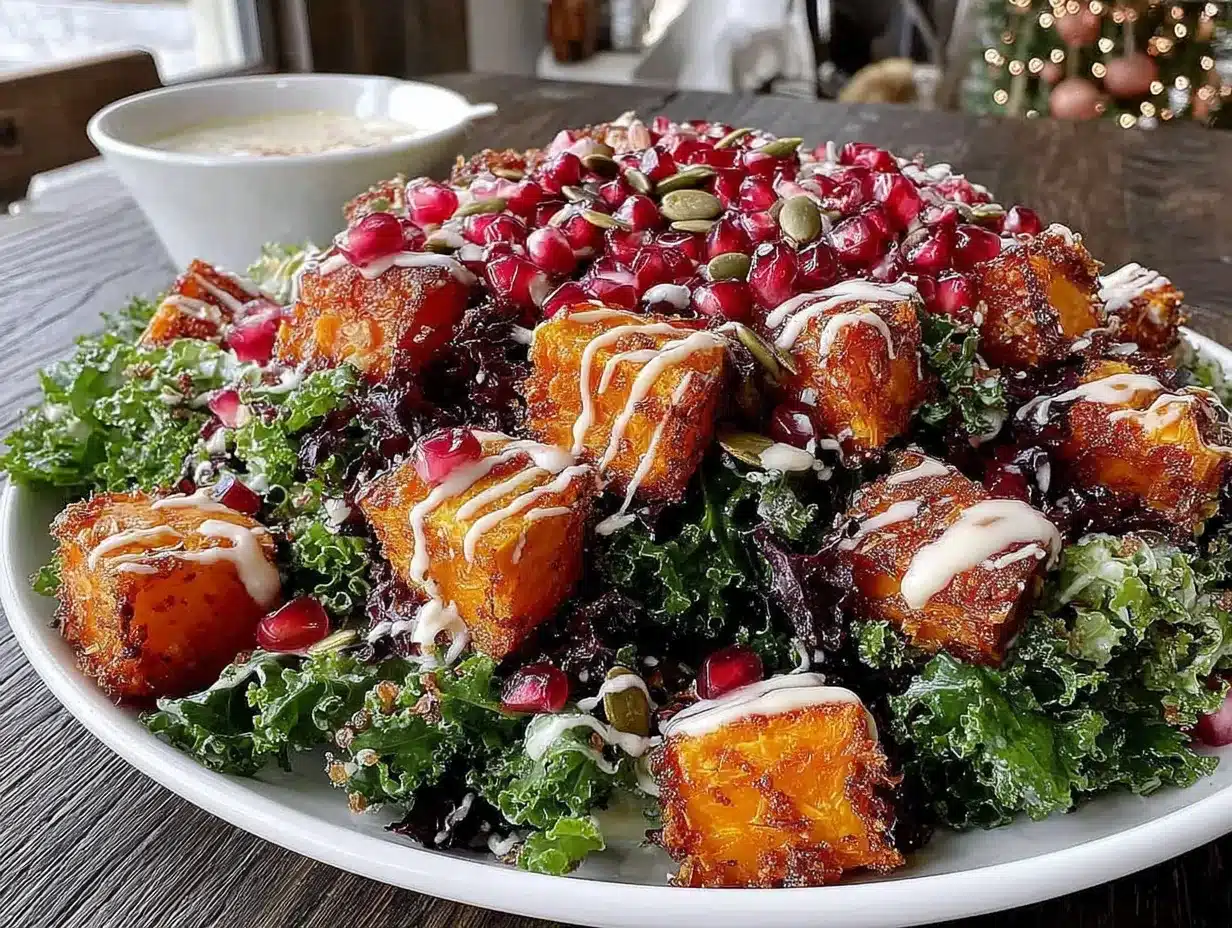
Let’s walk through this step by step. The whole process takes about 45 minutes, but most of that is hands-off roasting time.
Step 1: Preheat and Prep the Squash
Preheat your oven to 400°F (200°C). While it’s heating, peel your butternut squash with a vegetable peeler, cut it in half lengthwise, and scoop out the seeds with a spoon. Cut the squash into 1/2-inch cubes. I know this is the most annoying part, but try to make the pieces roughly the same size so they roast evenly. Toss the cubes with 2 tablespoons olive oil, a generous pinch of salt, and some black pepper. Spread them in a single layer on a parchment-lined baking sheet. Roast for 25-30 minutes, flipping halfway through, until the squash is tender and the edges are golden brown and slightly caramelized. Let it cool on the baking sheet while you work on the rest.
Step 2: Prepare the Kale
While the squash roasts, wash your kale and dry it thoroughly — wet kale won’t absorb the dressing well. Remove the tough stems by holding the stem at the bottom and stripping the leaves upward with your other hand. Tear the leaves into bite-sized pieces and place them in your large mixing bowl. Here’s where Mrs. Chen’s trick comes in: drizzle about 1 tablespoon of olive oil and a pinch of salt over the kale. Then use your hands to massage the leaves for 2-3 minutes. Seriously, get in there and squeeze, rub, and work the leaves. You’ll feel them transform from stiff and brittle to soft and almost silky. The color darkens slightly. This step is non-negotiable — it breaks down the tough fibers and makes the kale actually pleasant to eat raw.
Step 3: Make the Dressing
In a small bowl or jar, combine the tahini, maple syrup, apple cider vinegar, lemon juice, minced garlic, and salt. Whisk or shake until smooth. The mixture will seize up at first — that’s normal. Slowly add warm water, 1 tablespoon at a time, whisking after each addition, until the dressing is pourable but still thick enough to coat the back of a spoon. Taste and adjust: more salt if it needs it, more lemon if you want brightness, more maple if you like it sweeter. I usually end up adding about 3 tablespoons of water.
Step 4: Assemble the Salad
Pour about half the dressing over the massaged kale and toss well with your hands or tongs. Add the cooled roasted squash, pomegranate seeds, toasted pepitas, and feta if using. Drizzle with more dressing to taste and toss gently so you don’t break up the squash too much. Reserve some pomegranate seeds and pepitas for topping so the salad looks pretty.
Step 5: Rest and Serve
Let the salad sit for 5-10 minutes before serving. This resting time lets the flavors meld and the kale soften just a bit more. If you’re serving it later, keep the dressing on the side and add it just before serving.
Cooking Tips & Techniques
I’ve made this harvest kale salad enough times to learn a few things the hard way. Here’s what I wish someone had told me earlier:
Don’t skip the massage. The first time I made this, I was skeptical about the whole massage thing. I gave it a half-hearted 30 seconds and called it good. The salad was fine, but not great. The kale was still a little chewy and the dressing didn’t stick well. Now I set a timer for two full minutes and really work the leaves. The difference is night and day.
Roast squash at the right temperature. I used to roast squash at 375°F because that’s what most recipes said. It worked, but the squash was soft rather than caramelized. At 400°F, the edges get those gorgeous brown bits that add so much flavor. Don’t crowd the pan either — if the pieces are too close together, they steam instead of roast.
Make the dressing ahead. The tahini dressing thickens as it sits in the fridge. If you make it a day or two ahead, just add a splash of warm water and whisk before using. I keep a jar of this dressing in my fridge almost constantly now — it’s good on everything from roasted vegetables to grain bowls.
Toast your pepitas. Raw pepitas are fine, but toasting them in a dry skillet over medium heat for 2-3 minutes until they start popping and smelling nutty takes this salad to another level. Watch them carefully — they burn fast. I learned that the hard way and had to start over.
Variations & Adaptations
One of the best things about this harvest kale salad is how flexible it is. Here are some ways I’ve adapted it for different seasons, diets, and cravings:
Seasonal Swaps: In summer, I use roasted sweet potatoes instead of squash and add fresh peaches or nectarines instead of pomegranate. In winter, roasted beets and orange segments work beautifully. Spring calls for roasted asparagus and fresh strawberries. The dressing stays the same year-round.
Protein Boost: Add shredded rotisserie chicken, grilled tofu, or crispy chickpeas to turn this into a complete meal. My husband loves it with leftover grilled chicken thrown in. For a vegetarian version, I’ve added hard-boiled eggs or canned chickpeas that I’ve roasted with the squash.
Dairy-Free Option: Skip the feta or use a dairy-free alternative. The salad is still fantastic without it. I sometimes add a sprinkle of nutritional yeast for a cheesy flavor without the dairy.
Nut-Free Version: Replace pepitas with sunflower seeds or hemp hearts. Both are nut-free and add great texture. My son’s school is nut-free, so I make this version for his lunch.
Grain Addition: For a heartier salad that works as a main dish, add a cup of cooked quinoa, farro, or wild rice. It stretches the salad further and makes it more filling for hungry teenagers.
Serving & Storage Suggestions
This harvest kale salad is best served at room temperature or slightly chilled. The contrast between the warm squash and cool kale is part of the magic. If you’re serving it for a holiday meal or dinner party, arrange it on a large platter with the pomegranate seeds and pepitas sprinkled on top for a beautiful presentation.
For everyday meals, I serve it alongside roasted chicken, grilled fish, or even a simple frittata. It’s also substantial enough to be a main dish with some crusty bread on the side. My kids love it with a simple bowl of tomato soup — the creamy soup and crunchy salad are a surprisingly good match.
Storage: If you’re making this ahead, store the dressing separately and keep the assembled salad (without dressing) in an airtight container in the fridge for up to 3 days. The massaged kale stays crisp and the roasted squash holds up well. When you’re ready to eat, add the dressing and toss.
Reheating: You don’t really reheat this salad, but if you have leftover roasted squash, it reheats beautifully in a 350°F oven for 5-7 minutes or in the microwave for 30 seconds. Add it to fresh kale with fresh dressing for a whole new salad.
The flavors actually develop over time — the kale absorbs the dressing and becomes even more tender after sitting for a few hours. This is one of those rare salads that tastes better the next day, making it perfect for packed lunches.
Nutritional Information & Benefits
This harvest kale salad is packed with nutrients that make you feel good about feeding it to your family. Here’s a rough breakdown per serving (about 1.5 cups, with dressing and feta):
| Nutrient | Amount |
|---|---|
| Calories | 320 |
| Protein | 8g |
| Fat | 18g |
| Carbohydrates | 38g |
| Fiber | 9g |
| Sugar | 14g (natural from squash and pomegranate) |
| Vitamin A | 350% DV |
| Vitamin C | 80% DV |
| Iron | 15% DV |
| Calcium | 20% DV |
Kale is a powerhouse of vitamins K, A, and C, plus it’s loaded with antioxidants. Butternut squash provides beta-carotene and fiber, while pomegranate seeds add more antioxidants and a nice dose of vitamin C. The tahini in the dressing gives you healthy fats and calcium. This salad is naturally gluten-free and can easily be made vegan by skipping the feta.
One thing I love about this recipe is that it’s nutrient-dense without feeling like health food. It’s just a really good salad that happens to be good for you.
Conclusion
This harvest kale salad has become a staple in our kitchen because it solves so many problems at once. It’s affordable, it’s beautiful, it pleases picky eaters, and it actually gets better with time. Mrs. Chen’s casual lesson in the community garden that afternoon taught me something bigger than how to handle kale — it taught me that the best recipes come from real people cooking real food for real families.
I hope you give this salad a try and make it your own. Maybe you’ll add extra feta like my kids beg for, or skip the cheese entirely. Maybe you’ll double the dressing because you can’t get enough of it (I won’t judge). The point is to make it work for your family and your budget. That’s what cooking is all about.
If you make this harvest kale salad, I’d love to hear how it turned out. Drop a comment below and tell me about your favorite fall salad, or share a photo and tag me on Pinterest. And if you have a variation that your family loves, please share it — I’m always looking for new ideas!
Frequently Asked Questions
Can I use a different type of squash?
Absolutely! Honeynut, delicata, acorn, or even pumpkin work great. Delicata doesn’t even need to be peeled, which saves time. Just adjust roasting time based on the size of your cubes — smaller pieces cook faster.
How do I get the seeds out of a pomegranate without making a mess?
Cut the pomegranate in half horizontally. Hold it cut-side down over a deep bowl and whack the back firmly with a wooden spoon. The seeds fall out easily while the membrane stays in your hand. Do this over the sink to catch any rogue splashes.
Can I make this salad ahead of time for a party?
Yes! Massage the kale and roast the squash up to 2 days ahead. Store them separately in the fridge. Make the dressing up to a week ahead. Toss everything together about 30 minutes before serving so the flavors can meld.
My tahini dressing turned out bitter. What went wrong?
Some tahini brands are naturally more bitter than others. If yours is bitter, add an extra tablespoon of maple syrup or a pinch more salt to balance it. You can also blend in a tablespoon of plain yogurt or additional lemon juice to mask the bitterness.
Is this salad good for meal prep?
It’s excellent for meal prep! Store the massaged kale, roasted squash, pomegranate seeds, and dressing in separate containers. Assemble individual portions each day. The kale stays crisp for 3-4 days this way, and everything comes together in minutes.
Pin This Recipe!
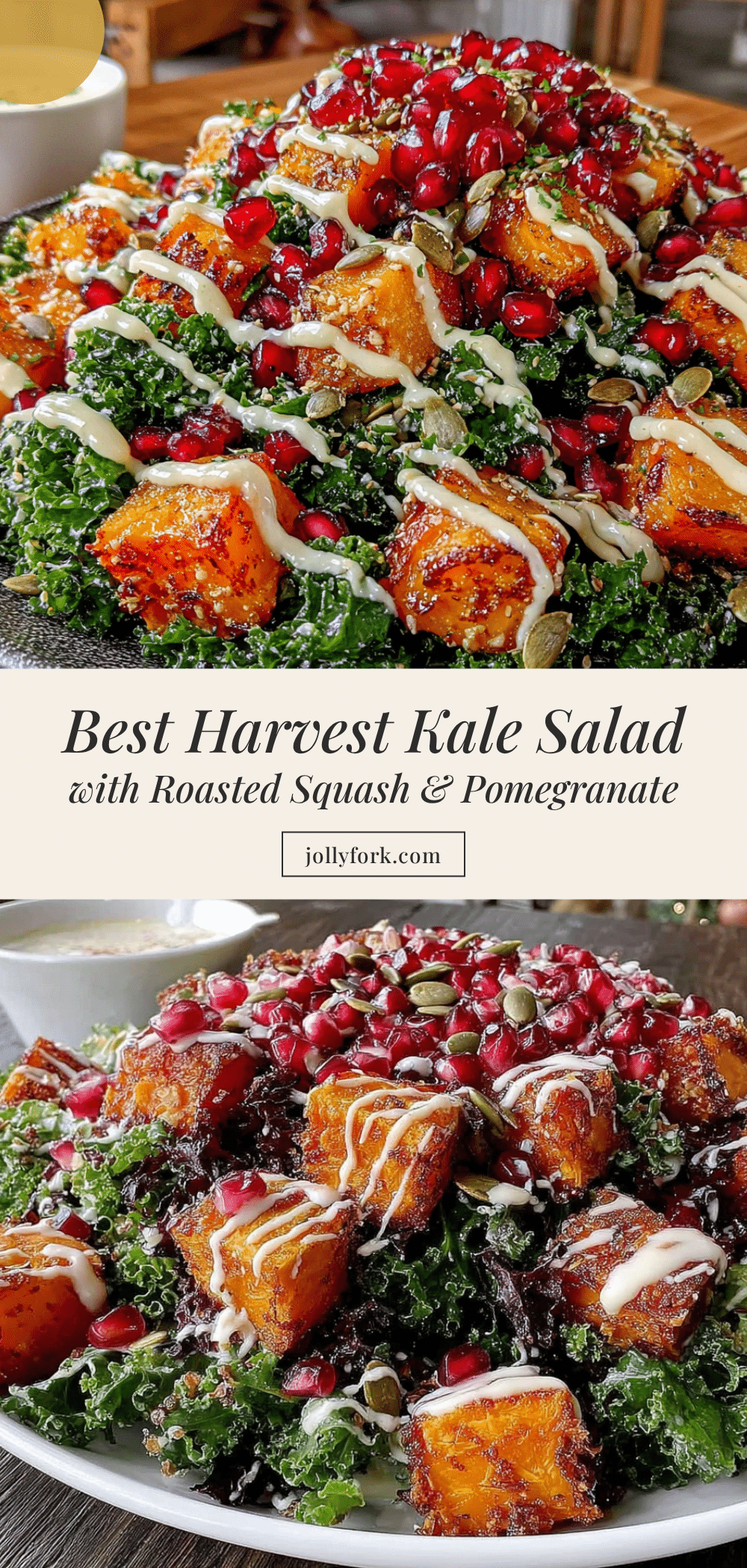
Best Harvest Kale Salad with Roasted Squash & Pomegranate

A hearty and flavorful kale salad featuring roasted butternut squash, pomegranate seeds, and a tangy maple-tahini dressing. This budget-friendly, make-ahead salad is perfect for fall and pleases even picky eaters.
- Prep Time: 15 minutes
- Cook Time: 30 minutes
- Total Time: 45 minutes
- Yield: 4 servings 1x
- Category: Salad
- Cuisine: American
Ingredients
- 1 large bunch curly kale (about 8–10 ounces), stems removed and leaves torn into bite-sized pieces
- 1 medium butternut squash (about 2 pounds), peeled, seeded, and cubed into 1/2-inch pieces
- 1/2 cup pomegranate seeds (from about 1 large pomegranate)
- 1/3 cup toasted pepitas (pumpkin seeds) or chopped pecans
- 1/4 cup crumbled feta cheese (optional)
- 2 tablespoons olive oil for roasting the squash
- Salt and black pepper to taste
- 1/4 cup tahini (stirred well)
- 2 tablespoons maple syrup
- 2 tablespoons apple cider vinegar
- 2 tablespoons fresh lemon juice (about half a lemon)
- 1 small garlic clove, minced or grated
- 1/4 teaspoon salt
- 3–4 tablespoons warm water, to thin the dressing
Instructions
- Preheat your oven to 400°F (200°C). Peel the butternut squash, cut in half lengthwise, scoop out seeds, and cut into 1/2-inch cubes. Toss with 2 tablespoons olive oil, salt, and pepper. Spread in a single layer on a parchment-lined baking sheet. Roast for 25-30 minutes, flipping halfway, until tender and caramelized. Let cool.
- While squash roasts, wash and dry the kale. Remove stems and tear leaves into bite-sized pieces. Place in a large bowl. Drizzle with about 1 tablespoon olive oil and a pinch of salt. Massage the kale with your hands for 2-3 minutes until it becomes soft and silky.
- In a small bowl or jar, combine tahini, maple syrup, apple cider vinegar, lemon juice, minced garlic, and salt. Whisk or shake until smooth. Gradually add warm water, 1 tablespoon at a time, until the dressing is pourable but still thick. Adjust seasoning to taste.
- Pour about half the dressing over the massaged kale and toss well. Add the cooled roasted squash, pomegranate seeds, toasted pepitas, and feta (if using). Drizzle with more dressing to taste and toss gently. Reserve some pomegranate seeds and pepitas for topping.
- Let the salad rest for 5-10 minutes before serving to allow flavors to meld. If serving later, keep dressing on the side and add just before serving.
Notes
Massaging the kale is essential for tenderness. The salad gets better after sitting in the fridge for a day. Store dressing separately if making ahead. For a vegan version, skip the feta. To toast pepitas, heat in a dry skillet over medium heat for 2-3 minutes until fragrant.
Nutrition
- Serving Size: 1.5 cups
- Calories: 320
- Sugar: 14
- Sodium: 400
- Fat: 18
- Saturated Fat: 3
- Carbohydrates: 38
- Fiber: 9
- Protein: 8
Keywords: kale salad, harvest salad, roasted squash, pomegranate, fall salad, maple tahini dressing, healthy salad, gluten-free, vegetarian