My uncle Frank had claimed to hate beef stew for forty-two years. Forty-two years. He’d make a whole production about it at every family dinner, waving his hand over the pot like he was banishing a demon. “Too much gray,” he’d say. “Everything tastes like boiled regret.” We all just rolled our eyes and passed him the chicken. Then last Thanksgiving, I made this version for a potluck at my neighbor Maria’s place. I’d prepped it the night before, let it bubble away in the slow cooker while I helped her set up tables, and honestly, I forgot all about it until someone lifted the lid. The smell that hit us was insane—deep, rich, almost wine-like. I turned around to grab serving bowls, and when I looked back, there was Uncle Frank. He had a spoon in one hand and a look of pure betrayal on his face. “This,” he said, pointing the spoon at me, “is not stew.” I just smiled. He went back for thirds.
That’s the thing about this recipe, you know? It doesn’t try to convince you. It just sits there, all low and slow, doing its thing with chuck roast and carrots and parsnips, and before you know it, the people who swore they’d never touch it are elbow-deep in a second bowl. Maybe you’ve been there—the skeptic at the table, the one who’s had one too many bowls of watery, flavorless stew and decided you’re done. I get it. I really do. But this version is different. The meat gets so tender it falls apart when you look at it wrong. The vegetables soak up all that savory broth until they’re sweet and soft. And the gravy? Let me tell you, it’s the kind of thick, glossy, beefy situation that makes you want to drink it straight from the ladle.
The best part is, this recipe was born from a mistake. I forgot to brown the meat once—just dumped everything in the slow cooker raw because I was running late for a doctor’s appointment. I figured it would be a disaster, but honestly? It was still amazing. The slow cooker did all the work anyway. That’s when I realized you don’t need to fuss. You don’t need to sear and deglaze and stress. You just need good ingredients, a little patience, and a big enough pot. This is the stew you make when you want to impress a crowd without breaking a sweat. It’s the stew that converts the non-believers, one bowl at a time.
Why You’ll Love This Recipe
I’ve tested this recipe about a dozen times over the past three years, tweaking the liquid ratio, swapping root vegetables, and even trying different cuts of beef. What I landed on is the version that gets the most “can I have the recipe?” texts after every dinner party. Here’s why it works so well for hosting:
- Completely Hands-Off: Once everything’s in the slow cooker, you can forget about it for 8 hours. No stirring, no checking, no hovering. That means you’re free to set the table, greet guests, or actually enjoy a glass of wine before everyone arrives.
- Scales Beautifully: This recipe doubles or even triples without any issues. I’ve made it for a crowd of 12 using a 7-quart slow cooker, and it came out just as perfect as when I make it for a quiet Sunday dinner.
- Made with Simple Ingredients: No fancy cuts of meat, no obscure spices, no trips to a specialty store. Chuck roast, potatoes, carrots, onions, and a few pantry staples—that’s it.
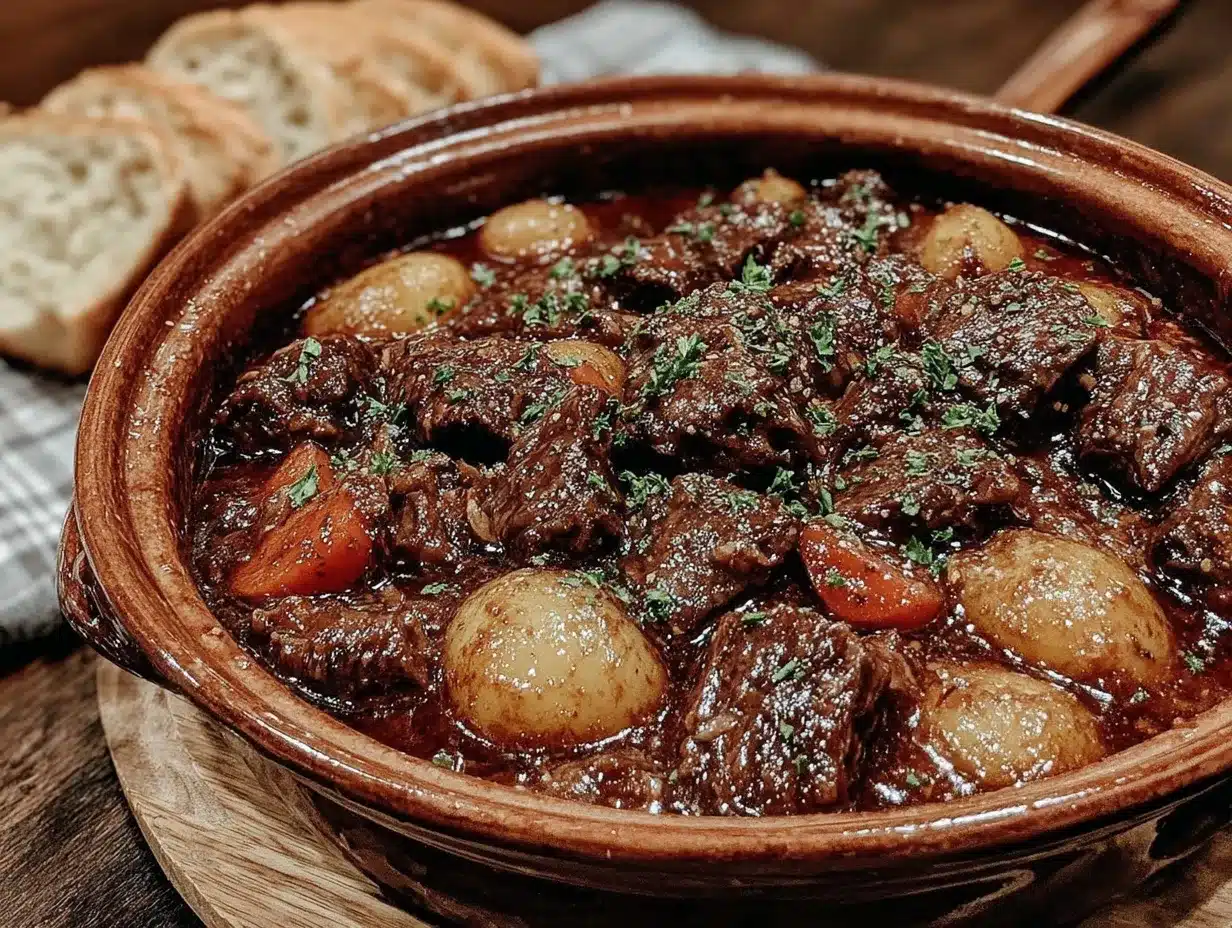
- Looks Impressive on the Table: There’s something about a big pot of stew on a serving platter that just feels like comfort. The deep brown gravy, the colorful vegetables, the way the beef practically melts—it’s a showstopper without being fussy.
- Better the Next Day: Stew is one of those rare dishes that actually improves overnight. The flavors meld, the meat gets even more tender, and the gravy thickens up beautifully. Make it a day ahead, and your future self will thank you.
This isn’t just another beef stew recipe. It’s the one I turn to when I need to feed a crowd without stress. It’s the one my friends request for our annual soup swap. It’s the one that made my uncle Frank eat his words—and three bowls of stew.
What Ingredients You Will Need
This recipe uses straightforward, humble ingredients that come together to create something truly special. The key is choosing the right cuts and prepping them properly. Here’s what you’ll need:
For the Beef and Vegetables
- 2.5 lbs (1.1 kg) beef chuck roast, cut into 2-inch chunks – Chuck is my go-to here. It has enough marbling to stay moist and tender during the long cook. Avoid lean cuts like sirloin or round; they’ll turn out dry and stringy.
- 4 medium carrots, peeled and cut into 1-inch pieces – I prefer organic carrots because they’re sweeter, but any will work. Cut them chunky so they don’t disappear into the broth.
- 3 parsnips, peeled and cut into 1-inch pieces – Parsnips add a subtle, almost nutty sweetness that carrots alone can’t match. If you can’t find them, swap in an extra carrot or two.
- 1 large yellow onion, diced – Yellow onions have the best flavor for slow cooking. They melt down into the broth and add depth without being overpowering.
- 3 celery stalks, sliced – Celery adds a savory, slightly bitter note that balances the sweetness of the root vegetables.
- 1.5 lbs (680 g) Yukon Gold potatoes, cut into 1.5-inch chunks – Yukon Golds hold their shape better than russets and have a buttery texture. Red potatoes also work well.
- 4 cloves garlic, minced – Fresh garlic is non-negotiable here. The jarred stuff just doesn’t have the same punch.
For the Broth and Seasoning
- 4 cups (960 ml) low-sodium beef broth – I recommend Better Than Bouillon beef base mixed with water. It has a richer, more concentrated flavor than most boxed broths.
- 1 can (14.5 oz / 411 g) diced tomatoes, undrained – The tomatoes add acidity and a touch of sweetness that balances the richness of the beef.
- 3 tablespoons tomato paste – This is the secret to deep, dark gravy. Don’t skip it.
- 2 tablespoons Worcestershire sauce – Adds umami and a slight tang. Lea & Perrins is my go-to brand.
- 2 bay leaves – For that subtle herbal note. Remove them before serving.
- 1 teaspoon dried thyme – Thyme and beef are a classic combo. If you have fresh, use 3 sprigs instead.
- 1 teaspoon smoked paprika – Adds a gentle smokiness that makes the stew feel more complex.
- Salt and black pepper, to taste – Go easy on the salt at the beginning; the broth will reduce and concentrate as it cooks.
For the Thickener (Optional but Recommended)
- 3 tablespoons cornstarch mixed with 3 tablespoons cold water – This slurry gets stirred in at the end to thicken the gravy. If you prefer a thinner broth, skip it.
Equipment Needed
You don’t need a ton of fancy equipment for this recipe, which is part of the beauty. Here’s what I use:
- 6-quart slow cooker – This is the sweet spot for this recipe. A 4-quart will be too small once you add all the vegetables, and an 8-quart might cook the liquid down too fast. I’ve been using a Crock-Pot 6-quart programmable model for years, and it’s never let me down.
- Large cutting board – You’re going to be chopping a lot of vegetables, so give yourself some space. I prefer a wooden board because it’s gentler on knives.
- Chef’s knife – A sharp 8-inch knife makes quick work of the chuck roast and root vegetables. A dull knife is more dangerous than a sharp one, trust me.
- Measuring cups and spoons – For the broth, tomato paste, and seasonings.
- Small bowl – For mixing the cornstarch slurry.
- Wooden spoon or spatula – For stirring everything together in the slow cooker.
- Tongs – For handling the beef chunks if you decide to brown them (though I usually don’t).
- Ladle – For serving. A deep, wide ladle is best for scooping up both broth and solids.
If you don’t have a slow cooker, you can absolutely make this in a Dutch oven on the stovetop or in the oven at 325°F (165°C) for about 3 hours. The results are slightly different—the stovetop version will reduce more and have a thicker gravy—but it’s still delicious.
Preparation Method
This is where the magic happens. Follow these steps, and you’ll have a pot of stew that’ll make you look like a kitchen hero.
- Prep the vegetables (20 minutes): Wash and peel the carrots, parsnips, and potatoes. Cut them into roughly 1-inch chunks. Dice the onion, slice the celery, and mince the garlic. Try to keep the pieces uniform in size so they cook evenly. I usually do this the night before and store everything in a big bowl in the fridge.
- Prep the beef (10 minutes): Pat the chuck roast dry with paper towels. Cut it into 2-inch cubes, trimming off any large pieces of fat. Season generously with salt and pepper. Pro tip: If you have time, let the seasoned beef sit at room temperature for 30 minutes before adding it to the slow cooker. It helps the seasoning penetrate deeper.
- Layer the slow cooker (5 minutes): Place the diced onion, sliced celery, and minced garlic in the bottom of the slow cooker. This creates a flavor base and keeps the beef from sticking. Add the carrots, parsnips, and potatoes on top. Then nestle the beef chunks among the vegetables. Don’t worry about layering perfectly—everything will meld together during cooking.
- Make the broth (5 minutes): In a medium bowl or large measuring cup, whisk together the beef broth, diced tomatoes (with their juices), tomato paste, Worcestershire sauce, thyme, and smoked paprika. Whisk until the tomato paste is fully dissolved. Pour this mixture over the beef and vegetables. Add the bay leaves, tucking them down into the liquid.
- Cook low and slow (8 hours on low or 5 hours on high): Cover the slow cooker and set it to low for 8 hours. If you’re in a hurry, high for 5 hours works, but I find the meat is noticeably more tender on low. Whatever you do, don’t lift the lid during the first 6 hours. Every time you open it, you release heat and add 20-30 minutes to the cooking time. I learned this the hard way when I was testing the recipe and kept peeking—the stew took almost 10 hours to finish.
- Thicken the gravy (5 minutes): About 30 minutes before serving, remove the bay leaves. In a small bowl, whisk together the cornstarch and cold water until smooth. Stir the slurry into the stew. Let it cook uncovered for the remaining 30 minutes, stirring once or twice. The gravy will thicken up beautifully. If you prefer a thinner broth, skip this step entirely.
- Finish and serve (5 minutes): Taste the stew and adjust the seasoning with more salt and pepper if needed. Ladle into deep bowls and garnish with fresh thyme or parsley if you’re feeling fancy. Serve with crusty bread for sopping up every last drop of that glorious gravy.
Cooking Tips & Techniques
After making this recipe more times than I can count, I’ve learned a few things the hard way. Here are my best tips for stew success:
Don’t skip the tomato paste. I know it’s easy to forget, but that little spoonful of concentrated tomato flavor is what gives the gravy its deep, rich color and savory depth. If you only have tomato sauce, use 1/4 cup and reduce the broth by the same amount.
Cut your vegetables bigger than you think you should. In a slow cooker, vegetables soften significantly over 8 hours. If you cut them too small, they’ll turn into mush. I aim for 1.5-inch chunks for potatoes and carrots, and I’ve never regretted it.
Brown the beef if you want extra flavor. I said earlier that you don’t need to brown the meat, and you don’t. But if you have an extra 10 minutes, searing the beef in a hot skillet with a little oil before adding it to the slow cooker adds a layer of caramelized flavor that’s hard to beat. I do this maybe half the time, usually when I’m trying to impress someone.
Watch your salt levels. Beef broth, Worcestershire sauce, and even some tomato pastes contain a surprising amount of sodium. I always use low-sodium broth and go easy on the salt until the end. You can always add more, but you can’t take it out.
Make it a day ahead. This is my number one hosting tip. Make the stew the day before your party, let it cool, and refrigerate it overnight. The next day, reheat it gently on the stovetop or in the slow cooker. The flavors will be deeper, the meat will be more tender, and you’ll have one less thing to worry about on the day of.
Resist the urge to stir. I know it’s tempting, but stirring a slow cooker full of stew can break up the meat and vegetables into unappetizing bits. Let it be. The heat circulates evenly without your help.
Variations & Adaptations
One of the best things about this recipe is how flexible it is. Here are a few ways to make it your own:
Make it gluten-free: This recipe is naturally gluten-free as written, as long as you use a gluten-free Worcestershire sauce (some brands contain malt vinegar). Skip the cornstarch slurry or use arrowroot powder instead for thickening.
Swap the root vegetables: Not a fan of parsnips? No problem. Use sweet potatoes, turnips, rutabaga, or even celery root. Each one brings a slightly different flavor and texture. I once made this with half sweet potatoes and half Yukon Golds, and it was fantastic—sweeter and a little more colorful.
Add mushrooms for extra umami: Slice 8 ounces of cremini or baby bella mushrooms and add them with the onions. They’ll release their liquid and absorb the beefy broth, becoming little flavor bombs. This is my go-to variation when I’m serving vegetarian friends (just swap the beef for extra mushrooms and use vegetable broth).
Make it spicy: Add a diced jalapeño or a teaspoon of red pepper flakes along with the onions. The heat mellows out during the long cook but leaves a pleasant warmth in the finish. I did this once for a game day party, and it was a hit.
Try a red wine version: Replace 1 cup of the beef broth with 1 cup of dry red wine (like Cabernet Sauvignon or Merlot). Add it with the broth and let the alcohol cook off during the first few hours. The wine adds a fruity, tannic complexity that pairs beautifully with the beef. Just be careful not to use too much, or the stew might taste bitter.
Personally, I’m partial to the mushroom version. I tried it on a whim one rainy Sunday when I had a half-empty container of creminis in the fridge, and now it’s my default. The mushrooms soak up the gravy and get this almost meaty texture that’s just incredible.
Serving & Storage Suggestions
When I serve this stew at gatherings, I like to ladle it into a big, wide serving bowl and let people help themselves. It feels more communal and relaxed that way. Here are my best serving and storage tips:
Serving temperature: Serve the stew piping hot. The gravy thickens as it cools, so if it sits out for more than 20 minutes, you might need to give it a stir and reheat it briefly. I usually set my slow cooker to “warm” during the party and let guests ladle straight from it.
What to serve alongside: Crusty bread is non-negotiable. A baguette, sourdough, or even thick slices of Texas toast are perfect for sopping up the gravy. I also love serving this with a simple green salad dressed with lemon and olive oil—the acidity cuts through the richness of the stew. For a heartier meal, try it over egg noodles or mashed potatoes.
Storage instructions: Let the stew cool completely before transferring it to an airtight container. It will keep in the refrigerator for up to 4 days. The flavors actually get better after a day or two, so don’t be afraid to make it ahead.
Freezing instructions: This stew freezes like a dream. Portion it into freezer-safe containers or zip-top bags, leaving about an inch of headroom for expansion. It will keep for up to 3 months. Thaw overnight in the refrigerator before reheating.
Reheating tips: Reheat the stew gently on the stovetop over medium-low heat, stirring occasionally. If it seems too thick, add a splash of beef broth or water. You can also reheat individual portions in the microwave, but the stovetop method gives you better control over the texture.
One thing I’ve noticed: the stew’s gravy thickens significantly after refrigeration. Don’t panic. Just add a little broth or water when you reheat it, and it’ll loosen right up.
Nutritional Information & Benefits
This stew is as nourishing as it is delicious. Here’s a rough estimate per serving (based on 8 servings):
- Calories: 380-420
- Protein: 32g
- Fat: 14g (mostly from the beef)
- Carbohydrates: 32g
- Fiber: 5g
- Sugar: 8g (naturally occurring from vegetables)
- Sodium: 580mg (varies based on broth and added salt)
The beef chuck is an excellent source of high-quality protein, iron, and B vitamins, particularly B12, which supports energy levels and red blood cell production. The root vegetables—carrots, parsnips, and potatoes—provide a hearty dose of fiber, vitamin A, and potassium. Carrots are especially rich in beta-carotene, which your body converts into vitamin A for healthy vision and immune function.
This recipe is naturally gluten-free and dairy-free, making it suitable for many dietary needs. If you’re watching your sodium, use low-sodium broth and go easy on the added salt—the natural flavors of the beef and vegetables will still shine through.
From a wellness perspective, this is the kind of meal that fills you up without weighing you down. It’s hearty enough to satisfy a post-hike hunger but balanced enough to feel good about eating. I love serving it after a long day when I need something that feels like a hug in a bowl.
Conclusion
Look, I’m not going to tell you this is the most complicated or impressive recipe you’ll ever make. It’s not. It’s a humble, honest pot of beef stew that happens to be absolutely, mind-blowingly delicious. It’s the recipe I turn to when I need to feed a crowd without stress, when I want to impress people without breaking a sweat, and when I just need a big bowl of comfort after a long week.
What makes this recipe special isn’t a secret technique or a fancy ingredient. It’s the way the beef gets so tender it melts in your mouth. It’s the way the vegetables soak up all that savory broth until they’re sweet and soft. It’s the way the gravy coats every single bite with richness and depth. And it’s the way people who swore they hated stew come back for seconds—and thirds.
I hope you’ll give this recipe a try. Customize it however you like—swap in different vegetables, add mushrooms, or spike it with red wine. Make it your own. And when you do, I’d love to hear about it. Drop a comment below and tell me how it turned out, or share a photo of your stew on social media. Tag me so I can see your creation. Honestly, there’s nothing that makes my day more than knowing someone tried one of my recipes and loved it.
So go ahead. Grab your slow cooker, chop some vegetables, and get that stew going. Your future self—and everyone at your table—will thank you.
Frequently Asked Questions
Can I use a different cut of beef for this stew?
Absolutely. While chuck roast is my top recommendation for its marbling and tenderness, you can also use bottom round, brisket, or even stew meat labeled “for stew.” Just keep in mind that leaner cuts like bottom round may be slightly less tender. If you use a lean cut, consider cooking on low for the full 8 hours to give the connective tissue time to break down.
Do I really need to brown the beef first?
No, you don’t. The recipe works perfectly without browning, and I often skip it for the sake of simplicity. However, if you have an extra 10 minutes, searing the beef in a hot skillet adds a layer of caramelized flavor that enhances the overall depth of the stew. It’s a nice-to-have, not a must-have.
Can I make this stew in a Dutch oven instead of a slow cooker?
Yes, you can. To make this on the stovetop or in the oven, follow the same prep steps, then bring the stew to a simmer in a Dutch oven. Cover and cook in a 325°F (165°C) oven for about 3 hours, or until the beef is fork-tender. Alternatively, simmer on the stovetop over low heat for 2.5 to 3 hours, stirring occasionally. The liquid will reduce more than in a slow cooker, so you may need to add extra broth.
How do I prevent the vegetables from turning to mush?
Cut your vegetables into large, uniform chunks—about 1.5 inches for potatoes and carrots. Also, add tender vegetables like peas or green beans during the last 30 minutes of cooking if you want them to retain some texture. Root vegetables like carrots and parsnips hold up well during a long cook, but potatoes can get soft. If you prefer firmer potatoes, add them halfway through the cooking time.
Can I freeze leftovers?
Definitely. This stew freezes beautifully. Let it cool completely, then portion it into freezer-safe containers or zip-top bags. Leave about an inch of headroom for expansion. It will keep for up to 3 months. Thaw overnight in the refrigerator and reheat gently on the stovetop or in the microwave. The gravy may thicken during freezing, so add a splash of broth or water when reheating if needed.
Pin This Recipe!
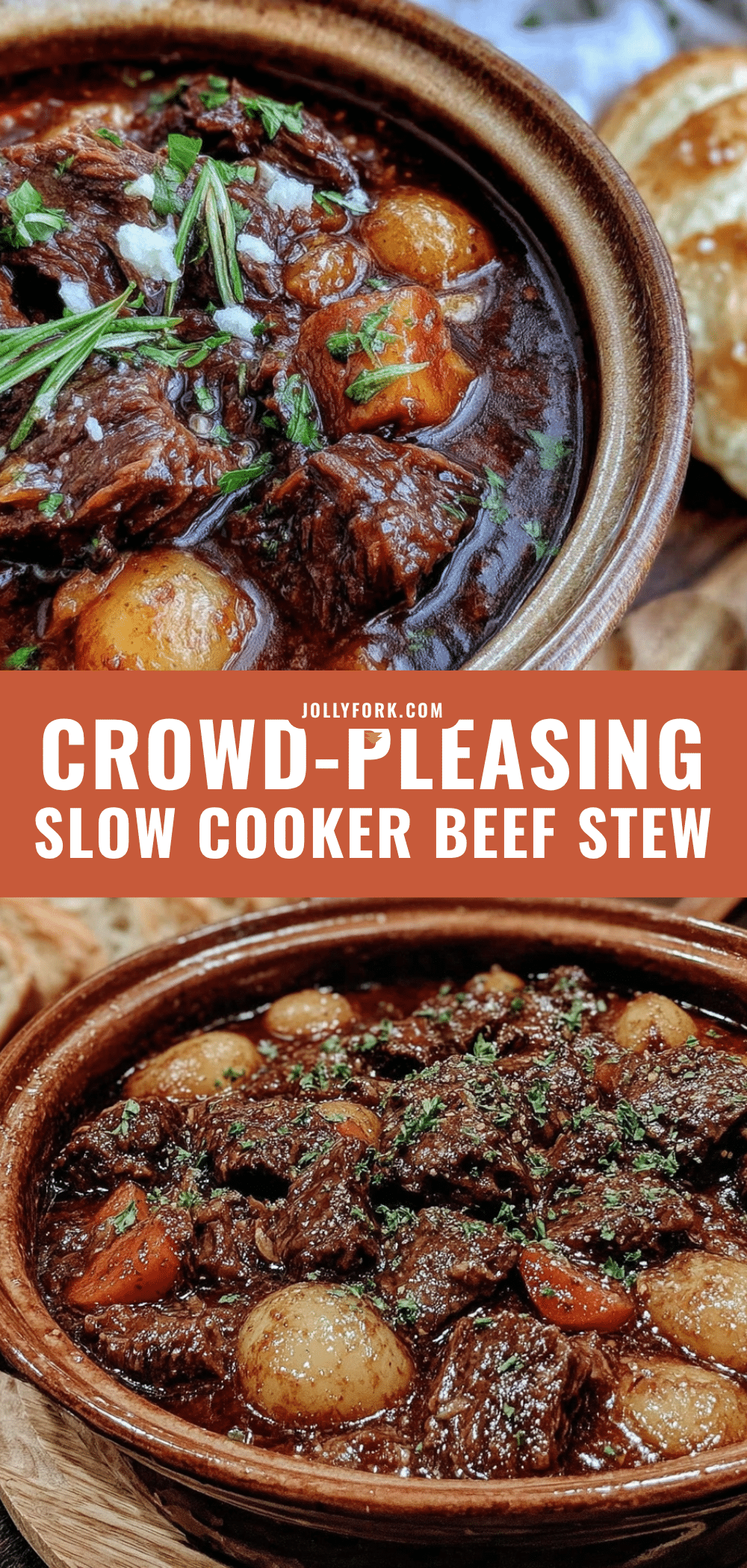
Perfect Easy Slow Cooker Beef Stew with Root Vegetables
This incredibly tender and flavorful slow cooker beef stew is made with chuck roast, root vegetables, and a rich, savory gravy. It’s a completely hands-off recipe that converts even the biggest stew skeptics.
- Prep Time: 30 minutes
- Cook Time: 8 hours
- Total Time: 8 hours 30 minutes
- Yield: 8 servings 1x
- Category: Main Course
- Cuisine: American
Ingredients
- 2.5 lbs (1.1 kg) beef chuck roast, cut into 2-inch chunks
- 4 medium carrots, peeled and cut into 1-inch pieces
- 3 parsnips, peeled and cut into 1-inch pieces
- 1 large yellow onion, diced
- 3 celery stalks, sliced
- 1.5 lbs (680 g) Yukon Gold potatoes, cut into 1.5-inch chunks
- 4 cloves garlic, minced
- 4 cups (960 ml) low-sodium beef broth
- 1 can (14.5 oz / 411 g) diced tomatoes, undrained
- 3 tablespoons tomato paste
- 2 tablespoons Worcestershire sauce
- 2 bay leaves
- 1 teaspoon dried thyme
- 1 teaspoon smoked paprika
- Salt and black pepper, to taste
- 3 tablespoons cornstarch mixed with 3 tablespoons cold water (optional, for thickening)
Instructions
- Prep the vegetables: Wash and peel the carrots, parsnips, and potatoes. Cut them into roughly 1-inch chunks. Dice the onion, slice the celery, and mince the garlic.
- Prep the beef: Pat the chuck roast dry with paper towels. Cut it into 2-inch cubes, trimming off any large pieces of fat. Season generously with salt and pepper. (Optional: let seasoned beef sit at room temperature for 30 minutes.)
- Layer the slow cooker: Place the diced onion, sliced celery, and minced garlic in the bottom of the slow cooker. Add the carrots, parsnips, and potatoes on top. Nestle the beef chunks among the vegetables.
- Make the broth: In a medium bowl or large measuring cup, whisk together the beef broth, diced tomatoes (with their juices), tomato paste, Worcestershire sauce, thyme, and smoked paprika until the tomato paste is fully dissolved. Pour this mixture over the beef and vegetables. Add the bay leaves, tucking them down into the liquid.
- Cook low and slow: Cover the slow cooker and set it to low for 8 hours (or high for 5 hours). Do not lift the lid during the first 6 hours.
- Thicken the gravy: About 30 minutes before serving, remove the bay leaves. In a small bowl, whisk together the cornstarch and cold water until smooth. Stir the slurry into the stew. Let it cook uncovered for the remaining 30 minutes, stirring once or twice.
- Finish and serve: Taste the stew and adjust the seasoning with more salt and pepper if needed. Ladle into deep bowls and garnish with fresh thyme or parsley if desired. Serve with crusty bread.
Notes
For extra flavor, brown the beef in a hot skillet with oil before adding to the slow cooker. Make the stew a day ahead for even deeper flavor. Cut vegetables into large chunks to prevent mushiness. Use low-sodium broth and adjust salt at the end.
Nutrition
- Serving Size: 1 serving (about 1.5
- Calories: 400
- Sugar: 8
- Sodium: 580
- Fat: 14
- Saturated Fat: 5
- Carbohydrates: 32
- Fiber: 5
- Protein: 32
Keywords: slow cooker beef stew, beef stew with root vegetables, easy beef stew, comfort food, gluten-free stew, dairy-free stew