I was elbow-deep in a pile of vintage vinyl records at a dusty flea market in upstate New York when the woman running the booth—a tiny, silver-haired lady named Pearl who looked like she hadn’t smiled since 1982—started talking about soup. Not just any soup. She was describing a roasted butternut squash soup with sage that she made every fall, and honestly, the way she talked about it made me forget I was supposed to be hunting for a rare pressing of Fleetwood Mac’s Rumours. She told me she’d learned it from her grandmother, who’d scribbled the recipe on the back of a gas bill from 1947. I asked if she’d sell me the recipe. She laughed—a rusty, surprised sound—and said, “Honey, I’ll just tell you. It’s too good to keep quiet.”
So there I stood, surrounded by old records and the smell of dust and autumn, trying to memorize every word Pearl said. She wasn’t a chef or a food blogger. She was just someone who’d made this soup so many times she didn’t need a recipe card anymore. She’d roast the squash until the edges caramelized, she said, and she never used cream—just a little coconut milk for silkiness. “Let the squash do the work,” she told me, tapping my arm with a gnarled finger. “It knows what it’s doing.”
I scribbled her instructions on a napkin I found in my jacket pocket, and I’ve been making this cozy roasted butternut squash soup with sage ever since. It’s become my go-to for those chilly evenings when all I want is something warm and soothing. Maybe you’ve had one of those days where nothing feels right, and you just need a bowl of something that tastes like a hug. That’s this soup. It’s simple, honestly, but it feels special—like Pearl’s secret, passed along to anyone who needs it.
Why You’ll Love This Recipe
This isn’t just another butternut squash soup recipe. I’ve tested this version at least a dozen times—tweaking the roasting time, playing with the sage-to-squash ratio, and even trying it with different milks—and I can tell you with confidence that this is the one. It’s the kind of recipe that makes you feel like you’ve got your act together, even if your kitchen is a mess and you’re wearing sweatpants.
- Quick & Easy: From start to finish, this soup comes together in about 45 minutes. Most of that is hands-off roasting time, so you can chop some sage or just stare out the window and think about life.
- Simple Ingredients: You don’t need a specialty grocery store for this one. Butternut squash, sage, onion, garlic, broth, and a splash of coconut milk—that’s it. No weird powders or hard-to-find spices.
- Perfect for Cozy Nights: This soup was made for cold weather, rainy afternoons, or any day that ends with you curled up on the couch with a blanket. It’s comfort in a bowl.
- Crowd-Pleaser: I’ve served this at dinner parties and to picky kids, and everyone goes back for seconds. It’s smooth, creamy, and just savory enough without being overwhelming.
- Unbelievably Delicious: The secret is roasting the squash until it’s deeply caramelized—that’s where the magic happens. The sage adds this earthy, almost floral note that makes the whole thing taste like fall.
What makes this recipe different from the rest? It’s the technique of roasting the squash with the sage leaves right in the pan, so the herb infuses the squash while it cooks. You get this layered flavor that you just can’t get from adding dried sage at the end. It’s comfort food reimagined—healthier than the cream-heavy versions, faster than most, but with the same soul-soothing satisfaction. Perfect for impressing guests without stress, or turning a simple Tuesday night into something memorable.
What Ingredients You Will Need
This recipe uses simple, wholesome ingredients to deliver bold flavor and satisfying texture without the fuss. Most of these are pantry staples or easy to find at any grocery store, especially during fall and winter.
- Butternut Squash (1 large, about 3 pounds / 1.4 kg) – Look for one that feels heavy for its size and has a firm, unblemished skin. I prefer organic when I can find it, but conventional works just fine. Peeled, seeded, and cut into 1-inch cubes.
- Fresh Sage Leaves (15-20 leaves) – Don’t even think about using dried sage here. Fresh sage has a soft, velvety texture and a milder, more complex flavor. You’ll use some for roasting and some for garnish.
- Yellow Onion (1 medium, diced) – Adds a sweet, savory base. You could swap in a leek for a milder flavor, but onion works beautifully.
- Garlic Cloves (4 cloves, smashed) – I like to leave them whole-ish so they roast gently and get sweet. No need to mince them finely.
- Olive Oil (3 tablespoons / 45 ml) – Use a good quality extra virgin for roasting. It adds richness and helps the squash caramelize.
- Vegetable Broth (4 cups / 960 ml) – I recommend Swanson or Imagine Foods for a clean flavor. Low-sodium is best so you can control the salt.
- Canned Coconut Milk (1/2 cup / 120 ml) – Full-fat gives the creamiest texture, but light works too if you’re watching calories. Shake the can well before opening.
- Salt (1 teaspoon, plus more to taste) – I use fine sea salt. Kosher salt works too, but you might need a bit more.
- Black Pepper (1/2 teaspoon, freshly ground) – Freshly ground makes a difference here. Don’t use the pre-ground stuff if you can help it.
- Optional Toppings: Toasted pumpkin seeds, a drizzle of brown butter, crispy fried sage leaves, or a swirl of plain yogurt. Each adds a different texture and flavor boost.
Substitution Guidance: If you’re out of butternut squash, you can use a sugar pumpkin or even sweet potatoes—the flavor will be slightly different but still delicious. For a vegan version, this recipe is already vegan as written. If you need a nut-free option, skip the pumpkin seeds and use sunflower seeds instead. For a lower-carb version, you can swap half the squash with cauliflower florets—roast them the same way.
Equipment Needed
You don’t need a fancy kitchen to make this soup, but a few key tools will make your life easier. Here’s what I use:
- Baking Sheet (half-sheet pan, 18×13 inches) – A rimmed baking sheet is essential for roasting the squash without making a mess. I’ve had good luck with Nordic Ware—they’re sturdy and don’t warp in the oven.
- Sharp Chef’s Knife – Butternut squash is tough to cut, so a sharp knife is non-negotiable. I use a Victorinox Fibrox—it’s affordable and stays sharp forever.
- Vegetable Peeler – A good peeler makes quick work of the squash skin. I prefer a Y-shaped peeler for better control.
- Large Soup Pot or Dutch Oven – You’ll need something heavy-bottomed for sautéing the onions and simmering the soup. A Le Creuset is lovely, but any 5-6 quart pot works.
- Immersion Blender or Regular Blender – An immersion blender lets you blend the soup right in the pot, which means less cleanup. If you’re using a regular blender, blend in batches and be careful with the hot liquid—never fill it more than halfway.
- Measuring Cups and Spoons – For accuracy. I use stainless steel ones that won’t react with acidic ingredients.
If you don’t have an immersion blender, don’t worry. A regular blender works just fine—just let the soup cool for a few minutes before blending, and hold the lid down with a kitchen towel to prevent splatters.
Preparation Method

Let me walk you through this step by step. I’ve made this soup so many times that I’ve got the rhythm down, and I’ll share all the little tricks I’ve learned along the way.
- Preheat your oven to 400°F (200°C). While it’s heating up, line a large baking sheet with parchment paper or a silicone mat. This makes cleanup so much easier—trust me on this one.
- Prep the butternut squash. Using a sharp chef’s knife, cut off both ends of the squash so it sits flat on your cutting board. Peel it with a vegetable peeler—start from the top and work your way down. Then cut it in half lengthwise and scoop out the seeds with a spoon. Cut the flesh into 1-inch cubes. Don’t worry about making them perfect; just try to keep them roughly the same size so they cook evenly.
- Toss the squash with oil and seasonings. In a large bowl, combine the cubed squash, 2 tablespoons of olive oil, 10 fresh sage leaves, 1 teaspoon of salt, and 1/2 teaspoon of black pepper. Toss everything together with your hands until the squash is evenly coated. Spread it out in a single layer on the prepared baking sheet. Don’t overcrowd the pan—if the pieces are touching too much, they’ll steam instead of roast.
- Roast the squash for 25-30 minutes. Halfway through, use a spatula to flip the pieces so they brown on all sides. You’re looking for deep golden-brown edges and a fork that slides in easily. The sage leaves will get crispy and dark—that’s a good thing. They’ll add incredible flavor to the soup.
- While the squash roasts, start the base. In your large soup pot, heat the remaining 1 tablespoon of olive oil over medium heat. Add the diced onion and cook for 5-7 minutes, stirring occasionally, until it’s soft and translucent. Add the smashed garlic cloves and cook for another minute until fragrant. Don’t let the garlic burn—it can turn bitter.
- Add the roasted squash and sage. Once the squash is done, transfer it to the pot with the onions and garlic. Add the crispy roasted sage leaves too—they’ll break apart as you stir, and that’s perfect.
- Pour in the broth. Add the 4 cups of vegetable broth to the pot. Bring everything to a simmer over medium-high heat, then reduce the heat to low and let it cook for 10 minutes. This allows all the flavors to meld together.
- Blend until smooth. Turn off the heat. If you’re using an immersion blender, carefully blend the soup right in the pot until it’s completely smooth. If you’re using a regular blender, let the soup cool for 5 minutes, then blend in batches—fill the blender no more than halfway, hold the lid down with a towel, and start on low speed before increasing to high.
- Stir in the coconut milk. Once the soup is blended, return it to the pot (if you used a regular blender) and stir in the coconut milk. Taste and adjust the seasoning—you might want a little more salt or a pinch of red pepper flakes for heat.
- Serve immediately. Ladle the soup into bowls and top with your favorite garnishes. I love a sprinkle of toasted pumpkin seeds and a few crispy fried sage leaves. Drizzle a little extra coconut milk on top for a pretty swirl.
Pro tip: If the soup seems too thick after blending, add a splash more broth or water until it reaches your desired consistency. If it’s too thin, let it simmer uncovered for a few minutes to reduce.
Cooking Tips & Techniques
I’ve made every mistake in the book with this soup, so you don’t have to. Here are the lessons I learned the hard way:
- Don’t skip the roasting. I know it’s tempting to just boil the squash to save time, but roasting is what gives this soup its deep, nutty flavor. The caramelization is non-negotiable. Trust me, I tried the shortcut once, and the soup was bland and watery. Never again.
- Use fresh sage, not dried. Dried sage has a much stronger, almost medicinal flavor that can overpower the soup. Fresh sage is milder and more aromatic. If you absolutely have to use dried, use half the amount and add it during the sautéing step.
- Blend carefully. Hot soup in a blender can be dangerous. The steam builds up pressure and can blow the lid off. Always let the soup cool for a few minutes, and never fill the blender more than halfway. Hold the lid down with a folded kitchen towel.
- Season in layers. Add salt at the beginning when you roast the squash, and again at the end after blending. This builds flavor gradually rather than dumping it all at once.
- Make it ahead. This soup actually tastes better the next day. The flavors have time to meld and deepen. I often make it on a Sunday and enjoy it for lunch all week.
- Toast your seeds. If you’re using pumpkin seeds as a topping, toast them in a dry skillet over medium heat for 2-3 minutes until they start to pop. It brings out their nutty flavor and adds a lovely crunch.
Variations & Adaptations
One of the best things about this soup is how easy it is to adapt. Here are a few variations I’ve tried and loved:
- Spicy Roasted Butternut Squash Soup: Add 1/2 teaspoon of red pepper flakes or a chopped fresh chili to the roasting pan along with the squash. The heat balances beautifully with the sweetness of the squash.
- Curried Butternut Squash Soup: Stir in 1 tablespoon of curry powder when you sauté the onions. Add a teaspoon of grated fresh ginger too. Finish with a squeeze of lime juice for brightness.
- Apple-Butternut Squash Soup: Add one peeled and chopped apple (Granny Smith or Honeycrisp work well) to the roasting pan with the squash. The apple adds a subtle sweetness and a touch of acidity.
- Vegan Creamy Version: This recipe is already vegan, but if you want it extra creamy, add a peeled and chopped potato to the roasting pan. It blends into the soup and adds body without any dairy.
- Gluten-Free Note: This soup is naturally gluten-free, so no adjustments needed. Just make sure your broth is certified gluten-free if you’re sensitive.
I once tried a version with roasted red bell peppers thrown in, and it was surprisingly good—gave the soup a slightly smoky, sweet flavor. Don’t be afraid to experiment. The base recipe is forgiving.
Serving & Storage Suggestions
This soup is at its best served hot, straight from the pot. Ladle it into wide, shallow bowls so you have room for toppings. A drizzle of coconut milk, a sprinkle of toasted pumpkin seeds, and a few crispy sage leaves make it look like something from a fancy restaurant.
What to serve with it: A crusty loaf of sourdough bread is my go-to—perfect for dipping. A simple green salad with a tangy vinaigrette balances the richness of the soup. If you’re feeling indulgent, serve it alongside a grilled cheese sandwich for the ultimate comfort meal.
Storage: Let the soup cool completely, then transfer it to an airtight container. It will keep in the refrigerator for up to 5 days. The flavors actually get better after a day or two.
Freezing: This soup freezes beautifully. Pour it into freezer-safe containers or zip-top bags, leaving an inch of headroom for expansion. It will keep for up to 3 months. Thaw overnight in the refrigerator before reheating.
Reheating: Reheat the soup gently on the stovetop over medium-low heat, stirring occasionally. If it’s too thick after freezing, add a splash of broth or water. You can also reheat individual portions in the microwave—just cover the bowl and heat in 30-second intervals, stirring between each.
Nutritional Information & Benefits
Here’s the approximate nutritional breakdown for one serving (about 1.5 cups / 360 ml), based on 6 servings per recipe:
| Nutrient | Amount |
|---|---|
| Calories | 220 |
| Total Fat | 12g |
| Saturated Fat | 4g |
| Carbohydrates | 28g |
| Fiber | 6g |
| Sugar | 8g |
| Protein | 4g |
| Sodium | 580mg |
| Vitamin A | 350% DV |
| Vitamin C | 45% DV |
| Potassium | 680mg |
Butternut squash is packed with vitamin A (from beta-carotene), which supports eye health and immune function. It’s also a good source of fiber, which helps with digestion and keeps you feeling full. The sage in this recipe isn’t just for flavor—it’s rich in antioxidants and has anti-inflammatory properties. Coconut milk provides healthy fats that help your body absorb the fat-soluble vitamins in the squash. This soup is naturally gluten-free, dairy-free, and vegan, making it a great option for a wide range of dietary needs.
Conclusion
This cozy roasted butternut squash soup with sage is more than just a recipe—it’s a little piece of comfort that I’m so glad Pearl shared with me that day at the flea market. It’s simple enough for a weeknight, but special enough to serve to guests. The deep, caramelized flavor of the roasted squash, the earthy whisper of sage, and the silky finish of coconut milk come together in a way that feels like a warm blanket on a cold day.
I hope you’ll give it a try and make it your own. Maybe you’ll add a little more spice, or top it with something unexpected. That’s the beauty of a good recipe—it’s just a starting point. I’d love to hear how it turns out for you. Drop a comment below and let me know what variations you tried, or tag me in your photos on social media. Happy cooking, and may your bowl always be warm.
Frequently Asked Questions
Can I use frozen butternut squash instead of fresh?
Yes, you can use frozen butternut squash, but the texture won’t be quite the same. Frozen squash tends to release more water as it roasts, so it won’t caramelize as deeply. If you’re in a pinch, thaw the frozen squash first and pat it dry with paper towels before roasting. You might need to roast it a little longer to get some browning.
How can I make this soup thicker?
If you prefer a thicker soup, add a peeled and chopped potato to the roasting pan with the squash. The potato will break down during blending and add body without changing the flavor. Alternatively, you can let the soup simmer uncovered for an extra 10-15 minutes after blending to reduce it.
Can I use a different type of milk instead of coconut milk?
Absolutely. You can use heavy cream, half-and-half, or any plant-based milk like oat milk or almond milk. Keep in mind that lighter milks will result in a thinner soup. If you’re using a plant-based milk, choose an unsweetened, unflavored variety to avoid altering the taste.
How do I make crispy sage leaves for garnish?
Heat a small skillet with about 1/4 inch of olive oil over medium heat. Once the oil is shimmering, add a few sage leaves at a time—they should sizzle immediately. Fry for 10-15 seconds, then flip and fry for another 5-10 seconds until they’re crispy but still green. Transfer to a paper towel-lined plate and sprinkle with a tiny pinch of salt. They’ll stay crispy for a few hours.
Can I make this soup in an Instant Pot or slow cooker?
Yes! For the Instant Pot, sauté the onions and garlic using the sauté function, then add the roasted squash, broth, and sage. Pressure cook on high for 5 minutes, then do a quick release. Blend and stir in the coconut milk. For a slow cooker, combine all ingredients (except the coconut milk) and cook on low for 6-8 hours or high for 3-4 hours. Blend and stir in the coconut milk before serving. Note that you’ll still need to roast the squash first for the best flavor.
Pin This Recipe!
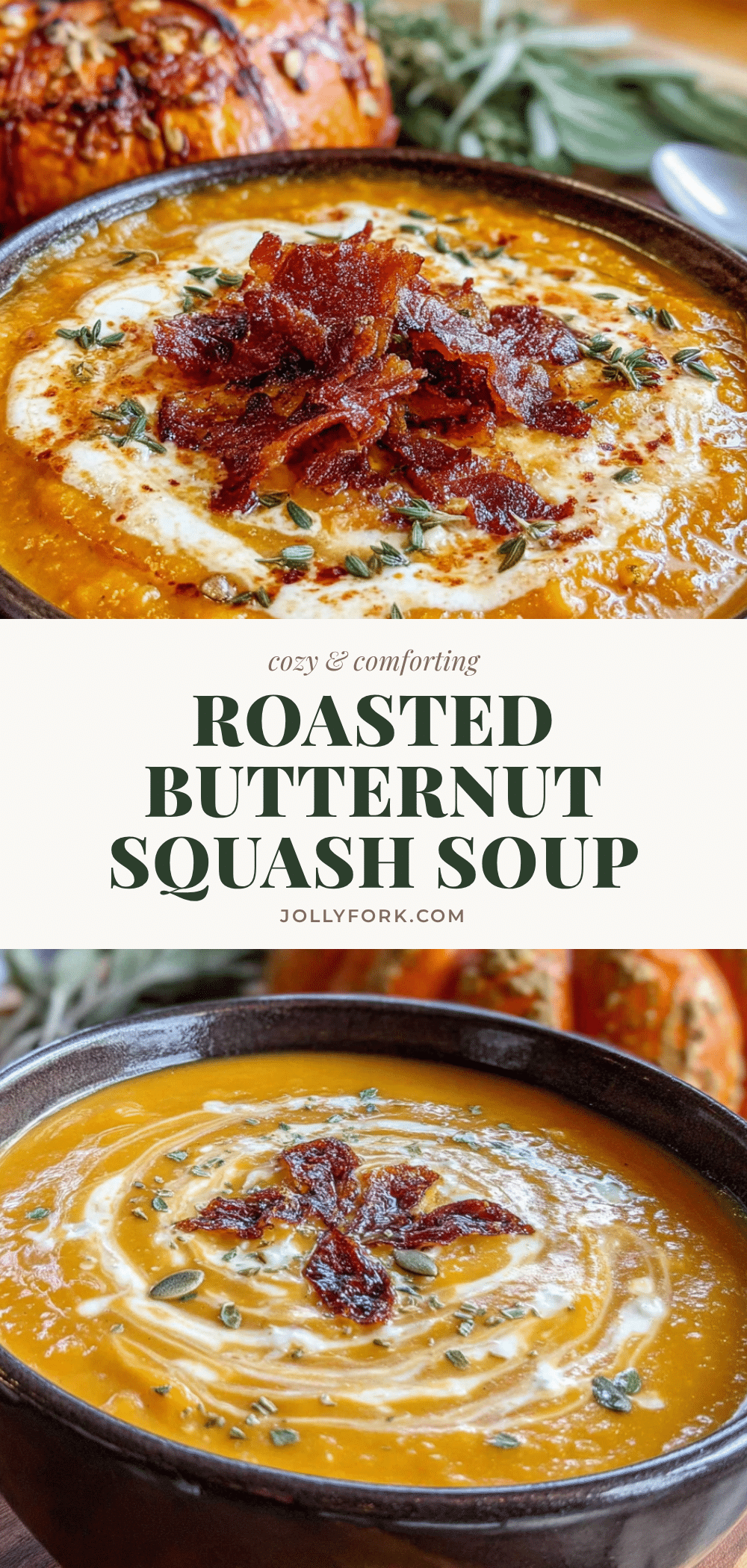
Cozy Roasted Butternut Squash Soup Recipe

This creamy, dairy-free roasted butternut squash soup with sage is the ultimate comfort food for chilly evenings. Roasting the squash with fresh sage leaves creates a deep, caramelized flavor that makes this simple soup taste special.
- Prep Time: 15 minutes
- Cook Time: 30 minutes
- Total Time: 45 minutes
- Yield: 6 servings 1x
- Category: Soup
- Cuisine: American
Ingredients
- 1 large butternut squash (about 3 pounds / 1.4 kg), peeled, seeded, and cut into 1-inch cubes
- 15–20 fresh sage leaves
- 1 medium yellow onion, diced
- 4 garlic cloves, smashed
- 3 tablespoons olive oil, divided
- 4 cups vegetable broth (low-sodium recommended)
- 1/2 cup canned coconut milk (full-fat for creamiest texture)
- 1 teaspoon fine sea salt, plus more to taste
- 1/2 teaspoon freshly ground black pepper
- Optional toppings: toasted pumpkin seeds, crispy fried sage leaves, drizzle of brown butter, swirl of plain yogurt
Instructions
- Preheat your oven to 400°F (200°C). Line a large baking sheet with parchment paper or a silicone mat.
- Prep the butternut squash: Cut off both ends, peel with a vegetable peeler, cut in half lengthwise, scoop out seeds, and cut into 1-inch cubes.
- In a large bowl, toss the cubed squash with 2 tablespoons olive oil, 10 fresh sage leaves, 1 teaspoon salt, and 1/2 teaspoon black pepper. Spread in a single layer on the prepared baking sheet.
- Roast for 25-30 minutes, flipping halfway through, until deep golden-brown and fork-tender.
- While squash roasts, heat remaining 1 tablespoon olive oil in a large soup pot over medium heat. Add diced onion and cook 5-7 minutes until soft and translucent. Add smashed garlic cloves and cook 1 minute until fragrant.
- Add the roasted squash and crispy sage leaves to the pot with the onions and garlic.
- Pour in 4 cups vegetable broth. Bring to a simmer over medium-high heat, then reduce heat to low and cook for 10 minutes.
- Turn off heat. Using an immersion blender, blend the soup until smooth. (If using a regular blender, let cool 5 minutes, then blend in batches, filling no more than halfway and holding lid down with a towel.)
- Stir in the coconut milk. Taste and adjust seasoning with additional salt or a pinch of red pepper flakes if desired.
- Serve immediately, topped with your favorite garnishes.
Notes
For best flavor, don’t skip roasting the squash—it creates deep caramelization. Use fresh sage, not dried. If soup is too thick after blending, add a splash more broth or water. This soup tastes even better the next day. To freeze, cool completely and store in airtight containers for up to 3 months.
Nutrition
- Serving Size: 1.5 cups (360 ml)
- Calories: 220
- Sugar: 8
- Sodium: 580
- Fat: 12
- Saturated Fat: 4
- Carbohydrates: 28
- Fiber: 6
- Protein: 4
Keywords: butternut squash soup, roasted butternut squash soup, vegan soup, dairy-free soup, fall soup, comfort food, sage, coconut milk