I had a long-standing position on gingerbread cookies. For years, I claimed to hate them. Hard little rocks that snap when you bite them, with a spice blend that tastes more like potpourri than something you’d actually want to eat. My grandmother’s recipe sat in a worn index card box, untouched, for a solid decade. Then last December, I made a batch of these soft gingerbread cookies with molasses glaze purely because I had a half-empty jar of molasses taking up space in my pantry. I found my neighbor, Mrs. Patterson—the one who claims she “doesn’t do sweets”—standing at my kitchen counter at 9 PM, eating her third cookie with the glaze dripping down her chin. She caught me watching and just shrugged. “These are different,” she said, reaching for another one. I had to agree. These were nothing like the gingerbread I remembered.
For years, I thought gingerbread cookies were doomed to be dry, crunchy, and frankly, a little boring. I’d tried so many versions—from bakery displays that looked beautiful but crumbled into dust, to homemade batches that spread into sad, flat discs. Honestly, I’d given up. Then I started messing around with the butter-to-molasses ratio, playing with the baking time, and adding a few tricks I’d picked up from making soft sugar cookies. Let me tell you, the first time I pulled a tray of these out of the oven, I knew something had shifted. They came out pillowy, fragrant, and exactly the texture I’d been chasing. The edges were slightly firm, but the centers stayed tender and almost cake-like. I stood there in my kitchen, eating one straight off the baking sheet, and I felt a little ridiculous for being this excited about a gingerbread cookie.
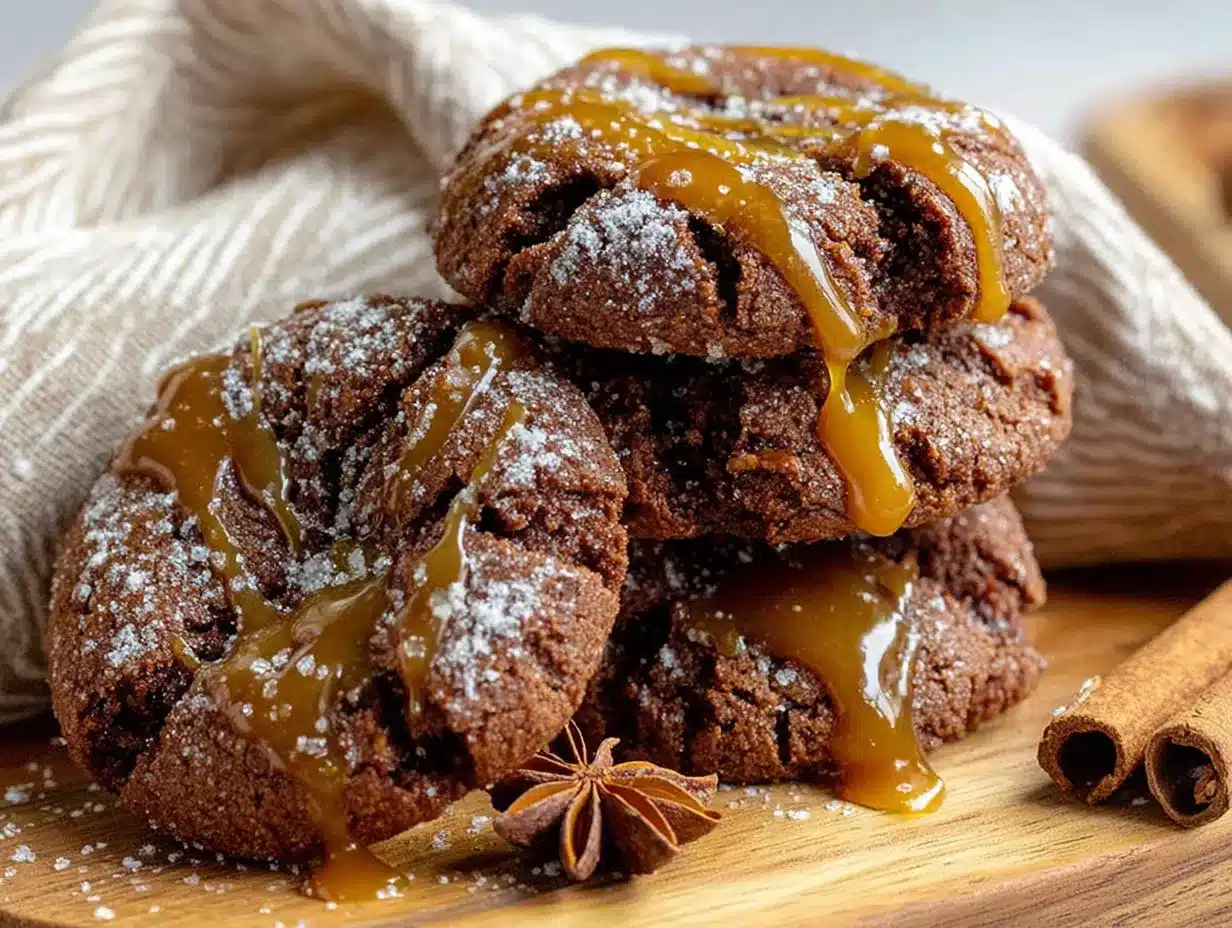
What makes these cookies work is the molasses glaze. I know, I know—it sounds like an extra step you don’t have time for. But trust me on this one. The glaze seeps into the cracks and crevices of the cookie, adding a layer of sweetness that balances the warm, spicy notes of the ginger and cinnamon. It’s not a thick, frosting-like coating. It’s thin, shiny, and it sets into a delicate shell that cracks when you bite into it. Maybe you’ve been there—baking cookies for a holiday party or a weeknight treat, only to be disappointed by something that looked promising but fell flat. These cookies won’t do that to you. They’re forgiving, they’re fast, and they taste like the kind of baking that takes all day, even though it doesn’t. That’s why I keep making them, even when I’m rushing through a Tuesday evening and just need something warm and sweet to end the day.
Why You’ll Love This Recipe
These soft gingerbread cookies with molasses glaze are the kind of recipe that makes you look like a hero with almost zero effort. I’ve tested this batch more times than I can count, tweaking the flour amount and the baking temperature until I got it just right. Here’s why I think you’ll fall for them too:
- Quick & Easy : From start to finish, you’re looking at about 35 minutes. The dough comes together in one bowl, and there’s no chilling time required. That’s right—no waiting around for the dough to firm up in the fridge. Just mix, scoop, bake, and glaze.
- Simple Ingredients : You probably have most of these in your pantry right now. Molasses, butter, sugar, flour, eggs, and a handful of spices. No fancy extracts or hard-to-find specialty items.
- Perfect for Weeknights : When you’re tired after a long day and the kids (or your own inner child) are begging for something sweet, this recipe delivers. It’s fast enough for a Tuesday night but special enough for a holiday gathering.
- Crowd-Pleaser : I’ve brought these to potlucks, office parties, and family dinners. Every single time, people ask for the recipe. Kids love the soft texture, and adults appreciate that they’re not cloyingly sweet.
- Unbelievably Delicious : The combination of warm ginger, cinnamon, and cloves with that glossy molasses glaze is pure comfort. The texture is soft and tender, almost like a muffin top in cookie form. It’s next-level comfort food.
What makes this recipe different from the rest? It’s the technique. Most gingerbread cookie recipes call for creaming the butter and sugar together, which incorporates air and makes the cookies spread. I use a different method—melting the butter and mixing it directly with the molasses and sugar. This creates a denser, chewier dough that holds its shape better and stays soft for days. The result is a cookie that’s sturdy enough to hold up to glazing but tender enough to melt in your mouth.
This recipe isn’t just good—it’s the kind that makes you close your eyes after the first bite. It’s comfort food reimagined: faster, softer, and with the same soul-soothing satisfaction you expect from gingerbread. Perfect for impressing guests without stress, or turning a simple weeknight into something memorable.
What Ingredients You Will Need
This recipe uses simple, wholesome ingredients to deliver bold flavor and satisfying texture without the fuss. Most of these are pantry staples, which makes this a great last-minute baking project. Here’s what you’ll need:
For the Cookies
- 2 1/4 cups (280g) all-purpose flour – Spoon and level it for accuracy. Too much flour will make the cookies dense.
- 1 teaspoon baking soda – This helps the cookies rise and stay soft.
- 1 1/2 teaspoons ground ginger – Freshly opened jars are best for maximum flavor. (I prefer the brand Simply Organic for its strong, aromatic punch.)
- 1 teaspoon ground cinnamon – Adds warmth without overwhelming the ginger.
- 1/2 teaspoon ground cloves – A little goes a long way. Too much can make the cookies taste medicinal.
- 1/2 teaspoon salt – Balances the sweetness and enhances the spices.
- 1/2 cup (113g) unsalted butter – Melted and slightly cooled. Don’t use margarine; the texture won’t be the same.
- 1/2 cup (100g) packed dark brown sugar – Light brown sugar works too, but dark adds more molasses depth.
- 1/3 cup (80ml) molasses – Use unsulphured molasses for the best flavor. Blackstrap molasses is too bitter and intense for this recipe.
- 1 large egg – Room temperature, so it incorporates smoothly into the melted butter.
- 1 teaspoon vanilla extract – Pure vanilla extract, not imitation, for a cleaner taste.
For the Molasses Glaze
- 1 cup (120g) powdered sugar – Sifted to remove lumps.
- 2 tablespoons (30ml) molasses – The same unsulphured kind you used for the cookies.
- 2–3 tablespoons (30–45ml) milk – Whole milk gives a creamier glaze, but any milk works. Add it slowly until you reach the right consistency.
- 1/4 teaspoon vanilla extract – Optional, but it rounds out the flavor nicely.
Substitution Guidance: If you’re out of dark brown sugar, use light brown sugar plus an extra tablespoon of molasses. For a dairy-free version, swap the butter with a high-quality vegan butter (I like Miyoko’s) and use oat milk in the glaze. If you’re gluten-sensitive, a 1:1 gluten-free baking flour blend works well—just add an extra tablespoon of milk to the dough if it seems dry.
Equipment Needed
You don’t need a fancy kitchen to make these cookies. Here’s what I use every time:
- Large mixing bowl – Any bowl will do, but a wide one makes mixing easier.
- Whisk – For combining the dry ingredients.
- Wooden spoon or rubber spatula – For mixing the wet and dry ingredients together.
- Measuring cups and spoons – Accuracy matters, especially with the spices and molasses.
- Cookie scoop (1.5-tablespoon size) – This gives you evenly sized cookies that bake uniformly. If you don’t have one, use two spoons to portion the dough.
- Baking sheets – Two standard half-sheet pans work perfectly. Line them with parchment paper for easy cleanup.
- Cooling rack – Essential for letting the cookies cool before glazing. A wire rack allows air to circulate so the bottoms don’t get soggy.
- Small saucepan or microwave-safe bowl – For melting the butter.
- Small whisk or fork – For making the glaze.
Budget-Friendly Tip: If you don’t have a cookie scoop, use a tablespoon measure and roll the dough into balls with your hands. It takes a little longer, but the results are just as good. And if you don’t have a cooling rack, let the cookies cool on the baking sheet for 5 minutes, then transfer them to a plate lined with paper towels.
Preparation Method
Let’s get baking. This method is straightforward, but I’ve included some notes to help you avoid the mistakes I made the first few times.
- Preheat your oven to 350°F (175°C). Line two baking sheets with parchment paper. Don’t skip the parchment—it prevents sticking and makes cleanup a breeze.
- In a medium bowl, whisk together the flour, baking soda, ginger, cinnamon, cloves, and salt. Make sure the baking soda is evenly distributed. I once forgot to whisk it in properly and ended up with a cookie that had a weird metallic taste in one spot.
- In a large microwave-safe bowl, melt the butter in 20-second bursts. Let it cool for 2-3 minutes. You want it warm, not hot. If it’s too hot, it will cook the egg when you add it.
- Stir in the brown sugar and molasses until smooth. The mixture will look a little grainy from the sugar, but that’s fine. Make sure the molasses is fully incorporated—scrape the bottom of the bowl with your spatula.
- Add the egg and vanilla extract, and stir until combined. The mixture should look glossy and smooth. If it looks curdled, your butter was too hot. Don’t panic—just keep stirring; it will come together.
- Add the dry ingredients to the wet ingredients in two additions. Stir gently with a wooden spoon or spatula until just combined. Overmixing will make the cookies tough. You want to see a few streaks of flour remaining when you stop.
- Let the dough rest for 5 minutes. This gives the flour time to absorb the moisture, which makes the dough easier to scoop. The dough will be soft and slightly sticky—that’s exactly what you want.
- Scoop the dough into 1.5-tablespoon portions (about the size of a golf ball) and place them 2 inches apart on the prepared baking sheets. I fit 12 cookies per sheet. If the dough is too sticky to scoop, lightly oil your cookie scoop or wet your hands slightly.
- Bake for 9-11 minutes, rotating the pans halfway through. The cookies are done when the edges are set and the centers look slightly puffed and cracked. They will look underdone in the middle—that’s good. Overbaking is the number one reason gingerbread cookies turn out hard.
- Let the cookies cool on the baking sheet for 5 minutes. This allows them to set without breaking. Then transfer them to a cooling rack to cool completely before glazing.
For the Molasses Glaze:
- In a small bowl, whisk together the powdered sugar, molasses, 2 tablespoons of milk, and vanilla extract. Start with less milk and add more, one teaspoon at a time, until the glaze is thick but pourable. It should fall off the whisk in a smooth ribbon.
- Drizzle the glaze over the cooled cookies using a spoon or a piping bag with the tip snipped off. I like to let it drip naturally over the edges. Work quickly—the glaze sets fast.
- Let the glaze set for at least 15 minutes before serving. If you’re stacking the cookies, wait until the glaze is completely firm, about 30 minutes.
Cooking Tips & Techniques
I’ve made these cookies dozens of times, and I’ve learned a few things the hard way. Here are my best tips for getting perfect results every time:
Don’t overbake. This is the most important tip I can give you. Gingerbread cookies continue to bake on the hot baking sheet after you pull them out of the oven. If you wait until the centers look fully set, they’ll be overbaked and hard. Pull them out when the edges are set and the centers look slightly soft and puffed. They’ll settle into that perfect soft texture as they cool.
Use room-temperature ingredients. I know, I know—you’re busy and you forgot to take the egg out of the fridge. But a cold egg seizes up the melted butter, making the dough lumpy. If you’re in a hurry, place the egg in a bowl of warm water for 5 minutes before using it.
Measure the molasses carefully. Molasses is thick and sticky, and it’s easy to overpour. Lightly spray your measuring cup with nonstick spray before measuring the molasses—it will slide right out. And don’t use blackstrap molasses; it’s too bitter and will overpower the other flavors.
Chill the dough if you have time. While this recipe works fine without chilling, the cookies will be slightly thicker and chewier if you refrigerate the dough for 30 minutes. I do this when I want a more bakery-style cookie. Just scoop the dough onto a parchment-lined plate and pop it in the fridge while the oven preheats.
One of my biggest failures: The first time I made these, I used a dark baking sheet and didn’t rotate the pans. The bottoms burned while the tops were still pale. Now I always use light-colored aluminum baking sheets and rotate them halfway through. It makes a huge difference.
Variations & Adaptations
One of the things I love about this recipe is how adaptable it is. Here are some variations I’ve tried and loved:
Spiced Orange Gingerbread Cookies: Add 1 tablespoon of orange zest to the dough along with the wet ingredients. The citrus brightens the spices beautifully. For the glaze, replace the milk with fresh orange juice and add a pinch of orange zest on top. I made these for a holiday brunch, and they disappeared in minutes.
Vegan Gingerbread Cookies: Replace the butter with melted coconut oil or vegan butter, and use a flax egg (1 tablespoon ground flaxseed mixed with 3 tablespoons water, let sit for 5 minutes). Use oat milk in the glaze. The texture is slightly different—a little more cake-like—but still delicious.
Gluten-Free Version: Substitute the all-purpose flour with a 1:1 gluten-free baking blend that contains xanthan gum. I’ve had good results with King Arthur’s Measure for Measure flour. Add an extra tablespoon of milk to the dough if it seems dry. The cookies won’t spread as much, so flatten them slightly with the back of a spoon before baking.
White Chocolate Drizzle: Instead of the molasses glaze, melt 1/2 cup of white chocolate chips with 1 teaspoon of coconut oil and drizzle it over the cooled cookies. The sweetness of the white chocolate is a lovely contrast to the spicy cookies.
Spice Blend Swap: If you don’t have cloves, use 1/4 teaspoon of nutmeg and 1/4 teaspoon of allspice instead. Or try adding a pinch of cardamom for a more complex flavor profile. I did this on a whim one afternoon and now it’s my go-to winter variation.
Serving & Storage Suggestions
These cookies are best served at room temperature, with the glaze fully set. They’re wonderful on their own, but they also pair beautifully with a cup of hot tea, coffee, or a glass of cold milk. For a festive presentation, arrange them on a platter with fresh cranberries and rosemary sprigs.
Storage: Place the cookies in an airtight container at room temperature. They’ll stay soft for up to 5 days. To keep them extra soft, add a slice of bread to the container—the cookies will absorb the moisture from the bread. Replace the bread slice every couple of days.
Freezing: You can freeze the baked cookies (unglazed) for up to 3 months. Place them in a single layer in a freezer-safe container, separating layers with parchment paper. Thaw at room temperature, then glaze and serve. The glaze doesn’t freeze well, so always add it fresh.
Make-Ahead Tip: The cookie dough can be refrigerated for up to 3 days. Scoop it into balls, place them on a parchment-lined baking sheet, and cover tightly with plastic wrap. Bake directly from the fridge—just add 1-2 minutes to the baking time.
Reheating: If you want that just-baked warmth, pop a cookie in the microwave for 10 seconds. The glaze will soften slightly, but the cookie will taste wonderfully fresh. For a larger batch, warm them in a 300°F oven for 5 minutes.
Nutritional Information & Benefits
Per cookie (based on 24 cookies): approximately 140 calories, 5g fat, 22g carbohydrates, 1g fiber, 12g sugar, 2g protein.
While these are definitely a treat, there are a few redeeming qualities. Molasses is a good source of iron, calcium, and magnesium—surprising for a sweetener, I know. The ginger in this recipe is known for its anti-inflammatory properties and can help with digestion. And the cinnamon adds antioxidants that support overall health.
If you’re watching your sugar intake, you can reduce the glaze amount or skip it entirely. The cookies are still delicious on their own, with a milder sweetness that lets the spices shine. For a lower-calorie option, use a light dusting of powdered sugar instead of the glaze.
These cookies are not suitable for those with celiac disease unless you use the gluten-free variation. They contain dairy and eggs in the standard version. Always check your ingredient labels if you’re cooking for someone with allergies.
Conclusion
These soft gingerbread cookies with molasses glaze have completely changed my mind about what gingerbread can be. They’re soft, they’re forgiving, and they come together in under an hour with ingredients you probably already have. I make them for holiday parties, yes, but I also make them on random Wednesday nights when I need something warm and comforting. They’ve become my go-to recipe for when I want to bake something that feels special without spending hours in the kitchen.
I’d love for you to try them and make them your own. Add extra ginger if you like things spicy. Swap the glaze for a dusting of powdered sugar. Double the batch and freeze half for later. Whatever you do, don’t overbake them—that’s the only real rule here. Let me know how they turn out in the comments below. Did you try a variation? Did your family love them? I genuinely want to hear about it. Happy baking, friend.
Frequently Asked Questions
Can I use blackstrap molasses instead of regular molasses?
I don’t recommend it. Blackstrap molasses is much stronger and more bitter than regular unsulphured molasses. It will overpower the spices and make the cookies taste harsh. Stick with unsulphured molasses for the best flavor.
Why did my cookies turn out hard?
You likely overbaked them. These cookies should look slightly underdone when you pull them out of the oven. The centers should be puffed and soft, not fully set. Remember, they continue to bake on the hot baking sheet for a few minutes after you remove them.
Can I make the dough ahead of time?
Absolutely. The dough can be refrigerated for up to 3 days. Scoop it into balls first so you can bake them straight from the fridge. Add 1-2 minutes to the baking time if baking from cold.
How do I prevent the glaze from being too runny?
Add the milk slowly—start with 2 tablespoons and whisk well. If the glaze is too thin, add more powdered sugar, one tablespoon at a time. It should be thick enough to coat the back of a spoon but still pourable.
Can I freeze these cookies?
Yes, but freeze them unglazed. Place the cooled cookies in a single layer in a freezer-safe container, separating layers with parchment paper. They’ll keep for up to 3 months. Thaw at room temperature, then glaze and serve.
Pin This Recipe!
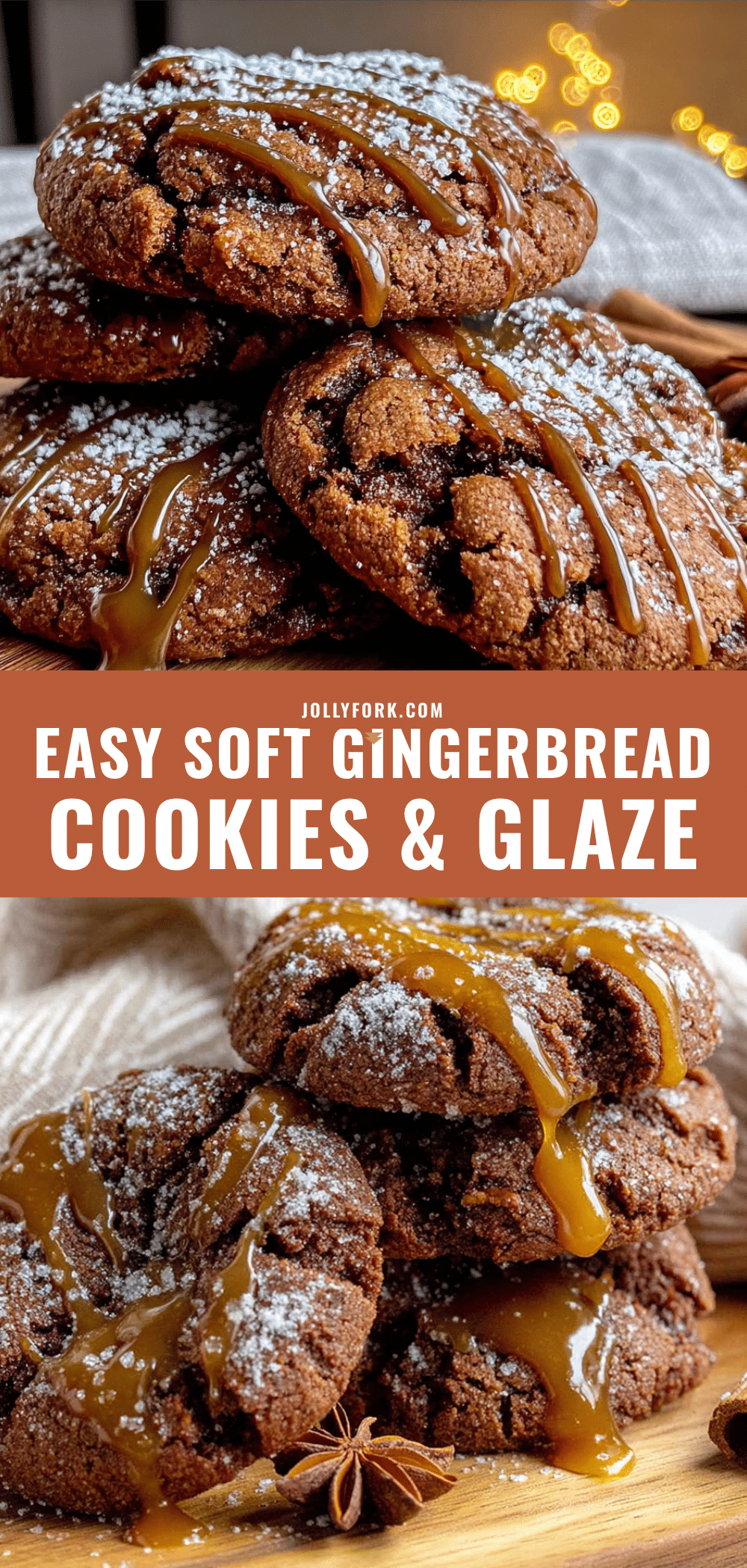
Easy Soft Gingerbread Cookies with Molasses Glaze
These soft gingerbread cookies with molasses glaze are the kind of recipe that makes you look like a hero with almost zero effort. They’re forgiving, fast, and taste like the kind of baking that takes all day, even though it doesn’t.
- Prep Time: 15 minutes
- Cook Time: 10 minutes
- Total Time: 35 minutes
- Yield: 24 servings 1x
- Category: Dessert
- Cuisine: American
Ingredients
- 2 1/4 cups (280g) all-purpose flour
- 1 teaspoon baking soda
- 1 1/2 teaspoons ground ginger
- 1 teaspoon ground cinnamon
- 1/2 teaspoon ground cloves
- 1/2 teaspoon salt
- 1/2 cup (113g) unsalted butter, melted and slightly cooled
- 1/2 cup (100g) packed dark brown sugar
- 1/3 cup (80ml) unsulphured molasses
- 1 large egg, room temperature
- 1 teaspoon vanilla extract
- 1 cup (120g) powdered sugar, sifted
- 2 tablespoons (30ml) unsulphured molasses
- 2–3 tablespoons (30–45ml) milk
- 1/4 teaspoon vanilla extract (optional)
Instructions
- Preheat your oven to 350°F (175°C). Line two baking sheets with parchment paper.
- In a medium bowl, whisk together the flour, baking soda, ginger, cinnamon, cloves, and salt.
- In a large microwave-safe bowl, melt the butter in 20-second bursts. Let it cool for 2-3 minutes.
- Stir in the brown sugar and molasses until smooth.
- Add the egg and vanilla extract, and stir until combined.
- Add the dry ingredients to the wet ingredients in two additions. Stir gently until just combined.
- Let the dough rest for 5 minutes.
- Scoop the dough into 1.5-tablespoon portions (about the size of a golf ball) and place them 2 inches apart on the prepared baking sheets.
- Bake for 9-11 minutes, rotating the pans halfway through. The cookies are done when the edges are set and the centers look slightly puffed and cracked.
- Let the cookies cool on the baking sheet for 5 minutes, then transfer them to a cooling rack to cool completely before glazing.
- For the glaze: In a small bowl, whisk together the powdered sugar, molasses, 2 tablespoons of milk, and vanilla extract. Add more milk, one teaspoon at a time, until the glaze is thick but pourable.
- Drizzle the glaze over the cooled cookies using a spoon or a piping bag with the tip snipped off.
- Let the glaze set for at least 15 minutes before serving.
Notes
Don’t overbake. Pull cookies out when edges are set and centers look slightly soft. Use room-temperature ingredients. Measure molasses carefully by lightly spraying measuring cup with nonstick spray. Chill dough for 30 minutes for thicker, chewier cookies. Use light-colored aluminum baking sheets and rotate halfway through.
Nutrition
- Serving Size: 1 cookie
- Calories: 140
- Sugar: 12
- Sodium: 120
- Fat: 5
- Saturated Fat: 3
- Carbohydrates: 22
- Fiber: 1
- Protein: 2
Keywords: soft gingerbread cookies, molasses glaze, easy gingerbread, holiday cookies, soft cookies, gingerbread recipe