There used to be a little pub tucked away on a side street in Portland, Oregon, called The Rusty Spoke. It wasn’t fancy—scratched wooden tables, a fireplace that smoked if the wind was wrong, and a chalkboard menu that changed daily. They made a slow-cooked beef stew with root vegetables that I still dream about. When they closed in 2019—the building got sold to a chain, of course—I honestly felt a little lost. After twelve tries—some too watery, one that tasted like a salt lick, and a particularly sad version I burned while arguing with my sister on the phone—I finally got it. This is that stew, recreated bite by bite in my own kitchen.
The secret, I learned, wasn’t some fancy wine or a secret spice blend. It was patience and a heavy hand with the onions. The original stew had this deep, almost jammy sweetness that I couldn’t place until my third attempt. I realized the pub must have caramelized the onions before adding the liquid. That one change—taking an extra fifteen minutes—was the key that unlocked the whole memory. Let me tell you, the first time I pulled my slow cooker lid off and that same rich, earthy smell hit me, I almost teared up. Maybe you’ve been there, chasing a flavor from a restaurant that just vanished. It’s a little obsessive, I know, but honestly, it’s so worth it when you finally nail it.
Why You’ll Love This Recipe
This isn’t just another beef stew recipe. This is the one that makes your whole house smell like a warm hug on a rainy Sunday afternoon. I’ve tested this version over a dozen times, adjusting the cook time, the cut of beef, and the ratio of carrots to parsnips until it was absolutely perfect. Here is why this particular stew is going to become your new cold-weather go-to.
- Truly Set It and Forget It : Once everything is in the slow cooker, you can walk away. No stirring, no checking, no stress. It’s the perfect recipe for a busy day when you want a home-cooked meal waiting for you.
- Simple, Humble Ingredients : You don’t need a specialty grocery store for this. Beef chuck, potatoes, carrots, onions—these are the basics. The slow cooker does the magic of turning them into something incredible.
- Perfect for Cozy Season : This stew was made for the first crisp day of fall, a snowy winter evening, or that weird, gray week in March when you need comfort food to get through. It just fits the mood of the season.
- A True Crowd-Pleaser : I’ve served this to picky eaters, to my dad who “doesn’t like vegetables,” and to friends who claim they don’t eat beef. It gets cleaned out every single time.
- Unbelievably Rich Flavor : The long, slow simmer melds the beef and vegetables into a broth that is so deep and savory, you’ll be sopping up every last drop with a crusty piece of bread.
What makes my version different is the step I mentioned—caramelizing the onions first. Most slow cooker recipes just dump everything in raw, which is fine, but it misses that layer of sweetness. Taking that extra bit of time on the front end creates a broth that tastes like it simmered for two days. It is comfort food at its finest—hearty, soul-soothing, and made with a little bit of love.
What Ingredients You Will Need
This recipe relies on a handful of quality ingredients to build deep, layered flavor. Most of these are pantry staples, especially in the cooler months, and they work together to create that classic, hearty stew profile.
- 2 pounds beef chuck, cut into 1.5-inch cubes : Chuck is my go-to for stew. It has enough marbling to stay tender and flavorful after hours of cooking. Don’t use a lean cut like sirloin; it will just get dry and tough.
- 2 tablespoons olive oil : For browning the meat and the vegetables. A good quality extra-virgin is fine, but regular olive oil works perfectly.
- 2 large yellow onions, diced : These are the foundation of the flavor. We are going to cook them low and slow until they are deeply golden.
- 4 cloves garlic, minced : Fresh garlic is non-negotiable here. The jarred stuff just doesn’t have the same punch.
- 4 large carrots, peeled and cut into 1-inch chunks : I prefer the sweetness of regular carrots, but rainbow carrots would be beautiful here too.
- 3 parsnips, peeled and cut into 1-inch chunks : Parsnips add a slightly peppery, almost nutty flavor that regular potatoes don’t. They are the secret to a more interesting stew.
- 1 pound Yukon Gold potatoes, cut into 1-inch chunks : Yukon Golds hold their shape well and get wonderfully creamy. Russets will break down too much and make the stew cloudy.
- 4 cups beef broth : Use a low-sodium broth so you can control the salt level yourself. I really like the Better Than Bouillon paste for the richest flavor.
- 1 cup dry red wine (like Cabernet Sauvignon) : This isn’t just for drinking while you cook (though that’s a bonus!). The wine adds acidity and complexity that balances the richness. If you don’t cook with wine, you can use an extra cup of beef broth.
- 2 tablespoons tomato paste : This adds a concentrated umami flavor and a beautiful deep color to the broth.
- 2 bay leaves : For that subtle, herbal background note.
- 1 teaspoon dried thyme : Thyme and beef are a classic pairing. If you have fresh, use about 1 tablespoon of the leaves.
- Salt and black pepper, to taste : I always season in layers—a little at the beginning, and more at the end.
- 2 tablespoons all-purpose flour (optional) : For thickening the stew at the end if you prefer a thicker gravy. You can also use cornstarch mixed with cold water.
Equipment Needed
You don’t need a lot of fancy equipment for this recipe, which is part of its beauty. Here is what you will need to get that stew on the table.
- Slow Cooker (5 to 6-quart) : This is the star of the show. A standard oval or round slow cooker works perfectly. I’ve used a Crock-Pot brand for years, and it’s never let me down.
- Large, Heavy-Bottomed Pot or Dutch Oven : You need this for browning the meat and cooking the onions on the stovetop before they go into the slow cooker. A Lodge cast-iron Dutch oven is ideal, but any large, sturdy pot will work.
- Sharp Chef’s Knife : A good knife makes cutting the beef and vegetables so much easier and safer. You don’t need a $200 knife—just one that is sharp.
- Cutting Board : Preferably a large wooden or plastic board to give you plenty of room to chop.
- Wooden Spoon or Spatula : For stirring and scraping up the flavorful browned bits from the bottom of the pan.
- Measuring Cups and Spoons : Accuracy matters, especially with the broth and wine.
- Tongs : For turning the beef cubes as they brown without poking them and losing their juices.
- Small Bowl : For mixing the flour and water slurry if you choose to thicken the stew at the end.
If you don’t have a Dutch oven, a large stainless steel skillet will work for the browning steps. Just be sure to scrape all those tasty bits into the slow cooker.
Preparation Method
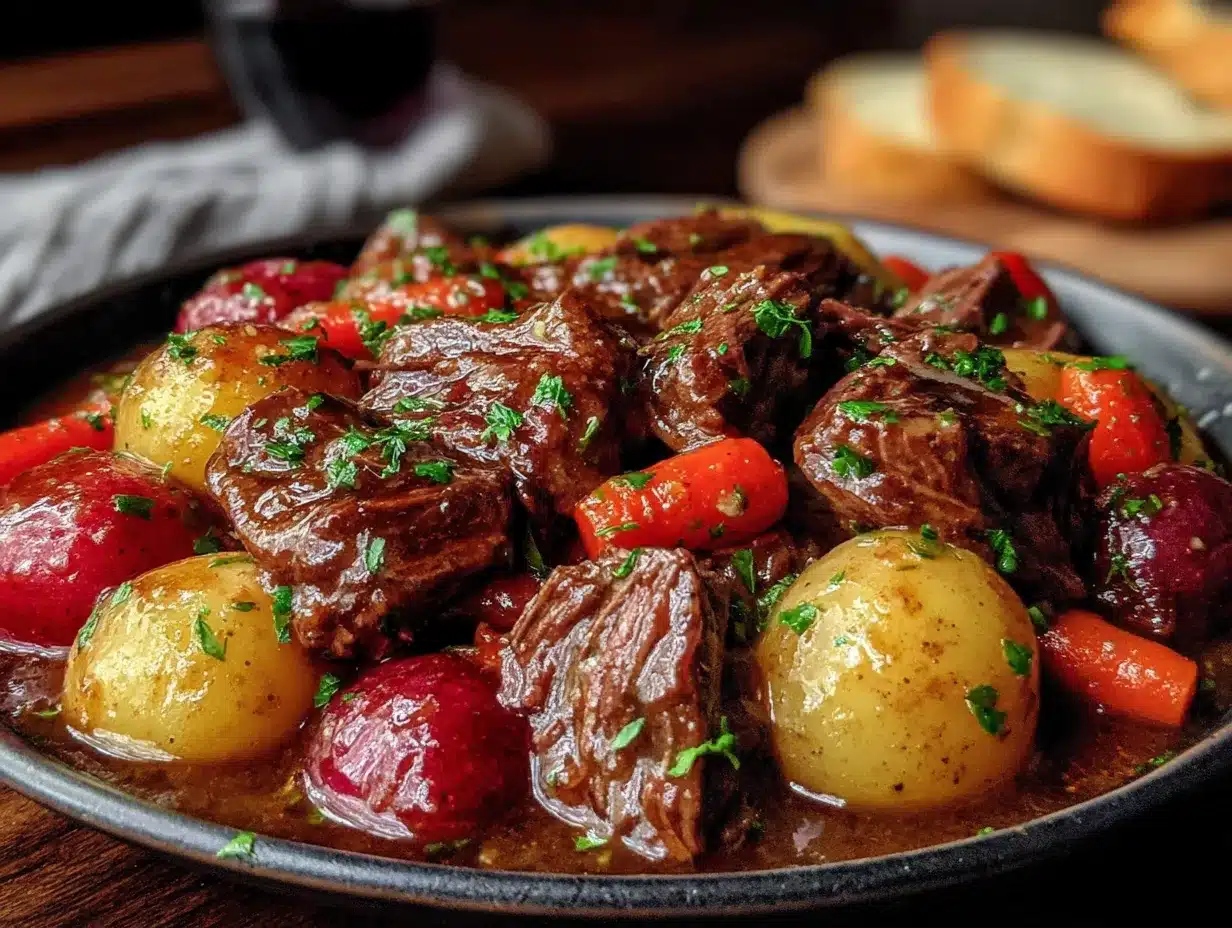
This process has a few key steps, but I promise they are all worth it. The active time is about 30-40 minutes, and then the slow cooker does all the heavy lifting.
- Brown the Beef : Pat the beef cubes dry with paper towels. This is crucial for getting a good sear. Season them generously with salt and pepper. Heat 1 tablespoon of the olive oil in your large pot over medium-high heat. Working in batches to avoid crowding the pan, sear the beef on all sides until deeply browned, about 3-4 minutes per batch. Use your tongs to turn them. Don’t rush this—the browned crust is pure flavor. Transfer the browned beef to your slow cooker.
- Caramelize the Onions : Reduce the heat to medium. Add the remaining 1 tablespoon of olive oil to the same pot. Add the diced onions and a pinch of salt. Cook, stirring occasionally, for 12-15 minutes, until the onions are soft, translucent, and starting to turn a deep golden brown. The salt helps draw out their moisture. If they start to stick, add a splash of the beef broth.
- Bloom the Tomato Paste and Garlic : Add the minced garlic and tomato paste to the pot with the onions. Cook for 1-2 minutes, stirring constantly, until the tomato paste darkens and becomes very fragrant. This step removes the raw, tinny taste from the paste.
- Deglaze the Pan : Pour in the red wine, using your wooden spoon to scrape up all the browned bits (the “fond”) from the bottom of the pot. This is where so much flavor lives! Let the wine simmer for 2-3 minutes, reducing slightly.
- Combine in the Slow Cooker : Pour the onion and wine mixture over the beef in the slow cooker. Add the carrots, parsnips, and potatoes. Pour in the beef broth, and add the bay leaves and dried thyme. Give everything a good stir to combine.
- Slow Cook : Cover the slow cooker and cook on LOW for 7-8 hours or on HIGH for 4-5 hours. The stew is ready when the beef is fork-tender and the vegetables are soft. The low-and-slow method is always better for beef, so aim for LOW if you have the time.
- Thicken (Optional) : About 30 minutes before serving, if you want a thicker stew, make a slurry. In a small bowl, whisk the 2 tablespoons of all-purpose flour with 1/4 cup of cold water until smooth. Stir this mixture into the stew. Turn the slow cooker to HIGH and cook, uncovered, for the last 30 minutes, until the broth has thickened. You can also use 2 tablespoons of cornstarch mixed with 1/4 cup of cold water for a gluten-free option.
- Finish and Serve : Remove the bay leaves. Taste the stew and adjust the seasoning with more salt and pepper. I almost always add a good crack of black pepper at the end. Ladle the stew into bowls and serve it hot.
Cooking Tips & Techniques
I’ve made more than a few mistakes with beef stew over the years, so let me share what I’ve learned so you can skip the trouble.
Don’t skip the sear. I know it’s tempting to just throw the raw beef into the slow cooker and save a step. I’ve done it. The result is a stew that tastes boiled, not braised. That deep, rich flavor comes directly from the browning. It’s a non-negotiable step in my book.
Beware of mushy vegetables. Root vegetables are sturdy, but they can still turn to mush if they cook too long. That’s why I cut them into 1-inch chunks. They are big enough to hold their shape during the long cook time. If you cut them too small, you’ll end up with a stew that tastes great but has no texture.
Patience with the onions. I once tried to rush the caramelization by cranking up the heat. I ended up with scorched, bitter onions. Low and slow is the only way to get that sweet, jammy flavor. It takes about 15 minutes, but it’s 15 minutes of mostly hands-off stirring. Put on a podcast and let it happen.
Taste as you go. Before you add the beef broth, taste the onion and wine mixture. It should be savory and slightly sweet. If it tastes flat, add another pinch of salt. Seasoning in layers is how you build a complex final dish.
Variations & Adaptations
One of the best things about a good stew is how easy it is to adapt to what you have on hand or what you’re craving.
- Make it a Hearty Mushroom Stew : For a vegetarian version, swap the beef for 1.5 pounds of cremini or portobello mushrooms, quartered. Sear them the same way you would the beef. Use a vegetable broth instead of beef broth. The mushrooms will give you that same deep, umami-rich flavor.
- Root Vegetable Swap : Don’t have parsnips? No problem. You can use celery root, turnips, or even sweet potatoes. Just keep the total weight of vegetables about the same. If you use sweet potatoes, add them in the last 2 hours of cooking so they don’t turn to complete mush.
- Herb Variations : I love thyme, but you can also add a sprig of fresh rosemary or a couple of sprigs of fresh sage along with the bay leaves. Just remember to fish them out before serving. The woodsy flavor of rosemary pairs beautifully with the root vegetables.
- Make it Spicy : Add a pinch of red pepper flakes along with the garlic for a little heat. Or, stir in a teaspoon of smoked paprika for a smoky, warm undertone that is perfect for a cold winter night.
I once made a version with a parsnip and celeriac combination when my local store was out of carrots. It was a little earthier, but honestly, it was one of my favorite versions. Don’t be afraid to experiment.
Serving & Storage Suggestions
This stew is a complete meal in a bowl, but the right sides can make it truly special.
I love serving this stew piping hot in wide, shallow bowls. A generous hunk of crusty bread is essential for sopping up the rich, savory broth. A simple side salad with a bright vinaigrette is a nice contrast to the heavy stew. For a truly cozy meal, a side of creamy mashed potatoes is also a fantastic choice—though the potatoes in the stew are already plenty.
Storage: This stew is one of those rare dishes that tastes even better the next day. Let it cool completely, then store it in an airtight container in the refrigerator for up to 4 days. The flavors will meld and deepen overnight.
Freezing: This stew freezes beautifully. Portion it into freezer-safe containers or zip-top bags, leaving a little headroom for expansion. It will keep for up to 3 months. Thaw it overnight in the refrigerator before reheating.
Reheating: Reheat the stew gently on the stovetop over medium-low heat, stirring occasionally. You can also reheat individual portions in the microwave. If the stew has thickened too much in the fridge, add a splash of beef broth or water to loosen it up.
Nutritional Information & Benefits
This hearty stew is packed with good-for-you ingredients. Here is an approximate nutritional breakdown per serving (based on 6 servings).
| Nutrient | Amount per Serving |
|---|---|
| Calories | ~450 |
| Protein | ~35g |
| Fat | ~18g |
| Carbohydrates | ~35g |
| Fiber | ~8g |
The beef provides a fantastic source of protein and iron, which is great for energy and healthy blood. The root vegetables—carrots, parsnips, and potatoes—are loaded with fiber, vitamins (like Vitamin A from the carrots), and antioxidants. The long, slow cooking process also makes the nutrients very bioavailable, meaning your body can easily absorb them. This is a meal that truly nourishes you from the inside out.
This recipe is naturally gluten-free if you skip the flour slurry at the end or use cornstarch instead. It is also dairy-free. Just be mindful of the sodium content in your broth if you are watching your salt intake.
Conclusion
This cozy slow cooker beef stew with root vegetables is more than just a recipe—it’s a warm hug on a cold day, a taste of a memory, and a guaranteed way to make your kitchen the best-smelling room in the house. It’s simple enough for a weeknight but impressive enough for company. I love that I can start it in the morning and have a perfect, soul-satisfying dinner waiting for me after a long day.
I really hope you give this a try. Don’t be afraid to make it your own—swap in your favorite vegetables, add a little more thyme, or serve it over some cheesy grits. The best recipes are the ones you adapt to your own taste. When you make it, I would love to hear about it! Leave a comment below and tell me how it turned out. Did you add a secret ingredient? Did your family love it? Share your story—it makes my day to hear from you.
Now go get that slow cooker out and get cozy. You deserve it.
Frequently Asked Questions
Can I use a different cut of beef for this stew?
Absolutely. While beef chuck is my top recommendation for its marbling and tenderness, you can also use beef brisket or even a well-trimmed bottom round. Just avoid very lean cuts, as they will dry out during the long cooking time.
Do I have to use wine? What can I substitute?
No, you don’t have to use wine. The wine adds acidity and depth, but you can easily substitute it with an extra cup of low-sodium beef broth. For a little extra tang, you can also add a tablespoon of balsamic vinegar or red wine vinegar.
Can I cook this on the stovetop instead of a slow cooker?
Yes, you can! After browning the beef and cooking the onions in a large Dutch oven, add the rest of the ingredients. Bring it to a simmer, then cover and cook over very low heat on the stovetop for about 2 to 2.5 hours, or until the beef is tender. Stir it occasionally to prevent sticking.
Why is my beef stew tough?
Tough beef usually means it hasn’t cooked long enough, or it was cooked at too high a temperature. The connective tissue in chuck needs time to break down into gelatin, which makes the meat tender. Always cook on low for the full 7-8 hours. If it’s still tough after that time, give it another 30-60 minutes.
Can I add frozen vegetables to this stew?
You can, but I recommend using fresh root vegetables for this recipe. Frozen vegetables like peas or green beans are better added in the last 30 minutes of cooking, otherwise they will turn to mush. If you want to add frozen peas, stir them in when you thicken the stew at the end.
Pin This Recipe!
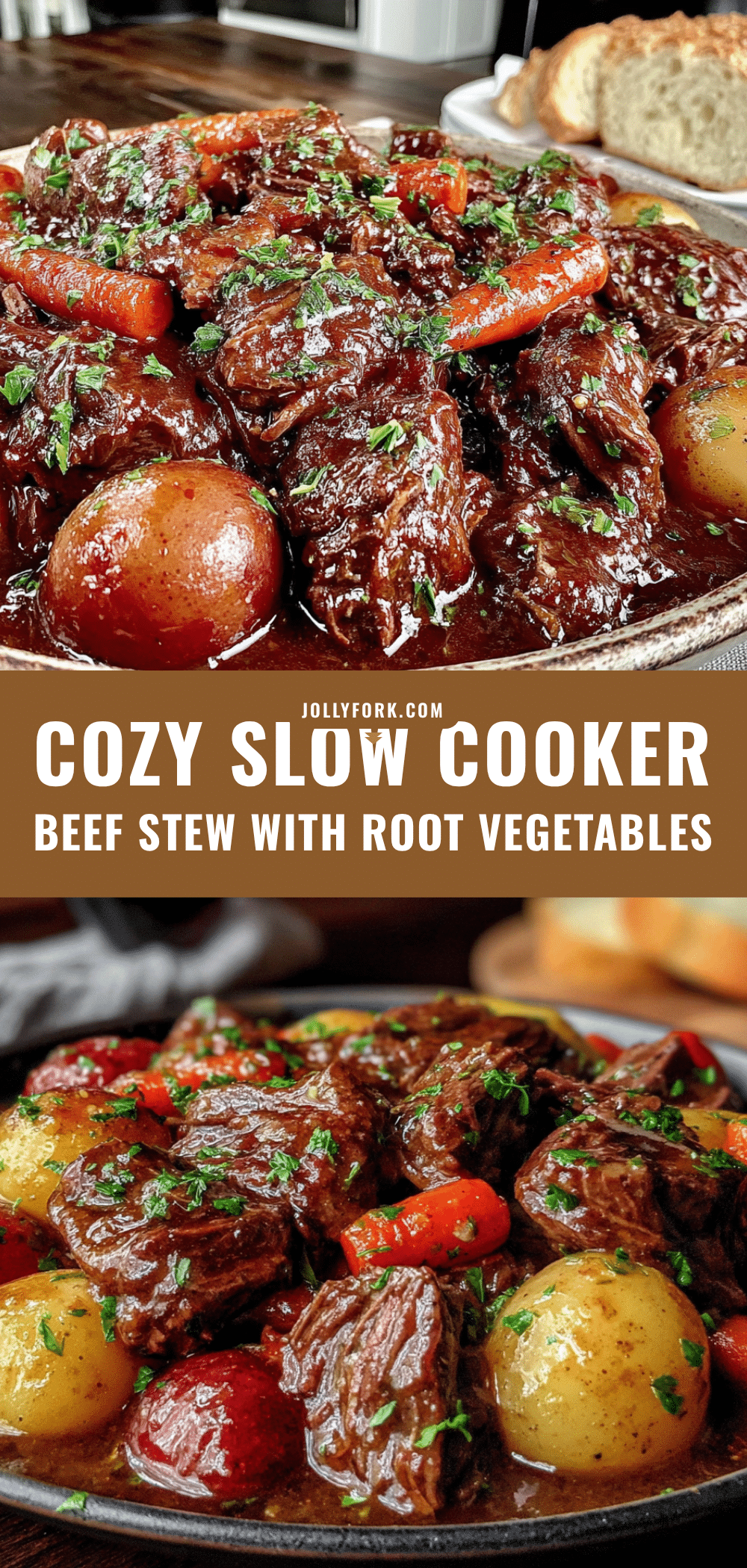
Cozy Slow Cooker Beef Stew with Root Vegetables – Easy Recipe
A hearty, soul-soothing beef stew with root vegetables, slow-cooked to perfection. This recipe recreates a beloved pub stew with caramelized onions for deep, rich flavor.
- Prep Time: 30 minutes
- Cook Time: 7 hours
- Total Time: 7 hours 30 minutes
- Yield: 6 servings 1x
- Category: Main Course
- Cuisine: American
Ingredients
- 2 pounds beef chuck, cut into 1.5-inch cubes
- 2 tablespoons olive oil
- 2 large yellow onions, diced
- 4 cloves garlic, minced
- 4 large carrots, peeled and cut into 1-inch chunks
- 3 parsnips, peeled and cut into 1-inch chunks
- 1 pound Yukon Gold potatoes, cut into 1-inch chunks
- 4 cups beef broth, low-sodium
- 1 cup dry red wine (like Cabernet Sauvignon)
- 2 tablespoons tomato paste
- 2 bay leaves
- 1 teaspoon dried thyme
- Salt and black pepper, to taste
- 2 tablespoons all-purpose flour (optional, for thickening)
Instructions
- Pat the beef cubes dry with paper towels. Season generously with salt and pepper. Heat 1 tablespoon olive oil in a large pot over medium-high heat. Working in batches, sear the beef on all sides until deeply browned, about 3-4 minutes per batch. Transfer to the slow cooker.
- Reduce heat to medium. Add remaining 1 tablespoon olive oil to the same pot. Add diced onions and a pinch of salt. Cook, stirring occasionally, for 12-15 minutes until soft, translucent, and deep golden brown.
- Add minced garlic and tomato paste to the pot. Cook for 1-2 minutes, stirring constantly, until fragrant and tomato paste darkens.
- Pour in the red wine, scraping up browned bits from the bottom. Let simmer for 2-3 minutes until slightly reduced.
- Pour the onion and wine mixture over the beef in the slow cooker. Add carrots, parsnips, potatoes, beef broth, bay leaves, and dried thyme. Stir to combine.
- Cover and cook on LOW for 7-8 hours or on HIGH for 4-5 hours, until beef is fork-tender and vegetables are soft.
- Optional: 30 minutes before serving, whisk 2 tablespoons flour with 1/4 cup cold water until smooth. Stir into stew. Cook uncovered on HIGH for 30 minutes to thicken.
- Remove bay leaves. Taste and adjust seasoning with salt and pepper. Serve hot.
Notes
Caramelizing the onions first is key for deep flavor. Don’t skip searing the beef. Cut vegetables into 1-inch chunks to avoid mushiness. For a gluten-free thickener, use cornstarch mixed with cold water.
Nutrition
- Serving Size: 1 bowl (about 1.5 cu
- Calories: 450
- Sugar: 10
- Sodium: 800
- Fat: 18
- Saturated Fat: 6
- Carbohydrates: 35
- Fiber: 8
- Protein: 35
Keywords: slow cooker beef stew, root vegetables, comfort food, winter recipe, easy stew