I wasn’t expecting cooking advice from my accountant, but there I was, waiting in his cramped office while he sorted through my tax receipts, listening to him describe exactly how to make the perfect prime rib. He had this quiet, almost secretive way of talking about it, like he was sharing a family heirloom he’d never shown anyone. “The trick,” he said, not looking up from his calculator, “is the garlic. Don’t just mince it. Make a paste. And let it sit.” I nodded, half-paying attention, more worried about my deductions than dinner. But something about his certainty stuck with me. Here was a man who spent his days buried in spreadsheets, yet he spoke about this roast with the passion of a seasoned chef.
That conversation happened three winters ago, right before the holiday season. I had been stressing about what to serve for our annual family dinner, wanting something that felt special but wasn’t going to leave me sweating in the kitchen while everyone else was opening presents. I mean, we’ve all been there, right? You want to impress, but you also want to actually enjoy your own party. So I took his advice home, scribbled it on a napkin, and gave it a shot. Honestly, the first time I made it, I was nervous. Prime rib is expensive, and messing it up felt like a real possibility. But the garlic herb paste? That was the game changer. The roast came out with a crust so fragrant and flavorful, and the inside was ridiculously tender. My uncle, who rarely compliments anything, asked for seconds. And thirds.
So here I am, years later, still using that accountant’s method. It’s become my go-to for any gathering where I need to bring my A-game. This garlic herb prime rib roast isn’t just a recipe; it’s my secret weapon for holiday hosting. It’s the kind of dish that makes people stop talking and just focus on their plate. And the best part? It looks way more complicated than it actually is. Let me show you how to pull it off without breaking a sweat.
Why You’ll Love This Recipe
Let’s be real—hosting a holiday dinner is a lot of pressure. You want everything to be perfect, from the table setting to the main course. This garlic herb prime rib roast takes that pressure and throws it out the window. Here’s why this recipe is a total lifesaver for anyone cooking to impress:
- Foolproof for a Crowd: This recipe is designed to serve 8-10 people easily. You can scale it up or down, and the method stays the same. No guesswork.
- Simple Ingredients, Big Flavor: You don’t need a dozen fancy spices. Garlic, fresh herbs, salt, and pepper do all the heavy lifting. It’s proof that simplicity wins every time.
- Perfect for Holiday Gatherings: Whether it’s Christmas dinner, New Year’s Eve, or a big birthday bash, this roast is the centerpiece that steals the show. It’s impressive without being fussy.
- Make-Ahead Friendly: You can prep the garlic herb paste a day in advance. When your guests arrive, you’re not stuck in the kitchen—you’re actually hanging out with them.
- Unbelievably Tender: The slow roasting method ensures every slice is juicy and melt-in-your-mouth. No dry, overcooked meat here.
What makes this version different from other prime rib recipes? It’s the technique of letting the garlic herb paste sit for at least an hour before applying it. That little step deepens the flavor in a way that rushing just can’t replicate. I’ve tested this method with friends who are professional chefs, and they all agreed—it’s the best version they’ve tried. This isn’t just another recipe; it’s the one that will have your guests asking for the secret.
What Ingredients You Will Need
This recipe uses simple, wholesome ingredients that come together to create something truly special. Most of these are pantry staples, which makes this dish even more approachable for a busy host. Here’s what you’ll need:
For the Garlic Herb Paste
- 8 cloves garlic, minced to a paste (use a Microplane or the side of your knife for the best texture)
- 3 tablespoons fresh rosemary, finely chopped (I prefer using kitchen shears for this)
- 3 tablespoons fresh thyme leaves (strip the stems—nobody wants a woody bite)
- 2 tablespoons olive oil (extra virgin adds a nice fruity note)
- 2 tablespoons Dijon mustard (this helps the paste stick and adds a tangy kick)
- 1 tablespoon kosher salt (Diamond Crystal is my go-to for even seasoning)
- 1 teaspoon black pepper, freshly ground
For the Prime Rib Roast
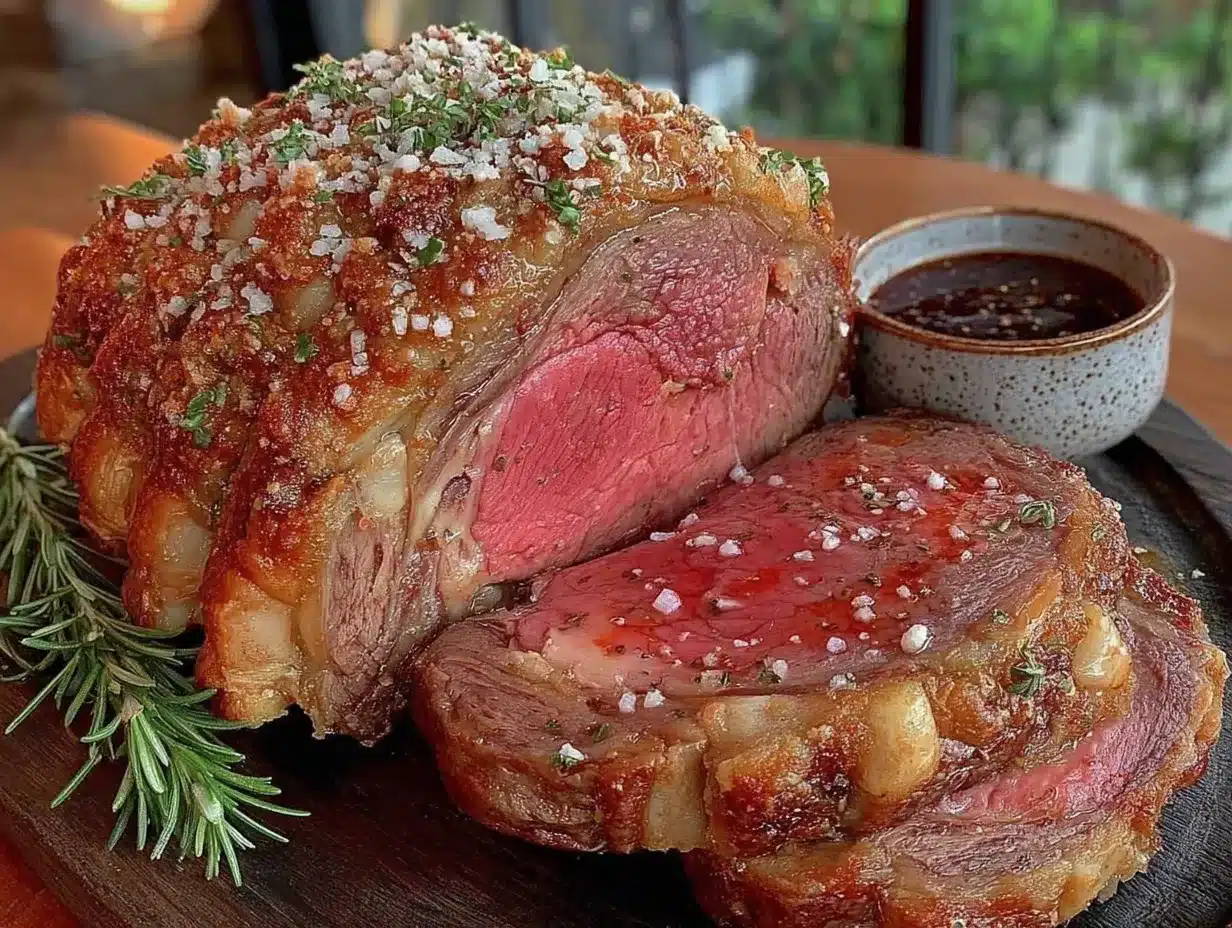
- 1 bone-in prime rib roast (about 6-7 pounds) (ask your butcher for a first cut for the most tender result)
- 1 tablespoon olive oil (for searing)
- 1 cup beef broth (low sodium, so you can control the salt)
- 1/2 cup dry red wine (optional, but adds depth to the pan jus)
Ingredient Tips from My Kitchen: When picking your prime rib, look for one with good marbling—those little white flecks of fat are what keep the meat juicy. I’ve used both bone-in and boneless roasts, and honestly, the bone-in version has more flavor. If you’re feeding a smaller crowd, a 4-pound roast works too; just adjust the cooking time down by about 15 minutes per pound. For the herbs, fresh is non-negotiable here. Dried herbs just won’t give you that vibrant, aromatic crust. And if you’re out of Dijon, whole grain mustard works in a pinch—it adds a slightly different texture but still tastes amazing.
Equipment Needed
You don’t need a fancy kitchen to pull off this roast. Here’s what you’ll need:
- Roasting pan with a rack: The rack keeps the meat elevated so it cooks evenly. If you don’t have a rack, you can use a few thick carrot slices to prop up the roast.
- Meat thermometer: This is non-negotiable. An instant-read thermometer is great, but a leave-in probe thermometer makes life even easier. I’ve used the ThermoPro brand for years and it’s never let me down.
- Chef’s knife: A sharp 8-inch knife makes slicing the garlic and herbs a breeze.
- Cutting board: Wooden or plastic, just make sure it’s stable.
- Aluminum foil: For tenting the roast while it rests.
- Small bowl: For mixing the herb paste.
Budget-Friendly Alternative: If you don’t have a roasting pan, a heavy-duty baking sheet with a wire cooling rack set inside works perfectly. I’ve done this in a pinch and the results were just as good. And if you’re new to using a meat thermometer, don’t stress—it’s really simple and takes all the guesswork out of cooking meat.
Preparation Method
Alright, let’s get cooking. This method is broken down into clear steps so you can follow along without any hiccups. Take your time, and remember—the key is patience.
- Take the chill off the roast: Remove your prime rib from the fridge about 2 hours before cooking. Let it sit at room temperature on a plate. This step is crucial—a cold roast will cook unevenly. Trust me, I learned this the hard way when I rushed it once and ended up with a raw center and overcooked edges.
- Make the garlic herb paste: In a small bowl, combine the minced garlic, rosemary, thyme, olive oil, Dijon mustard, kosher salt, and black pepper. Stir until it forms a thick paste. Let it sit for at least 30 minutes. This resting time allows the flavors to meld together. (If you’re prepping ahead, you can make this a day in advance and store it in the fridge.)
- Preheat your oven: Set your oven to 450°F (232°C). Position the rack in the lower third of the oven to ensure even heat distribution.
- Prepare the roast: Pat the prime rib dry with paper towels. This helps the paste stick and promotes a better crust. Rub the garlic herb paste all over the roast, covering every surface. Don’t be shy—use it all. The paste should form a thick, even layer.
- Sear the roast: Heat a large skillet or the roasting pan over medium-high heat. Add 1 tablespoon of olive oil. Carefully place the roast in the pan, fat-side down first. Sear for 3-4 minutes per side until a deep golden brown crust forms. This step locks in the flavor. Use tongs to hold the roast steady while searing the ends.
- Roast it low and slow: Transfer the roast to the roasting pan with the rack. Place it in the oven and immediately reduce the temperature to 325°F (163°C). Roast for about 15 minutes per pound for medium-rare. For a 6-pound roast, that’s roughly 1 hour and 30 minutes. Start checking the internal temperature at the 1-hour mark using your meat thermometer. Insert it into the thickest part of the meat, avoiding the bone.
- Monitor the temperature: For medium-rare, aim for 130°F (54°C). For medium, go for 140°F (60°C). Remember, the temperature will rise another 5-10 degrees while it rests. So pull it out when it’s about 5 degrees below your target.
- Rest the roast: Once it hits your desired temperature, remove the roast from the oven. Transfer it to a cutting board and tent it loosely with aluminum foil. Let it rest for 20-30 minutes. This step is non-negotiable. Resting allows the juices to redistribute, ensuring every slice is moist.
- Make the pan jus: While the roast rests, place the roasting pan on the stovetop over medium heat. Add the beef broth and red wine (if using). Scrape up any browned bits from the bottom of the pan. Let it simmer for 5 minutes until slightly reduced. Strain the jus through a fine-mesh sieve into a serving pitcher. Taste and adjust seasoning with salt and pepper.
- Slice and serve: After resting, remove the string (if tied). Slice the roast against the grain into 1/2-inch thick slices. Arrange on a platter and spoon some of the pan jus over the top. Serve the remaining jus on the side.
Cooking Tips & Techniques
Over the years, I’ve made a few mistakes with prime rib so you don’t have to. Here are my top tips for getting it perfect every time:
- Don’t skip the resting time before cooking: I once tried to save time by only letting the roast sit for 30 minutes. The center was significantly colder than the edges, leading to uneven cooking. Give it the full 2 hours—it’s worth it.
- Use a thermometer, not a timer: Ovens vary, and a timer can lie. A meat thermometer tells you the truth. I’ve had roasts cook faster or slower than expected, and the thermometer saved me every time. Insert it into the center of the meat, not touching the bone.
- Let the garlic paste rest: This is the tip my accountant shared. When you let the garlic and herbs sit together before applying them, the flavors marry. It’s like a mini marinade. I’ve tested making the paste and using it immediately, and the rested version always tastes more complex.
- Don’t overcrowd the pan: If you’re making a larger roast (8+ pounds), make sure your pan is big enough. The roast needs space for hot air to circulate. A crowded pan leads to steaming instead of roasting.
- Slice only what you need: Prime rib is best served fresh. Only slice the amount you plan to eat immediately. The leftover whole roast will stay juicier in the fridge than pre-sliced pieces.
Variations & Adaptations
One of the best things about this recipe is how adaptable it is. Here are a few ways to make it your own:
- Herb Swap: Not a fan of rosemary? Use fresh oregano or sage instead. I once made this with a mix of tarragon and parsley for a lighter, more floral flavor. It was a hit with my friend who doesn’t love strong herbs.
- Spicy Kick: Add 1 teaspoon of red pepper flakes to the garlic herb paste. It gives the crust a subtle heat that pairs beautifully with the richness of the beef. My brother-in-law requests this version every year.
- Garlic-Free Option: If garlic doesn’t agree with you, replace it with 2 tablespoons of finely chopped shallots. The flavor is milder but still savory.
- Different Cooking Method: You can reverse-sear this roast. Roast it at 250°F (121°C) until it hits 120°F (49°C), then sear it in a hot pan for 2 minutes per side. This method gives you an even more consistent doneness from edge to center.
- Dairy-Free Jus: Skip the butter in the pan jus (if you usually add it) and just use the broth and wine. It’s still rich and flavorful without any dairy.
Serving & Storage Suggestions
This prime rib is the star of the show, so let it shine. Here’s how to serve and store it like a pro:
Serving Suggestions: Serve the roast on a large wooden or ceramic platter. Slice it just before your guests sit down so it stays warm. Pair it with classic sides like creamy mashed potatoes, roasted Brussels sprouts, or a simple arugula salad with lemon vinaigrette. For drinks, a bold red wine like Cabernet Sauvignon or a malbec is a perfect match. If you’re hosting a holiday dinner, set out a basket of crusty bread to soak up any leftover jus on the plate.
Storage: Store leftover prime rib in an airtight container in the refrigerator for up to 4 days. Keep it as a whole piece if possible—it stays moister that way. To reheat, place slices in a skillet with a splash of beef broth over low heat. Cover and warm for 3-4 minutes. Avoid the microwave, which will toughen the meat. You can also freeze the cooked roast for up to 3 months. Wrap it tightly in plastic wrap and then foil. Thaw in the fridge overnight before reheating.
Flavor Development: The flavor actually deepens after a day in the fridge. Leftover prime rib makes incredible sandwiches the next day—just slice it thin, pile it on sourdough with horseradish cream, and toast it.
Nutritional Information & Benefits
Here’s an estimated nutritional breakdown per 6-ounce serving (based on a 6-pound roast serving 10 people):
- Calories: 450
- Protein: 38g
- Fat: 32g
- Saturated Fat: 13g
- Carbohydrates: 2g
- Fiber: 0g
- Sugar: 0g
- Sodium: 480mg
Health Benefits: Prime rib is a great source of high-quality protein, which supports muscle health. It also provides iron and zinc, important for energy and immune function. The garlic and herbs in this recipe add antioxidants, which help fight inflammation. While this dish is indulgent, it fits well into a balanced diet when enjoyed as part of a special meal. I like to balance it out with lighter sides like roasted vegetables or a green salad.
Dietary Notes: This recipe is naturally gluten-free and low-carb. If you’re watching your sodium, you can reduce the salt in the paste and use unsalted beef broth for the jus.
Conclusion
This garlic herb prime rib roast is more than just a recipe—it’s the dish that turns a regular gathering into a celebration. It’s the one that gets people talking, asking for the secret, and coming back for seconds. I love how it makes me feel like a confident host, even when I’m juggling a dozen other things. The best part? It’s deceptively simple. With a little patience and a few quality ingredients, you can create something that looks and tastes like it came from a high-end steakhouse.
I’d love to hear how yours turns out. Did you try a variation? Did your guests go wild for it? Drop a comment below and let me know. And if you’re looking for more crowd-pleasing holiday recipes, check out my honey glazed ham or these garlic parmesan roasted potatoes for the perfect side dish. Happy hosting, and don’t forget to save this recipe for your next big dinner!
Frequently Asked Questions
Can I use a boneless prime rib roast for this recipe?
Yes, absolutely. Boneless roasts work just as well. The cooking time may be slightly shorter, so start checking the temperature about 10 minutes earlier than you would for a bone-in roast. The flavor is still fantastic, though I personally prefer the bone-in version for extra richness.
What if I don’t have a meat thermometer?
I highly recommend getting one—it’s the best tool for perfect meat. But if you’re in a pinch, you can use the “hand test” method. For medium-rare, the meat should feel like the fleshy part of your palm when you touch your thumb to your pinky. It’s not as precise, but it works in a bind.
Can I prepare the garlic herb paste ahead of time?
Yes, you can make the paste up to 2 days in advance. Store it in an airtight container in the fridge. Let it come to room temperature for about 20 minutes before applying it to the roast. The flavors actually get better as it sits.
How do I prevent the roast from drying out?
The key is not overcooking it. Use a meat thermometer and pull the roast out at the right temperature. Also, don’t skip the resting step—it allows the juices to redistribute. If you’re worried, you can also baste the roast with the pan juices halfway through cooking.
Can I cook this roast in a slow cooker?
I don’t recommend it for this recipe. Slow cookers don’t allow for the high-heat sear and even roasting that create the perfect crust and tender interior. Stick to the oven method for the best results. If you need a hands-off option, the reverse-sear method is a great alternative.
Pin This Recipe!
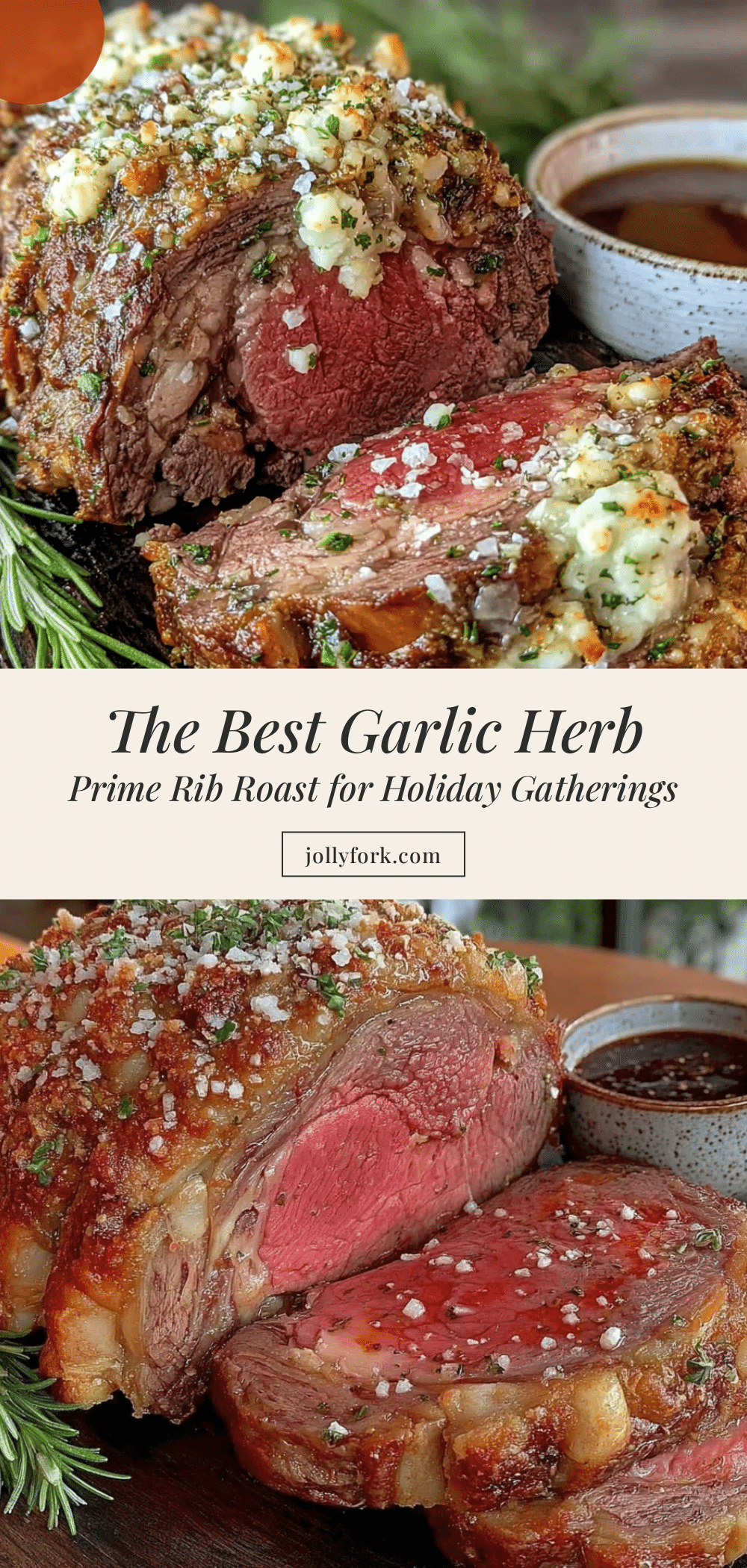
The Best Garlic Herb Prime Rib Roast for Holiday Gatherings
This foolproof garlic herb prime rib roast is the perfect centerpiece for holiday gatherings. With a flavorful garlic herb paste and slow roasting method, it delivers a tender, juicy roast that will impress your guests.
- Prep Time: 20 minutes
- Cook Time: 1 hour 30 minutes
- Total Time: 2 hours 20 minutes (including resting and prep)
- Yield: 8-10 servings 1x
- Category: Main Course
- Cuisine: American
Ingredients
- 8 cloves garlic, minced to a paste
- 3 tablespoons fresh rosemary, finely chopped
- 3 tablespoons fresh thyme leaves
- 2 tablespoons olive oil
- 2 tablespoons Dijon mustard
- 1 tablespoon kosher salt
- 1 teaspoon black pepper, freshly ground
- 1 bone-in prime rib roast (about 6–7 pounds)
- 1 tablespoon olive oil (for searing)
- 1 cup beef broth (low sodium)
- 1/2 cup dry red wine (optional)
Instructions
- Take the chill off the roast: Remove your prime rib from the fridge about 2 hours before cooking. Let it sit at room temperature on a plate.
- Make the garlic herb paste: In a small bowl, combine the minced garlic, rosemary, thyme, olive oil, Dijon mustard, kosher salt, and black pepper. Stir until it forms a thick paste. Let it sit for at least 30 minutes.
- Preheat your oven: Set your oven to 450°F (232°C). Position the rack in the lower third of the oven.
- Prepare the roast: Pat the prime rib dry with paper towels. Rub the garlic herb paste all over the roast, covering every surface.
- Sear the roast: Heat a large skillet or the roasting pan over medium-high heat. Add 1 tablespoon of olive oil. Carefully place the roast in the pan, fat-side down first. Sear for 3-4 minutes per side until a deep golden brown crust forms.
- Roast it low and slow: Transfer the roast to the roasting pan with the rack. Place it in the oven and immediately reduce the temperature to 325°F (163°C). Roast for about 15 minutes per pound for medium-rare. For a 6-pound roast, that’s roughly 1 hour and 30 minutes. Start checking the internal temperature at the 1-hour mark.
- Monitor the temperature: For medium-rare, aim for 130°F (54°C). For medium, go for 140°F (60°C). Pull it out when it’s about 5 degrees below your target.
- Rest the roast: Once it hits your desired temperature, remove the roast from the oven. Transfer it to a cutting board and tent it loosely with aluminum foil. Let it rest for 20-30 minutes.
- Make the pan jus: While the roast rests, place the roasting pan on the stovetop over medium heat. Add the beef broth and red wine (if using). Scrape up any browned bits from the bottom of the pan. Let it simmer for 5 minutes until slightly reduced. Strain the jus through a fine-mesh sieve into a serving pitcher. Taste and adjust seasoning with salt and pepper.
- Slice and serve: After resting, remove the string (if tied). Slice the roast against the grain into 1/2-inch thick slices. Arrange on a platter and spoon some of the pan jus over the top. Serve the remaining jus on the side.
Notes
Let the garlic herb paste sit for at least 30 minutes before applying to deepen the flavor. For best results, use a meat thermometer and let the roast rest for 20-30 minutes after cooking. The bone-in version has more flavor. If using a boneless roast, adjust cooking time down by about 15 minutes per pound.
Nutrition
- Serving Size: 6 ounces
- Calories: 450
- Sodium: 480
- Fat: 32
- Saturated Fat: 13
- Carbohydrates: 2
- Protein: 38
Keywords: prime rib, garlic herb prime rib, holiday roast, Christmas dinner, New Year's Eve, beef roast, prime rib recipe