My neighbor, a guy named Dave who I swear survives on takeout and protein bars, asked me why I couldn’t just dump everything in the crockpot and walk away. I was in the middle of explaining the absolute necessity of browning the meat first — how it builds that deep, savory foundation, the Maillard reaction, all that good stuff — when I just stopped. I mean, I had been standing in my kitchen for twenty minutes already, the stew meat was still raw in the bowl, and I was already tired. Dave had a point.
So I tried it. I threw the chuck roast cubes straight into the slow cooker with a whole bottle of cheap Cabernet, some beef broth, and a mountain of vegetables. No searing. No extra pan to wash. No standing over a hot stove when I was already running late for a Tuesday night. Honestly, I was sure it would taste flat. I braced myself for something that felt more like a sad vegetable soup than a proper stew.
The first bite made me laugh out loud. It was rich. It was tender. The wine had mellowed into this velvety, almost sweet backbone that you usually only get from hours of simmering on the stove. My husband asked if I had “done something different” — high praise from a man who notices when I switch salt brands. I confessed to my lazy shortcut, and he just shrugged and went back for seconds. Let me tell you, it is not often I get proven wrong by a guy named Dave, but this one time, I was glad I listened.
Maybe you have been there — staring at a recipe that asks for browning, deglazing, and a whole lot of patience you just do not have on a Wednesday. This crockpot beef stew is for those nights. It is the recipe that taught me that sometimes the best thing you can do is just stop, trust the process, and let the slow cooker do the work. It is honest, it is forgiving, and it is exactly the kind of dinner you need when you are tired and hungry and just want something good.
Why You’ll Love This Recipe
This is not just another beef stew recipe. It is the one I make when I want a hug in a bowl but have zero energy to stand at the stove. Here is why it works so well for busy weeknights:
- Quick & Easy: There is no browning, no extra pans, no fancy techniques. You just chop, dump, and walk away. It takes about 15 minutes of active prep time. That is it.
- Simple Ingredients: You probably have most of these in your pantry and fridge already. Beef stew meat, carrots, potatoes, onion, garlic, tomato paste, beef broth, and a bottle of red wine you would drink. Nothing weird or hard to find.
- Perfect for Busy Weeknights: This is the dinner you set up in the morning before work or during a lunch break. By the time you are done with your day, dinner is ready. No stress, no last-minute scrambling.
- Crowd-Pleaser: I have served this to picky kids, vegetarian friends who “just wanted a taste,” and my dad who claims he does not like slow cooker food. It gets empty bowls every single time.
- Unbelievably Delicious: The red wine creates a depth of flavor that feels like you spent hours on it. The meat gets fall-apart tender. The broth thickens into something almost gravy-like. It is comfort food at its finest, and it requires almost nothing from you.
What makes this recipe different is the technique — or rather, the lack of it. Skipping the browning step does not mean skipping flavor. The wine does the heavy lifting here. It breaks down the meat, adds acidity, and creates a rich, complex broth that you would swear came from a long-simmered stovetop version. It is the kind of meal that makes you close your eyes after the first bite and just breathe. It is comfort food reimagined — faster, easier, but with the same soul-soothing satisfaction.
What Ingredients You Will Need
This recipe uses simple, hearty ingredients to build big flavor without any fuss. Most are pantry staples, and the ones that are not are easy to find at any grocery store.
- Beef stew meat (2 lbs): Look for chuck roast cut into 1-inch cubes. It has the right amount of marbling to get tender in the slow cooker. If you can, buy a whole chuck roast and cube it yourself — it is often cheaper and you can control the size. I have used pre-cut stew meat from the store plenty of times, and it works great too.
- Red wine (1 ½ cups): Use something you would actually drink. A dry red like Cabernet Sauvignon, Merlot, or a Côtes du Rhône works beautifully. Do not use “cooking wine” — it has added salt and tastes flat. A $10 bottle of wine is perfect. The alcohol cooks off, leaving behind rich, fruity depth.
- Beef broth (2 cups): Low-sodium is best so you can control the salt level. I like Better Than Bouillon roasted beef base — it has a deep, concentrated flavor that works well in slow cookers. Just mix a heaping tablespoon with 2 cups of hot water.
- Carrots (4 medium): Peeled and cut into 1-inch chunks. They soften perfectly in the slow cooker and add natural sweetness to balance the wine.
- Potatoes (1 lb, about 3 medium): Yukon Gold or red potatoes hold up best. Russets can get a bit mealy. Cut them into 1-inch cubes — no need to peel if you do not want to. I usually leave the skin on for extra texture and fiber.
- Yellow onion (1 large): Diced. It melts into the broth and adds savory depth. You could use a sweet onion if that is what you have.
- Garlic (4 cloves): Minced. Fresh is best here. Do not use the pre-minced stuff in a jar if you can help it — fresh garlic makes a noticeable difference in the final flavor.
- Tomato paste (2 tablespoons): This adds umami and helps thicken the broth slightly. I buy the tube kind so I can use just what I need and keep the rest in the fridge.
- All-purpose flour (¼ cup): This gets tossed with the beef before it goes into the slow cooker. It helps thicken the stew as it cooks. If you are gluten-free, use cornstarch or a gluten-free flour blend.
- Dried thyme (1 teaspoon): Earthy and aromatic. It pairs beautifully with the wine and beef. You can use fresh thyme — about 3 sprigs — just remove the stems before serving.
- Dried rosemary (½ teaspoon): Crush it between your fingers before adding to release the oils. Go easy on this one — rosemary can get overpowering if you use too much.
- Bay leaves (2): They add a subtle herbal note that rounds everything out. Remember to fish them out before serving.
- Salt and black pepper: To taste. I start with 1 teaspoon of salt and ½ teaspoon of pepper, then adjust at the end.
- Olive oil (1 tablespoon): Just to lightly coat the beef before tossing with flour. It helps the flour stick and adds a tiny bit of richness.
- Frozen peas (1 cup): Added at the very end. They bring a pop of color and sweetness. Do not add them at the beginning — they will turn mushy and gray.
Equipment Needed
You do not need a lot of fancy gear for this recipe, which is kind of the whole point. Here is what you will need:
- Slow cooker (6-quart): This is the star of the show. A 6-quart size is perfect for this amount of food. If yours is smaller, just cut the recipe in half or use a larger one. I use a basic Crock-Pot brand model that was under $40, and it has never let me down.
- Cutting board and sharp knife: For chopping the veggies and trimming the meat if needed. A good chef’s knife makes the prep go much faster.
- Large bowl: For tossing the beef with the flour and oil. A mixing bowl works fine.
- Measuring cups and spoons: For the wine, broth, and seasonings. A liquid measuring cup with a spout is helpful for pouring the wine and broth into the slow cooker without spilling.
- Wooden spoon or spatula: For stirring everything together in the slow cooker. A wooden spoon is gentle on the pot and works well.
- Ladle: For serving the stew into bowls. A deep ladle is best to get plenty of broth with each scoop.
If you do not have a slow cooker, you can use a Dutch oven and cook this in the oven at 300°F for about 3 hours. The results are similar, but you will need to check the liquid level a couple of times. Honestly, the crockpot is easier and uses less energy.
Preparation Method
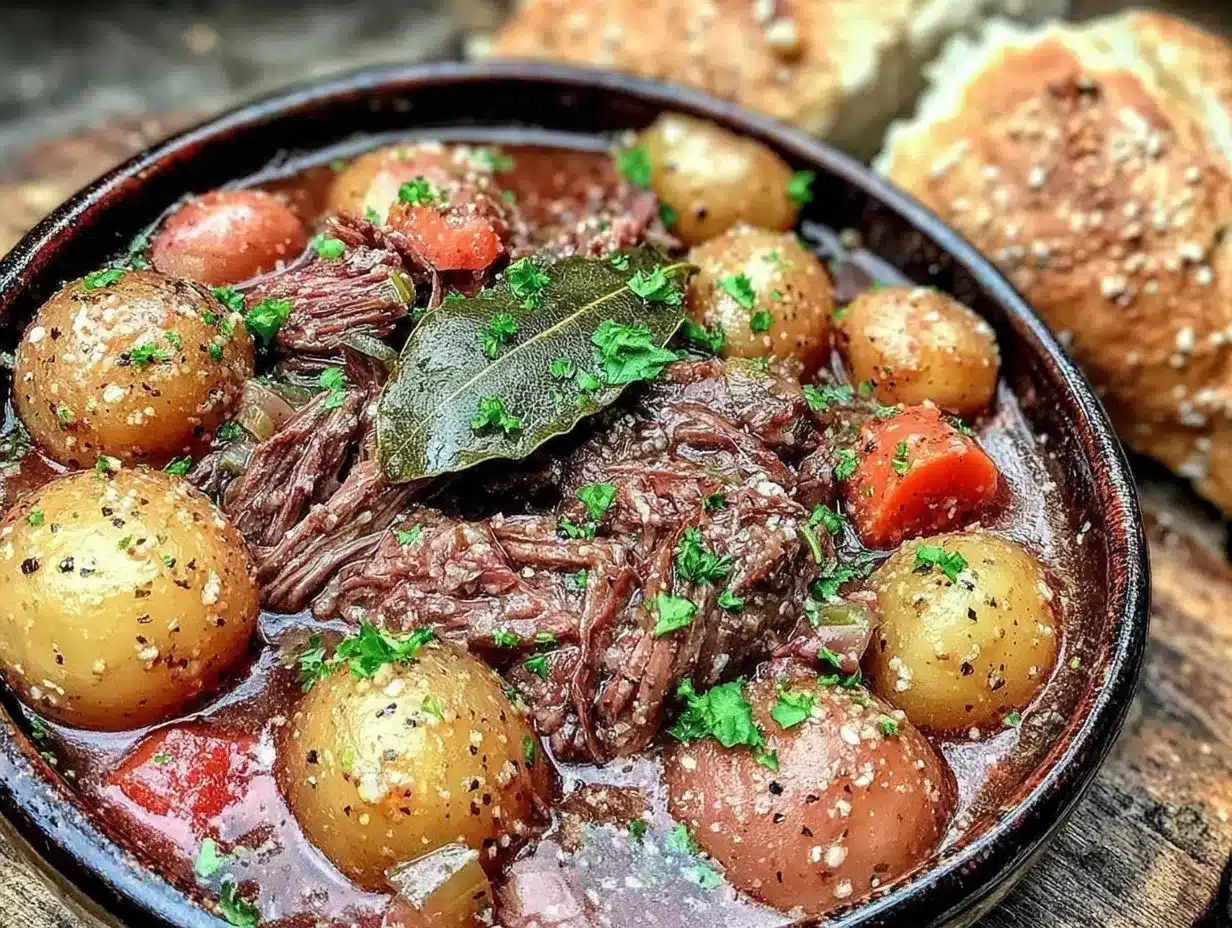
This is the easiest part. Follow these steps, and you will have dinner ready with almost no effort.
- Prep the beef: Pat the beef stew meat dry with paper towels. This helps the flour stick better. Place the beef in a large bowl, drizzle with 1 tablespoon of olive oil, and toss to coat. Add ¼ cup of all-purpose flour, 1 teaspoon of salt, and ½ teaspoon of black pepper. Toss everything together until the beef is lightly coated in flour. Do not skip this step — the flour is what thickens the stew as it cooks.
- Layer the vegetables: Place the diced onion, minced garlic, chopped carrots, and cubed potatoes in the bottom of your 6-quart slow cooker. Spread them out evenly. Putting the vegetables on the bottom helps them cook more evenly since they take a bit longer than the meat.
- Add the beef: Scatter the floured beef cubes on top of the vegetables. Do not stir yet — just let everything sit in layers. This helps the meat stay on top where it will cook gently in the steam and liquid.
- Mix the liquid base: In a separate bowl or a large liquid measuring cup, whisk together 1 ½ cups of red wine, 2 cups of low-sodium beef broth, and 2 tablespoons of tomato paste. Whisk until the tomato paste is mostly dissolved. It does not have to be perfect — a few little lumps are fine.
- Pour and season: Pour the wine mixture over the beef and vegetables. Do not stir. Just let the liquid settle around everything. Sprinkle 1 teaspoon of dried thyme, ½ teaspoon of dried rosemary (crushed), and add 2 bay leaves on top. Again, no stirring needed.
- Cook low and slow: Put the lid on your slow cooker and set it to LOW for 8 hours or HIGH for 4-5 hours. Low and slow is better for the beef — it gives the connective tissue more time to break down, resulting in that fall-apart tenderness. If you are in a rush, high works, but the meat will be slightly less tender.
- Add the peas: About 15 minutes before serving, stir in 1 cup of frozen peas. They do not need to cook for long — just until they are heated through and bright green. Taste the stew at this point and adjust the salt and pepper. You might need another ½ teaspoon of salt, depending on your broth and wine.
- Remove bay leaves: Fish out the bay leaves before serving. They are not edible and can be a choking hazard. I always forget this step and end up chasing them around the pot with a spoon.
- Serve: Ladle the stew into bowls. It is thick, rich, and full of tender meat and vegetables. Serve it with crusty bread for dipping, or over mashed potatoes if you want to get really cozy.
Prep time: 15 minutes | Cook time: 8 hours on low or 4-5 hours on high | Total time: 8 hours 15 minutes (mostly hands-off)
Cooking Tips & Techniques
I have made this stew about a dozen times now, and I have learned a few things the hard way. Here are my best tips to make sure yours turns out perfect every time.
Do not skip the flour coating. I tried skipping this once because I was in a hurry and thought, “It will thicken on its own.” It did not. The stew was thin and watery, and I had to make a cornstarch slurry at the end to fix it. The flour coating on the beef is the easiest way to get that thick, luscious broth without any extra steps. Just make sure the beef is well-coated before it goes in.
Use the right wine. I made the mistake of using a very cheap, sweet red wine once — the kind you would not drink. The stew came out tasting like cough syrup. Stick with a dry red that you would actually enjoy drinking. A $10 bottle of Cabernet Sauvignon or Merlot is perfect. The wine adds acidity and fruitiness that balances the richness of the beef. If you do not drink alcohol, you can substitute an equal amount of extra beef broth plus 2 tablespoons of balsamic vinegar. It will not be exactly the same, but it will still be good.
Layer wisely. Putting the vegetables on the bottom and the beef on top is not just for show. The vegetables take longer to cook, and being at the bottom of the slow cooker puts them closer to the heat source. The beef cooks gently in the steam and liquid above, which keeps it tender. If you stir everything together at the start, the beef might end up on the bottom and cook too quickly, getting tough.
Do not peek. Every time you lift the lid, you lose heat and add about 20 minutes to the cooking time. I know it is tempting to check on it, but resist the urge. Trust the process. The stew will be fine.
Thicken at the end if needed. If your stew is thinner than you would like after 8 hours, do not panic. Mix 2 tablespoons of cornstarch with 2 tablespoons of cold water to make a slurry. Stir it into the stew and let it cook on high for 15-20 minutes. It will thicken right up. I have had to do this a couple of times when I used a leaner cut of beef that did not release as much gelatin.
Variations & Adaptations
This recipe is forgiving, and you can tweak it to fit your preferences or what you have on hand. Here are a few ways I have made it work for different situations.
Make it gluten-free: Swap the all-purpose flour for a gluten-free flour blend or use cornstarch. If using cornstarch, skip the flour coating step and toss the beef with just the oil and seasonings. At the end, make a cornstarch slurry (2 tablespoons cornstarch + 2 tablespoons cold water) and stir it in. Let it cook on high for 15 minutes to thicken.
Add more vegetables: I have thrown in parsnips, celery, and even mushrooms when I had them on hand. Parsnips add a nice earthy sweetness. Mushrooms soak up the wine broth and become little flavor bombs. Just chop them into similar-sized pieces and add them with the other vegetables. If you add mushrooms, reduce the potatoes slightly to keep the stew from getting too crowded.
Make it dairy-free: This recipe is already dairy-free as written. The flour coating does not use butter, and the broth is beef-based. If you want to add a creamy element, stir in a splash of full-fat coconut milk or a dairy-free cream at the end. I tried this once with coconut milk, and it added a subtle richness that worked surprisingly well with the red wine.
Use a different protein: You can substitute the beef with boneless, skinless chicken thighs for a lighter version. Cut them into chunks and skip the flour coating — chicken does not need it. Cook on low for 6 hours instead of 8, since chicken cooks faster. The red wine still works beautifully with chicken, though you might want to use a lighter red like a Pinot Noir.
Add a smoky twist: I once added ½ teaspoon of smoked paprika and a chopped chipotle pepper in adobo sauce to the broth. It gave the stew a subtle smoky heat that was incredible on a cold winter night. It is not traditional, but it is delicious if you want something a little different.
Serving & Storage Suggestions
This stew is best served hot, right from the slow cooker. Ladle it into deep bowls and let everyone help themselves. I like to serve it with a thick slice of crusty sourdough bread for dipping into the broth. A sprinkle of fresh parsley on top adds a nice pop of color and freshness.
It also pairs beautifully with a simple side salad dressed with a tangy vinaigrette — the acidity cuts through the richness of the stew. If you want to go all-in on comfort, serve it over a scoop of buttery mashed potatoes or egg noodles. The stew is thick enough to sit on top without getting lost.
Storage: Leftovers keep well in an airtight container in the refrigerator for up to 4 days. The flavors actually get better overnight as the wine and herbs meld together. I often make this on a Sunday and eat it for lunch all week. It reheats beautifully in the microwave or on the stovetop over medium-low heat. If it thickens too much in the fridge, add a splash of beef broth or water when reheating.
Freezing: This stew freezes like a dream. Let it cool completely, then transfer it to freezer-safe containers or zip-top bags. Leave a little headroom for expansion. It will keep for up to 3 months. Thaw overnight in the refrigerator and reheat gently on the stovetop. The potatoes might get a little softer after freezing, but the flavor stays great.
Reheating: The best way to reheat individual portions is in a small saucepan over medium-low heat, stirring occasionally. Add a splash of broth or water if it looks too thick. The microwave works in a pinch — just cover the bowl and heat in 1-minute increments, stirring between each.
Nutritional Information & Benefits
This stew is hearty and satisfying, but it is also packed with good-for-you ingredients. Here is an approximate breakdown per serving (based on 6 servings):
- Calories: 420
- Protein: 35g
- Fat: 14g
- Carbohydrates: 35g
- Fiber: 5g
- Sugar: 8g
- Sodium: 680mg (varies based on broth and added salt)
The beef provides a solid dose of protein and iron, which is great for energy and muscle health. Carrots and potatoes add fiber, vitamin A, and potassium. The red wine contains antioxidants like resveratrol, which has been linked to heart health in moderate amounts. The tomato paste adds lycopene, another antioxidant that supports overall wellness.
This meal is naturally dairy-free and can easily be made gluten-free with a simple swap. It is also relatively low in added sugar — the sweetness comes from the carrots and wine. If you are watching your sodium, use low-sodium broth and go easy on the added salt. You can always add more at the table.
Frequently Asked Questions
Can I use a different cut of beef?
Yes. Chuck roast is the best choice because of its marbling, but you can also use bottom round or brisket. Avoid lean cuts like sirloin or tenderloin — they will dry out and become tough in the slow cooker. If you use a leaner cut, reduce the cooking time to 6 hours on low and check for tenderness.
Do I have to use red wine?
No. You can substitute the wine with an equal amount of beef broth plus 2 tablespoons of balsamic vinegar or Worcestershire sauce. The vinegar adds acidity that mimics the wine. The flavor will be slightly different — less fruity and more savory — but it will still be delicious.
Can I cook this on high instead of low?
Yes, you can cook it on high for 4-5 hours. The meat will be tender, but it will not be quite as fall-apart as it would be on low. If you are in a hurry, high works fine. Just check the meat at the 4-hour mark to see if it is done to your liking.
Why is my stew watery?
This usually happens if you skip the flour coating on the beef or if you added too much liquid. Next time, make sure the beef is well-coated in flour before adding it to the slow cooker. You can also reduce the broth to 1 ½ cups if you prefer a thicker stew. If it is already watery, stir in a cornstarch slurry (2 tablespoons cornstarch + 2 tablespoons cold water) and cook on high for 15 minutes.
Can I add the peas at the beginning?
I do not recommend it. Frozen peas will turn mushy and lose their bright color if they cook for 8 hours. They only need about 15 minutes to heat through. Add them at the end for the best texture and appearance. If you forget, you can stir them in right before serving and let the residual heat warm them up.
Conclusion
This easy crockpot beef stew with red wine has become my go-to for busy weeks when I need a reliable, comforting meal without the hassle. It taught me that sometimes the best recipes come from breaking the rules — or at least from listening to a neighbor who has a simpler idea. The no-browning method saves time and cleanup, but it does not save on flavor. The wine creates a depth that feels special, and the slow cooker does all the work.
I hope you give this recipe a try, especially on a night when you are tired and hungry and just want something good. Feel free to make it your own — swap in different vegetables, adjust the seasonings, or add a smoky kick. That is the beauty of a stew. It is forgiving, it is flexible, and it always delivers.
If you make this, I would love to hear how it turned out. Drop a comment below or tag me in your photos. And if you have a neighbor like Dave with a lazy but brilliant idea, maybe give it a chance. It might just become your new favorite way to cook.
Pin This Recipe!
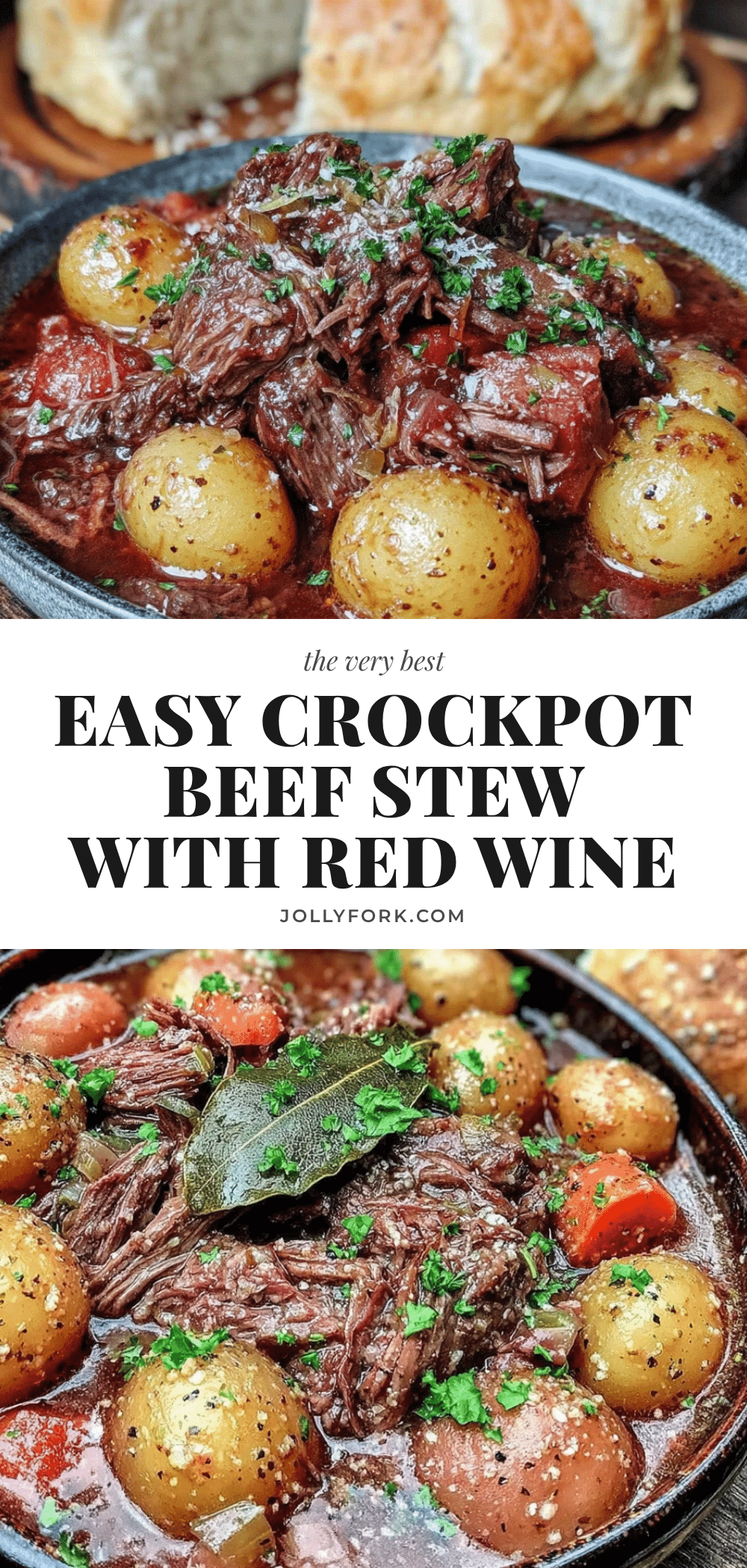
Easy Crockpot Beef Stew with Red Wine (No Browning)
A rich, tender beef stew made entirely in the slow cooker without browning the meat first. The red wine creates a velvety, deep flavor while the meat becomes fall-apart tender—perfect for busy weeknights.
- Prep Time: 15 minutes
- Cook Time: 8 hours (low) or 4-5 hours (high)
- Total Time: 8 hours 15 minutes
- Yield: 6 servings 1x
- Category: Main Course
- Cuisine: American
Ingredients
- 2 lbs beef stew meat (chuck roast, cut into 1-inch cubes)
- 1 ½ cups dry red wine (e.g., Cabernet Sauvignon, Merlot)
- 2 cups low-sodium beef broth
- 4 medium carrots, peeled and cut into 1-inch chunks
- 1 lb Yukon Gold or red potatoes, cut into 1-inch cubes (unpeeled optional)
- 1 large yellow onion, diced
- 4 cloves garlic, minced
- 2 tablespoons tomato paste
- ¼ cup all-purpose flour
- 1 teaspoon dried thyme
- ½ teaspoon dried rosemary, crushed
- 2 bay leaves
- 1 teaspoon salt (plus more to taste)
- ½ teaspoon black pepper (plus more to taste)
- 1 tablespoon olive oil
- 1 cup frozen peas
Instructions
- Pat the beef stew meat dry with paper towels. Place in a large bowl, drizzle with olive oil, and toss to coat. Add flour, salt, and pepper; toss until beef is lightly coated.
- Layer the diced onion, minced garlic, chopped carrots, and cubed potatoes in the bottom of a 6-quart slow cooker.
- Scatter the floured beef cubes on top of the vegetables. Do not stir.
- In a separate bowl or liquid measuring cup, whisk together red wine, beef broth, and tomato paste until mostly dissolved.
- Pour the wine mixture over the beef and vegetables. Do not stir. Sprinkle dried thyme, crushed rosemary, and add bay leaves on top.
- Cover and cook on LOW for 8 hours or HIGH for 4-5 hours.
- About 15 minutes before serving, stir in frozen peas. Taste and adjust salt and pepper as needed.
- Remove bay leaves before serving. Ladle into bowls and serve hot with crusty bread or over mashed potatoes.
Notes
Do not skip the flour coating on the beef—it thickens the stew. Use a dry red wine you would drink; avoid cooking wine. Layer vegetables on the bottom and beef on top for even cooking. Do not lift the lid during cooking. If stew is too thin at the end, stir in a cornstarch slurry (2 tablespoons cornstarch + 2 tablespoons cold water) and cook on high for 15 minutes. Leftovers keep in the fridge for up to 4 days and freeze well for up to 3 months.
Nutrition
- Serving Size: 1 serving (about 1 ½
- Calories: 420
- Sugar: 8
- Sodium: 680
- Fat: 14
- Saturated Fat: 4
- Carbohydrates: 35
- Fiber: 5
- Protein: 35
Keywords: crockpot beef stew, slow cooker beef stew, no browning beef stew, red wine beef stew, easy beef stew, comfort food, weeknight dinner