My husband took one bite of this lemon butter salmon and just stopped talking. That quiet moment—where he forgot I was even watching—told me more than any compliment could. He asked for it again three nights later, which, honestly, never happens with fish in our house.
I had been testing sheet pan dinners for weeks, trying to find something that felt special but didn’t leave me scrubbing pans until nine o’clock. This one-pan lemon butter salmon with asparagus started as a happy accident. I had a single lemon, some butter that needed using, and a bundle of asparagus threatening to go limp in the fridge. The salmon was frozen, actually. I thawed it under cold water while I preheated the oven, not expecting much.
But something clicked that night. The butter browned just enough in the hot pan before the salmon went in. The lemon slices caramelized at the edges. The asparagus roasted in those lemony, buttery juices and came out tender with crispy tips. My husband scraped the pan clean with a piece of bread, which is basically his version of a standing ovation.
This isn’t complicated cooking. It’s the kind of dinner you make on a Tuesday when you’re tired but still want something that tastes like you tried. The salmon comes out flaky and rich, the asparagus picks up all that bright citrus flavor, and the whole thing comes together on one pan with almost no cleanup. That’s the kind of dinner I can get behind.
Why You’ll Love This Recipe
Let me tell you why this one-pan lemon butter salmon with asparagus has earned a permanent spot in my weekly rotation. I’ve tested it at least a dozen times to get the timing just right, and I can honestly say it works every single time.
- Quick & Easy: From start to table in under 30 minutes. The oven does most of the work while you set the table or pour yourself a glass of wine.
- Simple Ingredients: No fancy grocery runs. Salmon, asparagus, butter, lemon, garlic, salt, pepper. That’s it. You probably have most of this right now.
- Perfect for Busy Weeknights: This is my go-to when I want something that feels restaurant-quality but takes less time than ordering takeout.
- One Pan, Minimal Cleanup: Everything cooks together on a single sheet pan. No extra pots, no splattered stovetop, no sink full of dishes.
- Crowd-Pleaser: Even my friends who “don’t really like fish” have asked for seconds. The lemon butter does something magical here.
What makes this recipe different from every other salmon recipe out there? It’s the timing. Most recipes either overcook the salmon or undercook the vegetables. I’ve figured out exactly when to add each ingredient so the salmon stays silky and the asparagus comes out perfectly tender-crisp. Plus, that brown butter situation—letting the butter get slightly nutty before it hits the salmon—adds a depth of flavor you just don’t get from simply melting it.
This is the kind of meal that makes you close your eyes after the first bite. It’s simple enough for a Tuesday but impressive enough for company. And honestly, knowing I can pull this off on a tired weeknight makes me feel like I’ve got my life together, even when I definitely don’t.
What Ingredients You Will Need
This recipe uses simple, fresh ingredients that work together to create something genuinely delicious. Nothing obscure, nothing expensive—just good food cooked well.
For the Salmon and Asparagus
- Salmon fillets (4 fillets, about 6 ounces each): Look for fillets that are similar in thickness so they cook evenly. I prefer wild-caught when I can find it, but good-quality farmed salmon works beautifully here too. Pat them dry with paper towels before seasoning—this helps the butter cling to the surface.
- Asparagus (1 pound, trimmed): Fresh asparagus with firm stalks and tight tips. Snap off the woody ends where they naturally break, or trim about an inch from the bottom. Thicker stalks hold up better to roasting and won’t get mushy.
- Unsalted butter (4 tablespoons): I use unsalted so I can control the salt level. Let it soften slightly before using so it spreads easily over the salmon.
- Fresh lemon (1 large lemon): You’ll use both the juice and thin slices. A good, juicy lemon makes all the difference here. Roll it on the counter before cutting to get more juice out.
- Garlic (4 cloves, minced): Fresh garlic is non-negotiable here. The pre-minced stuff in jars won’t give you the same flavor. I like to let the garlic sit for a few minutes after mincing to let the flavor develop.
- Olive oil (2 tablespoons): A good extra virgin olive oil for drizzling over the asparagus. It helps everything roast evenly and adds a nice fruity note.
- Salt and black pepper (to taste): I use kosher salt for seasoning and flaky sea salt for finishing. Freshly cracked black pepper is worth the extra few seconds.
- Fresh parsley (optional, for garnish): A sprinkle of chopped parsley adds color and a fresh finish. Dill would also be lovely here.
Ingredient Tips and Substitutions
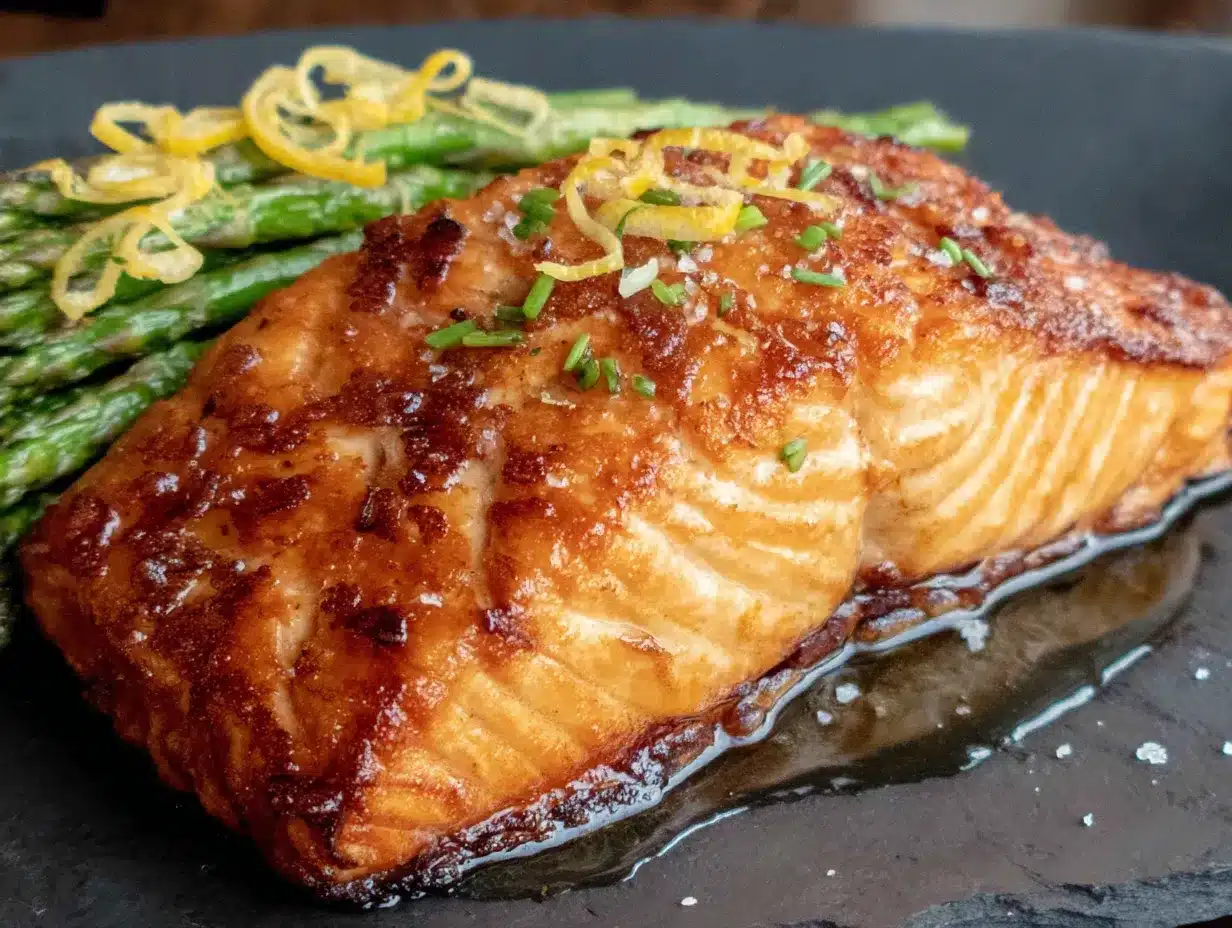
If you can’t find asparagus, green beans or broccolini make excellent substitutes. They roast at about the same time and pick up the lemon butter beautifully. For a dairy-free version, use a good plant-based butter or ghee (which is technically dairy but has the lactose removed).
I’ve made this with arctic char and trout too, and both work wonderfully. Just adjust the cooking time based on the thickness of the fillets. Thinner fillets will cook faster, so check them a few minutes early.
For the best results, I really recommend using fresh lemon juice. The bottled stuff has a flat, slightly bitter taste that just doesn’t compare. And please don’t skip the lemon slices on top—they caramelize in the oven and become these sweet, tangy little gems that are honestly my favorite part.
Equipment Needed
You don’t need a lot of fancy equipment for this one-pan lemon butter salmon with asparagus, which is part of why I love it so much.
- Sheet pan or baking sheet: A standard half-sheet pan (about 13×18 inches) works perfectly. Line it with parchment paper or aluminum foil for even easier cleanup.
- Small saucepan: For melting and browning the butter. You can also do this in the microwave, but the stovetop gives you more control.
- Chef’s knife and cutting board: For trimming the asparagus, mincing garlic, and slicing lemon.
- Measuring spoons: For measuring the olive oil and any seasonings.
- Pastry brush (optional): For brushing the butter mixture over the salmon. A spoon works just fine too.
- Instant-read thermometer: Not strictly necessary, but helpful if you’re nervous about overcooking the salmon. You’re looking for 125°F to 130°F at the thickest part for medium.
If you don’t have a sheet pan, a large baking dish will work. Just make sure the salmon and asparagus aren’t too crowded—they need space to roast, not steam. And if you’re using a dark-colored pan, keep an eye on things toward the end since dark pans absorb more heat and can overcook the bottoms.
I’ve made this in a cast iron skillet too, and it works great. The skillet holds heat beautifully and gives the lemon slices nice caramelization. Just be careful serving from a hot skillet at the table.
Preparation Method
Let me walk you through this step by step. I’ve made this so many times that I’ve got the timing down to a science, and I’ll share all my little tricks along the way.
- Preheat your oven to 400°F (200°C). Give it a full 15 minutes to come to temperature. A properly preheated oven is the difference between perfectly roasted salmon and sad, overcooked fish. While the oven heats, line your sheet pan with parchment paper or foil for easy cleanup.
- Prepare the asparagus. Rinse the asparagus and snap off the woody ends. The easiest way is to hold a spear at both ends and bend it gently—it will naturally break where the tough part ends. Discard the ends and arrange the asparagus on one side of your prepared sheet pan. Drizzle with 1 tablespoon of olive oil, season with salt and pepper, and toss gently to coat. Spread them in a single layer.
- Season the salmon. Pat the salmon fillets dry with paper towels. This step matters more than you think—dry fish browns better and doesn’t steam. Place the fillets on the other side of the sheet pan, skin-side down if they have skin. Drizzle with the remaining tablespoon of olive oil and season generously with salt and pepper.
- Make the lemon butter. In a small saucepan over medium heat, melt the butter. Let it cook for 2 to 3 minutes, swirling occasionally, until it turns a light golden brown and smells nutty. Watch it carefully—butter can go from brown to burnt in seconds. Remove from heat and stir in the minced garlic and the juice of half the lemon. The garlic will sizzle and become fragrant immediately.
- Brush the salmon. Using a pastry brush or a spoon, coat each salmon fillet generously with the lemon garlic butter. Don’t be shy here—this is where all the flavor lives. Reserve any leftover butter for drizzling after cooking.
- Add lemon slices. Slice the remaining half lemon into thin rounds, about ¼-inch thick. Place 2 to 3 slices on top of each salmon fillet. These will caramelize in the oven and become sweet and tender. Tuck any extra slices among the asparagus.
- Roast everything together. Place the sheet pan in the preheated oven and roast for 12 to 15 minutes. The exact time depends on the thickness of your salmon. At 12 minutes, start checking—the salmon should be opaque and flake easily with a fork, and the asparagus should be tender-crisp with lightly browned tips.
- Finish and serve. Remove the pan from the oven. If you reserved any lemon butter, drizzle it over the salmon now. Squeeze a little extra fresh lemon juice over everything if you like things bright and tangy. Let the salmon rest for 2 minutes before serving—this lets the juices redistribute so the fish stays moist.
One thing I learned the hard way: don’t crowd the pan. If your salmon fillets are touching each other or piled on top of the asparagus, they’ll steam instead of roast. Give everything a little breathing room. If you’re cooking for a crowd, use two pans.
Cooking Tips & Techniques
After making this one-pan lemon butter salmon with asparagus more times than I can count, I’ve picked up a few tricks that make a real difference. Let me share what I’ve learned.
Don’t skip the pat-dry step. I know it seems fussy, but moisture is the enemy of good browning. Wet salmon steams instead of searing, and you end up with pale, sad-looking fish. Take those extra 30 seconds to really dry the fillets with paper towels.
Watch your butter temperature. That brown butter moment is where the magic happens, but it’s also where things can go wrong. Keep the heat at medium and swirl the pan constantly. You’re looking for a golden amber color and a nutty aroma. If you see black specks forming, you’ve gone too far. Start over—it’s worth it.
Check for doneness early. Salmon continues cooking after it comes out of the oven, so pull it when it’s just barely opaque in the center. I use the back of a fork to gently press the thickest part—if it flakes easily, it’s done. If you’re using a thermometer, 125°F to 130°F is your sweet spot for perfectly moist salmon.
Cut your asparagus uniformly. If some spears are much thicker than others, cut the thick ones in half lengthwise so everything cooks at the same rate. Nobody wants half the asparagus to be mushy while the other half is still crunchy.
Make extra lemon butter. I always make a little more than I think I need. It keeps in the fridge for a week and tastes amazing drizzled over roasted vegetables, grilled chicken, or even tossed with pasta. Just warm it gently before using.
One mistake I made early on: putting cold salmon straight from the fridge onto the pan. Let your fillets sit at room temperature for 10 to 15 minutes before cooking. This helps them cook more evenly and reduces the chance of having a cold center.
Variations & Adaptations
This recipe is wonderfully flexible, and I’ve tried quite a few variations over the months. Here are some of my favorites.
Dietary Adaptations
- Dairy-free: Swap the butter for a good-quality vegan butter or ghee. I’ve used Miyoko’s European Style Cultured Vegan Butter with great results—it browns beautifully and has a rich flavor.
- Low-carb/Keto: This recipe is naturally low-carb and keto-friendly. The asparagus adds fiber and nutrients without the carbs. You could also swap the asparagus for broccoli or zucchini noodles.
- Gluten-free: This recipe is naturally gluten-free. Just make sure your butter and any seasonings are certified gluten-free if that’s a concern.
Flavor Variations
- Spicy lemon butter: Add ½ teaspoon of red pepper flakes to the butter along with the garlic. The heat pairs beautifully with the bright lemon and rich salmon.
- Herb-crusted salmon: Mix 2 tablespoons of fresh chopped dill, parsley, and chives into the butter before brushing over the salmon. The herbs get slightly crispy in the oven and add wonderful flavor.
- Mediterranean twist: Add halved cherry tomatoes and sliced olives to the pan with the asparagus. The tomatoes burst and create a little sauce that’s amazing spooned over the salmon.
Different Vegetables
Not an asparagus fan? Try broccoli florets, green beans, or halved Brussels sprouts. Just adjust the cooking time slightly—broccoli might need an extra 2 to 3 minutes, while green beans might cook a minute faster. I’ve even made this with wedges of bell pepper and red onion, and it was fantastic.
One of my favorite variations is swapping the salmon for arctic char. It has a similar richness but a slightly more delicate texture. If you try this, reduce the cooking time by about 2 minutes and keep a close eye on it.
Serving & Storage Suggestions
This one-pan lemon butter salmon with asparagus is beautiful as-is, but a few thoughtful touches can make it feel extra special.
How to serve: Transfer the salmon and asparagus to a warm platter and spoon any pan juices over the top. The caramelized lemon slices are edible and delicious—don’t skip them. I like to serve this with a side of fluffy rice, quinoa, or crusty bread to soak up every last drop of that lemon butter sauce. A simple Mediterranean chickpea and cucumber salad on the side adds freshness and crunch.
Wine pairing: A crisp Sauvignon Blanc or a unoaked Chardonnay pairs beautifully with the lemon and butter. For white wine lovers, a dry Riesling is also lovely. If you prefer red, go with a light Pinot Noir served slightly chilled.
Storage: Leftover salmon and asparagus keep in an airtight container in the refrigerator for up to 3 days. The flavors actually meld together a bit overnight, making it even more delicious the next day. I wouldn’t recommend freezing this dish—the texture of both the salmon and asparagus changes too much.
Reheating: The best way to reheat is in a low oven (300°F) for about 8 to 10 minutes, or until just warmed through. You can also use a skillet over medium-low heat with a splash of water or lemon juice to create a little steam. Avoid the microwave if possible—it tends to overcook the salmon and make it dry.
Make-ahead tip: You can prep the asparagus and make the lemon butter up to a day in advance. Store the butter in the fridge and reheat it gently before using. When you’re ready to cook, just arrange everything on the pan and roast. This makes it perfect for busy weeknights when you want dinner on the table fast.
Nutritional Information & Benefits
This one-pan lemon butter salmon with asparagus isn’t just delicious—it’s genuinely good for you. Here’s what you’re getting in each serving.
Estimated nutrition per serving (1 salmon fillet with asparagus):
- Calories: 420
- Protein: 38g
- Fat: 28g
- Carbohydrates: 8g
- Fiber: 3g
- Sugar: 3g
- Sodium: 380mg
Health benefits: Salmon is packed with omega-3 fatty acids, which support heart health, brain function, and reduce inflammation. It’s also an excellent source of high-quality protein and vitamin D. Asparagus is loaded with fiber, folate, and vitamins A, C, and K. It’s also a natural diuretic, which can help reduce bloating.
Dietary considerations: This recipe is naturally gluten-free, low-carb, and keto-friendly. It’s also suitable for pescatarian diets. For dairy-free, simply swap the butter for a plant-based alternative.
Potential allergens: This recipe contains fish and dairy (butter). If you’re serving someone with a dairy allergy, the vegan butter substitution works beautifully and doesn’t compromise the flavor.
I love that this meal feels indulgent but is actually packed with nutrients. It’s the kind of dinner that leaves you feeling satisfied and energized, not heavy and sluggish. And honestly, knowing I’m eating something this good for me makes that second helping feel a little less guilty.
Conclusion
This one-pan lemon butter salmon with asparagus has become my secret weapon for busy weeknights when I want something that feels special without the fuss. It’s the recipe I turn to when I need dinner on the table in under 30 minutes, when I want to impress someone without breaking a sweat, and when I just want to eat something delicious that also happens to be good for me.
The best part? You can make it your own. Swap in your favorite vegetables, adjust the seasonings to your taste, or try it with a different fish. The basic formula—salmon, butter, lemon, garlic, and a hot oven—is forgiving enough to adapt to whatever you have on hand. I’ve made it with lime instead of lemon, with thyme instead of parsley, and with broccolini instead of asparagus. It always works.
I’d love to hear how this turns out for you. Did you try a variation I haven’t thought of? Did your family ask for it three nights in a row like mine did? Drop a comment below and let me know. And if you’re looking for more easy weeknight dinners, you might also enjoy this sheet pan caprese chicken or these ground turkey taco bowls.
Until next time, happy cooking. And remember—sometimes the simplest dinners are the ones that stick with you.
Frequently Asked Questions
Can I use frozen salmon for this recipe?
Yes, absolutely. Just make sure to thaw it completely in the refrigerator overnight or under cold running water. Pat it very dry before seasoning—frozen salmon tends to hold more moisture, and you want to get rid of as much as possible for good browning.
How do I know when the salmon is done?
The easiest way is to check with a fork. Gently press the thickest part of the fillet—if it flakes easily and is opaque all the way through, it’s done. For the most accurate result, use an instant-read thermometer inserted into the thickest part. You’re looking for 125°F to 130°F for medium, which is perfectly moist and tender.
Can I make this recipe with skin-on salmon?
Yes, and it works beautifully. Place the fillets skin-side down on the pan. The skin gets crispy and delicious in the oven, and it helps keep the fish moist. Just be aware that the skin might stick to the parchment paper slightly—use a thin spatula to lift the fillets off carefully.
What can I use instead of asparagus?
So many options! Green beans, broccolini, broccoli florets, zucchini slices, bell pepper strips, or even halved Brussels sprouts all work wonderfully. Just adjust the cooking time based on the vegetable you choose. Firmer vegetables like Brussels sprouts might need a few extra minutes, while tender ones like zucchini might cook faster.
How do I prevent the salmon from sticking to the pan?
Line your sheet pan with parchment paper or aluminum foil, and make sure you’ve brushed or drizzled enough olive oil on the pan before adding the salmon. The lemon butter also helps create a non-stick barrier. If you’re still worried, you can lightly oil the parchment paper too.
Pin This Recipe!
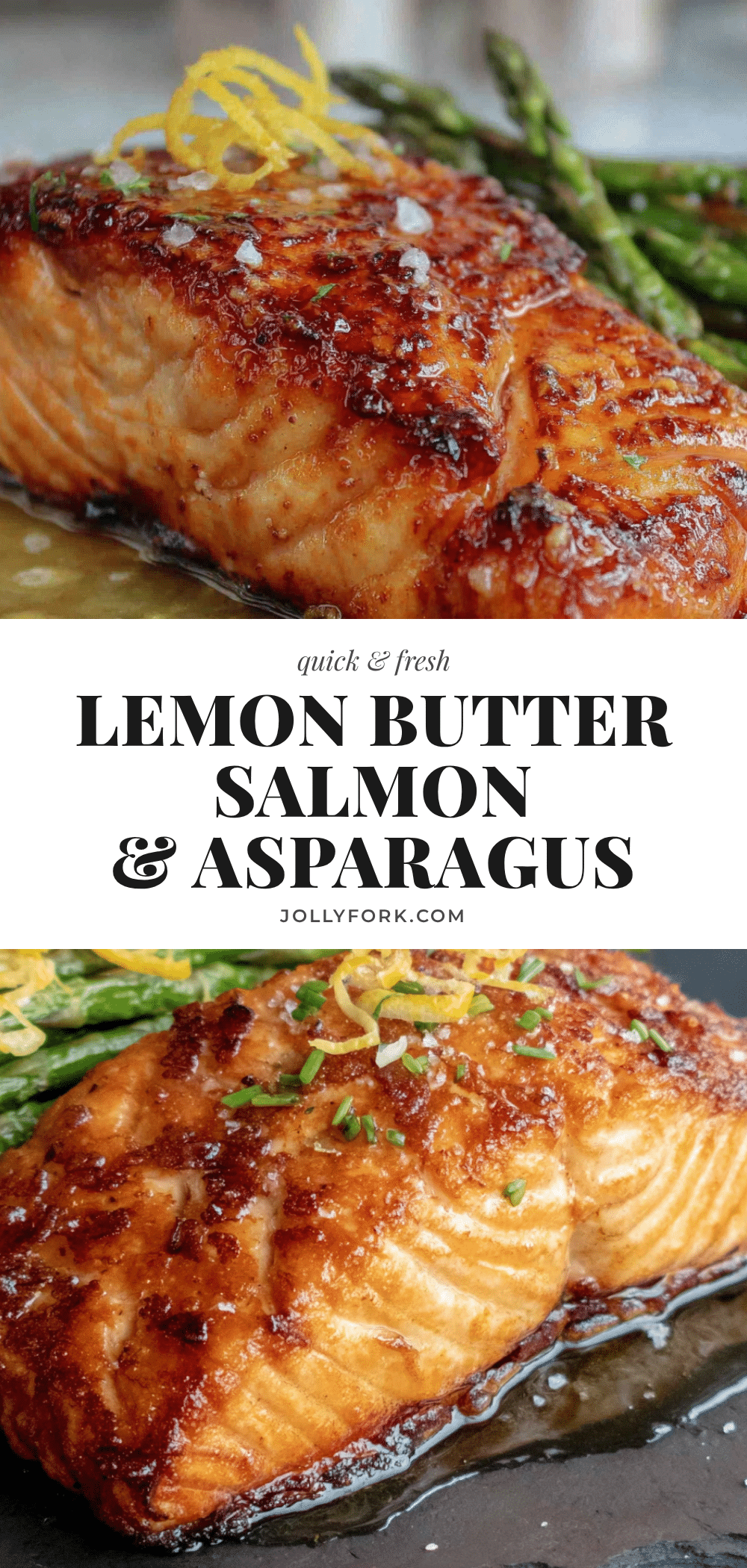
Easy One-Pan Lemon Butter Salmon with Asparagus

A quick and delicious one-pan meal featuring flaky salmon and tender asparagus in a rich lemon butter sauce, perfect for busy weeknights with minimal cleanup.
- Prep Time: 10 minutes
- Cook Time: 15 minutes
- Total Time: 25 minutes
- Yield: 4 servings 1x
- Category: Main Course
- Cuisine: American
Ingredients
- 4 salmon fillets (about 6 ounces each)
- 1 pound asparagus, trimmed
- 4 tablespoons unsalted butter
- 1 large lemon (juice and slices)
- 4 cloves garlic, minced
- 2 tablespoons olive oil
- Salt and black pepper to taste
- Fresh parsley for garnish (optional)
Instructions
- Preheat oven to 400°F (200°C). Line a sheet pan with parchment paper or foil.
- Rinse asparagus and snap off woody ends. Arrange on one side of the pan, drizzle with 1 tablespoon olive oil, season with salt and pepper, and toss to coat.
- Pat salmon fillets dry with paper towels. Place on the other side of the pan, drizzle with remaining 1 tablespoon olive oil, and season with salt and pepper.
- In a small saucepan over medium heat, melt butter and cook until light golden brown and nutty, about 2-3 minutes. Remove from heat and stir in minced garlic and juice of half the lemon.
- Brush the lemon garlic butter generously over each salmon fillet. Reserve any leftover butter for drizzling after cooking.
- Slice the remaining half lemon into thin rounds. Place 2-3 slices on each salmon fillet and tuck extra slices among the asparagus.
- Roast for 12-15 minutes, until salmon is opaque and flakes easily with a fork, and asparagus is tender-crisp with lightly browned tips.
- Remove from oven. Drizzle reserved lemon butter over salmon. Squeeze extra lemon juice if desired. Let rest 2 minutes before serving. Garnish with parsley if using.
Notes
For best results, let salmon sit at room temperature for 10-15 minutes before cooking. Don’t crowd the pan; use two pans if needed. Salmon continues cooking after removal, so pull it when just barely opaque. Leftovers keep in the fridge for up to 3 days; reheat in a low oven (300°F) for 8-10 minutes.
Nutrition
- Serving Size: 1 salmon fillet with
- Calories: 420
- Sugar: 3
- Sodium: 380
- Fat: 28
- Saturated Fat: 10
- Carbohydrates: 8
- Fiber: 3
- Protein: 38
Keywords: one-pan salmon, lemon butter salmon, sheet pan dinner, easy salmon recipe, asparagus salmon, quick weeknight dinner, healthy salmon