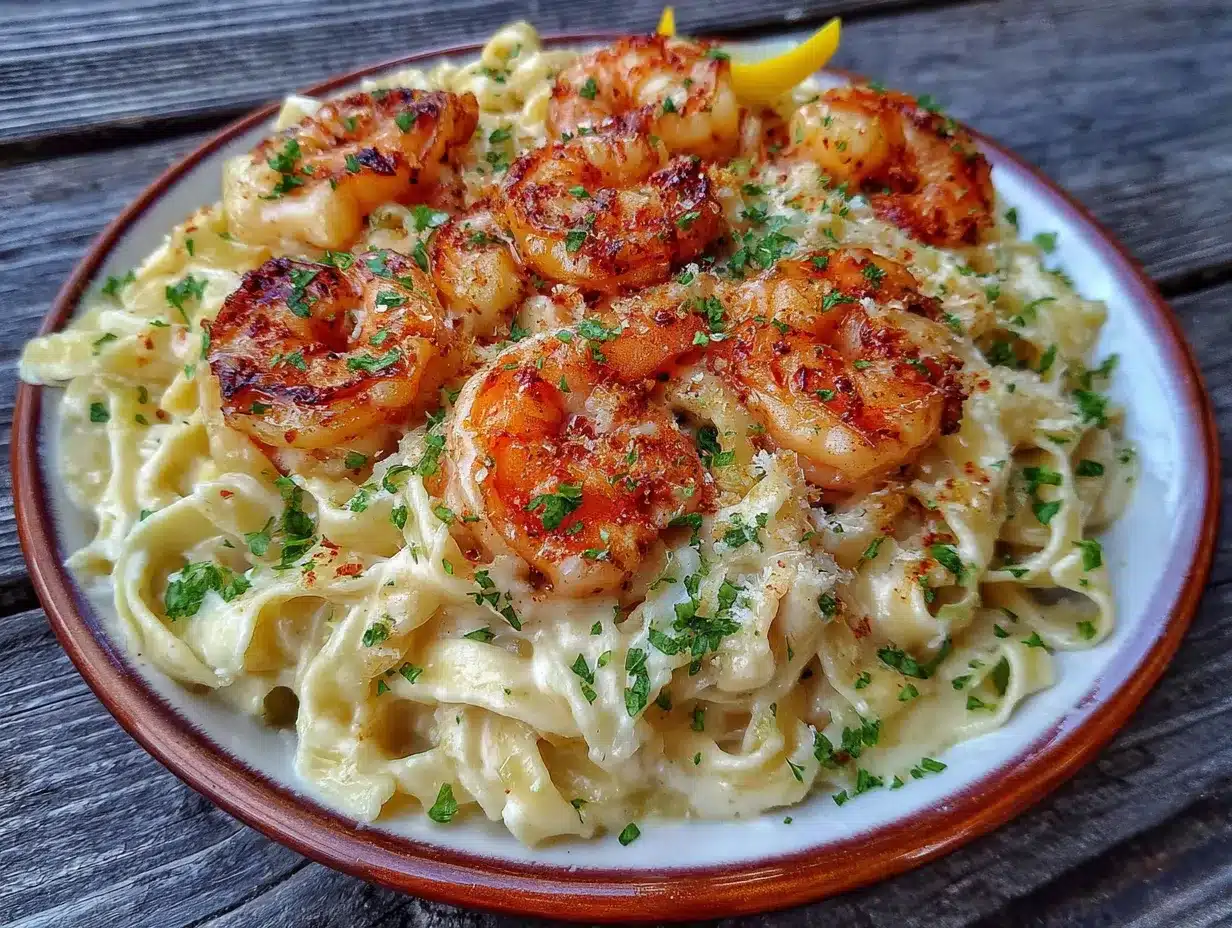
My husband did not trust shrimp in a creamy pasta sauce. That’s the honest truth. Every time I suggested it, he’d make a face and mutter something about seafood and heavy cream just not belonging together. So for years, I kept my shrimp alfredo cravings to myself, ordering it only when we ate out and he wasn’t looking. Then one Tuesday night, exhausted from a long work week and staring down a package of shrimp in the fridge, I decided I didn’t care anymore. I was making it. And honestly? I was a little nervous myself. I’d had my fair share of watery, bland versions at cheap buffets, and I didn’t want to prove him right.
I grabbed my biggest pot (the one I use for everything, honestly) and just started cooking. I deglazed the pan with a splash of white wine I had leftover from the weekend (don’t tell anyone it was three days old), threw in some garlic, and let the cream do its thing right in the same pot. No extra dishes, no complicated steps. The whole thing came together in about twenty minutes, and the smell—garlicky, rich, a little bit buttery—filled the whole house. By the time I stirred in the parmesan and watched it melt into this silky, perfect sauce, I had a feeling this was going to be different.
He took one bite, looked at me, and said, “Okay, I get it now.” That was three years ago, and this creamy one-pot shrimp alfredo pasta has been a regular in our dinner rotation ever since. It’s the kind of meal that quiets a busy mind, the one you make when you need something good without the fuss. Let me show you how simple it really is.
Why You’ll Love This Recipe
I’ve tested this recipe more times than I can count, tweaking the cream-to-broth ratio and the garlic level until it was just right. It’s not just another pasta dish—it’s the one that changed my husband’s mind about seafood and cream. Here’s why it works so well:
- Quick & Easy: From start to finish, this comes together in about 25 minutes. Perfect for those nights when you need dinner on the table fast, without sacrificing flavor.
- Simple Ingredients: You probably already have garlic, butter, cream, and parmesan in your kitchen. No fancy grocery trips needed—just honest, pantry-friendly staples.
- Perfect for Busy Weeknights: This is the dinner you make when you’re tired, hungry, and don’t want to wash a mountain of dishes. One pot does it all.
- Crowd-Pleaser: Even picky eaters love it. The shrimp is tender, the sauce is creamy without being heavy, and the pasta soaks up all that garlicky goodness.
- Unbelievably Delicious: The texture is next-level—silky sauce, perfectly cooked shrimp, and al dente pasta all in one glorious bite. It’s comfort food that feels a little fancy but takes almost no effort.
What makes this different from other alfredo recipes? It’s the technique. Instead of making the sauce separately and hoping it doesn’t break, you cook the pasta right in the creamy broth. The starch from the pasta thickens the sauce naturally, giving you that luscious, velvety texture without any heavy cream substitutes or weird thickeners. It’s foolproof, I promise.
What Ingredients You Will Need
This recipe uses simple, wholesome ingredients to deliver bold flavor and satisfying texture without the fuss. Most of these are pantry staples, so you can whip this up anytime the craving hits.
- 8 oz (225 g) fettuccine or linguine: I prefer fettuccine for its wide, flat shape that holds the sauce beautifully. Linguine works great too. Break the noodles in half if your pot is on the smaller side.
- 1 lb (450 g) large raw shrimp, peeled and deveined: Look for shrimp that’s 21-25 count per pound. I like to buy them frozen and thaw them in cold water—it’s cheaper and just as good. Pat them dry before cooking for the best sear.
- 2 tablespoons (30 g) unsalted butter: Adds richness and helps brown the shrimp. I use salted butter in a pinch, just reduce the added salt later.
- 4 cloves garlic, minced: Fresh garlic is non-negotiable here. The pre-minced stuff in a jar just doesn’t have the same punch. Trust me on this one.
- 1 cup (240 ml) heavy cream: This gives the sauce its signature richness. For a lighter version, you can use half-and-half, but the sauce won’t be as thick.
- 2 cups (480 ml) low-sodium chicken broth: The base of the cooking liquid. Low-sodium is key so you can control the salt level. Vegetable broth works too if that’s what you have.
- 1 cup (100 g) freshly grated Parmesan cheese: Please, please grate it yourself. The pre-shredded stuff has anti-caking agents that prevent it from melting smoothly. Freshly grated parmesan melts like a dream into the sauce.
- 1/2 teaspoon (2 g) salt: Start here and adjust at the end. Different brands of broth and cheese have varying salt levels.
- 1/4 teaspoon (0.5 g) black pepper: Freshly cracked is best. It adds a subtle warmth that balances the richness.
- 1/4 teaspoon (0.5 g) red pepper flakes (optional): I add this for a tiny kick of heat. It’s optional, but I love how it cuts through the creaminess.
- 1 tablespoon (15 ml) fresh lemon juice: A squeeze at the end brightens everything up. It’s the secret ingredient that makes the shrimp and cream sing together.
- 2 tablespoons (8 g) fresh parsley, chopped: For color and a fresh finish. Dried parsley works in a pinch, but fresh is noticeably better.
Equipment Needed
You don’t need a lot of fancy tools for this one, which is part of the beauty. Here’s what I use:
- Large pot or Dutch oven (5-6 quart): I use my trusty enameled cast iron Dutch oven. It holds heat well and has plenty of room for the pasta to cook. A large stainless steel pot works just as well.
- Wooden spoon or silicone spatula: For stirring the pasta and scraping up any browned bits from the bottom. A wooden spoon is my go-to—it won’t scratch your pot.
- Sharp knife and cutting board: For mincing garlic and chopping parsley. A good chef’s knife makes this step quick and easy.
- Measuring cups and spoons: Accurate measurements matter here, especially for the cream and broth. I use glass measuring cups for liquids.
- Box grater or microplane: For grating the Parmesan cheese. A microplane gives you that fine, fluffy texture that melts instantly.
- Tongs: For tossing the pasta and shrimp together at the end. Tongs make it easy to coat everything evenly.
If you don’t have a Dutch oven, any large, deep skillet or pot with a lid will work. Just make sure it’s big enough to hold the pasta as it expands—you don’t want it spilling over!
Preparation Method
Let’s get cooking. I’ll walk you through each step so you feel confident, even if it’s your first time making shrimp alfredo from scratch.
- Prep the shrimp: Start by patting the shrimp dry with paper towels. This is important—wet shrimp won’t brown properly, and you’ll end up with rubbery, pale bits instead of golden, tender ones. Season them lightly with a pinch of salt and pepper. Set them aside while you get everything else ready.
- Sear the shrimp: Place your pot over medium-high heat. Add 1 tablespoon of the butter and let it melt until it sizzles. Add the shrimp in a single layer (you might need to do this in two batches if your pot is small). Cook for 1-2 minutes per side, until they turn pink and get a nice golden sear. They don’t need to be fully cooked through—they’ll finish in the sauce. Transfer them to a plate and set aside.
- Build the flavor base: Reduce the heat to medium. Add the remaining 1 tablespoon of butter to the pot. Once it melts, toss in the minced garlic. Stir constantly for about 30 seconds until it’s fragrant—don’t let it burn, or it will turn bitter. You want that sweet, nutty garlic smell that fills your whole kitchen.
- Deglaze the pot: Pour in the chicken broth and use your wooden spoon to scrape up any browned bits from the bottom. Those bits are pure flavor, so don’t skip this step. Bring the broth to a gentle simmer.
- Cook the pasta: Add the fettuccine to the simmering broth, breaking it in half if needed to fit. Pour in the heavy cream and stir everything together. The pasta won’t be fully submerged at first—that’s okay. Cover the pot and let it cook for 8-10 minutes, stirring every couple of minutes to prevent sticking. The pasta will absorb the liquid as it cooks, creating that creamy, starchy sauce.
- Check the pasta: After 8 minutes, taste a piece of pasta. It should be al dente—tender but with a slight bite. If it’s still too firm, cook for another minute or two. The sauce should be thick enough to coat the back of a spoon. If it looks too thick, add a splash of broth or milk to loosen it up.
- Add the cheese and shrimp: Remove the pot from the heat. Sprinkle in the grated Parmesan cheese and stir vigorously until it melts into the sauce. The residual heat will do the work—just keep stirring until it’s smooth and glossy. Return the cooked shrimp to the pot, along with any juices that accumulated on the plate. Stir gently to combine.
- Finish with lemon and parsley: Squeeze in the fresh lemon juice and sprinkle in the chopped parsley. Give everything one last gentle stir. Taste and adjust salt and pepper if needed. The lemon juice is the magic touch—it brightens the whole dish and balances the richness.
- Rest and serve: Let the pasta sit for 2-3 minutes off the heat. This allows the sauce to thicken slightly and cling to every strand of pasta. Serve immediately while it’s hot and creamy.
Pro tip from my kitchen: If you’re cooking for a crowd, you can double this recipe easily. Just use a bigger pot and add an extra minute or two to the pasta cooking time.
Cooking Tips & Techniques
I’ve made this recipe more times than I can count, and I’ve learned a few things the hard way. Here are my best tips to ensure success every time.
Don’t overcook the shrimp. This is the number one mistake I see. Shrimp cook incredibly fast—usually 2-3 minutes total. The moment they turn pink and curl into a loose C shape, they’re done. If they curl into a tight O, they’re overcooked and rubbery. When you add them back to the pot at the end, they only need a quick warm-through, not another full cook.
Use freshly grated Parmesan. I know it’s tempting to grab the bag of pre-shredded cheese, but it really does make a difference. The anti-caking agents in pre-shredded cheese prevent it from melting smoothly, leaving you with a grainy, clumpy sauce. A block of good Parmesan and a microplane give you that silky, luxurious texture every time.
Stir the pasta frequently. When you’re cooking pasta in a reduced amount of liquid, it has a tendency to stick together and clump. Set a timer and stir every 2 minutes. Use your wooden spoon to gently separate any strands that are clinging together. This ensures even cooking and a creamy sauce.
Adjust the sauce consistency. Different brands of pasta absorb liquid at different rates. If your sauce looks too thick before the pasta is done, add a splash of warm broth or milk. If it’s too thin, let it simmer uncovered for an extra minute or two to reduce. The sauce should coat the back of a spoon—not be watery, not be paste.
Let it rest before serving. I know you’re hungry, but those 2-3 minutes off the heat are crucial. The sauce continues to thicken as it cools slightly, and the flavors meld together. It’s the difference between a good pasta dish and a great one.
I once forgot to stir the pasta and ended up with a giant clump of noodles stuck to the bottom of my pot. It was a sad, wasted batch. Now I always set a timer and keep that wooden spoon handy. Learn from my mistakes, friend!
Variations & Adaptations
This recipe is wonderfully flexible. Here are some ways to make it your own.
Gluten-Free Version: Swap the fettuccine for your favorite gluten-free pasta. I’ve had good luck with brown rice pasta or chickpea pasta. Just be aware that gluten-free pasta absorbs liquid differently—check the package directions and adjust the cooking time as needed. You might need to add a little extra broth.
Vegetarian Option: Skip the shrimp and add a cup of sautéed mushrooms or roasted cherry tomatoes instead. The mushrooms add that same umami richness, and the tomatoes bring a pop of acidity that brightens the dish. I’ve made this version for my vegetarian sister, and she asks for it all the time.
Spicy Cajun Twist: Add 1-2 teaspoons of Cajun seasoning along with the garlic. Toss the raw shrimp in a little Cajun seasoning before searing them. The smoky, spicy flavors pair beautifully with the creamy sauce. This is my husband’s favorite variation—he adds extra red pepper flakes too, because he’s a heat seeker.
Lighter Version: Swap the heavy cream for half-and-half or whole milk. The sauce won’t be as thick, but it’ll still be creamy and delicious. You can also use Greek yogurt stirred in at the end, but be careful not to let it boil or it might curdle. I’ve done this when I wanted something a little less indulgent, and it still hit the spot.
Add Vegetables: Toss in a handful of baby spinach or chopped sun-dried tomatoes when you add the cheese. The spinach wilts in seconds, and the sun-dried tomatoes add a chewy, tangy bite. I love adding a cup of frozen peas too—they add a pop of sweetness and color.
Herb Swap: If you don’t have parsley, try fresh basil or chives. Basil adds a slightly sweet, peppery note that’s lovely with the lemon. Chives give a mild onion flavor that works well with the garlic.
Serving & Storage Suggestions
This dish is best served fresh, but leftovers are still pretty fantastic. Here’s how to handle both.
Serving: Serve the pasta hot, straight from the pot. I like to twirl it into a nest on a shallow bowl or plate using tongs. Top with an extra sprinkle of Parmesan and a pinch of fresh parsley for color. A wedge of lemon on the side is a nice touch—guests can squeeze more if they want.
What to serve with it: A simple green salad with a lemony vinaigrette is my go-to side. The acidity cuts through the richness of the alfredo perfectly. I also love serving it with crispy garlic dill refrigerator pickles on the side—the tangy crunch is a great contrast. For a heartier meal, pair it with crispy brown sugar roasted sweet potato wedges for a sweet and savory combo that works surprisingly well. A glass of crisp white wine, like a Sauvignon Blanc or Pinot Grigio, is a lovely accompaniment.
Storage: Store leftovers in an airtight container in the refrigerator for up to 3 days. The sauce will thicken as it cools, so don’t be alarmed if it looks more like a paste than a sauce. That’s normal.
Reheating: The best way to reheat is on the stovetop. Add the pasta to a skillet with a splash of milk or broth and warm over medium-low heat, stirring gently. The liquid will loosen the sauce back to its creamy state. You can also microwave it in 30-second bursts, stirring in between, but the texture won’t be quite as good. Avoid high heat—it can cause the cream sauce to separate and become greasy.
Freezing: I don’t recommend freezing this dish. Cream-based sauces tend to separate and become grainy when thawed. If you have a lot of leftovers, it’s better to share them with a friend or neighbor!
The flavors actually deepen overnight, so leftovers the next day are still delicious. The garlic and lemon meld together even more, and the pasta soaks up all that creamy goodness. It’s a lunch I look forward to.
Nutritional Information & Benefits
Here’s a rough estimate of the nutritional content per serving (based on 4 servings). These values are approximate and will vary based on specific ingredients and portion sizes.
| Nutrient | Amount per Serving |
|---|---|
| Calories | 580 kcal |
| Protein | 32 g |
| Fat | 28 g |
| Saturated Fat | 16 g |
| Carbohydrates | 48 g |
| Fiber | 2 g |
| Sugar | 3 g |
| Sodium | 780 mg |
Health Benefits: Shrimp is an excellent source of lean protein and provides important nutrients like selenium, vitamin B12, and iodine. It’s low in calories and fat but high in protein, making it a great choice for a satisfying meal. The garlic in this recipe is known for its immune-boosting properties, and the lemon juice adds a dose of vitamin C. While this dish is indulgent, it also delivers a good balance of protein and carbohydrates to keep you full and energized.
Dietary Considerations: This recipe is naturally nut-free and egg-free. To make it gluten-free, simply use gluten-free pasta. For a lower-carb option, serve the sauce over zucchini noodles or spaghetti squash instead of traditional pasta. If you’re watching your sodium intake, use low-sodium broth and go easy on the added salt—the Parmesan cheese adds plenty of savory flavor on its own.
Conclusion
This creamy one-pot shrimp alfredo pasta has become a staple in my kitchen for good reason. It’s the dinner that delivers on every level—rich, satisfying, and surprisingly simple. The one-pot method means less cleanup, the shrimp cooks perfectly every time, and that garlicky, parmesan-laced sauce is the kind of thing you’ll find yourself craving on a random Tuesday night. It’s proof that you don’t need a complicated recipe or a sink full of dishes to make something truly special.
I love that this recipe is a blank canvas. Add more red pepper for heat, throw in some spinach for extra greens, or keep it classic and simple. It works every time, and it always feels like a treat. If you’ve been nervous about making alfredo from scratch, let this be your starting point. It’s forgiving, it’s fast, and it’s genuinely delicious.
I’d love to hear how it turns out for you. Did you add a twist? Did your family love it? Drop a comment below and let me know—I read every single one. And if you’re looking for another quick, comforting weeknight meal, don’t miss my easy one-pan sausage and veggies dinner or this quick creamy lemon garlic butter shrimp pasta for another take on shrimp and pasta. Happy cooking, friend—you’ve got this.
Frequently Asked Questions
Can I use frozen shrimp for this recipe?
Absolutely! Frozen shrimp works great. Just thaw them first by placing them in a bowl of cold water for about 10-15 minutes, then pat them dry thoroughly before cooking. Dry shrimp are key for a good sear.
Why did my sauce turn out grainy?
This usually happens when you use pre-shredded Parmesan cheese, which contains anti-caking agents that don’t melt smoothly. Always grate your Parmesan fresh from a block. Also, make sure you add the cheese off the heat—high heat can cause it to clump.
Can I make this dairy-free?
Yes, with a few swaps. Use a high-quality dairy-free cream alternative (like oat cream or canned full-fat coconut milk) and a dairy-free Parmesan substitute. The texture will be slightly different, but it’s still delicious. I’ve made it with oat cream and it worked surprisingly well.
How do I prevent the pasta from sticking together?
Stir the pasta frequently during cooking—every 2 minutes or so. This is especially important in a one-pot recipe where there’s less liquid. Also, make sure your pot is big enough for the pasta to move around freely. If it still sticks, add a splash more broth.
Can I add chicken instead of shrimp?
Definitely. Cook diced chicken breast in the pot first, then remove it and proceed with the recipe. Add the cooked chicken back in at the end with the cheese. You might need to add a minute or two to the cooking time for the chicken to cook through. It’s a great variation when you’re out of shrimp!
Pin This Recipe!
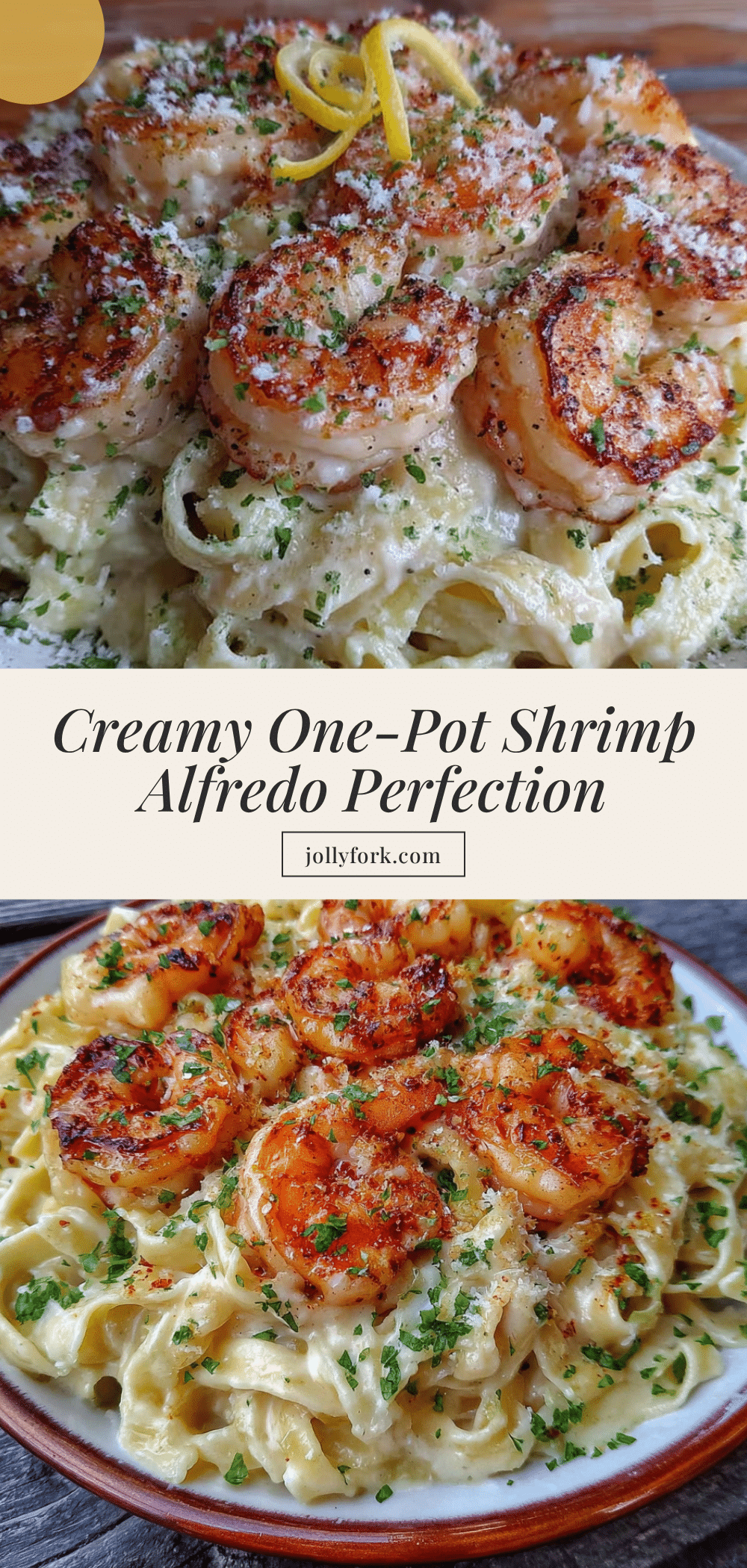
Creamy One-Pot Shrimp Alfredo Pasta: Easy Weeknight Dinner
This creamy one-pot shrimp alfredo pasta is a quick and easy weeknight dinner that comes together in about 25 minutes. With simple ingredients like garlic, butter, cream, and Parmesan, it’s a crowd-pleaser that even picky eaters will love.
- Prep Time: 10 minutes
- Cook Time: 15 minutes
- Total Time: 25 minutes
- Yield: 4 servings 1x
- Category: Main Course
- Cuisine: Italian-American
Ingredients
- 8 oz (225 g) fettuccine or linguine
- 1 lb (450 g) large raw shrimp, peeled and deveined
- 2 tablespoons (30 g) unsalted butter
- 4 cloves garlic, minced
- 1 cup (240 ml) heavy cream
- 2 cups (480 ml) low-sodium chicken broth
- 1 cup (100 g) freshly grated Parmesan cheese
- 1/2 teaspoon (2 g) salt
- 1/4 teaspoon (0.5 g) black pepper
- 1/4 teaspoon (0.5 g) red pepper flakes (optional)
- 1 tablespoon (15 ml) fresh lemon juice
- 2 tablespoons (8 g) fresh parsley, chopped
Instructions
- Prep the shrimp: Pat the shrimp dry with paper towels and season lightly with salt and pepper. Set aside.
- Sear the shrimp: Heat 1 tablespoon of butter in a large pot over medium-high heat. Add the shrimp in a single layer and cook for 1-2 minutes per side until pink and golden. Transfer to a plate and set aside.
- Build the flavor base: Reduce heat to medium. Add the remaining 1 tablespoon of butter and the minced garlic. Stir constantly for about 30 seconds until fragrant.
- Deglaze the pot: Pour in the chicken broth and scrape up any browned bits from the bottom. Bring to a gentle simmer.
- Cook the pasta: Add the fettuccine (break in half if needed) and heavy cream. Stir, cover, and cook for 8-10 minutes, stirring every 2 minutes, until pasta is al dente and sauce has thickened.
- Check the pasta: Taste a piece of pasta; it should be tender but with a slight bite. If too thick, add a splash of broth or milk.
- Add the cheese and shrimp: Remove from heat. Stir in the Parmesan until melted and smooth. Return the shrimp to the pot and stir gently.
- Finish with lemon and parsley: Add lemon juice and parsley. Stir, taste, and adjust salt and pepper if needed.
- Rest and serve: Let the pasta sit for 2-3 minutes off the heat, then serve immediately.
Notes
For best results, use freshly grated Parmesan and pat shrimp dry before cooking. Stir pasta frequently to prevent sticking. Let the dish rest for 2-3 minutes before serving to allow the sauce to thicken.
Nutrition
- Serving Size: 1 serving
- Calories: 580
- Sugar: 3
- Sodium: 780
- Fat: 28
- Saturated Fat: 16
- Carbohydrates: 48
- Fiber: 2
- Protein: 32
Keywords: shrimp alfredo, one-pot pasta, creamy pasta, easy weeknight dinner, shrimp pasta, alfredo sauce