My neighbor Carol watched me fumbling with a grocery bag on her porch last November, eggs threatening to slide out the bottom. She didn’t say anything at first. Then she just shook her head, took the bag from me, and said, “You’re overcomplicating breakfast. Come inside.”
I followed her into a kitchen that smelled like sage and something warm. She pulled a dish from the fridge, covered in foil, and slid it into the oven without a word. Twenty minutes later, I was eating the best breakfast casserole of my life. The eggs were fluffy, the sausage was perfectly browned, and there was this slight crust on top that I still dream about. I asked for the recipe, and she laughed. “It’s not a recipe. It’s just what I do on Sunday nights so Wednesday morning me doesn’t lose her mind.”
Honestly, that stuck with me. The idea of being kind to your future self through breakfast. This make-ahead sausage breakfast casserole is that exact energy. You throw it together one evening, stick it in the fridge, and wake up to a hot breakfast that tastes like you spent hours on it. I’ve tweaked Carol’s version over the years, adding a bit more cheese, swapping in different meats, figuring out what freezes well and what doesn’t. But the heart of it remains the same: this is breakfast for people who are tired but still want something good.
Maybe you’ve been there, standing in front of the fridge at 7 AM with no idea what to feed everyone. This casserole solves that problem before it starts. It’s the kind of recipe that makes you look like a morning person, even when you’re absolutely not.
Why You’ll Love This Recipe
Let me tell you why this specific casserole has earned a permanent spot in my weekly rotation. I’ve tested it on tired Tuesday mornings, chaotic holiday brunches, and even a few camping trips. It delivers every single time.
- Quick Assembly: You need about 15 minutes of active prep time. That’s it. Brown the sausage, whisk the eggs, layer everything in a dish. Your future self will thank you.
- Simple Ingredients: No trips to specialty stores. You probably have most of these in your kitchen right now. Eggs, bread, milk, cheese, sausage. That’s the whole list.
- Perfect for Busy Mornings: This was designed for people who don’t have time to cook breakfast. Assemble it the night before, bake it in the morning. You can even prep it two days ahead.
- Crowd-Pleaser: I’ve served this to picky kids, hungover friends, and in-laws who “don’t usually like casseroles.” It disappears every time. The crispy edges and creamy center win everyone over.
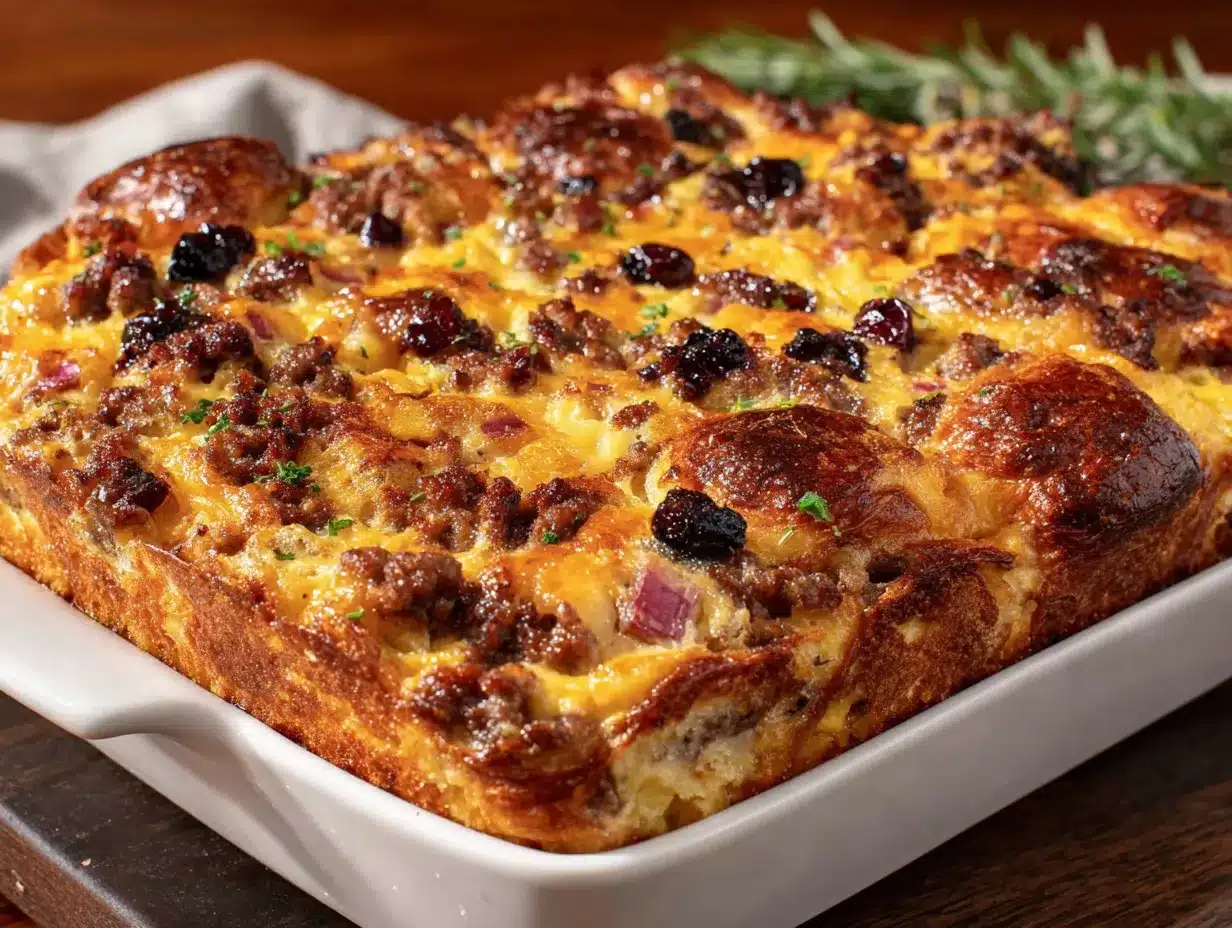
- Unbelievably Delicious: The texture is what gets me. The bread soaks up the egg mixture overnight, creating this soft, custard-like interior. Meanwhile, the top gets golden and slightly crunchy. It’s comfort food that feels special.
What makes this different from other breakfast casseroles? It’s the ratio. I spent months tweaking the egg-to-milk ratio, the amount of cheese, the type of bread. Most recipes end up too dry or too soggy. This one hits that sweet spot where every bite is moist but not wet, rich but not heavy. The sausage is browned before it goes in, so you get those little crispy bits throughout. And the make-ahead aspect isn’t an afterthought—it’s the whole point. The overnight rest allows the flavors to meld together in a way that instant baking just can’t replicate.
This isn’t just good breakfast food. It’s the kind of meal that makes you close your eyes after the first bite. It’s Saturday morning energy on a Wednesday. It’s comfort food without the stress.
What Ingredients You Will Need
This recipe relies on simple, everyday ingredients that work together to create something greater than the sum of their parts. Here’s what you’ll need and why each one matters.
For the Casserole Base
- 1 pound breakfast sausage (I prefer Jimmy Dean or a local butcher’s bulk sausage. Avoid pre-formed patties—you want loose sausage that crumbles well.)
- 8 large eggs (Room temperature eggs whisk up smoother, but cold eggs work fine since this rests overnight.)
- 2 cups whole milk (Whole milk gives the creamiest texture. You can use 2% in a pinch, but avoid skim—it gets watery.)
- 1 teaspoon salt (Kosher salt dissolves better. Table salt works too, just use slightly less.)
- 1/2 teaspoon black pepper (Freshly ground makes a difference, but pre-ground is fine for busy mornings.)
- 1 teaspoon dry mustard (This is the secret ingredient. It doesn’t make it taste like mustard—it just adds a subtle warmth that wakes up the whole dish.)
- 1/2 teaspoon garlic powder (Not enough to taste garlic, just enough to add depth.)
For the Layers
- 6 cups cubed bread (Day-old French bread or sourdough works best. The staler the bread, the better it holds up. Fresh bread gets mushy. I’ve used Texas toast, brioche, and even leftover dinner rolls—all work great.)
- 2 cups shredded cheddar cheese (Sharp cheddar gives the most flavor. Mild cheddar is fine if that’s what you have. I’ve also used a mix of cheddar and Monterey Jack for extra creaminess.)
- 1/2 cup shredded Parmesan cheese (This adds a salty, nutty note that balances the richness. Skip it if you’re out, but you’ll miss it.)
Optional Add-Ins
- 1/2 cup diced onion (Sauté it with the sausage for extra flavor. My husband hates onions, so I often leave this out.)
- 1/2 cup diced bell pepper (Adds color and a slight sweetness. Red or orange peppers are milder than green.)
- 1 cup sliced mushrooms (Sauté them first to release moisture. Otherwise, they’ll make the casserole watery.)
- 2 cups fresh spinach (Wilt it into the cooked sausage. It shrinks way down, so don’t be alarmed by the volume.)
I recommend using a good quality breakfast sausage here. The flavor really carries the whole dish. If you’re using a milder sausage, consider adding a pinch of red pepper flakes or sage. For a lighter option, turkey sausage works well, just be sure to brown it thoroughly since it releases less fat.
Equipment Needed
You don’t need fancy equipment for this recipe. Here’s what I use and some alternatives if you’re working with a less stocked kitchen.
- 9×13 inch baking dish (Glass or ceramic works best. Metal dishes can cause the edges to brown too quickly. If you only have a metal pan, reduce the oven temperature by 25 degrees.)
- Large skillet (For browning the sausage. A non-stick skillet makes cleanup easier, but stainless steel works fine.)
- Large mixing bowl (For whisking the eggs and milk. Any bowl works—I’ve used a pasta pot in a pinch.)
- Whisk (A fork works too, but a whisk incorporates air better, giving you fluffier eggs.)
- Measuring cups and spoons (I’m usually a “by eye” cook, but for this recipe, the ratios matter. Measure the milk and cheese.)
- Spatula or wooden spoon (For breaking up the sausage as it cooks.)
- Aluminum foil (For covering the dish while it bakes and while it rests overnight.)
- Knife and cutting board (For cubing the bread. If the bread is fresh, pop it in a 300°F oven for 10 minutes to dry it out.)
If you don’t have a 9×13 dish, you can use two 8×8 dishes or even a deep-dish pie plate. Just adjust the baking time slightly. A good tip I learned the hard way: spray your dish generously with cooking spray, even if it’s non-stick. Trust me on this one.
Preparation Method
This recipe comes together in three easy stages. Take it step by step, and you’ll have breakfast sorted for the whole week.
Stage 1: Brown the Sausage
- Place a large skillet over medium-high heat. Add the sausage, breaking it up with a spatula as it cooks. You want small, even crumbles, not big chunks. This takes about 6-8 minutes.
- Cook until the sausage is browned and no longer pink. If you’re using onions or peppers, add them halfway through cooking so they soften without burning. The sausage should release enough fat to cook the vegetables without extra oil.
- Drain the excess grease. I pour the sausage into a paper towel-lined plate or use a slotted spoon to transfer it to a bowl. Leaving too much grease in the casserole makes it oily. Don’t rinse it—you want some fat for flavor.
- Let the sausage cool for 5-10 minutes. If you add hot sausage to the egg mixture, it can start cooking the eggs prematurely. Patience here pays off.
Stage 2: Prepare the Egg Mixture
- In a large mixing bowl, crack all 8 eggs. Whisk them vigorously for about 30 seconds until the yolks and whites are completely combined. You shouldn’t see any streaks of white.
- Add the milk, salt, pepper, dry mustard, and garlic powder. Whisk again until everything is smooth. The dry mustard might clump at first—keep whisking until it dissolves.
- Taste the mixture. I know, raw eggs. But just a tiny dab on your finger to check the seasoning level. It should taste well-seasoned because the bread and sausage will dilute it.
Stage 3: Assemble the Casserole
- Spread the cubed bread evenly in your greased 9×13 dish. Don’t press it down—you want air gaps so the egg mixture can seep in. If you’re using fresh bread, let it sit out for an hour to stale slightly.
- Sprinkle the cooked sausage evenly over the bread. Try to distribute it so every bite gets some meat. I use my hands for this, spreading it like I’m topping a pizza.
- Pour the egg mixture evenly over the bread and sausage. Use a spatula to gently press down on the bread, encouraging it to absorb the liquid. Don’t stir—just press. You want the bread to soak up the eggs, not get mushy.
- Sprinkle both cheeses over the top. Cover the dish tightly with foil and refrigerate for at least 4 hours, but overnight is best. The longer it rests, the more the flavors meld together.
Stage 4: Bake and Serve
- When you’re ready to bake, preheat your oven to 350°F. Remove the casserole from the fridge while the oven heats. This takes the chill off and helps it bake more evenly.
- Bake covered for 30 minutes. The foil traps steam, which helps the center cook through without drying out the edges. Don’t skip this step.
- Remove the foil and bake for another 15-20 minutes. The top should be golden brown, and the edges should look slightly crispy. A knife inserted in the center should come out clean.
- Let the casserole rest for 5-10 minutes before cutting. This allows the eggs to set completely. Cutting too early gives you a soupy mess. I know it’s hard to wait, but it’s worth it.
- Slice into squares and serve warm. The leftovers reheat beautifully in the microwave or oven.
Cooking Tips & Techniques
I’ve made this casserole probably fifty times now, and I’ve learned a few things the hard way. Let me save you some trouble.
Don’t skip the overnight rest. I know it’s tempting to bake it right away, especially when you’re hungry. But the bread needs time to absorb the egg mixture. Without that rest, you end up with dry bread chunks floating in liquid egg. The overnight soak transforms everything into a cohesive, custard-like texture. Four hours is the minimum. Twelve hours is ideal.
Watch your oven temperature. Every oven runs differently. If your casserole is browning too fast on top but still jiggly in the center, tent it with foil again. If it’s taking forever to set, increase the temperature by 25 degrees for the last 10 minutes. I once burned the top while the center was still raw because I didn’t check early enough. Learn from my mistake.
Use day-old bread. Fresh bread turns to mush. I keep a bag of bread cubes in my freezer specifically for this recipe. If you only have fresh bread, cube it and spread it on a baking sheet in a 300°F oven for 10 minutes. You want it dry but not toasted. This little step makes a huge difference.
Let the sausage cool. I learned this one the messy way. Adding hot sausage to the egg mixture starts cooking the eggs immediately, creating little scrambled egg bits throughout the casserole. It still tastes fine, but the texture is uneven. Let the sausage cool for at least 10 minutes before assembling.
Don’t overmix the eggs. Whisk them until they’re combined, but don’t go crazy. Over-whisking incorporates too much air, which can make the casserole puff up in the oven and then deflate. You want it dense and creamy, not airy and spongy.
Use a sharp knife to cut. A dull knife will squish the casserole instead of slicing through it. Run your knife under hot water between cuts for the cleanest slices. This is a restaurant trick that works beautifully at home.
Variations & Adaptations
One of the best things about this recipe is how flexible it is. Here are some variations I’ve tried and loved.
Dietary Adaptations
- Gluten-Free: Use gluten-free bread. I like Canyon Bakehouse or Schar. The texture is slightly different, but it works surprisingly well. Just be sure to dry the bread out first, as gluten-free bread tends to be more moist.
- Low-Carb: Swap the bread for 4 cups of frozen hash browns or cauliflower rice. Thaw and squeeze out the excess moisture first. The texture is different but still delicious.
- Vegetarian: Skip the sausage and add 2 cups of sautéed mushrooms, spinach, and bell peppers. I also add an extra 1/2 cup of cheese for richness. My vegetarian friend requests this version for every brunch.
- Dairy-Free: Use unsweetened almond milk or oat milk and dairy-free cheese. The texture won’t be as creamy, but it’s still good. I recommend Violife or Miyoko’s for cheese alternatives.
Flavor Variations
- Southwest: Add 1 can of drained green chiles, 1/2 cup of corn, and use pepper jack cheese instead of cheddar. Top with salsa and avocado after baking.
- Mediterranean: Use turkey sausage, add 1/2 cup of sun-dried tomatoes, 1/4 cup of olives, and use feta cheese instead of Parmesan. This version is lighter and brighter.
- Biscuit and Gravy: Replace the bread with 4 cups of halved refrigerated biscuits and use 1 cup of milk plus 1 can of cream of mushroom soup as the liquid. It’s indulgent but incredible.
Make-Ahead Variations
- Freezer-Friendly: Assemble the casserole in a disposable aluminum pan, cover tightly with foil, and freeze for up to 3 months. Bake from frozen, adding 20 minutes to the covered baking time.
- Individual Servings: Divide the mixture among greased muffin tins. Bake for 15-18 minutes. These are perfect for grab-and-go breakfasts. I make a batch every month for my husband’s early work days.
Serving & Storage Suggestions
This casserole is versatile enough for any occasion. Here’s how I serve and store mine.
Serving Temperature: Serve warm, not hot. Let it rest for 5-10 minutes after baking. The flavors come together beautifully at this temperature. I’ve served it cold the next day, and it’s still good, but warm is definitely better.
Presentation: Cut into clean squares and arrange on a platter. Garnish with fresh parsley or chives for color. A dollop of sour cream or hot sauce on the side lets guests customize their serving. For brunch, I serve it alongside fresh fruit and mimosas.
Complementary Dishes: This casserole pairs well with simple sides. A green salad with vinaigrette cuts through the richness. Roasted potatoes add crunch. Fresh fruit provides a sweet contrast. For a full brunch spread, add muffins, yogurt parfaits, and coffee cake.
Refrigerator Storage: Store leftovers in an airtight container for up to 4 days. The flavors actually deepen over time. I often find the second-day leftovers taste even better than the first. Reheat individual portions in the microwave for 1-2 minutes or in a 350°F oven for 10 minutes.
Freezer Storage: Wrap individual portions in plastic wrap, then foil, and freeze for up to 3 months. Thaw overnight in the fridge before reheating. To reheat from frozen, unwrap and microwave for 2-3 minutes, or bake at 350°F for 20 minutes.
Reheating Tips: The microwave is fastest, but the oven gives you crisper edges. For the best of both worlds, microwave for 1 minute to warm through, then finish under the broiler for 2 minutes to crisp the top. This is my go-to method for leftovers.
Nutritional Information & Benefits
Here’s the nutritional breakdown for one serving (based on 8 servings per recipe). These values are estimates and can vary based on specific ingredients used.
- Calories: Approximately 380-420
- Protein: 22-25 grams
- Fat: 24-28 grams
- Carbohydrates: 18-22 grams
- Fiber: 1-2 grams
- Sugar: 4-6 grams
- Sodium: 650-750 mg
Health Benefits: This casserole provides a solid protein boost from the eggs and sausage, which helps keep you full until lunch. Eggs are rich in choline, which supports brain health. The calcium from the milk and cheese is good for bone health. If you add vegetables like spinach or peppers, you’ll get extra vitamins and fiber.
Dietary Considerations: This recipe contains gluten, dairy, and eggs. For gluten-free, use gluten-free bread. For dairy-free, use plant-based milk and cheese alternatives. For lower sodium, use reduced-sodium sausage and cheese. This casserole is not suitable for vegan diets due to the eggs and dairy.
My Take: I don’t pretend this is health food. It’s comfort food that happens to have some nutritional value. But for a busy morning, it’s a balanced meal that provides sustained energy. I pair it with fruit or a side salad to round out the meal.
Conclusion
This make-ahead sausage breakfast casserole has become a staple in my kitchen for good reason. It’s the recipe I turn to when I want to feel organized, when I’m hosting guests, or when I just need breakfast to be easy. Carol was right that day on her porch: we overcomplicate breakfast. Sometimes the best meals are the ones you can prep ahead and forget about until you need them.
I love that this recipe is forgiving. You can swap ingredients, adjust the seasonings, or double it for a crowd. It never lets you down. The crispy edges, the creamy center, the savory sausage throughout—it’s simple food done right. And honestly, isn’t that what we all want on a busy morning?
I encourage you to make this your own. Add your favorite vegetables, try different cheeses, experiment with spices. The base recipe is solid, but the variations are endless. If you try it, let me know how it turns out. Share your adaptations in the comments, or tag me in your photos. I love seeing how this recipe evolves in other kitchens.
Go ahead, make your future self happy. Assemble this casserole tonight, and wake up to a breakfast that feels like a gift. You deserve it.
Frequently Asked Questions
Can I use a different type of meat?
Absolutely. Ground turkey, chicken, or even crumbled bacon work well. Just be sure to cook the meat thoroughly before adding it to the casserole. If using bacon, drain the grease well to avoid a greasy final dish.
How long can I keep the assembled casserole in the fridge before baking?
You can refrigerate the assembled casserole for up to 2 days before baking. After that, the bread can become too soggy. If you need longer storage, freeze it instead. The overnight rest is ideal, but 4 hours is the minimum for good results.
Can I bake this casserole without resting it overnight?
You can, but the texture won’t be as good. Without the rest, the bread won’t fully absorb the egg mixture, resulting in a drier, less cohesive casserole. If you’re in a rush, let it rest for at least 30 minutes at room temperature before baking. It’s not ideal, but it works in a pinch.
How do I prevent the casserole from becoming soggy?
Use day-old or dried bread, drain the sausage grease well, and don’t overdo the milk. The ratio in this recipe is carefully balanced to avoid sogginess. Also, be sure to bake it covered first to allow the center to cook through without drying out the edges.
Can I make this casserole in a slow cooker?
Yes, but the texture will be different. Grease the slow cooker insert, layer the ingredients as directed, and cook on low for 4-5 hours or on high for 2-3 hours. The top won’t get crispy, so I recommend broiling it for 2-3 minutes after cooking if you want that golden crust.
Pin This Recipe!
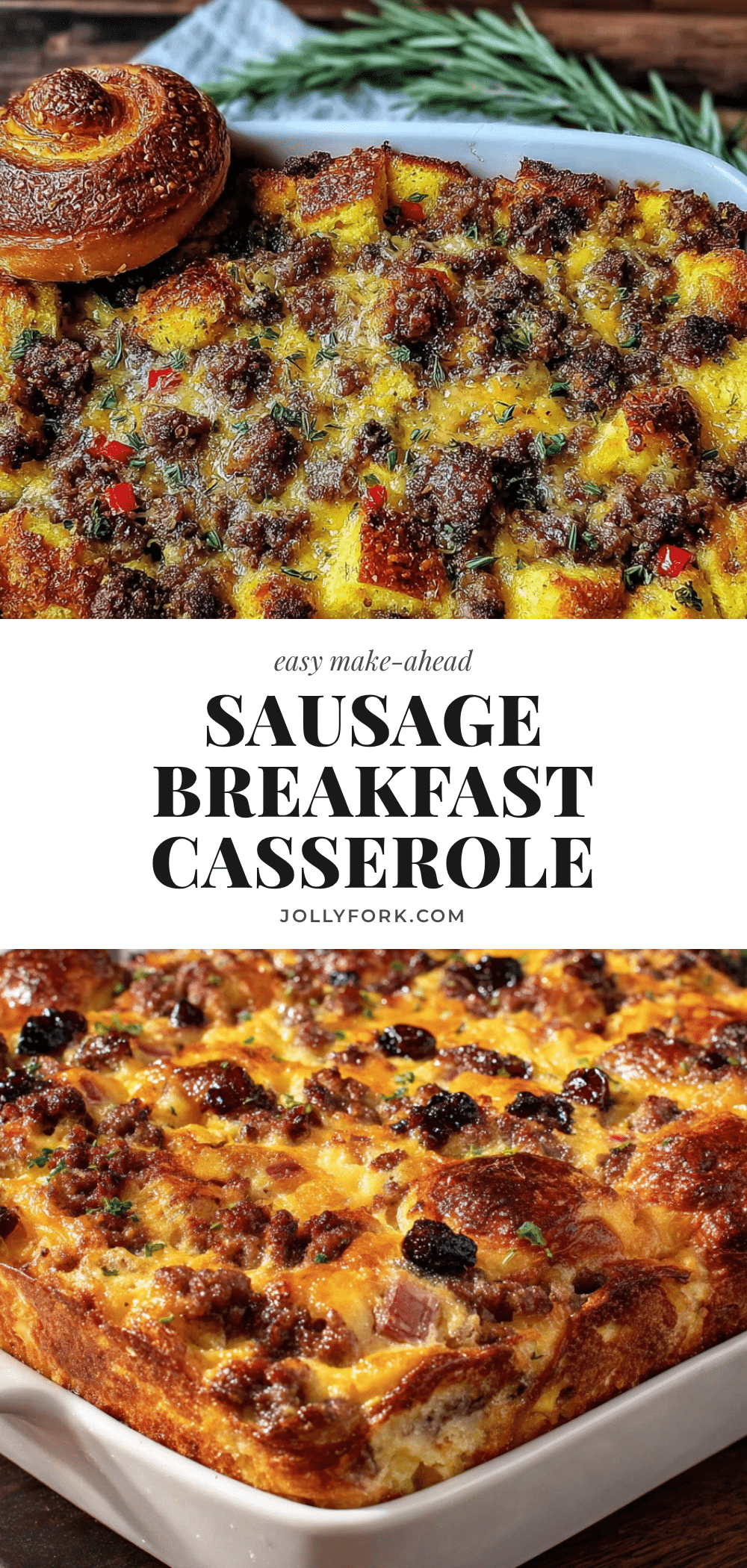
Best Make-Ahead Sausage Breakfast Casserole

A make-ahead breakfast casserole with fluffy eggs, perfectly browned sausage, and a golden crust. Assemble it the night before and bake in the morning for a stress-free, crowd-pleasing breakfast.
- Prep Time: 15 minutes
- Cook Time: 45 minutes
- Total Time: 1 hour (plus overnight rest)
- Yield: 8 servings 1x
- Category: Breakfast
- Cuisine: American
Ingredients
- 1 pound breakfast sausage (loose, not patties)
- 8 large eggs
- 2 cups whole milk
- 1 teaspoon kosher salt
- 1/2 teaspoon black pepper (freshly ground preferred)
- 1 teaspoon dry mustard
- 1/2 teaspoon garlic powder
- 6 cups cubed day-old bread (French or sourdough preferred)
- 2 cups shredded sharp cheddar cheese
- 1/2 cup shredded Parmesan cheese
- 1/2 cup diced onion (optional)
- 1/2 cup diced bell pepper (optional)
- 1 cup sliced mushrooms (optional)
- 2 cups fresh spinach (optional)
Instructions
- Brown the sausage in a large skillet over medium-high heat, breaking it into small crumbles, about 6-8 minutes. If using onions or peppers, add them halfway through. Drain excess grease and let cool for 5-10 minutes.
- In a large bowl, whisk eggs until combined. Add milk, salt, pepper, dry mustard, and garlic powder; whisk until smooth.
- Grease a 9×13-inch baking dish. Spread cubed bread evenly in the dish. Sprinkle cooked sausage over the bread.
- Pour egg mixture evenly over the bread and sausage. Gently press down with a spatula to help bread absorb the liquid. Sprinkle both cheeses on top.
- Cover tightly with foil and refrigerate for at least 4 hours, preferably overnight.
- When ready to bake, preheat oven to 350°F. Remove casserole from fridge while oven heats.
- Bake covered for 30 minutes. Remove foil and bake another 15-20 minutes until top is golden brown and a knife inserted in center comes out clean.
- Let rest for 5-10 minutes before cutting into squares. Serve warm.
Notes
Don’t skip the overnight rest for best texture. Use day-old bread to avoid sogginess. Let sausage cool before adding to egg mixture. For a crispy top, broil for 2 minutes after baking. Leftovers keep in the fridge for up to 4 days or freeze for up to 3 months.
Nutrition
- Serving Size: 1 square (1/8 of cas
- Calories: 400
- Sugar: 5
- Sodium: 700
- Fat: 26
- Saturated Fat: 12
- Carbohydrates: 20
- Fiber: 1
- Protein: 23
Keywords: breakfast casserole, make-ahead, sausage casserole, overnight casserole, brunch, easy breakfast