My grandmother called it “stretch stew.” I remember standing on a step stool in her kitchen, watching her brown the cheapest cut of beef the butcher had that day. She’d look at me with a knowing smile and say, “Honey, some of the best meals come from making do with what you’ve got.” And she meant it. That woman could take a tough piece of meat, some tired carrots, and a few potatoes and turn them into something that felt like a warm hug on a cold Tuesday night.
I didn’t always believe her, though. For years, I chased after recipes with fancy names and long lists of imported ingredients. I thought a good stew needed red wine from France and herbs I couldn’t pronounce. But honestly? I was wrong. Dead wrong. The truth is, this poor man’s beef stew—the one my grandmother made without a second thought—tastes richer, deeper, and more satisfying than any restaurant version I’ve ever ordered. It’s the kind of meal that makes you slow down, breathe deep, and remember what real comfort food feels like.
This recipe uses humble ingredients you probably already have in your pantry. No expensive cuts of meat. No complicated techniques. Just patience, a heavy pot, and the willingness to let time do its magic. The beef gets fall-apart tender. The potatoes soak up all that savory broth. And the carrots? They turn sweet and buttery in a way that will surprise you. By the end of cooking, your kitchen smells like a promise—the kind that says everything is going to be okay.
Why You’ll Love This Recipe
Let me tell you why this stew has earned a permanent spot in my weekly rotation. I’ve tested it more times than I can count, tweaking and adjusting until every spoonful felt just right. And honestly, it delivers every single time without fail.
- Budget-Friendly: This whole meal comes together for under fifteen dollars, and it feeds a crowd. No fancy ingredients needed—just good old-fashioned pantry staples that won’t break the bank.
- One-Pot Wonder: You only need one heavy pot or Dutch oven. Less cleanup means more time to actually sit down and enjoy your meal. That’s a win in my book.
- Deep, Rich Flavor: The secret is browning the meat properly and letting it simmer low and slow. No shortcuts, no cheating—just real, honest flavor that builds with every passing hour.
- Perfect for Meal Prep: This stew actually tastes better the next day. The flavors meld together overnight into something even more incredible. Make it on Sunday, and you’ve got lunches sorted for half the week.
- Family-Approved: I’ve served this to picky eaters, hungry teenagers, and dinner guests who expected something fancy. Every single one of them asked for seconds. That’s the kind of approval that matters.
What makes this recipe different from the dozens of other beef stew recipes out there? It’s the technique. Most people rush the browning step or skip it entirely. But taking those extra ten minutes to get a deep, dark crust on the beef makes all the difference. Plus, I add a splash of Worcestershire sauce and a bay leaf that nobody expects but everybody notices. It’s those little details that turn a simple meal into something memorable.
This isn’t just another stew recipe. It’s the one you’ll come back to again and again when you need something warm, filling, and honest. The kind of meal that makes you close your eyes after the first bite and forget about everything else for a minute.
What Ingredients You Will Need
This recipe uses simple, wholesome ingredients to deliver bold flavor and satisfying texture without any fuss. Most of these items are probably sitting in your kitchen right now, which makes this the perfect last-minute dinner solution.
For the Stew Base
- 2 pounds beef chuck or stew meat, cut into 1-inch cubes (look for well-marbled pieces—the fat adds flavor and tenderness as it cooks)
- 3 tablespoons all-purpose flour (for coating the beef and thickening the stew)
- 2 tablespoons olive oil or vegetable oil (use a neutral oil with a high smoke point for browning)
- 1 large yellow onion, diced (about 1.5 cups)
- 3 cloves garlic, minced (fresh is best here—skip the jarred stuff)
- 4 cups beef broth (I prefer low-sodium so I can control the salt level)
- 1 can (14.5 ounces) diced tomatoes, undrained (fire-roasted adds a nice smoky depth)
- 2 tablespoons tomato paste (this is the secret to that rich, dark color)
- 2 tablespoons Worcestershire sauce (adds umami and depth you can’t get from anything else)
- 1 bay leaf (don’t skip this—it adds a subtle herbal note that ties everything together)
- 1 teaspoon dried thyme (or 2 sprigs fresh if you have them)
- 1 teaspoon smoked paprika (regular works too, but smoked adds something special)
- Salt and black pepper, to taste
For the Vegetables
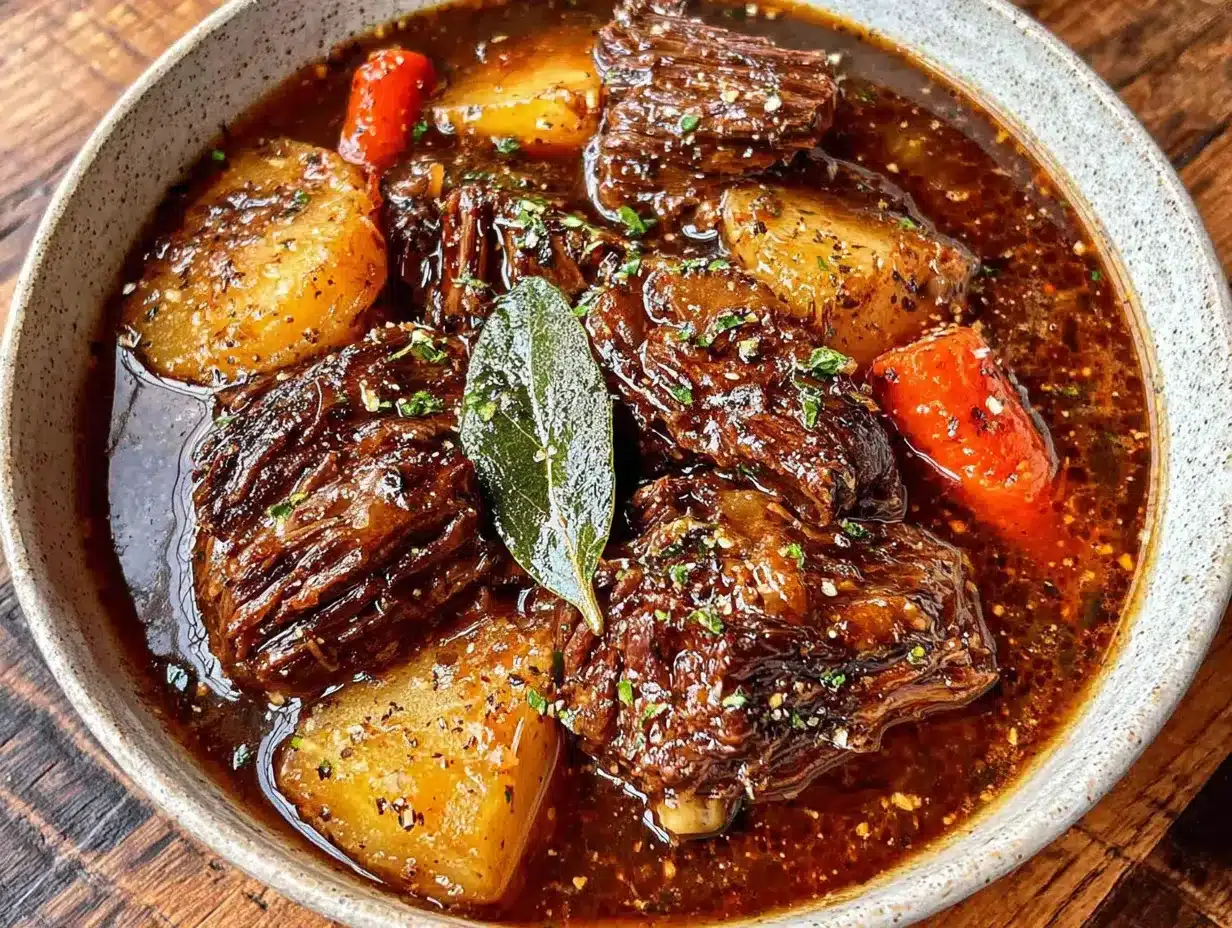
- 4 medium Yukon Gold or Russet potatoes, peeled and cut into 1-inch chunks (Yukon Golds hold their shape better and have a creamier texture)
- 4 large carrots, peeled and sliced into 1/2-inch rounds (go for thick carrots—they’ll hold up better during the long simmer)
- 2 stalks celery, sliced (optional, but I love the subtle crunch and flavor it adds)
- 1 cup frozen peas (add these at the very end—they only need a few minutes to warm through)
Ingredient Tips: For the best texture, look for beef chuck with good marbling. I’ve tried this with sirloin and round, and nothing compares to chuck after a long, slow simmer. If you can’t find stew meat already cut, buy a whole chuck roast and cube it yourself—it’s cheaper and you get better control over the size.
Substitution Guidance: Use sweet potatoes instead of regular potatoes for a slightly sweeter twist. Swap the beef broth for mushroom broth if you want a vegetarian version (though it won’t be quite the same). And if you’re out of Worcestershire sauce, a splash of soy sauce or balsamic vinegar can work in a pinch.
Equipment Needed
You don’t need a fancy kitchen to make this stew. Here’s what you’ll need:
- Dutch oven or heavy-bottomed pot (5 to 6 quarts is ideal—something that holds heat well and has a tight-fitting lid)
- Sharp chef’s knife (a dull knife makes cutting beef and vegetables frustrating and dangerous)
- Cutting board (preferably wooden or plastic)
- Wooden spoon or spatula (for stirring and scraping up those browned bits from the bottom)
- Measuring cups and spoons
- Large bowl (for tossing the beef with flour)
- Colander (for rinsing vegetables)
If you don’t have a Dutch oven, a large heavy-bottomed pot or even a slow cooker will work. I’ve made this in a cast iron skillet with a lid, and it turned out just fine. The key is even heat distribution and a tight seal to keep the moisture in. My grandmother used an old enameled pot that was chipped in three places, and her stew was always perfect.
One tip: invest in a good wooden spoon. The flat-edged ones are best for scraping up the fond—those browned bits stuck to the bottom of the pot after searing the meat. That stuff is pure flavor gold, and you don’t want to leave any behind.
Preparation Method
This is where the magic happens. Follow these steps closely, and you’ll end up with a stew that tastes like it simmered all day—even if you’re short on time.
Step 1: Prep the Beef (5 minutes)
Pat the beef cubes dry with paper towels. This step is non-negotiable—wet meat won’t brown properly. Season generously with salt and pepper. Then toss the beef with the flour until every piece is lightly coated. Shake off any excess flour. The flour helps create that gorgeous brown crust and thickens the stew later.
Step 2: Brown the Beef (10-15 minutes)
Heat the oil in your Dutch oven over medium-high heat until it shimmers. Working in batches (don’t crowd the pot!), add the beef in a single layer. Let it sear undisturbed for 3-4 minutes until the bottom is deep brown and crusty. Flip and repeat on the other side. Transfer the browned beef to a plate and set aside. If you crowd the pot, the meat will steam instead of brown, and you’ll lose all that flavor.
Step 3: Sauté the Aromatics (5 minutes)
Reduce the heat to medium. Add the diced onion to the pot and cook for 3-4 minutes, scraping up any browned bits from the bottom. The onion should turn translucent and start to soften. Add the minced garlic and cook for another 30 seconds until fragrant—don’t let it burn or it’ll turn bitter.
Step 4: Build the Broth (5 minutes)
Stir in the tomato paste and cook for 1-2 minutes until it darkens slightly. This step deepens the flavor. Pour in the beef broth, diced tomatoes (with their juices), Worcestershire sauce, thyme, smoked paprika, and bay leaf. Stir everything together, scraping up any remaining browned bits from the bottom of the pot.
Step 5: Simmer the Stew (1.5 to 2 hours)
Return the browned beef to the pot along with any accumulated juices. Bring the stew to a gentle boil, then reduce the heat to low. Cover with a tight-fitting lid and let it simmer for 1 hour. The liquid should barely bubble—a gentle simmer, not a rolling boil. Check occasionally to make sure it’s not cooking too fast.
Step 6: Add the Vegetables (30-40 minutes)
After the first hour, add the potatoes, carrots, and celery (if using). Stir everything together, cover again, and continue simmering for another 30-40 minutes. The vegetables should be fork-tender but not falling apart. The potatoes should offer a little resistance when pierced—they’ll continue cooking slightly even after you turn off the heat.
Step 7: Finish and Serve (5 minutes)
Remove the bay leaf and discard it. Stir in the frozen peas—they only need 2-3 minutes to warm through. Taste the broth and adjust the seasoning with more salt and pepper if needed. If the stew seems too thin, let it simmer uncovered for 10 more minutes to thicken. If it’s too thick, add a splash of beef broth or water.
Sensory Cues: The broth should be rich and dark brown, thick enough to coat the back of a spoon. The beef should be so tender it almost falls apart when you poke it with a fork. The smell should fill your kitchen with warmth—earthy, savory, and deeply comforting.
Cooking Tips & Techniques
I’ve made this stew dozens of times, and I’ve learned a few things the hard way. Here’s what I wish someone had told me from the start.
Don’t skip the browning step. I know it’s tempting to just dump everything in the pot and walk away. But that 10-15 minutes of browning builds a flavor foundation that no amount of simmering can replicate. The browned bits stuck to the bottom of the pot—called fond—are concentrated flavor. Deglaze them with the broth, and you’ll taste the difference.
Patience is everything. Low and slow is the name of the game here. Crank up the heat to save time, and you’ll end up with tough, chewy beef. The connective tissue in chuck needs time to break down into gelatin, which gives the broth that silky, luxurious texture. Rush it, and you’ll be disappointed.
Season in layers. Salt the beef before browning. Add more salt with the broth. Taste and adjust at the end. Seasoning in stages builds complexity—you can’t just dump it all in at the end and expect the same result. I learned this after making a few flat-tasting stews that needed a whole lot of salt to fix.
Watch your heat levels. A simmer should show small, lazy bubbles breaking the surface. If you see big, vigorous bubbles, you’re boiling—and that’ll make your beef tough and your potatoes mushy. Adjust the heat as needed throughout cooking.
Let it rest. Stew always tastes better after sitting for 15-20 minutes off the heat. The flavors meld together, and the broth thickens slightly as it cools. If you can wait overnight, even better. I’ve made this stew the day before serving, and it was the best version I’ve ever had.
Variations & Adaptations
This recipe is flexible. Here are some ways to make it your own.
Slow Cooker Version: Brown the beef and sauté the aromatics on the stovetop first, then transfer everything to a slow cooker. Cook on low for 6-8 hours or high for 3-4 hours. Add the potatoes and carrots during the last 2 hours so they don’t turn to mush.
Instant Pot Version: Use the sauté function to brown the beef and cook the aromatics. Add the broth, tomatoes, and seasonings. Pressure cook on high for 35 minutes with natural release. Then add the vegetables and pressure cook for another 5 minutes. Quick release and you’re done.
Vegetarian Adaptation: Swap the beef for hearty mushrooms (cremini or portobello) and use vegetable broth. Add a can of chickpeas or lentils for protein. The flavor won’t be exactly the same, but it’ll still be deeply satisfying.
Spicy Twist: Add a diced jalapeño with the onions, or stir in a teaspoon of red pepper flakes. A dash of cayenne pepper at the end adds warmth without overwhelming the other flavors. I tried this once on a whim, and it became my husband’s favorite version.
Herb Variations: Swap the thyme for rosemary or oregano. Add a sprig of fresh sage during the last 30 minutes of cooking. Fresh herbs add brightness that dried herbs can’t quite match. Just remember to remove the stems before serving.
Serving & Storage Suggestions
This stew is a meal in itself, but the right sides can make it even better. Serve it piping hot in deep bowls with crusty bread for soaking up every last drop of broth. A side of buttered egg noodles or fluffy rice works beautifully too. I love pairing it with a simple green salad dressed with lemon vinaigrette—the acidity cuts through the richness perfectly.
For a cozy presentation, ladle the stew into bowls and top with a sprinkle of fresh parsley or chives. A dollop of sour cream or Greek yogurt adds a nice tangy contrast. And if you’re feeling indulgent, a pat of butter melting into the hot stew is never a bad idea.
Storage Instructions: Let the stew cool completely before transferring to airtight containers. It will keep in the refrigerator for 4-5 days. The flavors actually improve after a day or two, so don’t be afraid to make it ahead.
Freezer Instructions: This stew freezes beautifully. Portion it into freezer-safe containers or zip-top bags, leaving a little headroom for expansion. It will keep for up to 3 months. Thaw overnight in the refrigerator before reheating.
Reheating Tips: Reheat gently on the stovetop over medium-low heat, stirring occasionally. Add a splash of beef broth or water if the stew has thickened too much. You can also microwave individual portions in 30-second bursts, stirring between each. The potatoes might soften a bit more upon reheating, but the flavor will still be incredible.
Nutritional Information & Benefits
This stew is hearty comfort food, but it also packs some nutritional value. Each serving (about 1.5 cups) contains approximately:
- Calories: 380
- Protein: 32g
- Fat: 14g
- Carbohydrates: 32g
- Fiber: 5g
- Sugar: 8g
- Sodium: 680mg (varies based on broth and added salt)
Health Benefits: Beef is an excellent source of iron, zinc, and B vitamins, which support energy metabolism and immune function. Carrots provide beta-carotene for eye health, while potatoes offer potassium and vitamin C. The slow cooking method helps retain nutrients that might be lost with faster cooking techniques.
Dietary Considerations: This recipe is naturally gluten-free if you use a gluten-free flour blend or cornstarch for thickening. It’s also dairy-free and nut-free. To make it lower in sodium, use low-sodium beef broth and reduce the added salt. For a lower-carb option, swap the potatoes for additional carrots, celery, or turnips.
I won’t pretend this is a health food—it’s comfort food, through and through. But knowing it’s made with real, whole ingredients makes that second bowl feel a little less guilty.
Conclusion
This poor man’s beef stew is more than just a recipe—it’s a reminder that the best meals don’t need to be complicated or expensive. With a little patience and a few humble ingredients, you can create something that warms you from the inside out and fills your home with the kind of smell that makes everyone gather around the table.
I love this recipe because it’s honest. It doesn’t pretend to be something it’s not. It’s simple, hearty, and deeply satisfying in a way that fancy food rarely is. Every time I make it, I think of my grandmother and her chipped enamel pot, and I feel grateful for the lessons she taught me about cooking with what you have.
If you try this recipe, I’d love to hear how it turned out. Did you add your own twist? Did your family ask for seconds? Drop a comment below and let me know. And if you’re looking for other cozy, budget-friendly meals, check out this cream cheese stuffed pumpkin chocolate chip muffins for a sweet fall treat, or this rustic sourdough pumpkin bread with pepitas for the perfect bread to serve alongside your stew.
Happy cooking, friends. May your stew always be rich, your bread always be crusty, and your table always be full.
Frequently Asked Questions
Can I use a different cut of beef?
Absolutely. Chuck is ideal because of its marbling, but bottom round, brisket, or even sirloin tip will work. Just avoid lean cuts like top round—they’ll turn tough and dry during the long simmer. If you’re using a leaner cut, consider reducing the cooking time slightly and adding the vegetables earlier.
How do I thicken the stew if it’s too thin?
Mix 2 tablespoons of cornstarch with 2 tablespoons of cold water to make a slurry. Stir it into the simmering stew and cook for 2-3 minutes until thickened. Alternatively, you can mash a few of the potatoes against the side of the pot to release their starch, which naturally thickens the broth.
Can I add other vegetables?
Of course. Parsnips, turnips, sweet potatoes, and even green beans work beautifully. Just keep in mind that different vegetables have different cooking times. Add hard vegetables like parsnips with the potatoes, and add tender vegetables like green beans in the last 15 minutes of cooking.
Why is my beef tough?
This usually happens when the stew isn’t cooked long enough or the heat is too high. Beef chuck needs time for the connective tissue to break down into gelatin. If your beef is tough, let it simmer another 30-45 minutes on low heat. Patience is the only fix here.
Can I make this in advance for a party?
Yes, and I actually recommend it. Make the stew a day ahead, let it cool, and refrigerate overnight. The flavors meld and deepen beautifully. Reheat gently on the stovetop, adding a splash of broth if needed. Your guests will think you spent all day cooking.
Pin This Recipe!
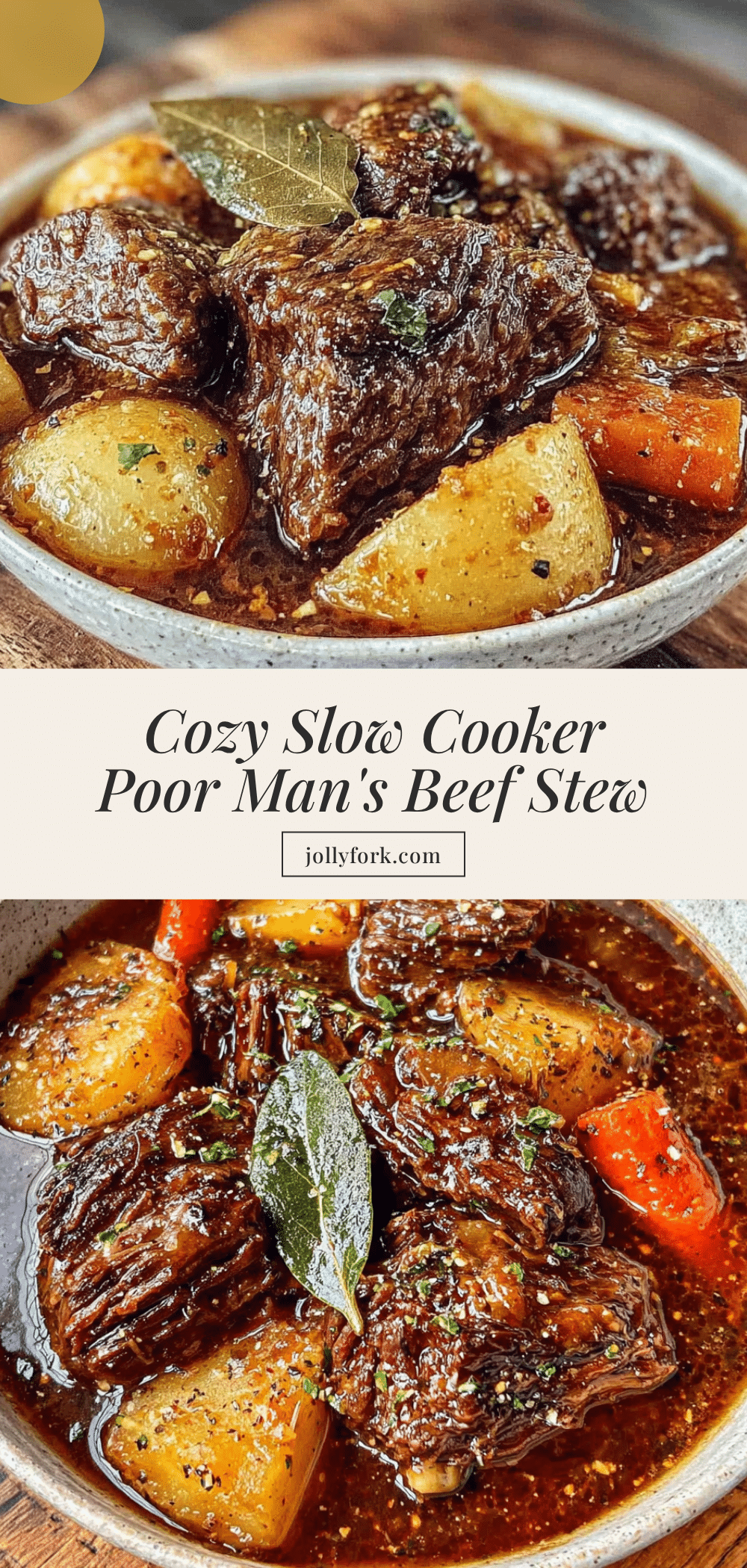
Cozy Poor Mans Beef Stew with Potatoes and Carrots
A humble, budget-friendly beef stew that delivers deep, rich flavor through simple ingredients and slow simmering. Perfect for a cozy, comforting meal that tastes even better the next day.
- Prep Time: 15 minutes
- Cook Time: 1 hour 45 minutes
- Total Time: 2 hours
- Yield: 6 servings 1x
- Category: Main Course
- Cuisine: American
Ingredients
- 2 pounds beef chuck or stew meat, cut into 1-inch cubes
- 3 tablespoons all-purpose flour
- 2 tablespoons olive oil or vegetable oil
- 1 large yellow onion, diced (about 1.5 cups)
- 3 cloves garlic, minced
- 4 cups beef broth (low-sodium preferred)
- 1 can (14.5 ounces) diced tomatoes, undrained
- 2 tablespoons tomato paste
- 2 tablespoons Worcestershire sauce
- 1 bay leaf
- 1 teaspoon dried thyme
- 1 teaspoon smoked paprika
- Salt and black pepper, to taste
- 4 medium Yukon Gold or Russet potatoes, peeled and cut into 1-inch chunks
- 4 large carrots, peeled and sliced into 1/2-inch rounds
- 2 stalks celery, sliced (optional)
- 1 cup frozen peas
Instructions
- Pat the beef cubes dry with paper towels. Season generously with salt and pepper. Toss the beef with the flour until lightly coated. Shake off excess flour.
- Heat the oil in a Dutch oven over medium-high heat until shimmering. Working in batches, add the beef in a single layer and sear undisturbed for 3-4 minutes until deep brown. Flip and repeat. Transfer browned beef to a plate.
- Reduce heat to medium. Add diced onion and cook for 3-4 minutes, scraping up browned bits. Add minced garlic and cook for 30 seconds until fragrant.
- Stir in tomato paste and cook for 1-2 minutes until darkened. Pour in beef broth, diced tomatoes (with juices), Worcestershire sauce, thyme, smoked paprika, and bay leaf. Stir, scraping up any remaining browned bits.
- Return the browned beef and any accumulated juices to the pot. Bring to a gentle boil, then reduce heat to low. Cover and simmer for 1 hour.
- After 1 hour, add potatoes, carrots, and celery (if using). Stir, cover, and continue simmering for 30-40 minutes until vegetables are fork-tender.
- Remove bay leaf and discard. Stir in frozen peas and cook for 2-3 minutes until warmed through. Taste and adjust seasoning with salt and pepper. If stew is too thin, simmer uncovered for 10 minutes to thicken. If too thick, add a splash of broth or water.
Notes
For best results, don’t skip the browning step—it builds deep flavor. Patience is key: low and slow simmering ensures tender beef. Season in layers for complexity. Let the stew rest for 15-20 minutes off the heat before serving; flavors meld and broth thickens. The stew tastes even better the next day.
Nutrition
- Serving Size: 1.5 cups
- Calories: 380
- Sugar: 8
- Sodium: 680
- Fat: 14
- Saturated Fat: 4
- Carbohydrates: 32
- Fiber: 5
- Protein: 32
Keywords: beef stew, poor man's stew, comfort food, one-pot meal, budget-friendly, hearty stew, fall-apart beef, slow-cooked stew