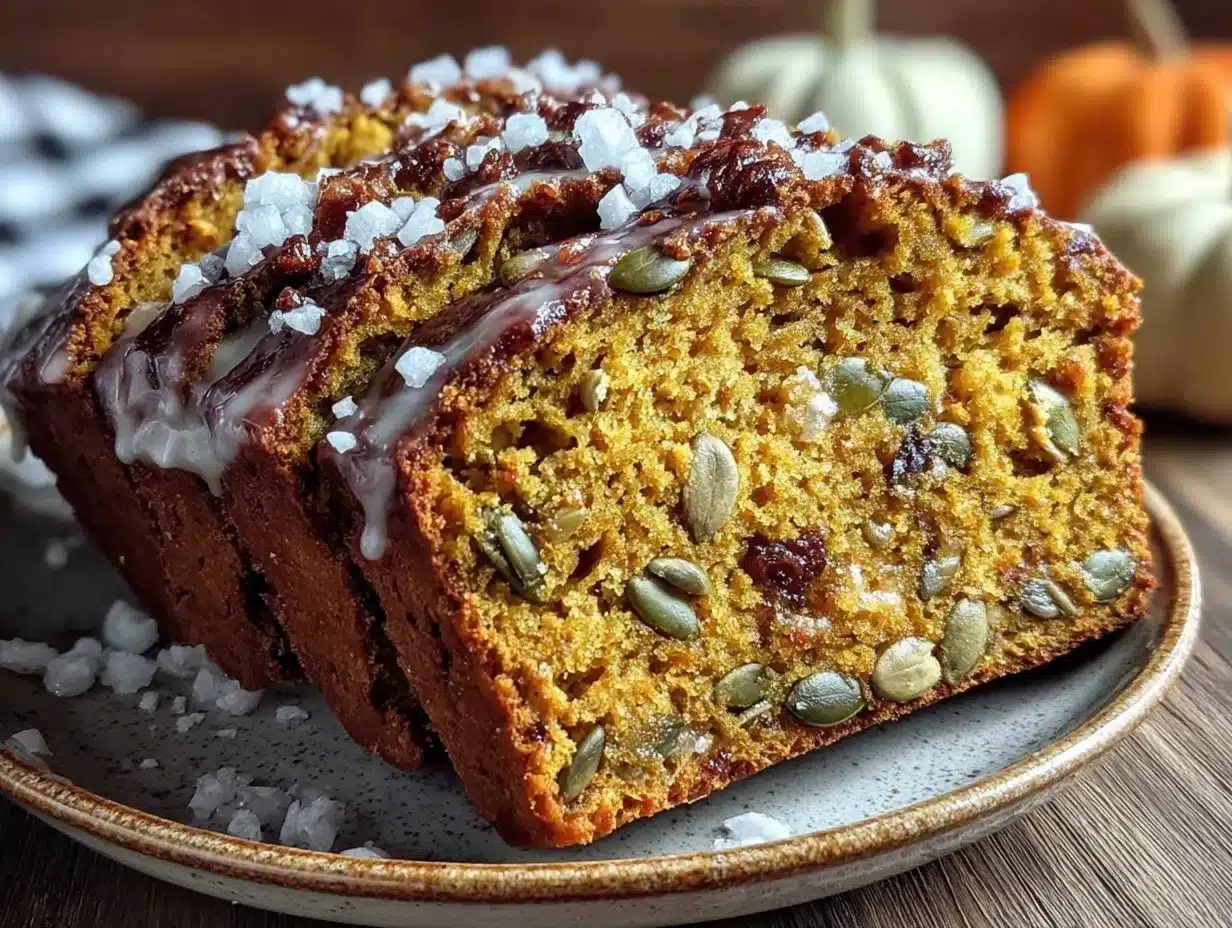
My craving for something warm and comforting hits hard, like right now, and I have everything except the usual sweet breads that feel too polished. I want that gritty, rustic vibe—something with a tang from sourdough, a hint of fall from pumpkin, and a little crunch that surprises me. This sourdough pumpkin bread with pepitas and that flaky sea salt crust? It’s the kind of thing I didn’t know I needed until I took that first bite. The crust crackles under my fingertips, the pepitas sprinkle a nutty contrast, and the sourdough tang cuts through the sweetness just enough to keep it interesting. Honestly, it’s not just bread—it’s a quiet moment wrapped in scent and texture.
What’s funny is how this recipe found me during a chaotic weekend when nothing else felt right. I wasn’t looking to bake the perfect loaf; I just wanted something that felt homemade and real, something that smelled like the season without trying too hard. The pumpkin’s subtle earthiness paired with pepitas toasted gently on top—salted just right—made me realize this bread wasn’t just about eating. It was about slowing down.
There’s a trust in sourdough that comes from its slow fermentation process, and pairing that with pumpkin’s natural moisture means no dry crumbs here. The sea salt crust adds that unexpected twist, like a secret handshake with your taste buds. If you’ve ever felt let down by overly sweet seasonal breads, this one’s your answer. It’s humble, a little wild, and utterly satisfying.
It’s also the kind of bread that sticks with you—perfect for cozy mornings with butter melting in the folds or afternoon tea when you want something not too sweet but totally soulful. This recipe has become my go-to fall comfort, the one I come back to when I want a little calm in the kitchen and a lot of warmth on my plate. Not just pumpkin bread—this is a cozy, rustic hug baked into every slice.
Why You’ll Love This Recipe
- Quick & Easy: Despite its rustic charm, this sourdough pumpkin bread comes together in about 3 hours including rising time, making it perfect for weekend baking sessions or leisurely afternoons.
- Simple Ingredients: No need to hunt for fancy stuff—just your basic sourdough starter, canned pumpkin, and pantry staples that you likely have on hand.
- Perfect for Fall Gatherings: Whether it’s a weekend brunch or a cozy night in, this bread brings seasonal vibes without fuss.
- Crowd-Pleaser: The mix of sourdough tang, pumpkin sweetness, pepita crunch, and sea salt finish gets rave reviews from kids and adults alike.
- Unbelievably Delicious: The crust’s flaky salt crunch contrasts the moist, tender crumb inside—honestly, it’s the kind of texture combo you don’t forget.
- What Makes This Recipe Different: Instead of the usual sweet pumpkin bread, this one uses a sourdough base for depth and fermentation flavor, plus pepitas for nuttiness, and a unique sea salt crust that adds savory balance—giving you a loaf that’s rustic, complex, and way more interesting than your average pumpkin loaf.
- Emotional Connection: This bread is like a warm blanket on a crisp day, the kind that reminds you why baking can feel like therapy.
What Ingredients You Will Need
This recipe uses simple, wholesome ingredients to deliver bold fall flavors and a satisfying texture without the fuss. Most are pantry staples or easy to find during pumpkin season. Here’s what you’ll need:
- Sourdough starter (active and bubbly, about 100g) – the heart of the bread, bringing that signature tang
- All-purpose flour (350g / 2 ¾ cups) – I prefer King Arthur brand for consistent results
- Whole wheat flour (50g / ½ cup) – adds rustic texture and a nutty flavor
- Canned pumpkin puree (120g / ½ cup) – not pumpkin pie mix, just pure pumpkin for moisture and subtle sweetness
- Water (180g / ¾ cup) – lukewarm to encourage fermentation
- Honey (30g / 2 tablespoons) – natural sweetness that balances the sourdough tang
- Salt (8g / 1 ½ teaspoons) – essential for flavor and crust development
- Ground cinnamon (1 teaspoon) – for that warm fall spice note
- Ground nutmeg (¼ teaspoon) – subtle spice to complement pumpkin
- Pepitas (pumpkin seeds) (50g / ⅓ cup) – toasted and sprinkled on top for crunch and visual appeal
- Coarse sea salt (1 teaspoon) – sprinkled on the crust for that signature salty crunch
- Olive oil or melted butter (15g / 1 tablespoon) – to brush on the crust before baking
For gluten-free adaptations, you can swap the all-purpose flour with a 1:1 gluten-free blend, though expect a softer crumb. If you prefer a dairy-free option, olive oil works beautifully in place of butter. Fresh pumpkin puree works as well, especially if you roast your own, but canned is super convenient and consistent.
Equipment Needed
- Mixing bowls: Large enough to hold the dough comfortably; glass or stainless steel preferred for easy cleanup.
- Dough scraper or bench knife: Useful for folding and handling sticky dough without tearing.
- Kitchen scale: For precise measurements (trust me, baking bread is all about accuracy).
- Proofing basket (banneton): Optional but great for shaping and giving the bread its rustic ridges. If you don’t have one, a bowl lined with a floured kitchen towel works fine.
- Dutch oven or heavy oven-safe pot with lid: Essential for creating steam during baking to develop a crisp crust. A cast-iron skillet with a lid can also work in a pinch.
- Oven thermometer: Handy to verify your oven’s actual temperature—ovens can be tricky.
- Baking sheet: For toasting pepitas before topping the loaf.
Personally, I started with just a bowl and a baking sheet and upgraded to a banneton after a few tries—it really makes shaping easier but isn’t mandatory. For budget-friendly options, a mixing bowl and parchment paper can be all you need to get started.
Preparation Method
- Feed your sourdough starter: About 4-6 hours before baking, feed your starter and let it become bubbly and active. You’ll need 100g of this lively starter for the recipe.
- Mix dry ingredients: In a large bowl, combine 350g all-purpose flour, 50g whole wheat flour, 8g salt, 1 teaspoon cinnamon, and ¼ teaspoon nutmeg. Whisk lightly to distribute spices evenly.
- Combine wet ingredients: In a separate bowl, whisk together 120g canned pumpkin puree, 180g lukewarm water, 30g honey, and your 100g active sourdough starter. The pumpkin adds moisture and a subtle sweetness that’s not overpowering.
- Make the dough: Pour wet ingredients into the dry and mix with a wooden spoon or your hand until a shaggy dough forms. It will be sticky and rough—that’s exactly how it should look.
- Autolyse and rest: Cover the bowl with a damp towel and let the dough rest for 30 minutes. This helps hydrate the flour and develop gluten.
- Stretch and fold: Over the next 2 hours, perform 3-4 sets of stretch and folds every 30 minutes. To do this, reach under the dough, stretch it up, and fold it over itself. This builds strength in the dough without kneading.
- First rise: After the last fold, cover and let the dough rise until it’s roughly doubled in size and passes the “poke test” (a gentle poke leaves a slight indentation). This usually takes about 1-1.5 hours, depending on room temperature.
- Shape the loaf: Lightly flour your work surface and gently turn the dough out. Shape it into a tight round loaf by folding edges into the center. Place it seam-side up in a floured proofing basket or bowl lined with a floured kitchen towel.
- Final proof: Cover and let the dough proof for 1-2 hours at room temperature, or overnight in the fridge for more flavor complexity.
- Preheat oven and Dutch oven: About 45 minutes before baking, preheat your oven to 450°F (232°C) with your Dutch oven inside. This ensures the pot is scorching hot for the best crust.
- Toast pepitas: Spread 50g pepitas on a baking sheet and toast in the oven for 5-7 minutes until fragrant and lightly browned. Set aside.
- Prepare for baking: When ready, gently invert the loaf onto parchment paper. Brush the top with olive oil or melted butter, sprinkle toasted pepitas evenly, and finish with a light dusting of coarse sea salt.
- Bake: Carefully transfer the loaf with parchment into the hot Dutch oven. Cover and bake for 20 minutes, then remove the lid and bake another 20-25 minutes until the crust is deep golden and crackly.
- Cool: Remove bread from Dutch oven and cool completely on a wire rack before slicing—this step is key to finish the crumb and avoid gummy texture.
Quick tip: If your dough feels too sticky during shaping, dust your hands lightly with flour but avoid adding too much or the crumb can dry out. The scent of pumpkin and sourdough mingling while baking will confirm you’re on the right track.
Cooking Tips & Techniques
Getting this sourdough pumpkin bread just right means paying attention to a few subtle details I learned over many bakes. First, the stretch and folds are your best friend here—don’t rush them. They develop the dough’s strength gently, which is crucial for holding the pumpkin’s moisture without collapsing.
Also, don’t skip the overnight fridge proof if you have time. It deepens the sourdough flavor and creates that wonderful complexity you won’t get with a quick rise. When you bake, the hot Dutch oven traps steam, making the crust crisp and flaky—kind of like the sea salt crust you want to show off.
One mistake I made early on was overloading the dough with pumpkin and ending up with a dense loaf. Sticking close to the ½ cup measure keeps it moist but not soggy. Toasting pepitas right before topping ensures they stay crunchy and aromatic instead of going limp.
Timing-wise, multitasking helps—toast pepitas while the oven preheats, do your final dough shaping during the last proof, and keep your tools ready. This rhythm makes the whole process feel less overwhelming.
Finally, slicing the bread when it’s still warm is tempting but wait until cool. The crumb firms up and slicing gets cleaner. I learned that the hard way when my first loaf turned into a mashed pumpkin mess.
Variations & Adaptations
This recipe is flexible for different tastes and dietary needs. Here are a few ways to change it up:
- Spice it up: Add ½ teaspoon ground ginger or cardamom for a warm, spicy twist that complements the pumpkin beautifully.
- Nutty boost: Mix in ⅓ cup chopped walnuts or pecans into the dough for extra crunch and flavor.
- Gluten-free option: Use a gluten-free baking blend instead of wheat flour and reduce hydration slightly (about 160g water) to account for different absorption.
- Sweeten naturally: Swap honey for maple syrup or brown rice syrup for a different flavor profile.
- Seed swap: Use sunflower seeds or chopped pepitas inside the dough instead of just on top.
I once tried adding some grated carrot along with the pumpkin, and while it added moisture, the texture changed quite a bit—still tasty, but less rustic. So keep the pumpkin front and center for that classic fall vibe.
Serving & Storage Suggestions
This sourdough pumpkin bread is best served at room temperature or lightly toasted, with a slather of butter or cream cheese. The sea salt and pepitas on top really shine when the bread is warm and the butter melts into those little crunchy pockets.
For a complete cozy snack, pair it with a hot mug of spiced chai or your favorite coffee. It also goes well alongside a savory squash dish, like the crispy garlic parmesan roasted summer squash I made last week—sweet and savory balance at its finest.
To store, wrap the bread tightly in plastic wrap or a bread bag and keep at room temperature for up to 3 days. For longer storage, slice and freeze portions in airtight bags. To reheat, toast slices directly from frozen or warm in the oven at 350°F (175°C) for about 10 minutes.
Flavors deepen after a day, so if you can wait, tomorrow’s bread is even better. The pepita crunch softens a bit but still provides that satisfying texture contrast.
Nutritional Information & Benefits
This loaf packs a good nutritional punch thanks to sourdough fermentation and wholesome ingredients. Per slice (based on 12 slices), expect roughly:
| Calories | 160 |
|---|---|
| Carbohydrates | 28g |
| Protein | 5g |
| Fat | 3g |
| Fiber | 3g |
| Sugar | 3g (natural from pumpkin and honey) |
Thanks to the pumpkin puree, you get a boost of beta-carotene and fiber, while the pepitas add healthy fats and magnesium. The sourdough process breaks down gluten somewhat, making it easier on digestion for many people. This bread is naturally low in added sugar and free from artificial ingredients.
It fits well into a balanced diet, especially if you’re looking for baked goods that offer more than empty calories. Just watch the portion size if you’re mindful of carbs, but honestly, it’s a wholesome treat that feels like a gift to your body and soul.
Conclusion
This cozy rustic sourdough pumpkin bread with pepitas and a sea salt crust is the kind of recipe that turns simple ingredients into something truly special. It’s approachable but unique, comforting but never boring. What I love most is how it invites you to slow down and savor the moment, whether you’re sharing it around a kitchen table or sneaking a slice with coffee solo.
Feel free to customize the spices or seeds to suit your mood or pantry, but don’t skip the sea salt crust—it’s the final touch that makes this bread unforgettable. Baking this loaf is like a little ritual that rewards you with warmth and texture and that unmistakable fall feeling.
Give it a try, and if you do, please share how your loaf turns out or any twists you’ve added. I’m always curious about how this recipe finds its way into other kitchens and stories.
Frequently Asked Questions
Can I use fresh pumpkin instead of canned puree?
Yes! Roast or steam pumpkin until soft, then puree it smoothly. Use the same amount (about ½ cup). Just make sure it’s not watery.
Do I have to use a sourdough starter?
Using sourdough gives the bread its signature tang and texture, but you can substitute with commercial yeast (about 2 teaspoons) if needed—just adjust rising times accordingly.
How do I store leftover bread?
Wrap tightly at room temperature for up to 3 days or slice and freeze for up to 3 months. Toast or warm slices before serving.
Can I make this bread vegan?
Yes, swap honey for maple syrup and use olive oil instead of butter. The sourdough starter is naturally vegan.
What if I don’t have a Dutch oven?
You can bake on a baking stone or sheet; place a pan of water in the oven for steam to help the crust develop, and tent the bread with foil if it browns too fast.
Pin This Recipe!
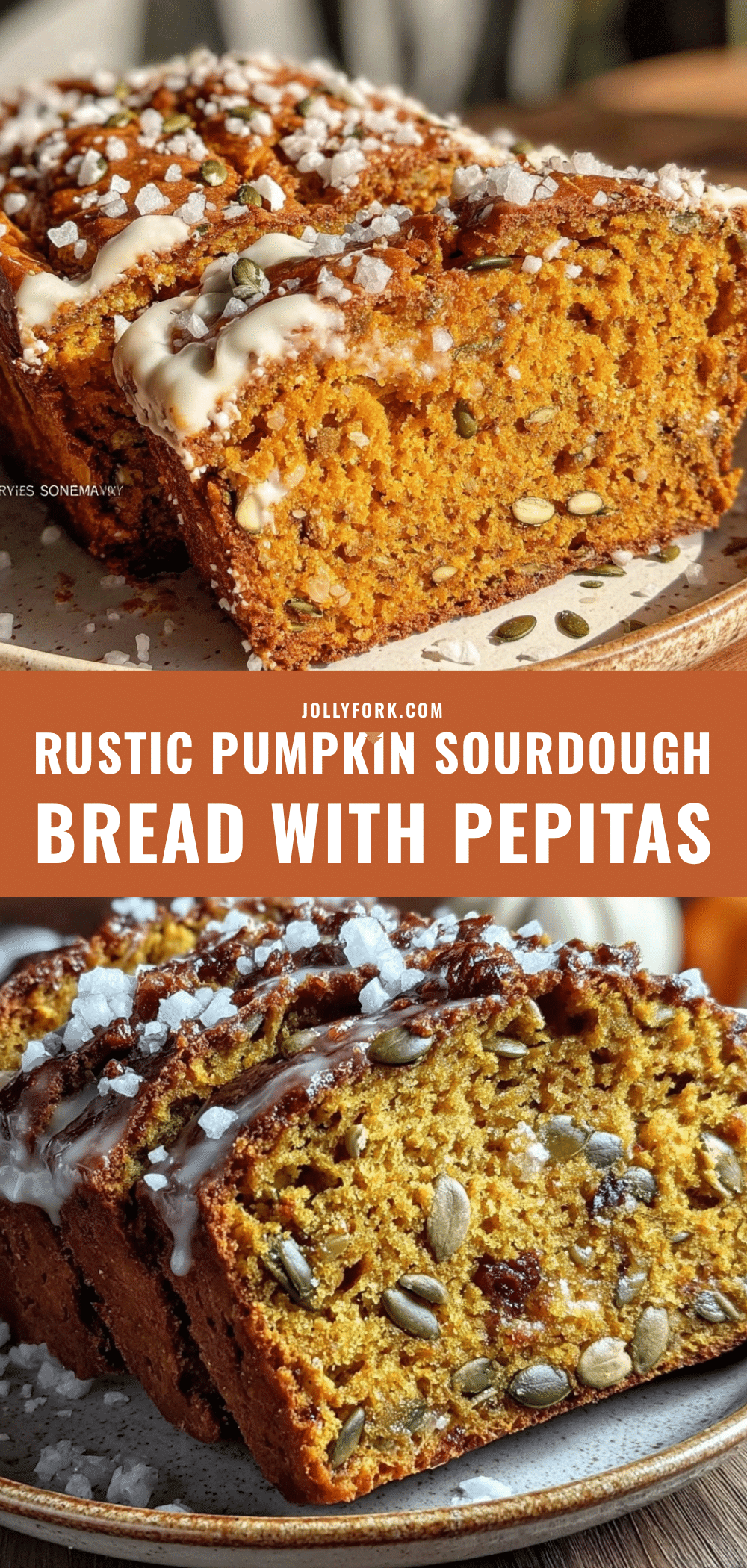
Cozy Rustic Sourdough Pumpkin Bread Recipe with Pepitas and Sea Salt Crust

A warm and comforting sourdough pumpkin bread with a tangy flavor, nutty pepitas, and a flaky sea salt crust, perfect for cozy fall mornings or afternoon tea.
- Prep Time: 30 minutes
- Cook Time: 45 minutes
- Total Time: 3 hours 15 minutes
- Yield: 12 servings 1x
- Category: Bread
- Cuisine: American
Ingredients
- 100g active sourdough starter (about 3.5 oz)
- 350g all-purpose flour (about 2 3/4 cups)
- 50g whole wheat flour (about 1/2 cup)
- 120g canned pumpkin puree (about 1/2 cup)
- 180g lukewarm water (about 3/4 cup)
- 30g honey (about 2 tablespoons)
- 8g salt (about 1 1/2 teaspoons)
- 1 teaspoon ground cinnamon
- 1/4 teaspoon ground nutmeg
- 50g pepitas (pumpkin seeds) (about 1/3 cup), toasted
- 1 teaspoon coarse sea salt
- 15g olive oil or melted butter (about 1 tablespoon)
Instructions
- Feed your sourdough starter about 4-6 hours before baking until bubbly and active; measure 100g for the recipe.
- In a large bowl, whisk together all-purpose flour, whole wheat flour, salt, cinnamon, and nutmeg.
- In a separate bowl, combine canned pumpkin puree, lukewarm water, honey, and active sourdough starter.
- Pour wet ingredients into dry ingredients and mix until a shaggy, sticky dough forms.
- Cover the bowl with a damp towel and let the dough rest for 30 minutes (autolyse).
- Perform 3-4 sets of stretch and folds every 30 minutes over the next 2 hours to develop dough strength.
- After the last fold, cover and let the dough rise until doubled and passes the poke test, about 1-1.5 hours.
- Lightly flour your work surface and shape the dough into a tight round loaf; place seam-side up in a floured proofing basket or bowl lined with a floured towel.
- Cover and proof the dough for 1-2 hours at room temperature or overnight in the fridge for more flavor.
- Preheat oven to 450°F (232°C) with a Dutch oven inside about 45 minutes before baking.
- Toast pepitas on a baking sheet in the oven for 5-7 minutes until fragrant and lightly browned; set aside.
- Invert the loaf onto parchment paper, brush with olive oil or melted butter, sprinkle toasted pepitas evenly, and dust with coarse sea salt.
- Carefully place the loaf with parchment into the hot Dutch oven, cover, and bake for 20 minutes.
- Remove the lid and bake for another 20-25 minutes until the crust is deep golden and crackly.
- Remove bread from Dutch oven and cool completely on a wire rack before slicing.
Notes
For gluten-free adaptation, use a 1:1 gluten-free flour blend and reduce water to about 160g. For dairy-free, use olive oil instead of butter. Do not add too much flour during shaping to avoid dry crumb. Overnight fridge proof enhances flavor complexity. Cool bread completely before slicing to avoid gummy texture. Toast pepitas just before topping to keep crunch.
Nutrition
- Serving Size: 1 slice (1/12th of l
- Calories: 160
- Sugar: 3
- Fat: 3
- Carbohydrates: 28
- Fiber: 3
- Protein: 5
Keywords: sourdough pumpkin bread, rustic bread, pepitas, sea salt crust, fall bread, homemade bread, sourdough, pumpkin recipe, cozy bread