My dad claimed to hate meatloaf for thirty-seven years. Thirty-seven years of watching the rest of us dig into a slice of comfort while he pushed it around his plate like a kid forced to eat something green. Then I made this version for a casual Sunday dinner—honestly, just for myself, because I was craving something cozy and had a pound of ground beef to use up. I found him standing at the kitchen counter, fork in hand, cutting himself a second slice. He didn’t even look up. He just said, “This doesn’t taste like meatloaf.” And he meant it as the highest possible compliment.
That’s the thing about this recipe. It doesn’t taste like the sad, dry loaf you might remember from school cafeterias or your aunt’s sad attempts at stretching a budget. This version is tender, almost like a really good burger shaped into a loaf, with a glossy brown sugar glaze that caramelizes into something you’d want to put on everything. I’ve brought it to potlucks where people asked for the recipe before they finished their first helping. I’ve served it at dinner parties where guests who swore they were “too full for more” found room for another slice.
Maybe you’ve been there—you want to serve something impressive for a gathering, but you also want to actually enjoy your own party instead of sweating over a complicated dish. This meatloaf solves that problem. It comes together in about fifteen minutes of active prep time, then the oven does the rest of the work while you set the table, pour the wine, and pretend you’ve been slaving away all afternoon. The glaze alone—just brown sugar, ketchup, and a few pantry staples—creates that glossy, sticky-sweet crust that makes people close their eyes when they take the first bite. I keep making this because it reminds me that sometimes the most unassuming dishes steal the show. And honestly? Watching a meatloaf convert a skeptic never gets old.
Why You’ll Love This Recipe
This isn’t just another meatloaf recipe you’ll forget about by next week. I’ve tested this version at least a dozen times—for weeknight dinners, holiday gatherings, and casual Sunday suppers—and it delivers consistently perfect results every single time. Here’s why this one stands out from the crowd:
- Effortless for Hosting : You can prep this entirely before your guests arrive. Mix the meatloaf, press it into the pan, and pop it in the fridge until you’re ready to bake. The glaze takes two minutes to whisk together.
- Simple Pantry Ingredients : No special trips to fancy grocery stores. You probably have everything in your kitchen right now—onion, eggs, breadcrumbs, ketchup, brown sugar.
- Perfect for a Crowd : This recipe scales beautifully. I’ve doubled it for a dinner party of twelve and halved it for a quiet night in. It always works.
- Unbelievably Tender : The secret is a combination of ground beef and ground pork, plus a panade (that’s just breadcrumbs soaked in milk) that keeps every slice moist and fork-tender.
- That Glaze, Though : The brown sugar glaze isn’t just a topping—it caramelizes into a sticky, tangy-sweet crust that makes this meatloaf memorable. People will ask what’s in it.
- Leftovers Are a Gift : Cold meatloaf sandwiches the next day? Yes, please. Or crumble it into pasta sauce for an easy dinner.
I’ve had professional chefs tell me this is the best meatloaf they’ve ever eaten. I’ve had picky kids ask for seconds. It’s the kind of recipe that makes you look like you know what you’re doing in the kitchen—even if you’re just following the instructions like the rest of us. The texture is soft but sliceable, the flavor is savory with just enough sweetness from the glaze, and it holds together beautifully without falling apart on the plate.
What Ingredients You Will Need
This recipe uses simple, everyday ingredients that work together to create something greater than the sum of their parts. The magic happens in the balance—savory meat, aromatic vegetables, and that sweet-tangy glaze that makes everything sing.
For the Meatloaf
- Ground beef (1.5 pounds / 680g, 80/20 blend) — The fat content matters here. Lean ground beef will give you a dry meatloaf. I prefer 80/20 for the juiciest results. If you can only find leaner beef, add an extra tablespoon of olive oil to the mixture.
- Ground pork (1/2 pound / 225g) — This adds fat and flavor that beef alone can’t provide. You can substitute with ground veal or more ground beef, but the texture won’t be quite as tender.
- Yellow onion (1 medium, finely diced) — I grate mine on a box grater instead of chopping. It releases more moisture and distributes evenly through the meatloaf without leaving chunky bits.
- Garlic (3 cloves, minced) — Fresh garlic makes a difference here. Don’t use the jarred stuff if you can help it.
- Breadcrumbs (1 cup / 120g, plain) — Panko breadcrumbs work beautifully for a lighter texture. Regular breadcrumbs work too, but the meatloaf will be slightly denser. I’ve used crushed saltines in a pinch and it was surprisingly good.
- Whole milk (1/2 cup / 120ml) — This soaks into the breadcrumbs to create a panade, which keeps the meatloaf tender. Any milk works, including oat milk or almond milk for dairy-free needs.
- Eggs (2 large, lightly beaten) — These bind everything together. Room temperature eggs incorporate more evenly, but cold eggs work fine in a pinch.
- Worcestershire sauce (2 tablespoons / 30ml) — Adds that deep, savory umami flavor. I’ve used soy sauce in a pinch when I ran out, and it worked well.
- Dijon mustard (1 tablespoon / 15ml) — Don’t skip this. It adds brightness and helps the flavors meld together.
- Fresh parsley (2 tablespoons, chopped) — Optional, but adds freshness and color. Dried parsley works too—use 1 teaspoon.
- Salt (1 teaspoon) — I use kosher salt. If you’re using table salt, reduce to 3/4 teaspoon.
- Black pepper (1/2 teaspoon, freshly ground)
- Smoked paprika (1 teaspoon) — This is my secret ingredient. It adds a subtle smokiness that makes the meatloaf taste like it’s been cooking all day.
For the Brown Sugar Glaze
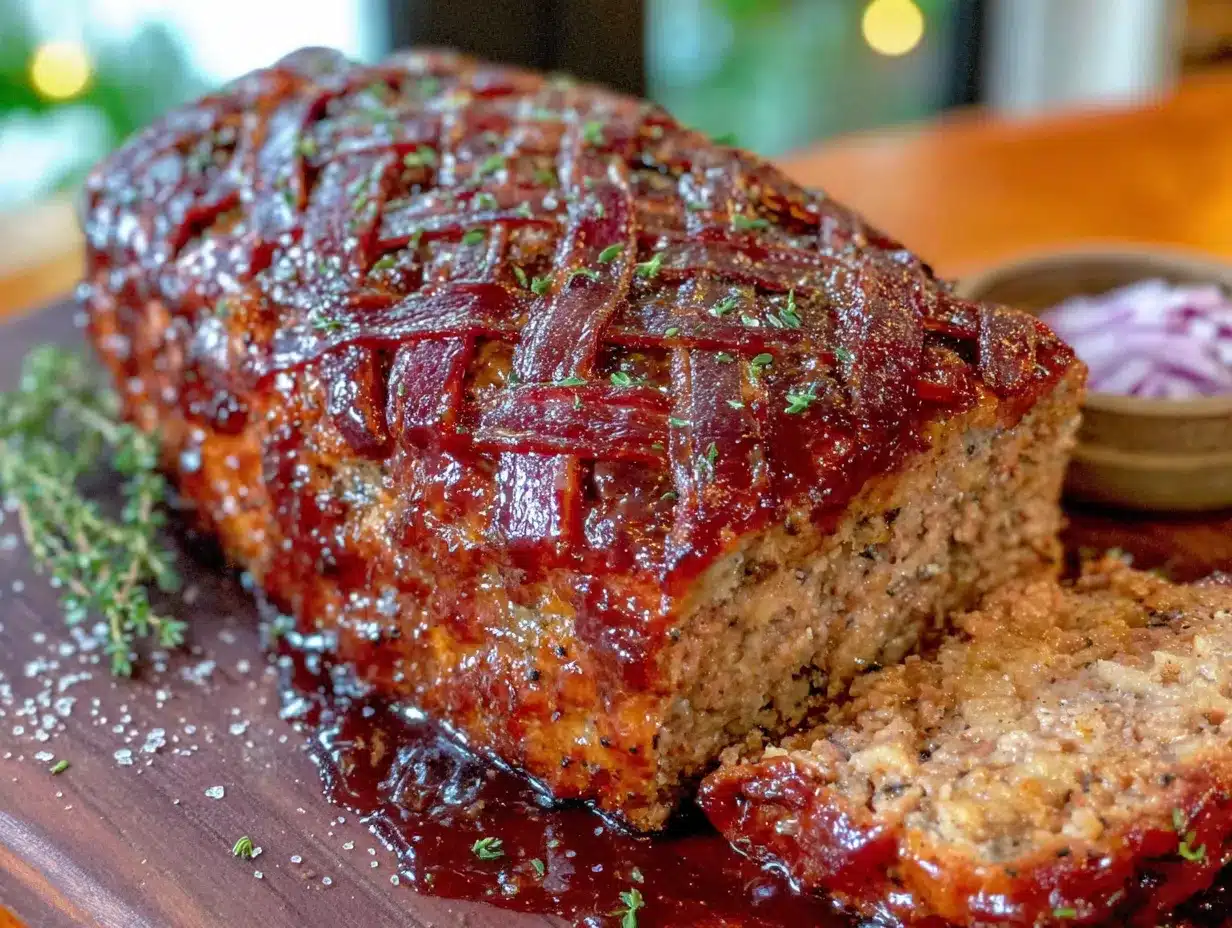
- Ketchup (1/2 cup / 120ml) — Use a good quality ketchup here. Heinz is my go-to, but any brand works.
- Brown sugar (1/3 cup / 70g, packed) — Light or dark brown sugar both work. Dark brown sugar gives a deeper, more molasses-y flavor. I personally prefer dark brown sugar for the glaze.
- Apple cider vinegar (1 tablespoon / 15ml) — This cuts through the sweetness and adds tang. White vinegar works in a pinch.
- Worcestershire sauce (1 teaspoon / 5ml) — A little extra depth never hurts.
- Garlic powder (1/2 teaspoon) — Not strictly necessary, but I love the subtle savory note it adds.
The beauty of this ingredient list is its flexibility. I’ve made this with ground turkey instead of pork, gluten-free breadcrumbs, and even a sugar-free ketchup for the glaze. It still worked. But if you’re making it for the first time, stick with the original. Trust me on this.
Equipment Needed
You don’t need a fancy kitchen to make this meatloaf. Here’s what you’ll need:
- Large mixing bowl — Big enough to get your hands in there and mix everything together. I use a stainless steel bowl that I’ve had for years. A glass or ceramic bowl works fine too.
- 9×5-inch loaf pan — This is the standard size for a single meatloaf. If you’re doubling the recipe, use two pans or a larger baking dish. I’ve also shaped the meatloaf free-form on a rimmed baking sheet lined with parchment paper—the edges get crispier that way.
- Box grater or food processor — For grating the onion. You can chop it finely by hand, but grating releases more moisture and distributes it evenly. I use my box grater and it takes about thirty seconds.
- Small bowl — For mixing the glaze ingredients together.
- Pastry brush or spoon — For spreading the glaze over the meatloaf. A spoon works perfectly fine if you don’t have a brush.
- Meat thermometer — This is non-negotiable for me. I’ve made enough dry meatloaf to know that visual cues lie. An instant-read thermometer takes the guesswork out. They’re cheap—like ten dollars on Amazon.
- Parchment paper or aluminum foil — For easy cleanup. I line my loaf pan with parchment paper, leaving some overhang on the sides. This makes lifting the finished meatloaf out so much easier.
- Wire rack — For cooling the meatloaf after baking. You can skip this and just let it rest in the pan, but the bottom will stay a bit soggy.
If you don’t have a loaf pan, don’t worry. Shape the meatloaf into a free-form loaf on a parchment-lined baking sheet. The edges will get more caramelized and the glaze will spread further. Honestly, I sometimes prefer this method for dinner parties because it looks more rustic and impressive.
Preparation Method
Let me walk you through this step by step. The total active time is about fifteen minutes, and then the oven does the heavy lifting.
- Preheat your oven to 350°F (175°C). Position the rack in the center of the oven. If you’re using a convection setting, reduce the temperature to 325°F (160°C).
- Make the panade. In your large mixing bowl, combine the breadcrumbs and milk. Stir until the breadcrumbs are fully soaked. Let this sit for 5 minutes while you prep the other ingredients. The breadcrumbs will absorb the milk and turn into a paste-like consistency. This is what keeps your meatloaf tender instead of dense and dry.
- Prep the aromatics. Grate your onion using the large holes of a box grater. You should end up with about 1/2 cup of grated onion and its juices. Don’t drain the juices—that’s flavor and moisture. Mince your garlic cloves finely.
- Mix the meatloaf base. Add the grated onion (with juices), minced garlic, eggs, Worcestershire sauce, Dijon mustard, salt, pepper, smoked paprika, and fresh parsley to the panade mixture. Stir until everything is well combined. It should look like a thick, slightly lumpy paste.
- Add the meat. Add the ground beef and ground pork to the bowl. Here’s the important part: use your hands to gently mix everything together. Don’t overmix. Overworking the meat will make your meatloaf tough. I use a light folding motion, like I’m handling a delicate cookie dough. Stop as soon as everything is evenly distributed—about 30 seconds of gentle mixing.
- Shape the meatloaf. Line your 9×5-inch loaf pan with parchment paper, leaving some overhang on the two long sides. Transfer the meat mixture to the pan and press it gently into an even loaf shape. Don’t pack it down—just smooth the top with your hands. If you’re using a baking sheet instead, shape the mixture into a loaf about 8 inches long and 4 inches wide.
- Make the glaze. In a small bowl, whisk together the ketchup, brown sugar, apple cider vinegar, Worcestershire sauce, and garlic powder until the sugar is mostly dissolved. It should be thick and glossy. Taste it—it should be sweet with a tangy kick. Adjust the brown sugar or vinegar to your preference.
- Apply the first layer of glaze. Spread about half of the glaze over the top of the meatloaf. Use a spoon or pastry brush to coat the top evenly. Reserve the remaining glaze for later.
- Bake for 45 minutes. Place the meatloaf in the preheated oven and bake uncovered. After 45 minutes, remove it from the oven and spread the remaining glaze over the top. Return to the oven and bake for another 15-20 minutes.
- Check for doneness. The meatloaf is done when the internal temperature reaches 160°F (71°C) at the center. Insert your meat thermometer into the thickest part of the loaf. If you don’t have a thermometer, cut into the center—the juices should run clear and there should be no pinkness.
- Rest before slicing. This is the hardest step. Let the meatloaf rest in the pan for 10-15 minutes. Use the parchment paper overhang to lift it out of the pan and transfer it to a cutting board or serving platter. Resting allows the juices to redistribute throughout the meatloaf. If you cut into it immediately, it will fall apart and the juices will run out onto the cutting board instead of staying in the meatloaf.
- Slice and serve. Use a sharp knife to cut even slices, about 1-inch thick. Spoon any remaining glaze from the pan over the slices before serving.
A few notes from experience: If the top of your meatloaf is browning too quickly during the last 15 minutes, tent it loosely with aluminum foil. This happened to me the first time I made this recipe—the glaze was getting too dark while the center was still 150°F. Also, if you’re doubling the recipe, increase the baking time by about 15-20 minutes. Always rely on the thermometer, not the clock.
Cooking Tips & Techniques
I’ve made this meatloaf more times than I can count, and I’ve learned a few things the hard way. Here’s what I wish someone had told me:
Don’t skip the panade. I know it seems like an extra step, but this mixture of breadcrumbs and milk is what keeps your meatloaf tender. Without it, you end up with something dense and dry that crumbles when you try to slice it. I once tried to save time by skipping this step and adding dry breadcrumbs directly to the meat. The result was a sad, crumbly mess that my guests politely described as “rustic.”
Use a light hand when mixing. Overmixing develops the proteins in the meat, which makes the meatloaf tough. I use my hands and a gentle folding motion, stopping as soon as everything is combined. Think of it like making meatballs—you want it to hold together, not feel like a workout for your hands.
Temperature matters. I cannot stress this enough. A meat thermometer is the difference between a perfectly cooked meatloaf and a dry, overcooked one. I’ve ruined so many meatloaves by relying on visual cues alone. The center should reach 160°F (71°C). If you take it out at 155°F, it will continue cooking from residual heat and reach the safe temperature during resting.
Let it rest. I know you’re hungry. I know your guests are hovering around the kitchen asking when dinner will be ready. But cutting into a meatloaf straight out of the oven is like opening a present before the party starts—you lose all the good stuff. Ten minutes of resting makes a world of difference in texture and juiciness.
Multitask like a pro. While the meatloaf is baking, use that time to prepare your sides. I usually make mashed potatoes and a simple green salad. The meatloaf takes about an hour total, so I start the potatoes with about 30 minutes left, then toss the salad right before serving. Everything comes together at the same time with minimal stress.
Variations & Adaptations
One of the best things about this recipe is how adaptable it is. Here are some variations I’ve tried and loved:
Turkey Meatloaf — Substitute the ground beef and pork with ground turkey (93/7 works best). Add 2 tablespoons of olive oil to compensate for the lower fat content. The texture will be slightly lighter, but the glaze does a lot of heavy lifting in terms of flavor.
Gluten-Free Version — Use gluten-free breadcrumbs or crushed gluten-free crackers. I’ve used rolled oats as a substitute too—just pulse them in a food processor until they resemble breadcrumbs. The texture is a bit heartier, but it works.
Spicy Kick — Add 1-2 tablespoons of sriracha or your favorite hot sauce to the glaze mixture. I’ve also added minced chipotle peppers in adobo sauce to the meat mixture for a smoky heat that pairs beautifully with the sweet glaze.
Cheesy Stuffed Meatloaf — Press half of the meat mixture into the pan, create a shallow well down the center, and fill it with shredded cheddar or mozzarella cheese. Top with the remaining meat mixture and seal the edges. The melted cheese center is absolute heaven.
BBQ Glaze Variation — Replace the ketchup in the glaze with your favorite barbecue sauce. Add an extra tablespoon of brown sugar and a dash of liquid smoke for that authentic BBQ flavor. This version is incredible served with coleslaw on the side.
Italian-Inspired — Add 1 teaspoon of dried oregano, 1 teaspoon of dried basil, and 1/4 cup of grated Parmesan cheese to the meat mixture. Replace the brown sugar glaze with a simple tomato sauce glaze (mix 1/2 cup tomato sauce with 1 tablespoon brown sugar and 1 teaspoon Italian seasoning).
I personally love the spicy kick version for game day gatherings. It’s unexpected and keeps people coming back for more. My sister-in-law, who claims she doesn’t like meatloaf, ate three slices of the chipotle version at our last family dinner. She still won’t admit she likes meatloaf, though. Some people just can’t be converted.
Serving & Storage Suggestions
Serving — This meatloaf is best served warm, straight from the oven. I like to transfer it to a wooden cutting board for a rustic presentation, slice it at the table, and let guests help themselves. The glaze creates a beautiful glossy finish that looks impressive without any extra effort.
What to Serve Alongside — Mashed potatoes are the classic choice, and for good reason. The creamy potatoes soak up any extra glaze on the plate. Roasted green beans or a simple arugula salad with lemon vinaigrette add freshness and color. For a dinner party, I also like to serve roasted carrots with honey and thyme—the sweetness complements the meatloaf beautifully.
Wine Pairing — A medium-bodied red wine like Merlot or Zinfandel works well with the savory-sweet flavors. If you prefer white, a Chardonnay with some oak aging holds its own against the richness of the meatloaf.
Storage — Leftover meatloaf keeps beautifully in the refrigerator for up to 4 days. Wrap it tightly in plastic wrap or aluminum foil, or store it in an airtight container. The flavors actually meld together more after a day in the fridge—cold meatloaf sandwiches are a legitimate reason to make extra.
Reheating — The best way to reheat meatloaf is in a 300°F (150°C) oven for about 15 minutes, covered with foil to prevent drying out. You can also reheat individual slices in a skillet over medium-low heat with a splash of water or broth, covered, for about 5 minutes. Microwave works in a pinch, but the texture won’t be as good.
Freezing — This meatloaf freezes beautifully. Let it cool completely, then wrap it tightly in plastic wrap, followed by a layer of aluminum foil. Freeze for up to 3 months. Thaw overnight in the refrigerator before reheating. I’ve also frozen individual slices for quick lunches—just wrap each slice separately and grab one as needed.
The leftovers from this recipe are honestly one of my favorite parts. A cold meatloaf sandwich on toasted sourdough with a little extra ketchup and some crispy lettuce? That’s a lunch worth looking forward to.
Nutritional Information & Benefits
Here’s the estimated nutritional breakdown for one serving (based on 8 servings):
| Nutrient | Amount per Serving |
|---|---|
| Calories | 385 |
| Protein | 28g |
| Fat | 22g |
| Saturated Fat | 8g |
| Carbohydrates | 18g |
| Fiber | 1g |
| Sugar | 12g |
| Sodium | 680mg |
This meatloaf is a good source of protein, iron, and B vitamins from the beef and pork. The onions and garlic provide antioxidants and anti-inflammatory compounds. While it’s not a low-calorie dish, it’s satisfying in a way that prevents overeating—a single serving is genuinely filling.
Dietary Considerations — This recipe contains gluten (from breadcrumbs) and dairy (from milk). For a gluten-free version, use gluten-free breadcrumbs or rolled oats. For a dairy-free version, use oat milk or almond milk in the panade. The recipe is naturally nut-free and can be made egg-free by using a flax egg (1 tablespoon ground flaxseed mixed with 3 tablespoons water, let sit for 5 minutes).
Potential Allergens — Gluten, dairy, eggs. Always check your ingredient labels if cooking for someone with allergies.
I’m not a nutritionist, but I’ve learned over the years that balance matters more than restriction. This meatloaf is a comfort food that fits into a balanced diet when paired with vegetables and reasonable portion sizes. It’s the kind of meal that makes you feel good—not just because it tastes great, but because it’s made with whole ingredients and a lot of love.
Conclusion
This brown sugar glazed meatloaf has become my go-to for dinner parties, potlucks, and any occasion where I want to feed people something that feels both special and effortless. It’s the recipe that converted my dad after thirty-seven years of meatloaf avoidance. It’s the dish that gets requested by name at family gatherings. And honestly? It’s the meal I turn to when I want to feel like a good cook without spending hours in the kitchen.
The beauty of this recipe is in its simplicity. Simple ingredients, simple techniques, but the result is something that tastes like you’ve been making it for years. The brown sugar glaze is the star—it caramelizes into a glossy, sticky-sweet crust that makes every slice look like it belongs on a magazine cover. And the meatloaf itself? Tender, juicy, flavorful, and perfectly sliceable. It’s everything you want in a comfort food dinner.
I hope you make this for your next gathering. I hope it becomes your go-to recipe too. And if you try it, I’d love to hear how it goes. Leave a comment below and let me know what variations you tried, who you served it to, and whether anyone claimed to hate meatloaf before tasting yours. Because honestly? There’s nothing quite like watching someone take back everything they ever said about a dish.
Happy cooking, friends. This one’s a keeper.
Frequently Asked Questions
Can I make this meatloaf ahead of time?
Absolutely. You can assemble the meatloaf completely (minus the glaze) up to 24 hours in advance. Cover it tightly with plastic wrap and store it in the refrigerator. When you’re ready to bake, apply the first layer of glaze and pop it in the oven. You may need to add 10-15 minutes to the baking time since it’s starting from cold.
Why did my meatloaf fall apart when I sliced it?
This usually happens for one of three reasons: the meatloaf didn’t rest long enough before slicing, there wasn’t enough binder (eggs and breadcrumbs), or the mixture was too wet. Make sure you let the meatloaf rest for at least 10 minutes after baking. If you’re still having trouble, add an extra egg to the mixture next time.
Can I use ground turkey instead of beef and pork?
Yes, but you’ll need to add some fat to keep it from drying out. I recommend using 93/7 ground turkey and adding 2 tablespoons of olive oil to the mixture. The texture will be slightly different—lighter and less dense—but the glaze does a lot of the heavy lifting in terms of flavor.
How do I prevent the glaze from burning?
If you notice the glaze getting too dark during the last 15 minutes of baking, tent the meatloaf loosely with aluminum foil. This will protect the glaze from direct heat while allowing the center to finish cooking. Also, make sure you’re not applying the second layer of glaze too early—wait until the last 15-20 minutes of baking.
Can I freeze the meatloaf before or after cooking?
Both work! To freeze before cooking, assemble the meatloaf in the pan, wrap it tightly in plastic wrap and then aluminum foil, and freeze for up to 3 months. Thaw overnight in the refrigerator before baking. To freeze after cooking, let the meatloaf cool completely, then wrap and freeze. Reheat in a 300°F oven until warmed through.
Pin This Recipe!
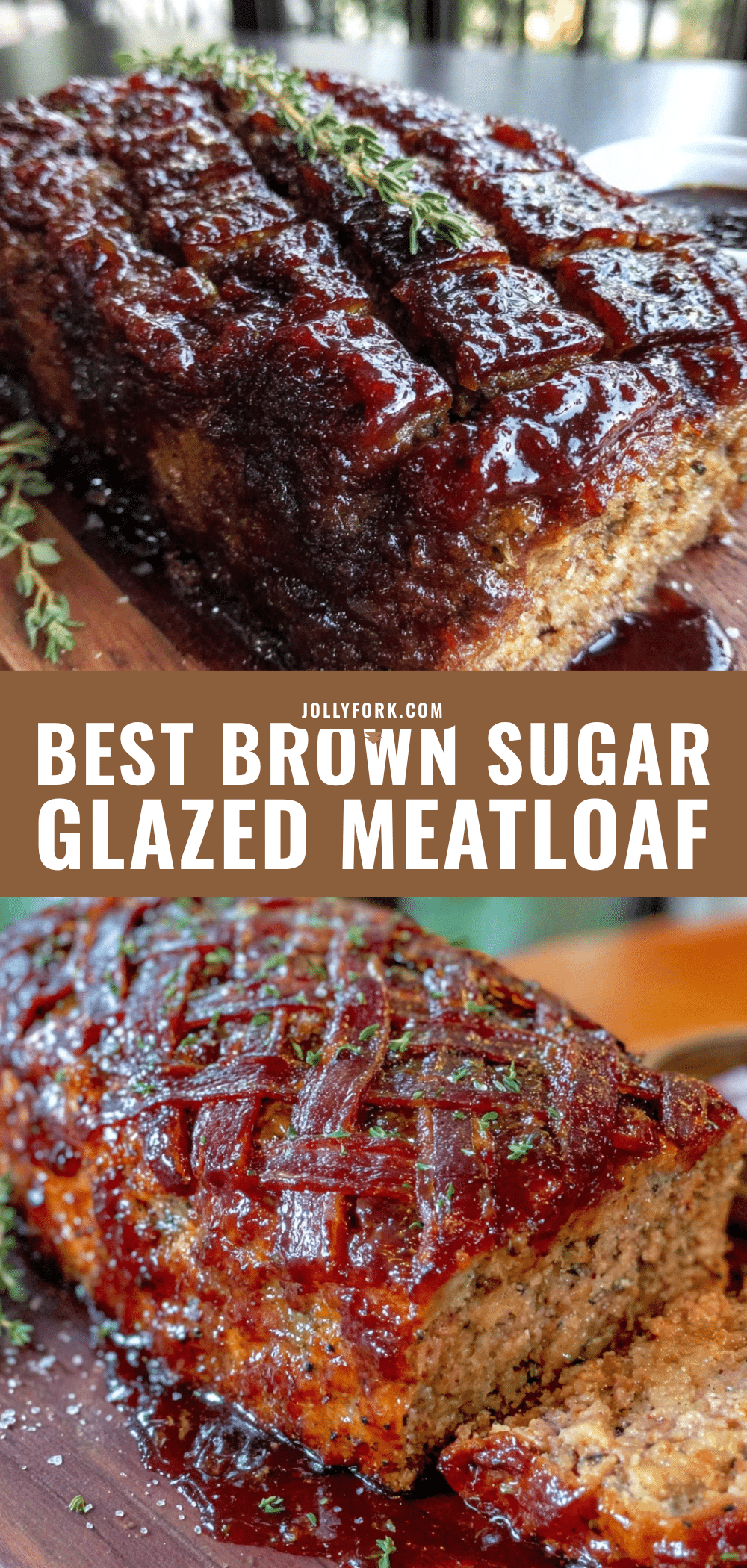
Best Brown Sugar Glazed Meatloaf for an Effortless Dinner Party
This tender, juicy meatloaf with a glossy brown sugar glaze is perfect for dinner parties and weeknight dinners alike. It comes together in about 15 minutes of active prep time and bakes to perfection, converting even the most stubborn meatloaf skeptics.
- Prep Time: 15 minutes
- Cook Time: 1 hour
- Total Time: 1 hour 15 minutes
- Yield: 8 servings 1x
- Category: Main Course
- Cuisine: American
Ingredients
- 1.5 pounds (680g) ground beef (80/20 blend)
- 1/2 pound (225g) ground pork
- 1 medium yellow onion, finely diced or grated
- 3 cloves garlic, minced
- 1 cup (120g) plain breadcrumbs (panko preferred)
- 1/2 cup (120ml) whole milk (or oat/almond milk for dairy-free)
- 2 large eggs, lightly beaten
- 2 tablespoons (30ml) Worcestershire sauce
- 1 tablespoon (15ml) Dijon mustard
- 2 tablespoons chopped fresh parsley (or 1 teaspoon dried)
- 1 teaspoon kosher salt (3/4 teaspoon if using table salt)
- 1/2 teaspoon freshly ground black pepper
- 1 teaspoon smoked paprika
- 1/2 cup (120ml) ketchup
- 1/3 cup (70g) packed brown sugar (light or dark)
- 1 tablespoon (15ml) apple cider vinegar
- 1 teaspoon (5ml) Worcestershire sauce
- 1/2 teaspoon garlic powder
Instructions
- Preheat your oven to 350°F (175°C). Position the rack in the center of the oven. If using convection, reduce temperature to 325°F (160°C).
- Make the panade: In a large mixing bowl, combine the breadcrumbs and milk. Stir until the breadcrumbs are fully soaked. Let sit for 5 minutes.
- Prep the aromatics: Grate the onion using the large holes of a box grater (about 1/2 cup with juices). Mince the garlic cloves finely.
- Mix the meatloaf base: Add the grated onion (with juices), minced garlic, eggs, Worcestershire sauce, Dijon mustard, salt, pepper, smoked paprika, and fresh parsley to the panade mixture. Stir until well combined.
- Add the meat: Add the ground beef and ground pork to the bowl. Use your hands to gently mix everything together with a light folding motion until evenly distributed (about 30 seconds). Do not overmix.
- Shape the meatloaf: Line a 9×5-inch loaf pan with parchment paper, leaving overhang on the two long sides. Transfer the meat mixture to the pan and press gently into an even loaf shape. Smooth the top with your hands.
- Make the glaze: In a small bowl, whisk together the ketchup, brown sugar, apple cider vinegar, Worcestershire sauce, and garlic powder until the sugar is mostly dissolved.
- Apply the first layer of glaze: Spread about half of the glaze over the top of the meatloaf. Reserve the remaining glaze.
- Bake for 45 minutes. Remove from oven and spread the remaining glaze over the top. Return to oven and bake for another 15-20 minutes.
- Check for doneness: The meatloaf is done when the internal temperature reaches 160°F (71°C) at the center. Insert a meat thermometer into the thickest part.
- Rest before slicing: Let the meatloaf rest in the pan for 10-15 minutes. Use the parchment paper overhang to lift it out and transfer to a cutting board or serving platter.
- Slice and serve: Use a sharp knife to cut even slices, about 1-inch thick. Spoon any remaining glaze from the pan over the slices before serving.
Notes
If the top of the meatloaf is browning too quickly during the last 15 minutes, tent it loosely with aluminum foil. For a free-form loaf, shape on a parchment-lined baking sheet for crispier edges. Leftovers keep in the refrigerator for up to 4 days and freeze beautifully for up to 3 months.
Nutrition
- Serving Size: 1 slice (1/8 of reci
- Calories: 385
- Sugar: 12
- Sodium: 680
- Fat: 22
- Saturated Fat: 8
- Carbohydrates: 18
- Fiber: 1
- Protein: 28
Keywords: meatloaf, brown sugar glaze, dinner party, comfort food, ground beef, ground pork, easy recipe