It was 11:47 PM on a rainy Thursday, and I had a sudden, almost aggressive craving for stuffing. Not the kind that comes from a box, but the real deal—the kind that soaks up every drop of turkey juice and turns into a golden, crispy-on-top, soft-in-the-middle masterpiece. I didn’t have any stale bread, which is what every recipe says you absolutely need. But I had a loaf of crusty sourdough that was starting to get a little too tough for sandwiches, and a stick of butter that was just begging to be browned. That’s when the idea hit me: brown butter sage stuffing. Honestly, I was skeptical. I mean, could you really just make it up as you go along at nearly midnight? Turns out, yes. Yes, you can.
The kitchen was quiet, just the sound of the rain and the sizzle of butter turning nutty and golden in the pan. I grabbed a handful of fresh sage from the fridge—the smell alone was enough to wake me up. I chopped it roughly, tossed it in the bubbling butter, and watched it crisp up in seconds. It felt like a secret, like I had stumbled onto something that shouldn’t work but absolutely did. Maybe you’ve been there, standing in your kitchen at a weird hour, trusting your gut and hoping for the best. That night, my gut was right.
This stuffing turned out so good that I made it for Thanksgiving the next week, and my brother-in-law—who claims to hate stuffing—ate three servings. Three. I knew then that this wasn’t just a late-night experiment. It was a recipe that deserved to be shared, scaled up, and served to a crowd. And now, I’m sharing it with you.
Why You’ll Love This Recipe
Let me tell you why this brown butter sage stuffing is about to become your new go-to for every gathering. I’ve tested this recipe more times than I can count, and each time, it gets better. Here’s what makes it stand out:
- Rich, Nutty Flavor: Browning the butter adds a deep, almost caramel-like flavor that you just can’t get from regular melted butter. It’s a game-changer.
- Crispy Sage: Frying the sage leaves in the brown butter gives them a crispy texture and an intense, earthy flavor that infuses every bite.
- Perfect for a Crowd: This recipe scales beautifully. Whether you’re feeding 8 or 18, you can double or triple it without losing any of the magic.
- Make-Ahead Friendly: You can prep this stuffing a day in advance and bake it right before your guests arrive. Less stress, more time to enjoy the party.
- Simple Ingredients: No fancy grocery trips needed. You probably already have bread, butter, sage, onions, and celery in your kitchen.
- Crowd-Pleaser: Even people who claim they don’t like stuffing will go back for seconds. I’ve seen it happen.
This recipe is different because it’s not just another stuffing recipe—it’s the one that makes people close their eyes after the first bite. It’s comfort food reimagined, with a nutty, savory depth that feels both familiar and surprising. Perfect for impressing guests without spending all day in the kitchen.
What Ingredients You Will Need
This recipe uses simple, wholesome ingredients to deliver bold flavor and satisfying texture. Most of these are pantry staples, but a few key players make all the difference.
- For the Bread Base:
- 1 large loaf (about 1.5 lbs / 680g) crusty sourdough or French bread, cut into 1-inch cubes (stale or slightly dried out works best)
- If your bread is fresh, spread it on a baking sheet and toast at 300°F (150°C) for 10-15 minutes to dry it out
- For the Brown Butter & Sage:
- 1 cup (2 sticks / 226g) unsalted butter (I use Kerrygold for its rich flavor)
- 1/2 cup (about 12g) fresh sage leaves, roughly chopped (plus a few whole leaves for garnish)
- For the Aromatics:
- 2 large yellow onions, diced (about 3 cups)
- 4 stalks celery, diced (about 1.5 cups)
- 4 cloves garlic, minced
- For the Liquid:
- 2 cups (480ml) low-sodium chicken or vegetable broth (adds moisture without making it soggy)
- 1 large egg, beaten (helps bind the stuffing together)
- For Seasoning:
- 1 teaspoon kosher salt (plus more to taste)
- 1/2 teaspoon black pepper
- 1 teaspoon dried thyme (or 1 tablespoon fresh)
- 1/2 teaspoon dried rosemary (or 1 teaspoon fresh, minced)
Ingredient Tips: For the best texture, use a hearty, crusty bread. Sourdough is my favorite because it holds its shape and adds a tangy note. If you’re gluten-free, use a good-quality gluten-free bread—just make sure it’s sturdy. For a dairy-free version, substitute the butter with a high-quality vegan butter or olive oil. The sage should be fresh—dried sage just won’t give you the same crispy, aromatic result.
Equipment Needed
You don’t need a lot of fancy equipment to make this stuffing, but a few key tools will make your life easier.
- Large Skillet or Dutch Oven: For browning the butter and sautéing the aromatics. A heavy-bottomed pan works best to prevent burning.
- Large Mixing Bowl: To combine the bread cubes with the butter mixture and broth.
- 9×13-inch Baking Dish: For baking the stuffing. If you’re making a double batch, use a larger dish or two separate dishes.
- Sharp Knife and Cutting Board: For chopping onions, celery, and sage.
- Wooden Spoon or Silicone Spatula: For stirring the butter as it browns.
- Aluminum Foil: To cover the stuffing while it bakes, preventing the top from burning before the center is cooked through.
Personal Note: I’ve made this stuffing in a cast-iron skillet and a ceramic baking dish, and both work great. If you don’t have a 9×13-inch dish, you can use a 10-inch cast-iron skillet or even a disposable aluminum pan for easy cleanup. Budget-friendly options are totally fine—the recipe doesn’t care what you cook it in.
Preparation Method
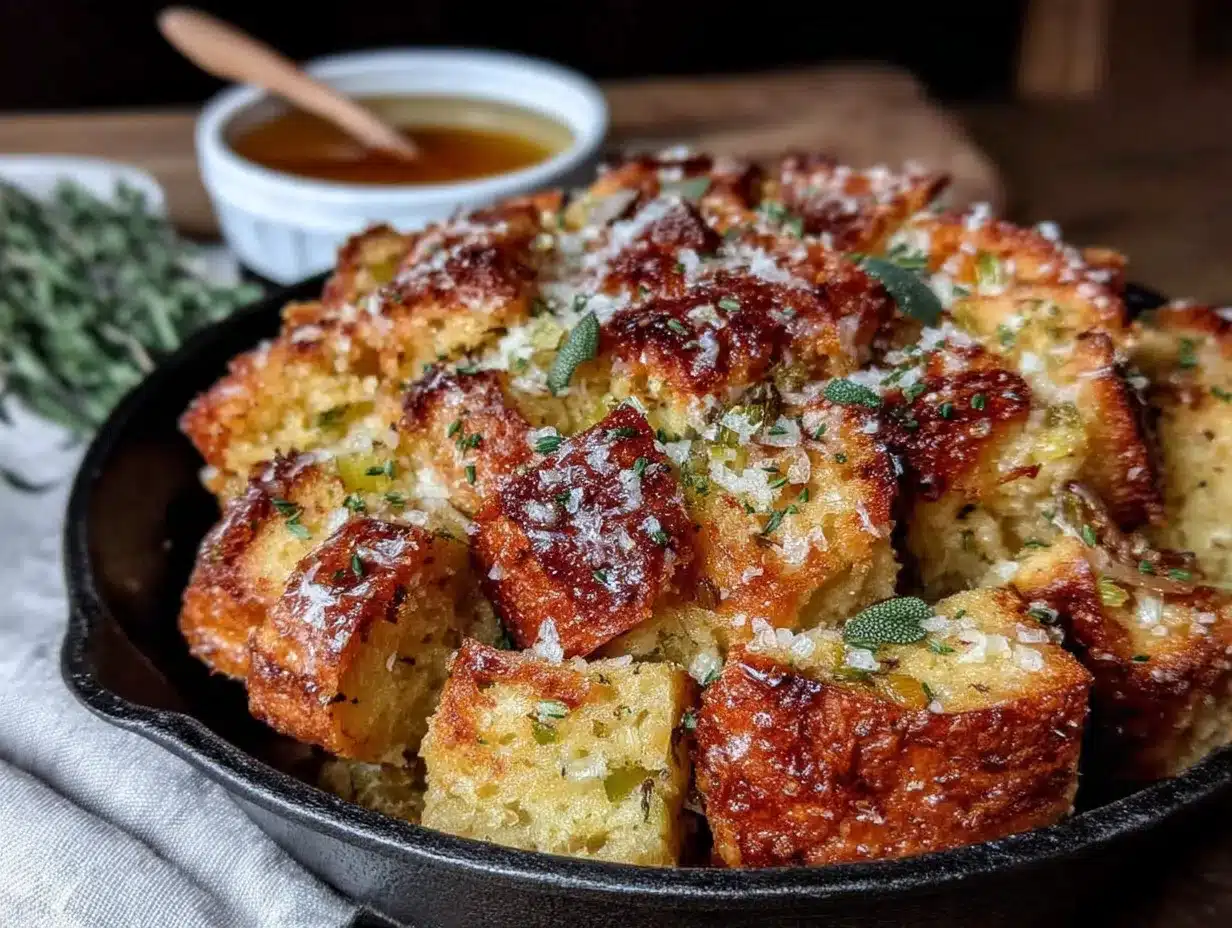
Let’s get cooking. This stuffing comes together in about an hour, with about 20 minutes of active prep time.
- Preheat your oven to 375°F (190°C). Spread the bread cubes on a large baking sheet in a single layer. Toast for 10-12 minutes, until lightly golden and dry. Set aside to cool.
- Brown the butter: In a large skillet or Dutch oven over medium heat, melt the butter. Swirl the pan occasionally. After 3-4 minutes, the butter will start to foam and turn golden. Watch closely—once you see brown specks forming at the bottom and it smells nutty, remove it from the heat immediately. This takes about 5-7 minutes total. Don’t walk away; burnt butter is a sad thing.
- Crisp the sage: Add the chopped sage to the hot brown butter. It will sizzle and crisp up in about 30 seconds. Use a slotted spoon to transfer the sage to a paper towel-lined plate. Set aside.
- Sauté the aromatics: In the same skillet with the remaining brown butter (don’t wipe it out!), add the diced onions and celery. Cook over medium heat for 6-8 minutes, until softened and translucent. Add the minced garlic and cook for 1 more minute, until fragrant.
- Season the vegetables: Stir in the salt, pepper, thyme, and rosemary. Cook for 1 minute to bloom the spices.
- Combine everything: In a large mixing bowl, add the toasted bread cubes, the sautéed vegetables, and the crispy sage. Pour the broth over the top, then add the beaten egg. Gently toss everything together with a wooden spoon or your hands until the bread is evenly moistened. It should feel moist but not soggy—if it looks dry, add a splash more broth.
- Transfer to baking dish: Pour the stuffing mixture into a greased 9×13-inch baking dish. Spread it evenly, but don’t press it down—you want some air pockets for texture.
- Bake: Cover the dish with aluminum foil and bake for 25 minutes. Then, remove the foil and bake for another 15-20 minutes, until the top is golden brown and crispy. If you want an extra-crispy top, broil for 2-3 minutes at the end—watch it closely so it doesn’t burn.
- Rest and serve: Let the stuffing rest for 5-10 minutes before serving. This allows the flavors to meld and the texture to set.
Cooking Tips & Techniques
Here are a few things I’ve learned from making this stuffing more times than I can count.
- Don’t rush the brown butter: It’s tempting to crank up the heat, but medium heat is your friend. Low and slow gives you better control and prevents the butter from burning. If you see black specks, you’ve gone too far—start over.
- Use stale bread: Fresh bread will turn into mush. If you don’t have stale bread, toast it in the oven until it’s dry and crunchy. This step is non-negotiable for the perfect texture.
- Don’t overmix: When combining the bread with the broth and egg, toss gently. Overmixing will break down the bread and turn your stuffing into paste.
- Check for moisture: Before baking, grab a handful of the stuffing mixture and squeeze it. If liquid drips out, it’s too wet. Add a handful of extra bread cubes. If it crumbles apart, add a splash more broth.
- Make it ahead: You can assemble the stuffing up to 24 hours in advance. Just cover and refrigerate. When ready to bake, add 10-15 minutes to the baking time since it’s starting cold.
Personal Failure: The first time I tried this, I used fresh bread and didn’t toast it. The result was a soggy, dense mess that I had to serve with a spoon. Learn from my mistakes—toast that bread!
Variations & Adaptations
This stuffing is incredibly versatile. Here are a few ways to make it your own.
- Add Sausage: Brown 1 pound of Italian or breakfast sausage in the skillet before sautéing the vegetables. Crumble it and add it to the bread mixture. This makes it a heartier, main-dish stuffing.
- Go Vegetarian: Use vegetable broth and add sautéed mushrooms for an earthy, umami flavor. Cremini or shiitake mushrooms work beautifully.
- Add Dried Fruit: Toss in 1/2 cup of dried cranberries, chopped apricots, or golden raisins for a sweet-tart contrast to the savory sage.
- Add Nuts: Toasted pecans or walnuts add a lovely crunch. Add them in the last 10 minutes of baking to keep them crisp.
- Gluten-Free: Use a good-quality gluten-free bread. I’ve had success with Schär or Udi’s. Just make sure to toast it well.
Personal Favorite: I love adding crumbled Italian sausage and dried cranberries. The combination of savory, sweet, and nutty is absolutely addictive.
Serving & Storage Suggestions
This stuffing is best served warm, right out of the oven. The top should be golden and crispy, while the inside is soft and tender. Let it rest for 5-10 minutes after baking so it holds its shape when you scoop it out.
- What to Serve With It: This stuffing pairs perfectly with roasted turkey, chicken, or pork. It also works as a side dish for roast beef or even a hearty vegetarian stew. For a complete holiday meal, serve it alongside mashed potatoes, green bean casserole, and cranberry sauce.
- Storage: Leftover stuffing can be stored in an airtight container in the refrigerator for up to 4 days. The flavors actually deepen overnight, so it might taste even better the next day.
- Freezing: You can freeze baked stuffing for up to 3 months. Let it cool completely, then wrap it tightly in plastic wrap and foil. To reheat, thaw in the refrigerator overnight, then bake at 350°F (175°C) for 20-25 minutes, covered, until heated through.
- Reheating: For best results, reheat in the oven. Microwave will make it soggy. If you’re in a hurry, reheat in a skillet over medium heat with a splash of broth to refresh the moisture.
Nutritional Information & Benefits
Here’s the approximate nutritional breakdown per serving (based on 12 servings):
- Calories: 320
- Fat: 18g
- Carbohydrates: 34g
- Fiber: 2g
- Protein: 6g
- Sodium: 480mg
Health Benefits: This stuffing is made with wholesome ingredients like fresh sage, which is packed with antioxidants and anti-inflammatory properties. Celery and onions add fiber and vitamins, while the brown butter, though indulgent, provides a small amount of vitamin A. If you’re watching your sodium, use low-sodium broth and reduce the added salt.
Dietary Considerations: This recipe contains gluten and dairy. For a gluten-free version, use gluten-free bread. For dairy-free, substitute the butter with vegan butter or olive oil. It’s not suitable for vegan diets as written, but you can use a flax egg and vegan butter for a plant-based version.
Conclusion
This brown butter sage stuffing is more than just a side dish—it’s the star of the table. It’s the kind of recipe that makes people ask for seconds before they’ve finished their first plate. Whether you’re hosting Thanksgiving, a Christmas dinner, or a cozy fall gathering, this stuffing will earn you serious bragging rights.
I love this recipe because it’s forgiving, adaptable, and absolutely packed with flavor. It’s proof that a few simple ingredients, treated with a little care, can become something truly special. So go ahead, make it for your next crowd. And when everyone raves about it? Just smile and say, “It’s the brown butter.”
I’d love to hear how yours turns out! Leave a comment below, share your photos, and let me know if you tried any of the variations. Happy cooking!
Frequently Asked Questions
Can I make this stuffing ahead of time?
Yes! You can assemble the stuffing up to 24 hours in advance and refrigerate it. Just add 10-15 minutes to the baking time since it’s starting cold.
Can I use dried sage instead of fresh?
You can, but fresh sage gives a much better flavor and texture. If using dried, use 2 tablespoons and add it to the butter with the aromatics rather than crisping it.
How do I prevent the stuffing from being too dry?
Make sure your bread is properly toasted but not over-dried. Also, check the moisture level before baking—if it looks dry, add a splash more broth. Covering with foil for the first half of baking also helps retain moisture.
Can I cook this stuffing inside a turkey?
I don’t recommend it. Stuffing cooked inside the turkey can become soggy and may not reach a safe internal temperature. Baking it separately gives you better texture and control.
What’s the best bread to use?
A crusty sourdough or French bread is ideal. It holds its shape well and adds a nice tangy flavor. Avoid soft sandwich bread—it will turn into mush.
Pin This Recipe!
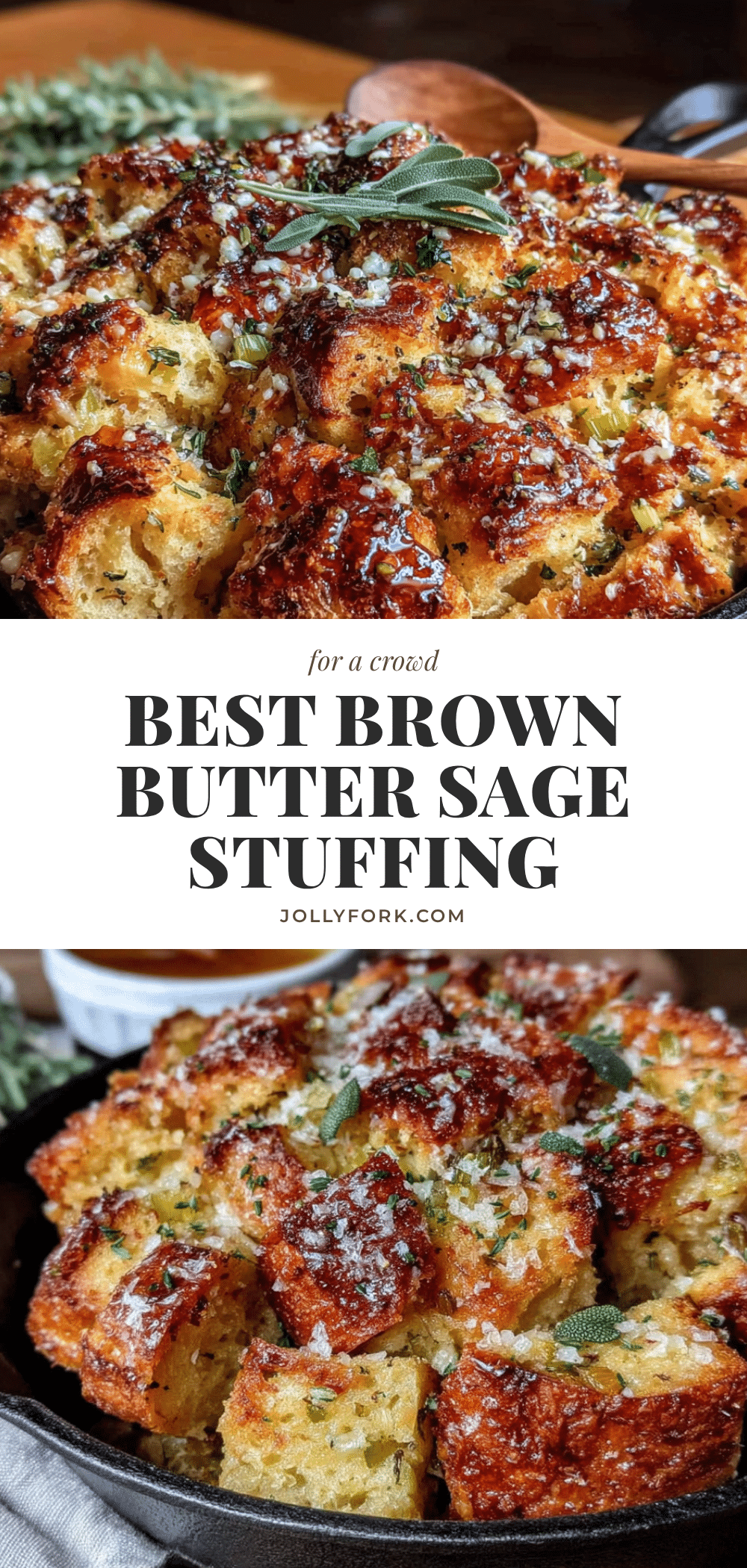
Best Brown Butter Sage Stuffing for a Crowd (Easy Recipe)

This brown butter sage stuffing is a rich, nutty, and crispy-on-top side dish perfect for feeding a crowd. Made with simple ingredients like sourdough bread, fresh sage, and browned butter, it’s a make-ahead friendly recipe that even stuffing skeptics will love.
- Prep Time: 20 minutes
- Cook Time: 40 minutes
- Total Time: 1 hour
- Yield: 12 servings 1x
- Category: Side Dish
- Cuisine: American
Ingredients
- 1 large loaf (about 1.5 lbs / 680g) crusty sourdough or French bread, cut into 1-inch cubes (stale or slightly dried out works best)
- 1 cup (2 sticks / 226g) unsalted butter
- 1/2 cup (about 12g) fresh sage leaves, roughly chopped (plus a few whole leaves for garnish)
- 2 large yellow onions, diced (about 3 cups)
- 4 stalks celery, diced (about 1.5 cups)
- 4 cloves garlic, minced
- 2 cups (480ml) low-sodium chicken or vegetable broth
- 1 large egg, beaten
- 1 teaspoon kosher salt
- 1/2 teaspoon black pepper
- 1 teaspoon dried thyme (or 1 tablespoon fresh)
- 1/2 teaspoon dried rosemary (or 1 teaspoon fresh, minced)
Instructions
- Preheat your oven to 375°F (190°C). Spread the bread cubes on a large baking sheet in a single layer. Toast for 10-12 minutes, until lightly golden and dry. Set aside to cool.
- Brown the butter: In a large skillet or Dutch oven over medium heat, melt the butter. Swirl the pan occasionally. After 3-4 minutes, the butter will start to foam and turn golden. Watch closely—once you see brown specks forming at the bottom and it smells nutty, remove it from the heat immediately. This takes about 5-7 minutes total.
- Crisp the sage: Add the chopped sage to the hot brown butter. It will sizzle and crisp up in about 30 seconds. Use a slotted spoon to transfer the sage to a paper towel-lined plate. Set aside.
- Sauté the aromatics: In the same skillet with the remaining brown butter, add the diced onions and celery. Cook over medium heat for 6-8 minutes, until softened and translucent. Add the minced garlic and cook for 1 more minute, until fragrant.
- Season the vegetables: Stir in the salt, pepper, thyme, and rosemary. Cook for 1 minute to bloom the spices.
- Combine everything: In a large mixing bowl, add the toasted bread cubes, the sautéed vegetables, and the crispy sage. Pour the broth over the top, then add the beaten egg. Gently toss everything together until the bread is evenly moistened. It should feel moist but not soggy—if it looks dry, add a splash more broth.
- Transfer to baking dish: Pour the stuffing mixture into a greased 9×13-inch baking dish. Spread it evenly, but don’t press it down.
- Bake: Cover the dish with aluminum foil and bake for 25 minutes. Then, remove the foil and bake for another 15-20 minutes, until the top is golden brown and crispy. If you want an extra-crispy top, broil for 2-3 minutes at the end.
- Rest and serve: Let the stuffing rest for 5-10 minutes before serving.
Notes
For the best texture, use stale or toasted bread. Don’t rush the brown butter—medium heat is key. You can assemble the stuffing up to 24 hours in advance and refrigerate; add 10-15 minutes to the baking time if starting cold. For a gluten-free version, use gluten-free bread. For dairy-free, substitute butter with vegan butter or olive oil.
Nutrition
- Serving Size: 1 serving
- Calories: 320
- Sugar: 4
- Sodium: 480
- Fat: 18
- Saturated Fat: 10
- Carbohydrates: 34
- Fiber: 2
- Protein: 6
Keywords: brown butter sage stuffing, Thanksgiving stuffing, easy stuffing recipe, crowd-pleasing stuffing, make-ahead stuffing