My friend Jen asked me why I couldn’t just skip the sausage in my usual stuffing recipe. I started to explain that stuffing needs that savory, fatty backbone—then stopped. Honestly? I had no good reason other than “that’s how I’ve always done it.” She was trying to eat lighter after the holidays, and I was being stubborn without realizing it.
So I gave it a shot. I swapped in brown butter for the sausage fat, doubled down on sage, and used a really good sourdough that could hold its own. The first bite? I was annoyed at how perfect it was. It had all that deep, nutty, herby flavor—minus the heavy feeling an hour later. Jen took the leftovers home, and I’ve been making it this way ever since.
This lighter brown butter sage stuffing with sourdough is now my go-to. It’s proof that sometimes you need someone to call you out on your cooking habits. Maybe you’ve been there too—clinging to a recipe because it’s tradition, even when a simpler version might actually be better. This one’s for those moments.
Why You’ll Love This Recipe
This isn’t just another stuffing recipe. It’s the one that made me question everything I thought I knew about holiday sides. Here’s why it works so well:
- Lighter but still indulgent: By skipping the sausage and using brown butter, you get all that rich, savory depth without the extra grease. It feels satisfying, not heavy.
- Simple, quality ingredients: You only need a handful of things—good sourdough, fresh sage, butter, and aromatics. No hunting for obscure items.
- Perfect for Thanksgiving or any cozy dinner: It’s fancy enough for the big day but easy enough for a Sunday roast chicken.
- Crowd-pleaser across the board: Even the “but where’s the meat?” folks at my table went back for seconds. It’s that good.
- Texture perfection: The sourdough stays crispy on the edges and tender in the middle. That contrast is everything.
What sets this apart from every other stuffing recipe? It’s the brown butter technique. Browning the butter transforms it into something nutty and almost caramelized, which pairs perfectly with the earthy sage. Plus, using sourdough instead of regular bread adds a tangy backbone that keeps each bite interesting. It’s not just another version—it’s the version I keep coming back to.
There’s something about that first bite that makes you pause. It’s comfort food that doesn’t weigh you down. It’s the side dish that steals the show without trying too hard. And honestly? It makes you feel good about eating it.
What Ingredients You Will Need
This recipe relies on a few key players. Each one has a job to do, and together they create something that tastes much more complex than the ingredient list suggests. Most of these are pantry staples, which is part of the beauty.
- 1 large loaf sourdough bread (about 1 pound), cut into 1-inch cubes: Day-old or slightly stale sourdough works best. It soaks up the broth without turning to mush. I prefer a crusty bakery loaf over the soft supermarket kind. The tanginess is non-negotiable here.
- 6 tablespoons unsalted butter: Use a good quality butter—it’s the star of the show. I like Kerrygold for its richness, but any European-style butter works well.
- 3 tablespoons fresh sage leaves, finely chopped: Fresh sage is a must. Dried sage won’t give you that bright, peppery flavor. Roll the leaves together and chiffonade them for even pieces.
- 1 large yellow onion, diced: Yellow onions are mellow and sweet when cooked. They form the aromatic base.
- 3 celery stalks, diced: Celery adds that classic stuffing crunch and freshness. Don’t skip it!
- 3 cloves garlic, minced: Garlic adds a subtle warmth. Fresh is best, but jarred minced garlic works in a pinch.
- 2 cups low-sodium chicken or vegetable broth: Low-sodium is key so you control the salt. Homemade broth takes this over the top, but good store-bought is fine.
- 2 large eggs, lightly beaten: Eggs bind everything together. They help the stuffing hold its shape without being dense.
- 1 teaspoon kosher salt: Use less if your broth is salted. You can always add more later.
- 1/2 teaspoon black pepper: Freshly ground is best. It adds a gentle heat.
- 1/2 teaspoon dried thyme: Thyme and sage are best friends. It adds an earthy, slightly floral note.
- 1/4 cup fresh parsley, chopped (optional, for garnish): A pop of color and freshness at the end. It’s optional but nice.
Ingredient Selection Tips: When choosing sourdough, look for a loaf that feels dense and heavy for its size. That means it has good structure and won’t fall apart. For the sage, avoid any leaves that look wilted or have dark spots. Fresh sage should be fragrant and slightly fuzzy.
Substitution Guidance: Gluten-free? Use a sturdy gluten-free sourdough. Dairy-free? Substitute the butter with a high-quality vegan butter (I like Miyoko’s) and use vegetable broth. The flavor will be slightly different but still delicious.
Equipment Needed
You don’t need a fancy kitchen to pull this off. Here’s what you’ll need:
- Large skillet or sauté pan: For browning the butter and cooking the aromatics. A stainless steel pan lets you see the butter color change clearly.
- Large mixing bowl: For combining the bread cubes with the broth mixture. Go big—you need room to toss everything.
- 9×13-inch baking dish: A standard casserole dish works perfectly. Glass or ceramic both work.
- Sharp knife and cutting board: For dicing the onion, celery, and herbs.
- Wooden spoon or silicone spatula: For stirring the brown butter. A silicone spatula is great for scraping every last bit.
- Aluminum foil: For covering the dish during the initial bake.
Budget-Friendly Options: If you don’t have a 9×13 dish, use a cast-iron skillet or even a disposable aluminum pan. For the skillet, any heavy-bottomed pan will do—just watch the heat closely to avoid burning the butter.
Personal Note: I once tried to brown butter in a non-stick pan and couldn’t see the color change well. Ended up with burnt butter and a smoky kitchen. Stick to a light-colored pan if you can!
Preparation Method
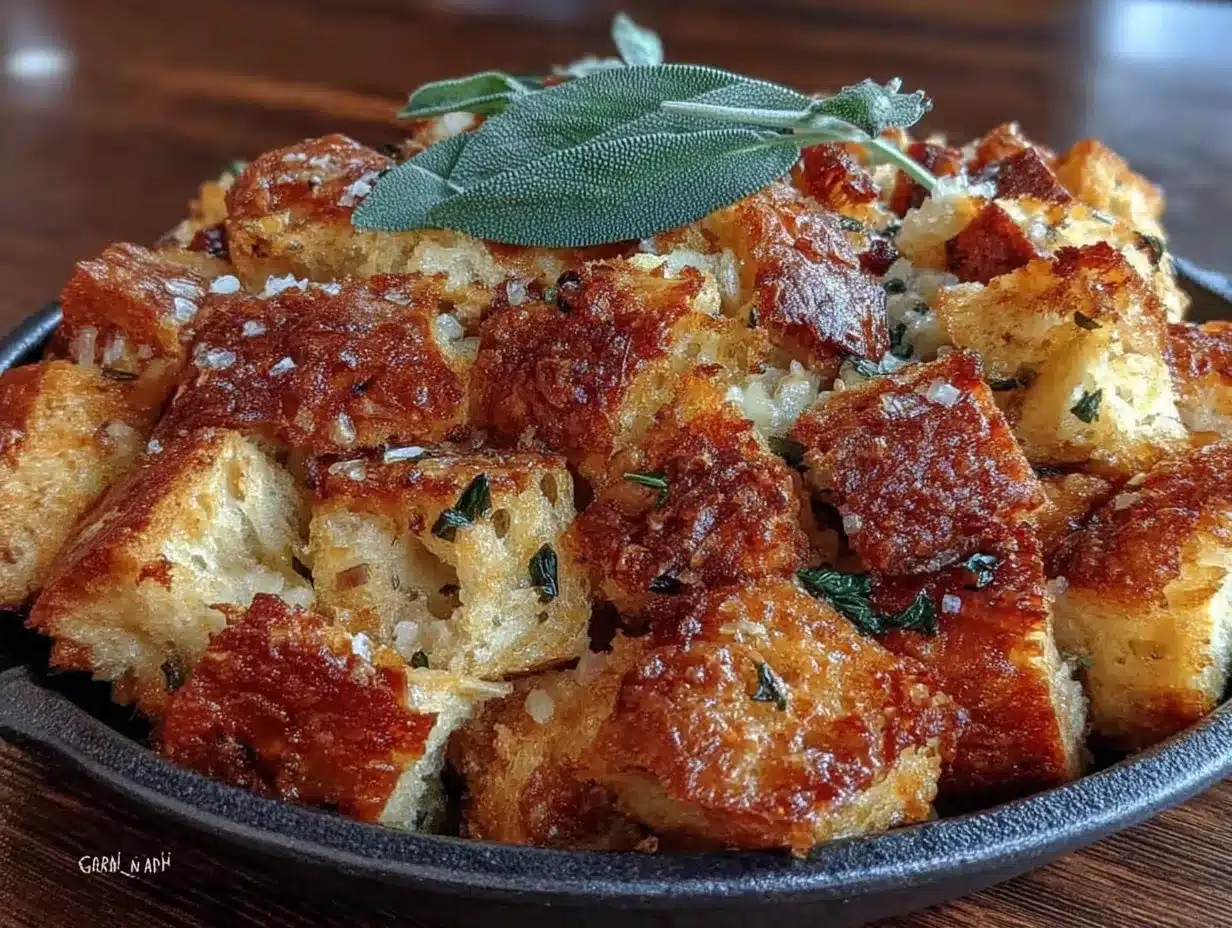
Let’s get cooking. This comes together in about an hour, with most of that being hands-off baking time.
- Preheat your oven to 375°F (190°C). Position a rack in the middle. While it heats, spread your sourdough cubes on a baking sheet in a single layer. Toast them for 10-12 minutes, shaking the pan halfway through. They should be dry and lightly golden, not hard. This step is crucial—it prevents mushy stuffing.
- Brown the butter. In a large skillet over medium heat, melt the 6 tablespoons of butter. Swirl the pan occasionally. After 3-4 minutes, you’ll see white milk solids form at the bottom. Keep swirling. The butter will smell nutty and turn a golden-amber color. This takes about 5-7 minutes total. Watch it closely—it goes from brown to burnt fast. Once it’s amber, immediately remove the pan from the heat.
- Add the sage to the brown butter. Toss in the chopped sage and let it sizzle for about 30 seconds. This blooms the flavor. The sage will crisp up slightly. Set the skillet aside.
- Cook the aromatics. In the same skillet (or a new one if you prefer), heat a drizzle of olive oil over medium heat. Add the diced onion and celery. Cook for 6-8 minutes, stirring occasionally, until they’re soft and translucent. Add the minced garlic and cook for another minute until fragrant. Season with a pinch of salt and pepper.
- Combine the broth mixture. In a small bowl or measuring cup, whisk together the 2 cups of broth, the beaten eggs, 1 teaspoon salt, 1/2 teaspoon pepper, and the dried thyme. Set aside.
- Assemble the stuffing. In your large mixing bowl, combine the toasted sourdough cubes, the cooked onion and celery mixture, and the brown butter with sage. Pour the broth mixture over everything. Use your hands or a large spoon to gently toss until all the bread is evenly coated. Don’t overmix—you want some texture, not a paste.
- Transfer to the baking dish. Pour the mixture into your greased 9×13-inch dish. Spread it into an even layer. Don’t press it down—you want some air pockets for crispy edges.
- Bake covered. Cover the dish tightly with aluminum foil. Bake for 25 minutes. This steams the inside and keeps it moist.
- Bake uncovered. Remove the foil and bake for another 15-20 minutes. The top should be golden brown and crispy. The edges will be darker and extra crunchy—those are the best parts.
- Rest before serving. Let the stuffing sit for 5 minutes after coming out of the oven. This helps it set and makes serving easier. Garnish with fresh parsley if you like.
Sensory Cues: When browning the butter, you’ll smell a distinct nutty aroma—that’s your cue it’s ready. The toasted bread should feel dry but not rock-hard. When you toss everything together, the bread should look evenly moist but not soggy. A few dry spots are okay—they’ll crisp up in the oven.
Personal Efficiency Tip: Toast the bread cubes while you chop the veggies. Multitasking saves time and keeps the workflow smooth.
Cooking Tips & Techniques
I’ve made this stuffing more times than I can count, and I’ve learned a few things the hard way. Let me save you the trouble.
Don’t skip toasting the bread. I know it’s an extra step, but it’s non-negotiable. Fresh bread will turn into a gluey mess. Toasting dries it out so it can absorb the broth without falling apart. Trust me on this one.
Watch the brown butter like a hawk. I once looked away for “just a second” and ended up with black butter. It smells burnt and tastes bitter. The moment you see that amber color and smell nuts, pull it off the heat. If you’re nervous, use a light-colored pan so you can see the color change.
Use room temperature eggs. Cold eggs can seize up the brown butter when mixed. Let them sit on the counter for 15 minutes before starting. Simple trick, big difference.
Don’t over-soak the bread. Pour the broth mixture over gradually. You might not need every last drop. The bread should be moist but not swimming. If there’s liquid pooling at the bottom of the bowl, you’ve added too much.
Let it rest. That 5-minute rest after baking is important. It lets the steam redistribute and the structure set. Cutting into it too early will give you a crumbly mess.
My biggest failure: I once forgot the eggs entirely. The stuffing was dry and crumbly, and nobody ate it. The eggs are the glue—don’t skip them.
Variations & Adaptations
This recipe is flexible. Here are some ways to make it your own:
- Add mushrooms: Sauté 8 ounces of sliced cremini mushrooms with the onion and celery. They add an earthy, meaty texture that’s perfect for vegetarians.
- Make it vegan: Use vegan butter, vegetable broth, and a flax egg (1 tablespoon ground flaxseed mixed with 3 tablespoons water). The texture will be slightly less firm but still delicious.
- Add dried fruit: Toss in 1/2 cup dried cranberries or chopped apricots with the bread cubes. The sweetness balances the savory sage beautifully.
- Spice it up: Add 1/2 teaspoon red pepper flakes with the garlic for a subtle heat. It cuts through the richness.
- Gluten-free option: Use a good quality gluten-free sourdough. I’ve had success with Against the Grain brand. Toast it a little longer since gluten-free bread tends to be more delicate.
- Slow cooker method: Assemble everything, then cook on low for 3-4 hours. Remove the lid for the last 30 minutes to crisp the top. It’s a lifesaver when the oven is full.
Personal Variation: I once added chopped toasted pecans and dried cherries for a holiday brunch. It was a hit. The crunch and sweetness made it feel special without extra work.
Serving & Storage Suggestions
This stuffing is best served warm, straight from the oven. The contrast between the crispy top and tender inside is at its peak within the first 15 minutes.
What to serve with it: It’s a natural side for roasted turkey or chicken. It also pairs beautifully with a simple green salad dressed with lemon vinaigrette to cut the richness. For a vegetarian meal, serve alongside roasted root vegetables or a hearty mushroom gravy.
Storage: Leftovers keep in an airtight container in the fridge for up to 4 days. The texture softens over time, but the flavor gets even better as the herbs meld together.
Freezing: This stuffing freezes beautifully. Assemble it completely but don’t bake it. Cover tightly with foil and freeze for up to 3 months. To bake, thaw overnight in the fridge, then bake as directed, adding 10 minutes to the covered baking time.
Reheating: The best way to reheat is in a 350°F oven for 10-15 minutes. It crisps up the top again. The microwave works in a pinch but makes it soft. If you’re in a hurry, reheat in a skillet over medium heat with a splash of broth to rehydrate.
Flavor Development: Honestly, day-old stuffing is often better than fresh. The flavors have time to settle and deepen. Don’t be afraid to make it a day ahead.
Nutritional Information & Benefits
Here’s an estimated breakdown per serving (based on 8 servings):
- Calories: ~280
- Fat: 14g
- Carbohydrates: 32g
- Protein: 7g
- Fiber: 3g
- Sugar: 4g
Health Benefits: Sourdough is easier to digest than regular bread thanks to the fermentation process—it breaks down gluten and phytic acid. Sage is packed with antioxidants and has anti-inflammatory properties. Brown butter, while rich, means you use less overall fat since it’s so flavorful. This version is lower in saturated fat than traditional sausage stuffings.
Dietary Considerations: This recipe can be made vegetarian, vegan, and gluten-free with the substitutions listed above. It’s naturally nut-free (unless you add nuts) and doesn’t contain common allergens beyond gluten and dairy.
Personal Wellness Perspective: I love that I can enjoy a generous serving of this stuffing without feeling like I need a nap afterward. It’s satisfying and celebratory, but it won’t derail your day. That balance is everything.
FAQs
Can I use dried sage instead of fresh?
You can, but the flavor won’t be as bright. If using dried, use 1 tablespoon instead of 3. Add it to the brown butter off the heat so it doesn’t burn.
Why did my stuffing turn out dry?
Most likely the bread was over-toasted or you didn’t use enough broth. Next time, add broth gradually and stop when the bread looks moist but not soaked. Also, make sure you cover the dish for the first part of baking.
Can I make this ahead of time?
Absolutely! Assemble the stuffing, cover it, and refrigerate for up to 24 hours. Add 10 minutes to the covered baking time since you’re starting from cold.
What’s the best bread to use besides sourdough?
A sturdy country loaf or ciabatta works well. Avoid soft sandwich bread—it turns to mush. The key is a bread with structure and a bit of tang.
How do I get extra crispy edges?
Spread the stuffing in a thinner layer (use a larger dish) and bake uncovered for an extra 5-10 minutes. You can also broil it for 1-2 minutes at the end, but watch it carefully so it doesn’t burn.
Conclusion
This lighter brown butter sage stuffing with sourdough is proof that sometimes the best recipes come from letting go of what you think you know. It’s got all the comfort and flavor of traditional stuffing, but it’s lighter, brighter, and honestly more interesting. The nutty brown butter, the earthy sage, the tangy sourdough—every bite works together.
I hope you give it a try, whether for Thanksgiving, a cozy Sunday dinner, or just because you deserve a good side dish. Feel free to make it your own—add mushrooms, swap the herbs, throw in some dried fruit. That’s the beauty of cooking.
If you make this, I’d love to hear about it. Drop a comment below or tag me in your photos. And if you’re looking for more lighter takes on classic comfort food, you might enjoy this creamy mushroom soup without heavy cream or these roasted balsamic Brussels sprouts. Happy cooking, friends!
Pin This Recipe!
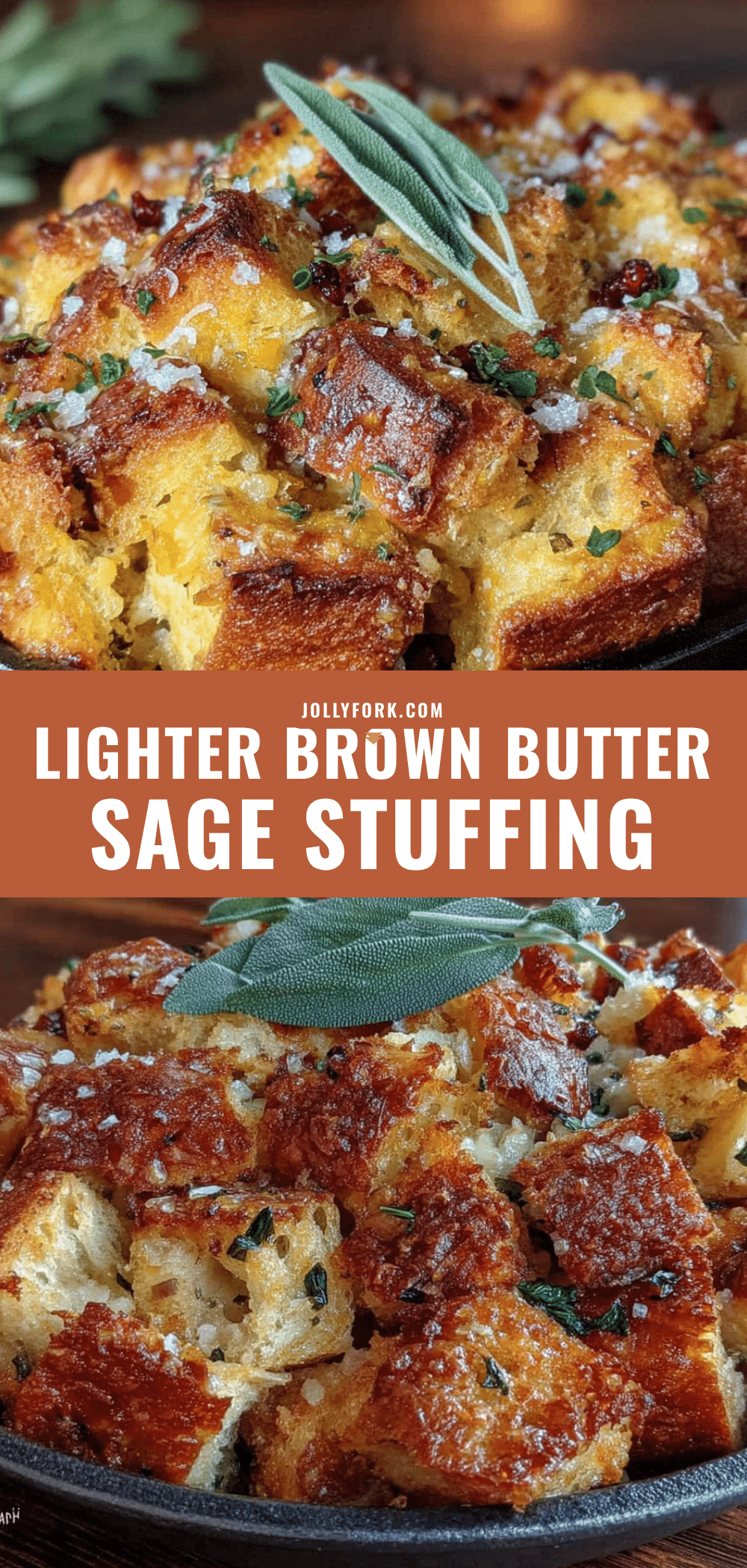
Best Easy Brown Butter Sage Stuffing Recipe

A lighter, yet indulgent stuffing made with brown butter, fresh sage, and sourdough bread. Perfect for Thanksgiving or any cozy dinner, this recipe delivers rich, nutty flavor without the heavy feeling.
- Prep Time: 15 minutes
- Cook Time: 45 minutes
- Total Time: 1 hour
- Yield: 8 servings 1x
- Category: Side Dish
- Cuisine: American
Ingredients
- 1 large loaf sourdough bread (about 1 pound), cut into 1-inch cubes
- 6 tablespoons unsalted butter
- 3 tablespoons fresh sage leaves, finely chopped
- 1 large yellow onion, diced
- 3 celery stalks, diced
- 3 cloves garlic, minced
- 2 cups low-sodium chicken or vegetable broth
- 2 large eggs, lightly beaten
- 1 teaspoon kosher salt
- 1/2 teaspoon black pepper
- 1/2 teaspoon dried thyme
- 1/4 cup fresh parsley, chopped (optional, for garnish)
Instructions
- Preheat your oven to 375°F (190°C). Spread sourdough cubes on a baking sheet in a single layer. Toast for 10-12 minutes, shaking halfway through, until dry and lightly golden.
- In a large skillet over medium heat, melt 6 tablespoons butter. Swirl occasionally. After 3-4 minutes, white milk solids form. Continue swirling until butter turns golden-amber and smells nutty (about 5-7 minutes). Immediately remove from heat.
- Add chopped sage to the brown butter and let sizzle for about 30 seconds. Set aside.
- In the same skillet, heat a drizzle of olive oil over medium heat. Add diced onion and celery. Cook for 6-8 minutes until soft and translucent. Add minced garlic and cook for 1 minute until fragrant. Season with a pinch of salt and pepper.
- In a small bowl, whisk together broth, beaten eggs, 1 teaspoon salt, 1/2 teaspoon pepper, and dried thyme.
- In a large mixing bowl, combine toasted sourdough cubes, cooked onion and celery mixture, and brown butter with sage. Pour broth mixture over everything. Gently toss until bread is evenly coated.
- Transfer mixture to a greased 9×13-inch baking dish. Spread into an even layer without pressing down.
- Cover tightly with aluminum foil. Bake for 25 minutes.
- Remove foil and bake for another 15-20 minutes until top is golden brown and crispy.
- Let stuffing rest for 5 minutes before serving. Garnish with fresh parsley if desired.
Notes
Toast bread cubes while chopping veggies to save time. Watch brown butter closely—it goes from brown to burnt fast. Use room temperature eggs to prevent seizing. Don’t over-soak the bread; it should be moist but not swimming. Let stuffing rest 5 minutes after baking for best texture.
Nutrition
- Serving Size: 1 serving (about 1 c
- Calories: 280
- Sugar: 4
- Sodium: 580
- Fat: 14
- Saturated Fat: 8
- Carbohydrates: 32
- Fiber: 3
- Protein: 7
Keywords: brown butter sage stuffing, sourdough stuffing, Thanksgiving stuffing, lighter stuffing, vegetarian stuffing