“You’re going to end up with way too many tomatoes.” That’s what my neighbor said, leaning over the fence last August, eyeing the six cherry tomato plants I’d just put in the ground. I laughed it off, confident in my meal planning. By mid-September, I was drowning in them. Every counter, every windowsill, every bowl I owned was filled with tiny red and orange orbs. I gave bags away to friends. I left them on doorsteps like some kind of produce fairy. And still, they kept coming.
That first year, I made a classic marinara, but something about it felt… rushed. The tomatoes deserved better. So I tried something different. I halved them, tossed them with garlic and olive oil, and let them hang out in a low oven for hours. What came out of that oven changed how I think about preserving summer. The tomatoes collapsed into themselves, concentrating all that sweetness into something almost jammy, with these little caramelized edges that tasted like candy. I stood there eating them straight off the pan, and I knew I’d found my thing.
This best slow-roasted cherry tomato sauce for freezing is my solution to the annual tomato avalanche. It’s not just a way to use up extras — it’s the reason I plant so many tomatoes in the first place. The slow roasting does something that stovetop cooking just can’t. It draws out moisture gently, intensifying flavor without scorching. The result is a sauce that tastes like August in January, like sunshine bottled up and tucked away for a rainy Tuesday.
I make this in big batches now, usually on a Sunday when I can let the oven do the work while I potter around the kitchen. The smell alone is worth it — garlic roasting, herbs infusing, tomatoes turning into something deeply, unapologetically delicious. And when I pull a jar from the freezer months later, I don’t just taste tomatoes. I taste that September afternoon, the warm kitchen, the neighbor who was right about everything.
Why You’ll Love This Recipe
I’ve tested this sauce more times than I can count, tweaking temperatures and timing until it felt just right. Here’s why it’s become my go-to — and why I think it’ll become yours too:
- Practically Hands-Off: The oven does all the heavy lifting. You halve tomatoes, toss them with oil and garlic, and walk away for a few hours. No stirring, no watching, no stress.
- Simple, Whole-Food Ingredients: You need cherry tomatoes, garlic, olive oil, salt, and maybe some herbs. That’s it. No sugar, no tomato paste, no fillers.
- Perfect for Batch Cooking: This recipe scales beautifully. I’ve made it with two pints and I’ve made it with ten pounds. It works every time.
- Freezer-Friendly for Months: Portion it into jars or bags, freeze flat, and you’ve got summer sauce ready for pasta, pizza, soups, or stews all year long.
- Deep, Complex Flavor: Slow roasting concentrates natural sugars and adds a subtle smokiness you just can’t get from quick-cooked sauce. It’s rich without being heavy.
What sets this apart from other tomato sauces is the texture. Because you’re not boiling or reducing on the stovetop, the tomatoes retain a bit of body. You get these soft, silky pieces swimming in a flavorful oil-based sauce. It’s not watery, not pasty — it’s just right. And honestly, after the first time you taste it straight from the oven, you’ll understand why I make extra every single year.
What Ingredients You Will Need
This recipe keeps things simple, letting the tomatoes shine. Here’s what you’ll need and why each ingredient matters:
- Cherry Tomatoes (2-3 pounds): The star of the show. Use any variety you have — red, yellow, orange, or a mix. Ripe, sweet tomatoes yield the best flavor, but even slightly underripe ones work because the slow roasting sweetens them up. I prefer smaller cherry tomatoes over grape tomatoes for this; they tend to be juicier and break down more evenly.
- Garlic (6-8 cloves, smashed): Whole cloves roast gently in the oil, becoming soft and sweet. Smashing them slightly helps release their flavor without burning. If you love garlic, add more. I’ve used up to 12 cloves in a batch and never regretted it.
- Extra-Virgin Olive Oil (¼ cup): Don’t skimp here. Good olive oil carries the flavors and helps the tomatoes caramelize. It also becomes part of the finished sauce, so use one you enjoy eating. I like a fruity, medium-bodied oil for this.
- Kosher Salt (1 teaspoon, plus more to taste): Salt draws out moisture and seasons the tomatoes as they cook. Start with a teaspoon and adjust at the end. Different tomatoes may need more or less.
- Fresh Herbs (optional but recommended): A few sprigs of basil, thyme, or oregano add aromatic depth. I usually tuck a few basil leaves and a sprig of thyme into the pan before roasting. They infuse the oil and tomatoes gently without overpowering.
- Red Pepper Flakes (optional, ¼ teaspoon): A tiny pinch adds warmth without heat. I add this about half the time, depending on my mood and what I plan to use the sauce for.
- Balsamic Vinegar (optional, 1 tablespoon): A splash at the end brightens the sauce and adds a touch of acidity. I use this when the tomatoes are on the sweeter side to balance things out.
Ingredient Selection Tips: For the best slow-roasted cherry tomato sauce for freezing, choose tomatoes that feel heavy for their size and have a deep, fruity smell at the stem. If you’re using farmers’ market tomatoes, ask for a taste — the sweetness varies by variety. I’ve had great luck with Sun Golds and Sweet 100s, but any cherry tomato works.
Substitutions: No fresh herbs? Use ½ teaspoon dried oregano or thyme. Need it oil-free? Roast with a splash of vegetable broth instead, though the texture will be slightly different. For a lower-sodium version, reduce salt to ½ teaspoon and adjust after roasting. You can also swap garlic for shallots or a mix of both — shallots add a milder, slightly sweeter note.
Equipment Needed
You don’t need fancy tools for this recipe, which is part of its charm. Here’s what I use:
- Rimmed Baking Sheet (half-sheet pan): A large rimmed sheet pan is essential. The rim catches the juices and oil, preventing spills. I use a 13×18-inch pan for 2-3 pounds of tomatoes. If you’re scaling up, use two pans to avoid overcrowding.
- Parchment Paper or Silicone Baking Mat: Lining the pan makes cleanup a breeze. The tomatoes release some sticky sugars as they roast, and parchment prevents them from bonding to the pan.
- Sharp Knife and Cutting Board: You’ll be halving a lot of small tomatoes. A sharp paring knife makes quick work of it. I use a serrated tomato knife sometimes — it cuts through the skin without squishing the fruit.
- Large Bowl: For tossing the halved tomatoes with oil, garlic, and salt before they go onto the pan.
- Spatula or Wooden Spoon: For stirring the tomatoes halfway through roasting and for scraping every last bit of goodness off the pan.
- Immersion Blender or Food Processor (optional): If you prefer a smoother sauce, you can blitz the roasted tomatoes after they cool. I usually leave mine chunky, but the option is there.
- Freezer-Safe Containers: Mason jars (leave headspace for expansion), freezer bags, or silicone food storage bags all work well. I use 8-ounce jars for single-serving portions and quart-sized bags for larger batches.
Budget-Friendly Tip: If you don’t have a rimmed baking sheet, a 9×13-inch baking dish works in a pinch. Just keep an eye on the edges — they may cook faster than the center. And honestly, a sharp knife is more important than any other tool here.
Preparation Method
Let me walk you through this step by step. The process is simple, but a few small details make a big difference in the finished sauce.
- Preheat your oven to 300°F (150°C). This low temperature is the secret. High heat would caramelize the outside too quickly while leaving the inside raw. Slow and steady wins this race.
- Wash and dry your cherry tomatoes. Give them a good rinse and pat them dry. Wet tomatoes steam instead of roast, and we want concentration, not dilution. Spread them on a clean kitchen towel to air dry while you prep everything else.
- Halve the tomatoes. Cut each cherry tomato in half through the equator (the widest part). This exposes the cut surface to heat, allowing moisture to evaporate evenly. For very small cherry tomatoes (the size of a marble), you can leave them whole — they’ll burst on their own during roasting. For larger ones, halving is non-negotiable. This takes the most time, so put on a podcast or queue up a show. I usually halve about 3 pounds in 15 minutes.
- Smash and peel the garlic cloves. Place each clove on your cutting board, lay the flat side of your knife over it, and give it a firm smack with your palm. The skin will slip right off. Leave the cloves whole or cut large ones in half. You want them to soften without burning.
- Toss everything together. In a large bowl, combine the halved tomatoes, smashed garlic, olive oil, salt, and any herbs or red pepper flakes you’re using. Gently toss with your hands or a spatula until every tomato half is coated in oil. The salt will start drawing out juices immediately — that’s good.
- Arrange on the baking sheet. Pour the tomato mixture onto your lined baking sheet and spread it into a single layer. Arrange the tomatoes cut-side up if you have the patience — it helps them concentrate more evenly. Don’t crowd them too much. If they’re piled on top of each other, they’ll steam instead of roast.
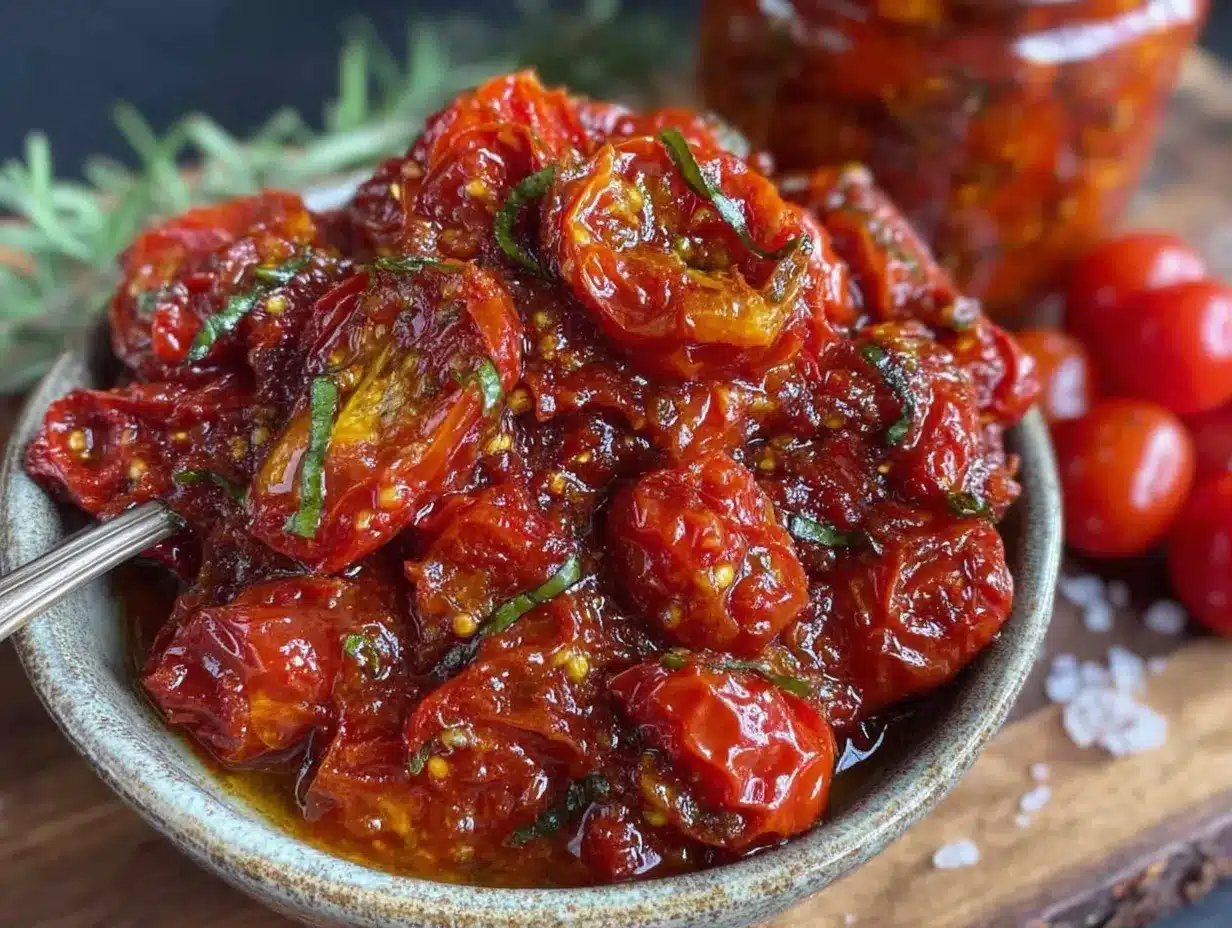
- Roast for 2 to 2.5 hours. Place the pan on the middle rack of your oven. After 1 hour, give the pan a gentle shake or stir with a spatula. The tomatoes will have started to soften and release their juices. At the 2-hour mark, check for doneness. You’re looking for tomatoes that have collapsed significantly, with some browning on the edges and a concentrated, jammy appearance. The garlic should be soft enough to squish between your fingers.
- Check for the right texture. The sauce is done when most of the liquid has evaporated and the oil has separated slightly. You should see small pools of olive oil with dark red tomato pieces suspended in it. If there’s still a lot of watery liquid, give it another 20-30 minutes. Every oven runs differently, and the moisture content of tomatoes varies.
- Cool slightly, then blend (optional). Let the pan cool on a wire rack for 10-15 minutes. If you want a smooth sauce, transfer the contents to a food processor or use an immersion blender right in the pan. Pulse a few times until you reach your desired consistency. I prefer it chunky, so I skip this step. But for a silky pasta sauce, a quick blitz is lovely.
- Add a splash of balsamic (optional). If your tomatoes were very sweet, stir in a tablespoon of balsamic vinegar. It brightens the flavor and adds a subtle tang. Taste and adjust salt if needed.
- Cool completely before freezing. This is important. Hot sauce in a closed container creates steam, which can lead to freezer burn or broken seals. Let the sauce come to room temperature, then refrigerate it if you’re not freezing immediately.
Troubleshooting Tip: If your sauce tastes flat or too acidic after roasting, it likely needs more salt. Tomatoes lose some acidity during long cooking, so a pinch of salt or a splash of vinegar usually fixes it. If it’s too watery, return the pan to the oven for another 20-30 minutes — the liquid will evaporate and concentrate the flavor.
Cooking Tips & Techniques
I’ve made this sauce more times than I can count, and I’ve learned a few things the hard way. Here’s what I wish someone had told me:
Don’t rush the temperature. I tried 350°F once, thinking I’d save time. The tomatoes caramelized on the outside but stayed watery inside. The low, slow heat at 300°F is non-negotiable for that concentrated, jammy texture. Trust the process.
Use the right pan size. Overcrowding is the most common mistake. If the tomatoes are piled too deep, they steam in their own juices instead of roasting. Use two pans if you’re making a big batch. Rotate them halfway through for even cooking.
Save the oil. After you transfer the sauce to containers, don’t wash that pan yet. The oil and browned bits left behind are liquid gold. Scrape them into your sauce or use them to sauté vegetables or drizzle over roasted chicken. I’ve started keeping a jar of “tomato oil” in my fridge for exactly this.
Let the garlic do its thing. Whole cloves roast into soft, sweet nuggets that melt into the sauce. If you mince the garlic, it can burn at the edges. Smashed whole cloves are the way to go. If you love garlic, add extra — it mellows dramatically during the long roast.
Multitask strategically. While the tomatoes roast, you can prep other components for future meals. I often make a batch of easy sheet pan caprese chicken delight while the oven’s already warm, or prep veggies for the week. The long, unattended cooking time is perfect for getting other things done.
Test for doneness with a spoon. Drag a spoon through the tomatoes. If liquid rushes in to fill the gap, they need more time. If the tomatoes hold their shape and the oil pools around them, they’re ready. The sauce should look concentrated, not soupy.
Variations & Adaptations
This sauce is endlessly adaptable. Here are some of my favorite ways to change it up:
Herb-Infused Version: Add 2-3 sprigs of fresh rosemary or a few sage leaves to the pan before roasting. The herbs infuse the oil and tomatoes with a woodsy, aromatic flavor. Remove the stems before freezing. I love this version for pairing with roasted vegetables or spooning over polenta.
Spicy Arrabbiata Style: Double the red pepper flakes and add a finely chopped Fresno or serrano chile to the mix. The heat mellows during roasting but leaves a warm, lingering finish. Use this for pasta or as a base for honey garlic baked chicken thighs — the sweet-spicy combo is incredible.
Roasted Vegetable Blend: Add diced zucchini, bell peppers, or eggplant to the pan alongside the tomatoes. Roast everything together, then blend for a chunky, vegetable-packed sauce. This is my go-to when I have odds and ends in the fridge that need using up.
Dairy-Free Creamy Sauce: After roasting, transfer the tomatoes to a blender with ¼ cup of raw cashews (soaked in hot water for 15 minutes) or ½ cup of canned coconut milk. Blend until silky smooth. The nuts or coconut add richness without dairy. It’s surprisingly luxurious.
Smoky Chipotle Version: Add 1-2 chipotle peppers in adobo sauce to the pan during the last 30 minutes of roasting. The smoky heat complements the sweet tomatoes beautifully. This version is fantastic in tacos, enchiladas, or over rice and beans.
Personal Variation: Last summer, I tried adding a tablespoon of honey and a splash of fish sauce to the tomatoes before roasting. It sounds weird, I know. But the honey helped caramelization, and the fish sauce added an umami depth that nobody at the dinner table could identify. They just kept saying “this is the best pasta sauce I’ve ever had.” I’ve done it ever since.
Serving & Storage Suggestions
Serving Temperature and Presentation: This sauce is best served warm, straight from the pan or reheated gently. Spoon it over al dente pasta, spread it on crusty bread for bruschetta, or use it as a base for pizza. It’s also incredible as a topping for easy mini whole wheat pita pizzas — the concentrated flavor stands up to the toppings beautifully.
Complementary Dishes: Pair this sauce with simple preparations that let it shine. Toss it with fresh pasta and a handful of basil. Serve it alongside grilled fish or roasted chicken. Spoon it over creamy polenta or soft scrambled eggs for a quick, satisfying meal. A glass of bold red wine doesn’t hurt either.
Storage Instructions: Once the sauce has cooled completely, transfer it to airtight containers. I use 8-ounce mason jars for single servings and quart-sized freezer bags for larger portions. If using jars, leave at least ½ inch of headspace — the sauce expands as it freezes. Label each container with the date and amount. This sauce keeps in the refrigerator for up to 1 week and in the freezer for up to 6 months.
Reheating Methods: To thaw, transfer a jar from the freezer to the refrigerator overnight. For a quicker option, run the jar under warm water until the sauce loosens, then reheat in a small saucepan over low heat. Add a splash of pasta water or broth if the sauce seems too thick. I’ve also reheated it straight from frozen in a covered skillet over low heat — it takes about 10 minutes and works perfectly.
How Flavors Develop: This sauce actually gets better after a few days in the fridge. The flavors meld and deepen, and the garlic becomes even sweeter. If you’re planning to freeze it, consider making it a day ahead and refrigerating overnight before portioning. The extra time allows the flavors to settle.
Nutritional Information & Benefits
While this sauce is more about flavor than numbers, here’s a rough estimate per ½-cup serving (based on 2 pounds of tomatoes, ¼ cup olive oil, and 6 garlic cloves, divided into 6 servings):
- Calories: Approximately 120-140
- Total Fat: 9-10g (mostly from heart-healthy olive oil)
- Carbohydrates: 8-10g (from tomatoes and garlic)
- Fiber: 2-3g
- Sugar: 5-7g (natural, no added sugar)
- Protein: 2g
- Sodium: 350-400mg (varies with salt added)
- Vitamin C: 25-30% of daily value
- Vitamin A: 15-20% of daily value
- Lycopene: High — cooking tomatoes actually increases the bioavailability of this antioxidant
Health Benefits: Cherry tomatoes are packed with lycopene, a powerful antioxidant linked to heart health and reduced inflammation. Slow roasting concentrates these nutrients and makes them more absorbable. The olive oil provides healthy monounsaturated fats, which help your body absorb the fat-soluble vitamins and lycopene. Garlic adds allicin, a compound known for its immune-supporting properties. This sauce is naturally gluten-free, dairy-free, vegan, and paleo-friendly. It contains no added sugars or preservatives.
Dietary Considerations: For a lower-sodium version, reduce the salt to ½ teaspoon and add a splash of lemon juice at the end for brightness. The sauce is already low in carbs, making it suitable for keto diets in moderation (watch the tomato count). It’s also Whole30-compliant if you skip any optional sweeteners.
Conclusion
This best slow-roasted cherry tomato sauce for freezing has become my favorite way to preserve summer. It’s not complicated, it doesn’t require special equipment, and the result is genuinely more delicious than anything you can buy in a jar. The slow roasting does something magical — it transforms humble cherry tomatoes into a sauce that tastes like it took all day to make, even though most of that time is hands-off.
I love that this recipe lets me capture a moment in time. When I pull a jar from the freezer in January, I don’t just taste tomatoes. I taste that warm September kitchen, the neighbor’s warning, the satisfaction of solving a delicious problem. And honestly? I plant even more tomatoes now, just so I can make extra.
I’d love to hear how this sauce works for you. Do you have a favorite way to use it? A variation you’ve tried? Drop a comment below and share your experience. And if you’re looking for more ways to use up summer produce, check out my cozy spiced peach butter recipe — it’s another great way to preserve the season’s bounty. Happy cooking, and here’s to summer flavors all year round!
Frequently Asked Questions
Can I use this sauce for canning instead of freezing?
This recipe is designed specifically for freezing, not water-bath canning. The low acid content and oil levels make it unsafe for standard canning methods. If you want to can tomato sauce, use a tested recipe with added acid (like lemon juice or citric acid). For this version, freezing is the safest and best option.
Do I have to halve all the cherry tomatoes?
For the best results, yes. Halving exposes the cut surface to heat, allowing moisture to evaporate and flavors to concentrate. If you leave them whole, they’ll burst eventually, but the sauce will be more watery and take longer to cook. For very small tomatoes (marble-sized), you can leave them whole, but for most cherry tomatoes, halving is worth the effort.
How long does this sauce last in the freezer?
Properly stored in airtight containers, this sauce stays delicious for up to 6 months in the freezer. After that, it’s still safe to eat but may lose some flavor intensity. I recommend labeling containers with the date so you can use the oldest ones first. For best quality, aim to use it within 3-4 months.
Can I use frozen cherry tomatoes for this recipe?
I don’t recommend it. Frozen tomatoes release a lot of water when they thaw, which makes them steam rather than roast. You’d end up with a watery sauce that lacks the concentrated, jammy texture. Stick with fresh tomatoes for the best results. If you have frozen tomatoes, use them for stovetop sauces or soups instead.
What’s the best way to reheat this sauce without it separating?
Reheat the sauce gently over low heat, stirring occasionally. If it looks separated (oil floating on top), that’s normal — just stir it back in. Adding a splash of pasta water or broth helps re-emulsify the sauce. Avoid high heat, which can cause the oil to separate further. A covered skillet or small saucepan works perfectly.
Pin This Recipe!
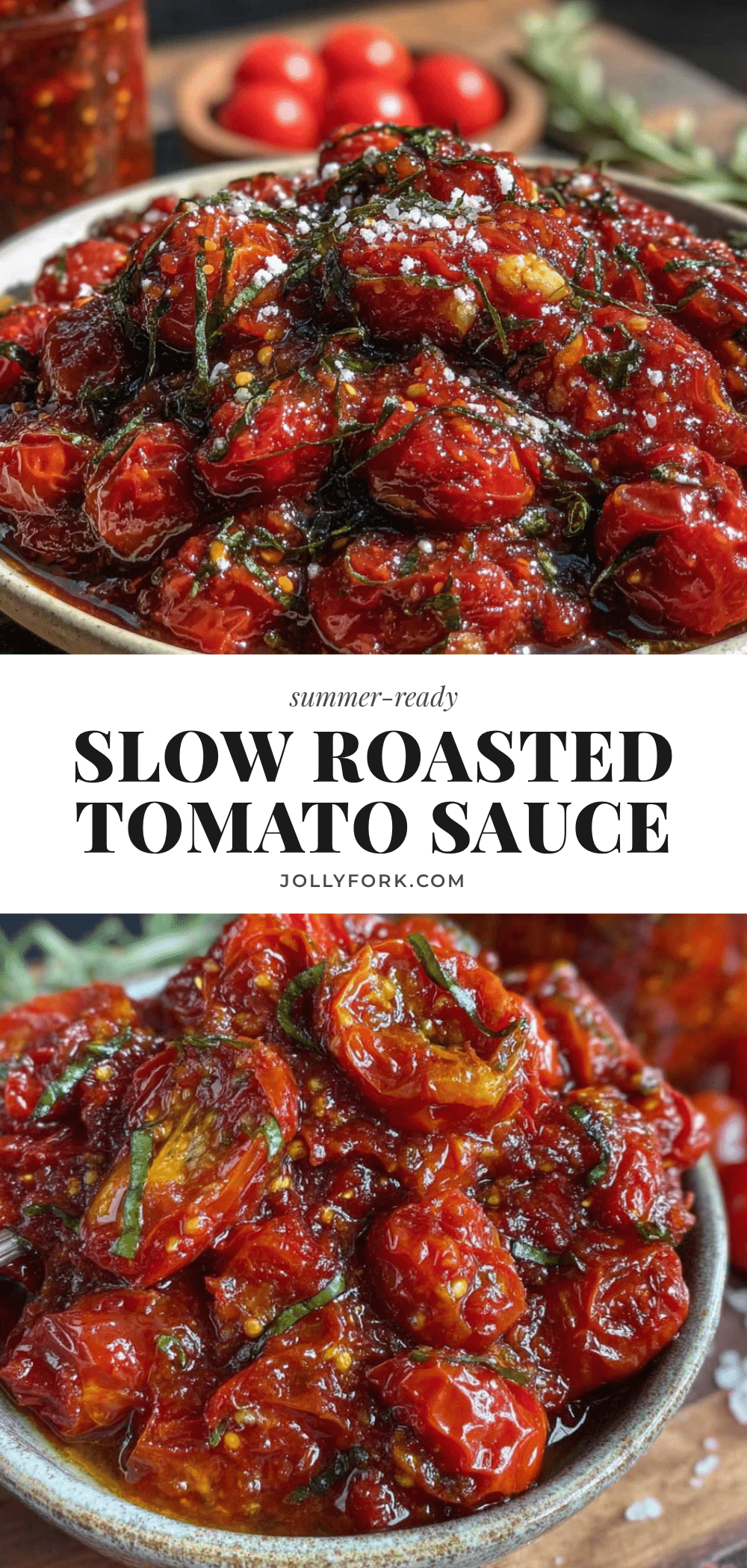
Best Slow-Roasted Cherry Tomato Sauce Recipe for Freezing
This slow-roasted cherry tomato sauce is a hands-off way to preserve summer’s bounty. The low oven concentrates the tomatoes’ sweetness, creating a jammy, flavorful sauce perfect for freezing and enjoying all year long.
- Prep Time: 15 minutes
- Cook Time: 2 hours 30 minutes
- Total Time: 2 hours 45 minutes
- Yield: 6 servings 1x
- Category: Sauce
- Cuisine: Italian
Ingredients
- 2–3 pounds cherry tomatoes
- 6–8 cloves garlic, smashed
- ¼ cup extra-virgin olive oil
- 1 teaspoon kosher salt, plus more to taste
- Fresh herbs (basil, thyme, or oregano sprigs, optional)
- ¼ teaspoon red pepper flakes (optional)
- 1 tablespoon balsamic vinegar (optional)
Instructions
- Preheat your oven to 300°F (150°C).
- Wash and dry the cherry tomatoes. Halve each tomato through the equator (the widest part). For very small tomatoes (marble-sized), you can leave them whole.
- Smash and peel the garlic cloves. Leave whole or cut large ones in half.
- In a large bowl, combine the halved tomatoes, smashed garlic, olive oil, salt, and any herbs or red pepper flakes. Toss gently until every tomato half is coated.
- Pour the tomato mixture onto a lined rimmed baking sheet and spread into a single layer, arranging tomatoes cut-side up if possible.
- Roast for 2 to 2.5 hours. After 1 hour, gently shake or stir the pan. At the 2-hour mark, check for doneness: tomatoes should be collapsed with some browning on the edges and a jammy appearance; garlic should be soft.
- The sauce is done when most liquid has evaporated and the oil has separated slightly. If watery, roast another 20-30 minutes.
- Cool on a wire rack for 10-15 minutes. For a smooth sauce, blend with an immersion blender or in a food processor. For chunky sauce, skip blending.
- If desired, stir in balsamic vinegar. Taste and adjust salt.
- Cool completely before freezing. Transfer to airtight containers, leaving headspace for expansion. Refrigerate for up to 1 week or freeze for up to 6 months.
Notes
Don’t rush the temperature; 300°F is key for jammy texture. Avoid overcrowding the pan to prevent steaming. Save the oil and browned bits from the pan for extra flavor. The sauce improves after a day in the fridge. For canning, use a tested recipe with added acid; this recipe is designed for freezing only.
Nutrition
- Serving Size: ½ cup
- Calories: 120140
- Sugar: 57
- Sodium: 350400
- Fat: 910
- Saturated Fat: 1.5
- Carbohydrates: 810
- Fiber: 23
- Protein: 2
Keywords: slow-roasted cherry tomato sauce, freezer-friendly tomato sauce, homemade tomato sauce, cherry tomato recipe, preserving summer tomatoes