“I don’t even really like squash,” my neighbor said, peering into the bowl I’d just handed her. It was a chilly November afternoon, and I’d brought over a thermos of this slow cooker soup after she’d mentioned her kids were getting over a cold. She took a hesitant spoonful anyway—because that’s what you do when someone shows up at your door with hot food. And then she just stood there in her doorway, eating it straight from the thermos lid, not saying a word until she’d finished every last drop. “Okay,” she finally said, “what’s in this thing?”
That moment pretty much sums up how I feel about this soup. It doesn’t look like much in the pot—kind of a muted orange-brown before you blend it—but something about the combination of roasted squash, earthy sage, and a slow simmer all day just works magic. I stumbled onto this recipe by accident a few falls ago when I had a butternut squash sitting on my counter that I kept ignoring. It was getting soft, and I needed to do something with it fast. The slow cooker felt like the laziest possible option, honestly. I chopped the squash roughly, tossed it in with some broth and aromatics, and figured I’d deal with it later. What came out of that pot was so much better than any soup I’d ever made by standing over a stove.
This cozy slow cooker butternut squash soup with sage has become my go-to for those days when you want something warm and nourishing but don’t want to actually cook. It’s the kind of recipe that makes you look like you spent hours in the kitchen when really, you just threw things in a pot and walked away. And honestly? That’s my favorite kind of cooking.
Why You’ll Love This Recipe
Let me tell you why this particular soup has earned a permanent spot in my fall rotation. I’ve tested this recipe at least a dozen times—tweaking the amount of sage, trying different liquids, even accidentally forgetting the garlic once (don’t do that). Every version taught me something, and this final version is the one I keep coming back to.
- Set It and Forget It: This is the whole point. You chop a few things, toss them in the slow cooker, and go about your day. No stirring, no watching, no stress. It’s perfect for those busy weekdays when you want dinner ready the second you walk through the door.
- Simple Pantry Ingredients: Nothing fancy here. Butternut squash, onion, garlic, broth, and a few pantry staples. You might already have most of this stuff on hand, which is exactly the kind of recipe I love.
- Perfect for Meal Prep: This soup actually gets better after a day or two in the fridge. The flavors meld together and deepen, making it ideal for Sunday meal prep or making ahead for a gathering.
- Naturally Creamy Without Cream: Here’s the trick—when you blend the cooked squash with the broth, it becomes incredibly silky and luxurious all on its own. No heavy cream needed, though you can certainly add a splash if you want.
- Crowd-Pleasing Flavor: Even people who claim they don’t like squash (like my neighbor) end up loving this. The sage adds this warm, almost savory note that balances the natural sweetness of the squash perfectly.
This isn’t just another butternut squash soup recipe. The slow cooker method lets the squash cook low and slow, which concentrates its flavor in a way that stovetop versions just can’t match. And the sage—fresh or dried—infuses the whole pot with that unmistakable fall aroma that makes your whole house smell like Thanksgiving.
What Ingredients You Will Need
This recipe uses simple, wholesome ingredients that work together to create something genuinely special. Most of these are fall pantry staples, and you can find everything at any grocery store without breaking the bank.
- Butternut Squash (1 large, about 3-4 pounds): Look for one that feels heavy for its size with firm, unblemished skin. You’ll need to peel and cube it, which is the most labor-intensive part of this recipe. I usually buy pre-cut cubes from the store when I’m feeling lazy, but whole squash is cheaper and honestly tastes a bit better.
- Yellow Onion (1 medium, diced): Any onion works here, but yellow onions have the right balance of sweetness and savory flavor. Red onion would work in a pinch, but it’ll change the color slightly.
- Garlic Cloves (4-5, smashed): Don’t bother mincing these finely—just smash them with the side of your knife. They’ll get blended up anyway, so rough is fine.
- Fresh Sage Leaves (10-12 leaves) OR Dried Sage (2 teaspoons): Fresh sage is ideal if you can find it. It has this earthy, slightly peppery flavor that’s absolutely perfect with squash. Dried sage works beautifully too—just use less since it’s more concentrated.
- Vegetable Broth (4 cups): Use a good-quality broth here since it’s the main liquid. I prefer low-sodium so I can control the salt level. Chicken broth works great too if you’re not keeping this vegetarian.
- Coconut Milk (1 cup, full-fat): This is optional but adds incredible richness. The coconut flavor is very subtle—it mostly just adds creaminess. Heavy cream or half-and-half work too.
- Apple (1 medium, peeled and diced): This is my secret ingredient. A Granny Smith apple adds a touch of tartness that brightens the whole soup. You don’t taste apple specifically—it just makes everything taste more balanced.
- Salt and Black Pepper: To taste. Start with 1 teaspoon of salt and go from there.
- Olive Oil (2 tablespoons): For sautéing the aromatics. You could use butter here too, which adds nice richness.
- Optional Toppings: Toasted pumpkin seeds, a drizzle of cream or coconut milk, extra fried sage leaves, or a sprinkle of red pepper flakes for heat.
Equipment Needed
The beauty of this recipe is that you don’t need much special equipment. Here’s what you’ll need:
- Slow Cooker (5-6 quart): Any size works, but a 5-6 quart is ideal for this amount of soup. A smaller one will work—just don’t overfill it.
- Immersion Blender OR Regular Blender: An immersion blender is so much easier here—you can blend right in the pot. If using a regular blender, work in batches and be careful with the hot liquid. Let it cool slightly first and remove the center cap from the lid to let steam escape.
- Chef’s Knife and Cutting Board: For prepping the squash and other veggies. A sharp knife makes the squash prep way less annoying.
- Vegetable Peeler: For peeling the squash. A Y-peeler works best for those curved squash surfaces.
- Large Skillet (optional): For sautéing the aromatics before they go in the slow cooker. You can skip this step, but it adds more depth of flavor.
- Measuring Cups and Spoons: For accurate measurements, though this recipe is pretty forgiving.
Preparation Method

Step 1: Prep the Squash (15 minutes)
Start by peeling your butternut squash. Cut off both ends, then use a vegetable peeler to remove the skin. Cut the squash in half lengthwise and scoop out the seeds with a spoon. Cut the flesh into 1-inch cubes. This is the most time-consuming part, so put on some music or a podcast. If you’re short on time, grab pre-cut squash from the store—no judgment here.
Step 2: Sauté the Aromatics (5 minutes)
Heat the olive oil in a large skillet over medium heat. Add the diced onion and cook for about 3 minutes until it starts to soften and turn translucent. Add the smashed garlic cloves and cook for another minute until fragrant. This step isn’t strictly necessary—you can throw everything raw into the slow cooker—but it adds so much more depth to the final flavor. The browning creates those complex savory notes that make the soup taste like it simmered all day (which it did, but still).
Step 3: Layer Everything in the Slow Cooker (5 minutes)
Transfer the sautéed onions and garlic to your slow cooker. Add the cubed squash, diced apple, and sage leaves (or dried sage). Pour in the vegetable broth. Give everything a stir to combine. The liquid should mostly cover the squash—if it doesn’t, add a bit more broth or water.
Step 4: Cook Low and Slow (4-6 hours on High OR 7-8 hours on Low)
Cover the slow cooker and cook on low for 7-8 hours or on high for 4-5 hours. You’ll know it’s done when the squash is fork-tender and practically falling apart. The apple should be completely soft too. Your house will smell amazing at this point—like fall in a pot.
Step 5: Blend Until Silky (5 minutes)
Turn off the slow cooker and remove the lid. Let the soup cool for about 5 minutes. If using an immersion blender, blend right in the pot until completely smooth. If using a regular blender, work in batches—fill the blender no more than halfway, hold the lid down with a kitchen towel, and blend until smooth. Be careful with hot liquid; it expands when blended and can push the lid off.
Step 6: Add Creaminess and Season (2 minutes)
Stir in the coconut milk (or cream) and season with salt and pepper to taste. Start with 1 teaspoon of salt and adjust from there. The amount you need will depend on your broth and personal preference. Taste and adjust—this is the most important step. I usually end up adding a bit more salt than I think I need, because squash really benefits from proper seasoning.
Step 7: Serve and Garnish (2 minutes)
Ladle the soup into bowls and add your favorite toppings. I love a drizzle of coconut milk or cream, some toasted pumpkin seeds for crunch, and a few fried sage leaves if I’m feeling fancy. A sprinkle of red pepper flakes adds a nice warmth if you want a little heat.
Cooking Tips & Techniques
I’ve made this soup more times than I can count, and I’ve definitely learned a few things the hard way. Here are my best tips for getting it right every time:
Don’t Skip the Sauté Step. I know it’s tempting to just throw everything in the slow cooker raw—I’ve done it. But sautéing the onions and garlic first makes a noticeable difference. That little bit of browning adds layers of flavor that you just can’t get from raw ingredients alone. Trust me on this one.
Cut Your Squash Evenly. Try to cut the squash into similar-sized cubes so everything cooks at the same rate. Some slightly smaller pieces are fine—they’ll just break down faster—but you don’t want some chunks still firm while others are mush.
Watch Your Liquid Level. Butternut squash releases quite a bit of water as it cooks, so you might end up with more liquid than you started with. If your soup seems too thin after blending, you can simmer it on the stovetop for 10-15 minutes to reduce it. If it’s too thick, add more broth or a splash of water until it reaches your preferred consistency.
Season at the End. Salt and other seasonings can become more concentrated as the soup cooks down, so it’s best to add them after blending. Taste and adjust—this is where the magic happens.
Make It Ahead. This soup actually tastes better the next day. The flavors have time to meld and deepen, and the texture becomes even silkier. I often make this a day ahead when I’m planning to serve it for company.
I once forgot to add the sage until after I’d already blended the soup. I stirred in dried sage at the end, and honestly? It was still delicious. So don’t stress if you miss a step—this recipe is forgiving.
Variations & Adaptations
One of the things I love about this soup is how adaptable it is. Here are some variations I’ve tried and loved:
Vegan Version: This recipe is already vegan if you use vegetable broth and coconut milk. The coconut milk adds a lovely richness without any dairy. If you’re not a fan of coconut flavor, use a plain unsweetened plant-based creamer instead.
Spicy Kick: Add a diced jalapeño (seeds removed unless you want heat) along with the onions, or stir in 1/2 teaspoon of red pepper flakes before serving. The heat pairs beautifully with the sweet squash and earthy sage.
Roasted Squash Version: For even deeper flavor, roast the cubed squash at 400°F for 25-30 minutes before adding it to the slow cooker. This caramelizes the natural sugars and adds a smoky sweetness that’s incredible.
Add Some Protein: Stir in some cooked white beans (like cannellini or great northern) before blending for a heartier soup with extra protein. Or top each bowl with crispy chickpeas or crumbled bacon.
Change the Herbs: No sage? No problem. Rosemary, thyme, or even a little fresh oregano work beautifully. I’ve made this with a combination of sage and rosemary, and it was absolutely delicious.
Make It a Meal: Serve this soup with a side of crusty bread and a simple green salad, and you’ve got a complete dinner. It also pairs wonderfully with a cozy roasted butternut squash and apple fall salad for a full autumn-themed meal.
Serving & Storage Suggestions
This soup is incredibly versatile when it comes to serving. Here’s how I like to enjoy it:
Serving Temperature: Serve hot, straight from the slow cooker. I like to let it cool for about 5 minutes after blending so it’s not scorching hot, but still warm and comforting.
Presentation: Ladle into wide, shallow bowls for a nice presentation. Drizzle a little coconut milk or cream on top and swirl it with a toothpick for a pretty effect. Sprinkle with toasted pumpkin seeds and a few fresh sage leaves.
What to Serve With It: This soup is wonderful on its own, but it’s even better with something to dip. Crusty sourdough bread, garlic bread, or even a simple grilled cheese sandwich are all perfect pairings. For a full fall spread, try it alongside a perfect fall harvest charcuterie board with easy apple butter.
Storage: Store leftover soup in an airtight container in the refrigerator for up to 5 days. The flavors actually improve after a day or two. You can also freeze this soup for up to 3 months—just let it cool completely, transfer to freezer-safe containers, and leave some room for expansion.
Reheating: Reheat on the stovetop over medium-low heat, stirring occasionally, until warmed through. You can also microwave individual portions in 30-second intervals, stirring between each. If the soup has thickened in the fridge, add a splash of broth or water to thin it out.
Nutritional Information & Benefits
This soup is as good for you as it is delicious. Here’s a rough breakdown per serving (based on 6 servings):
- Calories: Approximately 180-220 per serving (without heavy cream)
- Protein: 4-5 grams
- Fat: 8-10 grams (mostly from coconut milk and olive oil)
- Carbohydrates: 28-32 grams
- Fiber: 6-8 grams
- Vitamin A: Over 400% of your daily needs (from the butternut squash)
- Vitamin C: About 40% of your daily needs
Butternut squash is packed with vitamin A in the form of beta-carotene, which supports eye health and immune function. It’s also a good source of fiber, potassium, and magnesium. The sage in this recipe isn’t just for flavor—it’s been used traditionally for its anti-inflammatory properties. And the apple adds a nice dose of vitamin C and additional fiber.
This soup is naturally gluten-free, dairy-free (if you use coconut milk), and vegan. It’s also relatively low in calories for how satisfying it is, making it a great option for lighter fall eating.
Conclusion
This cozy slow cooker butternut squash soup with sage has become my go-to for those days when I need a little warmth and comfort without a lot of work. It’s the kind of recipe that feels special enough for company but simple enough for a Tuesday night dinner when you’re tired and just want something good to eat.
What I love most about this soup is how forgiving it is. You can play with the ingredients, adjust the seasonings, and make it your own. Add more garlic if you’re a garlic lover. Use less sage if you’re not sure about it. Throw in an extra apple for more sweetness. The base is so solid that you can’t really mess it up.
I’d love to hear how this soup turns out for you. Did you add any fun toppings? Try a different herb combination? Serve it with something unexpected? Drop a comment below and let me know—I read every single one and love hearing about your kitchen adventures. And if you’re looking for more cozy fall recipes, don’t miss my cozy slow cooker apple cider for cold weather gatherings or this creamy crockpot white chicken chili for another set-it-and-forget-it dinner.
Happy cooking, friends. May your kitchen smell like sage and your belly stay warm.
Frequently Asked Questions
Can I use frozen butternut squash for this recipe?
Absolutely! Frozen butternut squash works perfectly here. You don’t even need to thaw it first—just add it directly to the slow cooker. Keep in mind that frozen squash might release a bit more water, so your soup could be slightly thinner. You can simmer it on the stovetop after blending to thicken it up if needed.
How do I make this soup thicker?
If your soup turns out thinner than you’d like, there are a few easy fixes. You can simmer it on the stovetop for 10-15 minutes to let some of the liquid evaporate. Or add a cooked potato or some cooked white beans before blending—they’ll thicken the soup naturally without changing the flavor much. Another option is to stir in a tablespoon of cornstarch mixed with cold water and simmer until thickened.
Can I make this on the stovetop instead of a slow cooker?
Yes, definitely. Sauté the onions and garlic in a large pot, then add the squash, apple, sage, and broth. Bring to a boil, then reduce to a simmer and cook for about 25-30 minutes, or until the squash is tender. Blend and finish as directed. The slow cooker version is more hands-off, but the stovetop version works great when you’re short on time.
How long does this soup last in the fridge?
This soup will keep in an airtight container in the refrigerator for up to 5 days. In fact, it often tastes better on day two or three as the flavors continue to meld. Just give it a good stir before reheating, as it may separate slightly as it sits.
Can I freeze this soup?
Yes, this soup freezes beautifully. Let it cool completely, then transfer to freezer-safe containers or zip-top bags. Leave about an inch of headspace for expansion. It will keep in the freezer for up to 3 months. Thaw overnight in the refrigerator before reheating. If you’re planning to freeze it, you might want to hold off on adding the coconut milk until you reheat it, as dairy-based additions can sometimes separate after freezing.
Pin This Recipe!
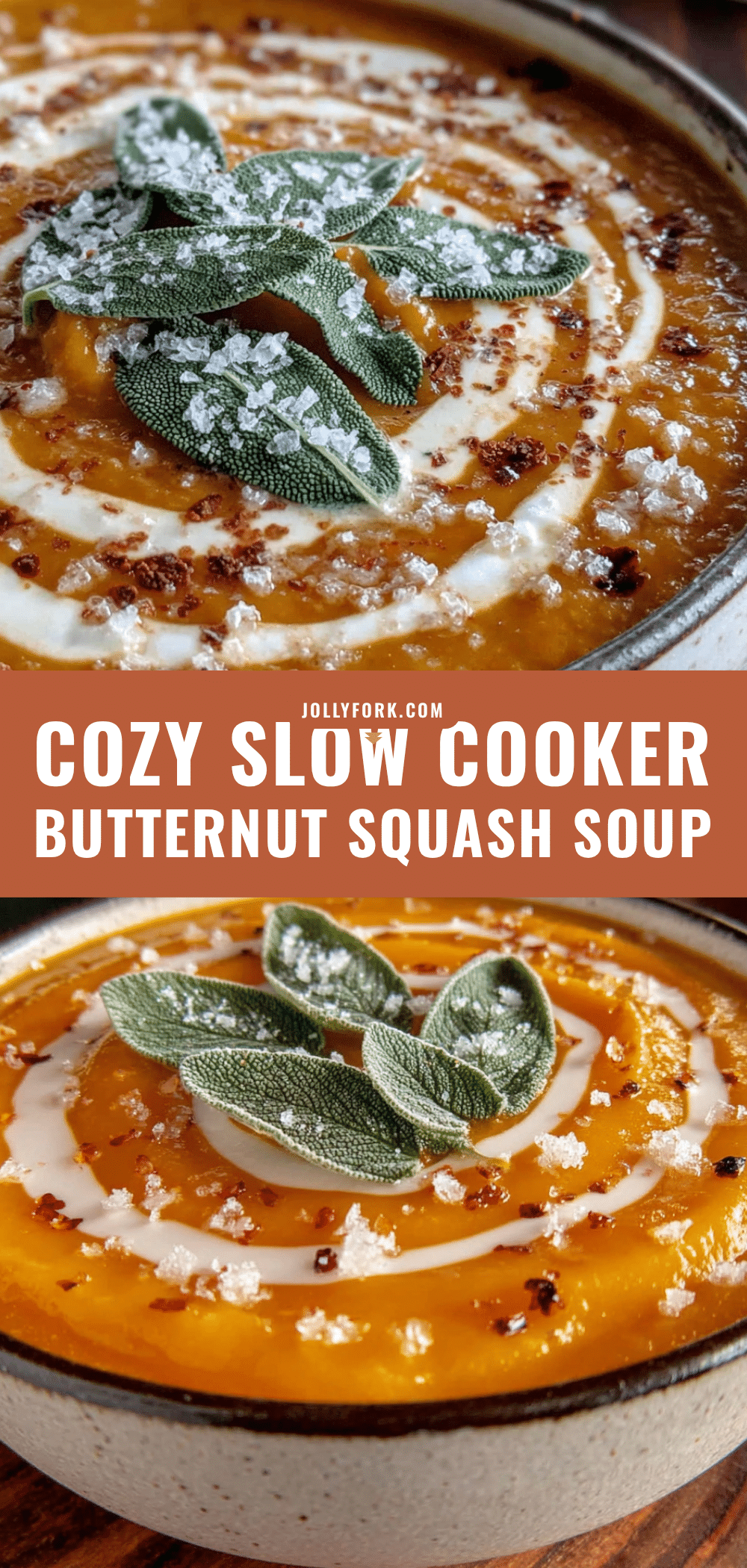
Cozy Slow Cooker Butternut Squash Soup with Sage

This cozy slow cooker butternut squash soup with sage is a set-it-and-forget-it fall favorite. With simple pantry ingredients and a naturally creamy texture, it’s perfect for busy weekdays and meal prep.
- Prep Time: 20 minutes
- Cook Time: 4-8 hours (depending on slow cooker setting)
- Total Time: 4 hours 20 minutes to 8 hours 20 minutes
- Yield: 6 servings 1x
- Category: Soup
- Cuisine: American
Ingredients
- 1 large butternut squash (about 3–4 pounds), peeled and cubed
- 1 medium yellow onion, diced
- 4–5 garlic cloves, smashed
- 10–12 fresh sage leaves OR 2 teaspoons dried sage
- 4 cups vegetable broth (low-sodium preferred)
- 1 cup full-fat coconut milk (optional)
- 1 medium apple (Granny Smith), peeled and diced
- 1 teaspoon salt (or to taste)
- Black pepper to taste
- 2 tablespoons olive oil
- Optional toppings: toasted pumpkin seeds, drizzle of cream or coconut milk, fried sage leaves, red pepper flakes
Instructions
- Prep the squash: Peel the butternut squash, cut off both ends, halve lengthwise, scoop out seeds, and cut into 1-inch cubes.
- Sauté the aromatics: Heat olive oil in a large skillet over medium heat. Add diced onion and cook for about 3 minutes until softened. Add smashed garlic and cook for another minute until fragrant.
- Layer in slow cooker: Transfer sautéed onions and garlic to a 5-6 quart slow cooker. Add cubed squash, diced apple, sage leaves (or dried sage), and pour in vegetable broth. Stir to combine.
- Cook: Cover and cook on low for 7-8 hours or on high for 4-5 hours, until squash is fork-tender.
- Blend: Turn off slow cooker and let cool for 5 minutes. Use an immersion blender to blend until smooth, or transfer in batches to a regular blender (be careful with hot liquid).
- Add creaminess and season: Stir in coconut milk (if using) and season with salt and pepper to taste. Start with 1 teaspoon salt and adjust.
- Serve: Ladle into bowls and garnish with desired toppings.
Notes
Sautéing the aromatics adds depth of flavor. Cut squash evenly for consistent cooking. Season at the end. Soup tastes even better the next day. For a thicker soup, simmer on stovetop after blending or add a cooked potato or white beans before blending.
Nutrition
- Serving Size: 1 serving (about 1.5
- Calories: 200
- Sugar: 10
- Sodium: 500
- Fat: 9
- Saturated Fat: 4
- Carbohydrates: 30
- Fiber: 7
- Protein: 4
Keywords: slow cooker butternut squash soup, butternut squash soup with sage, fall soup, vegan soup, gluten-free soup, easy soup recipe