Fifteen pounds of tomatoes sitting on my counter, staring at me like they knew I’d bought them on a whim at the farmers market. It was mid-September, the air had that first crisp edge of fall, and I’d gotten a little too excited by the bins of Roma tomatoes stacked near the entrance. Now they were all just sitting there, ripening faster than I could keep up with, and I had exactly zero plans for them. I’m not a canner. I don’t make salsa by the gallon. But I do panic-buy produce, apparently.
So there I was, facing down a small mountain of tomatoes that were starting to get that almost-too-soft give when you pressed them. My first thought was to just roast them all and freeze them, but that felt like giving up. My second thought, the one that actually stuck, was soup. Not the kind from a can, not the kind thickened with heavy cream until it tastes more like dairy than tomato. I wanted the real thing.
I pulled out my biggest pot, grabbed an onion and a head of garlic, and decided to just go for it. No recipe, no plan, just the vague memory of a soup I’d had at a tiny Italian place years ago that was so good I’d annoyed my dinner companion by talking about it the whole way home. I wanted that. The silky texture, the brightness of the tomatoes, the way the basil didn’t just sit on top but was woven all the way through. I wanted a creamy tomato basil soup from fresh tomatoes that tasted like summer had decided to stick around just a little longer.
And honestly? I got close. Really close. After a few tweaks and a second batch the next weekend (because the first one disappeared too fast), I landed on something that felt right. It’s not fussy. It doesn’t ask you to strain anything through cheesecloth or temper eggs. It just asks for good tomatoes, a little patience, and the willingness to let the ingredients do what they do best. This is that soup.
Why You’ll Love This Recipe
This isn’t one of those creamy tomato soups that leaves you wondering if you’re eating soup or drinking melted butter. The cream is there, sure, but it plays a supporting role. The tomatoes are the star here, and they deserve the spotlight.
- Made from Scratch with Real Tomatoes : No canned tomato soup shortcuts here. Using fresh Roma or vine-ripened tomatoes gives this soup a depth that store-bought versions just can’t touch. The roasting step concentrates the natural sugars and brings out a sweetness that balances perfectly with the acidity.
- Surprisingly Simple : Despite sounding fancy, this creamy tomato basil soup from fresh tomatoes comes together in about an hour. Most of that time is hands-off roasting or simmering. You can absolutely make this on a weeknight without feeling like you’ve spent the whole evening in the kitchen.
- Freezer-Friendly : This soup freezes like a dream. Make a double batch and stash half for those cold, rainy days when you need something warm and comforting without any effort. Just thaw, reheat, and you’re good to go.
- Customizable to Your Pantry : Dairy-free? Use full-fat coconut milk instead of heavy cream. Want extra protein? Stir in some white beans before blending. The base recipe is forgiving and flexible, which is exactly how weeknight cooking should be.
- Texture That Hits Different : Blending roasted tomatoes with a touch of cream and fresh basil creates a velvety smooth soup that feels luxurious without being heavy. It’s the kind of texture that makes you slow down and actually taste what you’re eating.
I’ve made this soup for dinner parties, for sick friends, and for those nights when I just needed something that felt like a hug in a bowl. It never disappoints. And the best part? You get to say you made it from scratch, which always sounds way more impressive than it actually is.
What Ingredients You Will Need
This recipe relies on simple, whole ingredients that work together to create something greater than the sum of their parts. The quality of your tomatoes matters here, so choose wisely.
- Fresh Tomatoes (3 pounds, about 6-8 large Roma or vine-ripened) : This is the heart of the soup. Roma tomatoes are ideal because they’re meaty with fewer seeds and less water content, which means more concentrated flavor. If you can only find vine-ripened or beefsteak tomatoes, they’ll work too, just expect a slightly thinner soup that may need a bit more simmering time to reduce. Look for tomatoes that are deeply colored, fragrant at the stem, and give slightly when gently squeezed. Avoid anything that feels rock-hard or has blemishes.
- Yellow Onion (1 large, roughly chopped) : Onions add a savory backbone to the soup. When roasted alongside the tomatoes, they become sweet and mellow, almost jammy. Yellow onions are my go-to here because they strike the right balance between sharp and sweet. You could use a white onion in a pinch, but skip red onions—they can turn the soup an unappetizing grayish color.
- Garlic (4-5 cloves, peeled and smashed) : Garlic and tomatoes are a classic pairing for good reason. Roasting the garlic cloves whole mellows their sharpness and brings out a subtle sweetness that blends seamlessly into the soup. I like to add a little extra because I’m that person, but adjust to your taste.
- Fresh Basil (1/2 cup packed, plus more for garnish) : Fresh basil is non-negotiable here. Dried basil just won’t give you the same bright, peppery-sweet flavor that makes this soup so memorable. I add some basil before blending and reserve a bit for garnish. If you have a basil plant that’s about to bolt, this is the perfect use for it.
- Heavy Cream (1/2 cup) : This adds richness and that velvety mouthfeel without overwhelming the tomato flavor. You can substitute half-and-half for a lighter version, or use full-fat coconut milk for a dairy-free option. Just avoid skim milk or anything low-fat—it will curdle when added to the hot soup.
- Vegetable or Chicken Broth (1 cup) : You don’t need much broth here because the tomatoes release plenty of liquid as they cook. Use a good-quality broth since it contributes to the overall flavor. I prefer low-sodium so I can control the salt level myself.
- Olive Oil (3 tablespoons) : A good extra-virgin olive oil is used for roasting the vegetables and adds its own fruity notes to the soup. Don’t skimp here—the oil helps the tomatoes caramelize and deepens the overall flavor.
- Butter (2 tablespoons) : A little butter stirred in at the end adds a glossy finish and rounds out the acidity of the tomatoes. It’s optional but highly recommended. If you’re going dairy-free, just skip it or use a vegan butter alternative.
- Salt and Black Pepper (to taste) : Simple seasonings that let the tomatoes shine. I use kosher salt for its clean flavor and flaky texture. Start with a teaspoon of salt and adjust from there.
- Optional Add-Ins : A pinch of red pepper flakes for heat, a teaspoon of sugar if your tomatoes are particularly acidic, or a splash of balsamic vinegar to deepen the flavor. These aren’t necessary but can be nice tweaks depending on your tomatoes and your mood.
Equipment Needed
You don’t need a professional kitchen to make this soup. Most of these tools are probably already in your cabinets.
- Large Baking Sheet or Sheet Pan : For roasting the tomatoes, onions, and garlic. A rimmed sheet pan is ideal because it catches any juices that release during roasting. Line it with parchment paper for easier cleanup.
- Heavy-Bottomed Pot or Dutch Oven : A 5- to 6-quart pot works perfectly. The heavy bottom distributes heat evenly and prevents scorching when you’re simmering the soup. I use my enameled cast iron Dutch oven and it’s perfect for this.
- Immersion Blender or Countertop Blender : An immersion blender makes blending the soup directly in the pot quick and easy with minimal cleanup. If you don’t have one, a regular blender works fine—just work in batches and be careful with the hot liquid. Never fill a blender more than halfway with hot soup, and remove the center cap from the lid to let steam escape.
- Chef’s Knife and Cutting Board : For chopping the onions and prepping the tomatoes. A sharp knife makes the job faster and safer.
- Wooden Spoon or Silicone Spatula : For stirring the soup as it simmers. Wooden spoons are great because they don’t conduct heat and won’t scratch your pot.
- Measuring Cups and Spoons : For accurate measurements, though this recipe is forgiving enough that you can eyebit it once you’re comfortable.
If you don’t have an immersion blender, don’t run out and buy one just for this soup. A regular blender works beautifully, and you can find them at any thrift store for a few dollars. Just let the soup cool slightly before blending, and always vent the lid.
Preparation Method
- Preheat your oven to 400°F (200°C). While the oven heats, wash your tomatoes and cut them in half lengthwise. If you’re using larger beefsteak tomatoes, quarter them so they roast evenly. Place the tomato halves cut-side up on your lined baking sheet. Tuck the roughly chopped onion and smashed garlic cloves around the tomatoes. Drizzle everything with 2 tablespoons of olive oil and season with a generous pinch of salt and pepper. Toss gently with your hands to coat, then spread everything back into an even layer.
- Roast for 35-40 minutes. The tomatoes should be soft, slightly shriveled around the edges, and starting to caramelize. The onions should be translucent and lightly browned in spots. The garlic should be soft enough to squish between your fingers. This roasting step is where the magic happens—it concentrates the tomato flavor and adds a subtle sweetness that you just can’t get from simmering alone. Your kitchen will smell incredible at this point.
- Remove the pan from the oven and let it cool for 5 minutes. While it cools, heat your Dutch oven or heavy-bottomed pot over medium heat. Add the remaining 1 tablespoon of olive oil and the 2 tablespoons of butter. Once the butter has melted, scrape the roasted vegetables and all their juices into the pot. Yes, all of it—don’t leave those caramelized bits on the pan. They’re pure flavor.
- Add the broth and bring to a gentle simmer. Pour in 1 cup of vegetable or chicken broth and stir to combine. Let everything simmer together for 10 minutes, stirring occasionally. This allows the flavors to meld and the roasted bits to fully incorporate into the liquid. If your tomatoes were particularly watery, you might want to simmer for an extra 5 minutes to let some of the excess liquid cook off.
- Add the fresh basil and remove from heat. Stir in the 1/2 cup of packed fresh basil leaves. The residual heat will wilt the basil without cooking it too much, which helps preserve its bright, fresh flavor. Let the soup sit off the heat for 2-3 minutes before blending. This brief rest also makes the soup safer to blend, reducing the risk of hot liquid splashing.
- Blend until smooth. If using an immersion blender, submerge it fully into the pot and blend until the soup is completely smooth. Work in a gentle up-and-down motion to incorporate all the ingredients. If using a countertop blender, work in batches—fill the blender no more than halfway, remove the center cap from the lid, and cover the opening with a clean kitchen towel. Blend on low speed to start, then increase to high until smooth. Pour each batch into a clean bowl or back into the pot.
- Stir in the heavy cream. Return the blended soup to low heat if needed. Pour in the 1/2 cup of heavy cream and stir gently until fully incorporated. Taste and adjust seasoning with salt and pepper. If your soup tastes a little flat, a tiny pinch of sugar or a splash of balsamic vinegar can brighten it up. If it’s too thick, add a splash more broth or water until it reaches your desired consistency.
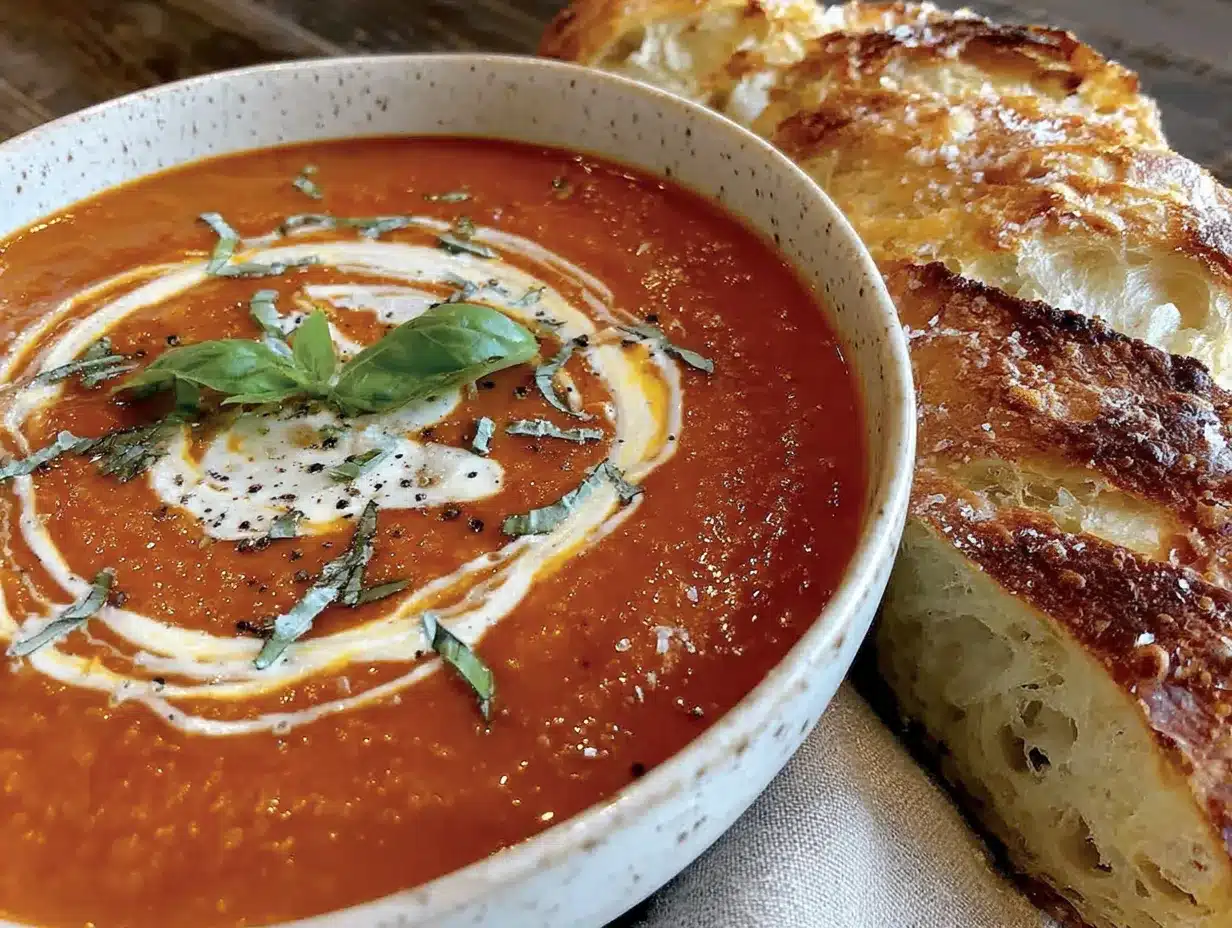
- Serve immediately. Ladle the soup into bowls and garnish with fresh basil leaves, a drizzle of olive oil, or a swirl of extra cream. A crack of black pepper on top never hurts either. This soup is best enjoyed right away, while it’s hot and the flavors are at their peak.
Cooking Tips & Techniques
I’ve made this creamy tomato basil soup from fresh tomatoes more times than I can count, and I’ve definitely learned a few things along the way. Here are the tips I wish someone had told me the first time.
Don’t skip the roasting step. I know it adds extra time and dirties another pan, but roasting transforms the tomatoes in a way that simmering alone never will. The high heat caramelizes the natural sugars and concentrates the flavor, giving you a soup that tastes like it’s been simmering all day when it’s really only been an hour. If you’re in a hurry, you can skip it and just simmer the raw tomatoes, but the soup won’t be as rich or complex.
Watch your blending technique. Hot soup in a blender is honestly kind of terrifying if you’re not careful. The steam builds up pressure and can blow the lid off, sending hot liquid everywhere. Always remove the center cap from the blender lid and cover the opening with a towel. Start on low speed and gradually increase. And never, ever fill the blender more than halfway. If you have an immersion blender, this whole problem disappears, which is why I consider it one of the best kitchen investments I’ve ever made.
Taste your tomatoes before you start. If they’re super sweet and perfectly ripe, you won’t need any sugar. If they’re a bit underripe or mealy (hello, winter tomatoes), a teaspoon of sugar or a drizzle of honey can help balance the acidity. I’ve also added a splash of balsamic vinegar on occasion when the soup needed a little depth. Trust your taste buds more than the recipe.
The cream is optional. I know the recipe calls for it, and I love it, but this soup is genuinely excellent without it too. If you’re watching your dairy intake or just want a lighter soup, skip the cream and blend in a handful of raw cashews that have been soaked in hot water for 15 minutes. It gives you that same velvety texture without the dairy.
Let the soup rest before serving. I know you’re hungry, but letting the soup sit for 5-10 minutes after blending allows the flavors to settle and meld together. It also brings the temperature down to a more comfortable eating level. Patience pays off here.
Variations & Adaptations
One of the things I love most about this recipe is how adaptable it is. I’ve made it so many different ways depending on what I had in the fridge or what I was craving.
Roasted Red Pepper Tomato Basil Soup : Add 2 roasted red peppers (from a jar or homemade) to the pot before blending. The peppers add a subtle sweetness and a beautiful orange-red color. This is my favorite variation when I want something a little different. It pairs beautifully with a grilled peach caprese salad for a complete summer meal.
Spicy Tomato Basil Soup : Add 1/2 teaspoon of red pepper flakes along with the garlic before roasting. You can also stir in a finely chopped fresh chili (like a serrano or Thai bird chili) after blending for a fresh heat that cuts through the creaminess. Start with less and add more—you can always increase the heat, but you can’t take it away.
Vegan Creamy Tomato Basil Soup : Replace the butter with olive oil and swap the heavy cream for full-fat coconut milk or blended silken tofu. The coconut milk adds a slight tropical note that actually works surprisingly well with the basil. For an even creamier version, blend in 1/4 cup of raw cashews that have been soaked in hot water for 20 minutes.
Herb-Infused Variation : Along with the basil, add a sprig of fresh oregano or thyme to the pot while it simmers. Remove the herb sprig before blending. A teaspoon of fresh rosemary, finely chopped, also adds a lovely woodsy note that pairs well with the tomatoes.
Protein-Packed Version : Stir in a can of drained and rinsed white beans (cannellini or great northern) before blending. The beans make the soup heartier and add a boost of protein and fiber without changing the flavor much. This turns the soup into a complete meal, especially when served with a fresh Mediterranean chickpea and cucumber salad on the side.
Serving & Storage Suggestions
This soup is wonderful on its own, but it really shines when you pair it with something to dip or dunk. A crusty piece of sourdough bread, a gooey grilled cheese sandwich, or even some crispy croutons on top—all excellent choices.
Serving Temperature : Serve this soup hot, but not boiling. Let it cool for a few minutes after blending so the flavors settle. A drizzle of good olive oil and a few fresh basil leaves on top make it look restaurant-worthy with almost zero effort.
What to Serve With It : Classic grilled cheese is the obvious choice, but I also love it with a simple green salad dressed with lemon vinaigrette. The acidity of the dressing cuts through the richness of the soup beautifully. For something heartier, serve it alongside a crispy smash burger for a diner-style dinner that’s way better than takeout.
Storage : Store leftover soup in an airtight container in the refrigerator for up to 5 days. The flavors actually deepen and improve after a day or two, so don’t be surprised if you like it even more the next day. The soup will thicken as it sits, so you may want to thin it with a splash of broth or water when reheating.
Freezing : This soup freezes exceptionally well. Let it cool completely, then transfer to freezer-safe containers or zip-top bags. Leave about an inch of headspace to allow for expansion. Freeze for up to 3 months. Thaw overnight in the refrigerator before reheating. If you’re meal-prepping, portion the soup into individual servings for easy grab-and-reheat lunches.
Reheating : Reheat gently on the stovetop over medium-low heat, stirring occasionally. You can also microwave individual portions in 30-second bursts, stirring between each. Avoid boiling the soup once the cream has been added, as high heat can cause the dairy to separate and create a grainy texture.
Nutritional Information & Benefits
This creamy tomato basil soup from fresh tomatoes is not just delicious—it’s also packed with nutrients that make you feel good about eating a second bowl.
Estimated Nutritional Values (per serving, about 1.5 cups) : Calories: 220, Fat: 15g, Saturated Fat: 7g, Carbohydrates: 18g, Fiber: 4g, Sugar: 10g, Protein: 4g, Sodium: 480mg. These values will vary based on the exact ingredients and quantities you use.
Health Benefits : Tomatoes are rich in lycopene, a powerful antioxidant that’s been linked to reduced risk of heart disease and certain cancers. Cooking tomatoes actually increases the bioavailability of lycopene, so this soup is an excellent way to get more of this beneficial compound. The olive oil and cream help your body absorb the fat-soluble vitamins in the tomatoes, including vitamins A, E, and K. Garlic and onions provide prebiotic fiber that supports gut health, while basil adds a dose of vitamin K and anti-inflammatory compounds.
Dietary Considerations : This recipe is naturally gluten-free and can easily be made dairy-free or vegan with the substitutions mentioned above. It’s also relatively low in calories for such a satisfying dish, making it a great option if you’re watching your intake without wanting to feel deprived.
Allergen Notes : This recipe contains dairy (heavy cream and butter). It does not contain nuts, eggs, soy, or gluten as written. If you’re serving a crowd with dietary restrictions, the vegan version is just as delicious and accommodates most common allergies.
FAQs
Can I use canned tomatoes instead of fresh?
Absolutely. If fresh tomatoes aren’t in season or you’re short on time, use two 28-ounce cans of whole peeled tomatoes. Drain them slightly before roasting, and reduce the roasting time to about 20 minutes since canned tomatoes are already cooked. The flavor won’t be quite as complex, but it will still be delicious.
Why is my soup too acidic?
Tomatoes vary in acidity depending on the variety and ripeness. If your soup tastes too sharp, add a pinch of sugar or a teaspoon of honey to balance it out. A splash of heavy cream also helps mellow the acidity. If you’re dairy-free, a tablespoon of tomato paste stirred in before blending can add sweetness and depth.
Can I make this soup ahead of time?
Yes, and I actually recommend it. The flavors meld and deepen overnight, making the soup even better the next day. Prepare the soup completely, let it cool, and store it in the refrigerator. Reheat gently on the stovetop, adding a splash of broth or water to thin it if needed.
How do I make this soup thicker?
If you prefer a thicker soup, simmer it longer after blending to reduce the liquid. You can also stir in a tablespoon of tomato paste before blending, or add a small potato (peeled and chopped) to the pot during the simmering step. The potato will break down and act as a natural thickener without changing the flavor.
Can I freeze this soup with the cream already added?
Yes, but the texture may change slightly upon thawing. The cream can separate during freezing and give the soup a slightly grainy texture when reheated. If you’re planning to freeze the soup, I recommend leaving the cream out until you’re ready to serve. Freeze the base soup, then thaw, reheat, and stir in the cream just before serving for the best texture.
Conclusion
This creamy tomato basil soup from fresh tomatoes has become one of those recipes I make on repeat, and I never get tired of it. It’s the kind of soup that feels special enough for a dinner party but simple enough for a Tuesday night when you just need something warm and comforting. The fact that it’s made from scratch with real, whole ingredients makes it taste even better.
I love that this recipe doesn’t demand perfection. Your tomatoes don’t have to be the most beautiful ones at the market. Your basil can be a little wilted. You can forget to add the cream and still end up with a fantastic soup. It’s forgiving and flexible, and it rewards whatever effort you put into it. That’s the kind of recipe I want in my rotation, and I hope it becomes one of yours too.
If you make this soup, I’d love to hear about it. Did you add your own twist? Did you serve it with something unexpected? Leave a comment below and let me know how it turned out. And if you’re looking for more cozy soup inspiration, don’t miss my creamy New England clam chowder for another bowl of pure comfort.
Pin This Recipe!
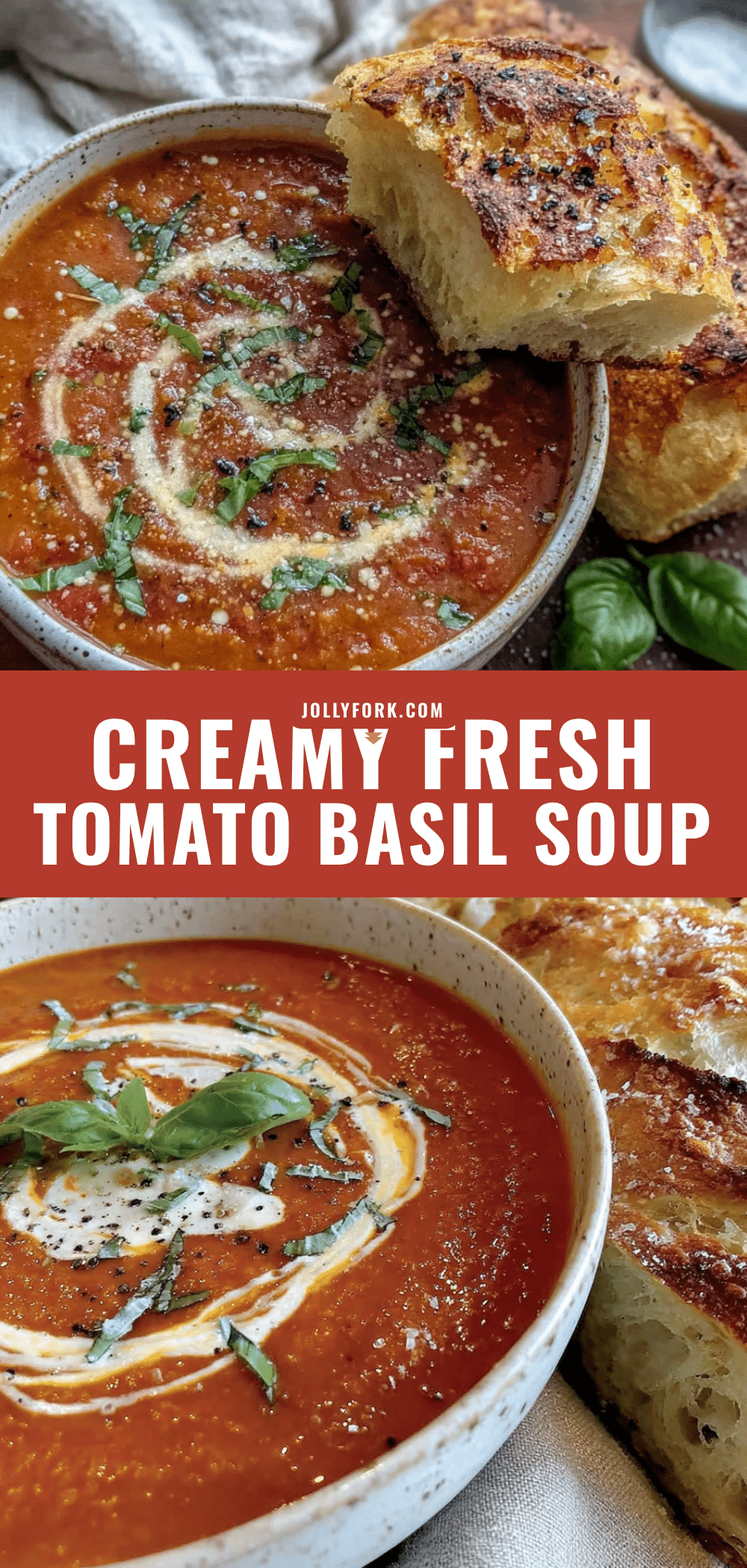
Creamy Tomato Basil Soup: Easy Homemade from Fresh Tomatoes

This creamy tomato basil soup is made from scratch with fresh Roma tomatoes, roasted to concentrate their natural sweetness, then blended with fresh basil and a touch of cream for a velvety smooth, comforting bowl. It’s surprisingly simple to make in about an hour and freezes beautifully.
- Prep Time: 15 minutes
- Cook Time: 45 minutes
- Total Time: 1 hour
- Yield: 4 servings 1x
- Category: Soup
- Cuisine: Italian
Ingredients
- 3 pounds fresh Roma or vine-ripened tomatoes (about 6–8 large), halved lengthwise
- 1 large yellow onion, roughly chopped
- 4–5 cloves garlic, peeled and smashed
- 1/2 cup packed fresh basil leaves, plus more for garnish
- 1/2 cup heavy cream
- 1 cup vegetable or chicken broth (low-sodium preferred)
- 3 tablespoons extra-virgin olive oil, divided
- 2 tablespoons unsalted butter
- Salt and black pepper to taste
- Optional: pinch of red pepper flakes, 1 teaspoon sugar, or splash of balsamic vinegar
Instructions
- Preheat oven to 400°F (200°C). Wash tomatoes and cut in half lengthwise. Place cut-side up on a lined baking sheet. Add chopped onion and smashed garlic cloves around the tomatoes. Drizzle with 2 tablespoons olive oil, season with salt and pepper, and toss gently to coat. Spread in an even layer.
- Roast for 35-40 minutes until tomatoes are soft, slightly shriveled, and starting to caramelize; onions are translucent and lightly browned; garlic is soft.
- Remove from oven and let cool for 5 minutes. Meanwhile, heat a Dutch oven or heavy-bottomed pot over medium heat. Add remaining 1 tablespoon olive oil and 2 tablespoons butter. Once butter melts, scrape roasted vegetables and all juices into the pot.
- Add broth and bring to a gentle simmer. Cook for 10 minutes, stirring occasionally, to meld flavors.
- Stir in fresh basil and remove from heat. Let sit for 2-3 minutes to wilt basil and cool slightly.
- Blend until smooth using an immersion blender directly in the pot, or in batches in a countertop blender (vent lid with a towel).
- Return blended soup to low heat. Stir in heavy cream until fully incorporated. Taste and adjust seasoning with salt, pepper, sugar, or balsamic vinegar as needed. Add more broth or water if too thick.
- Serve immediately, garnished with fresh basil, a drizzle of olive oil, or a swirl of extra cream.
Notes
Don’t skip roasting—it concentrates flavor. For a vegan version, replace butter with olive oil and heavy cream with full-fat coconut milk or blended silken tofu. For a thicker soup, simmer longer after blending or add a small peeled potato during simmering. Soup freezes well for up to 3 months; add cream after thawing for best texture.
Nutrition
- Serving Size: 1.5 cups
- Calories: 220
- Sugar: 10
- Sodium: 480
- Fat: 15
- Saturated Fat: 7
- Carbohydrates: 18
- Fiber: 4
- Protein: 4
Keywords: creamy tomato basil soup, fresh tomato soup, homemade tomato soup, roasted tomato soup, easy soup recipe, summer soup, comfort food