The first time I made a charcuterie board that looked like a spiderweb, it was purely accidental. I was hosting a small Halloween get-together, and honestly, I had way too much on my mind. I had the meats, the cheeses, the crackers—but no real plan for how to arrange them. My friend Clara, who had stopped by early to help, watched me stare at a pile of salami and brie like it held the secrets to the universe. She didn’t say anything at first. Then she grabbed a handful of black olives, placed them in a circle, and started arranging everything else around them in sweeping, curved lines. “It’s a web,” she said, shrugging. “You’re overthinking it.”
Clara grew up in a big Italian family where food was never just food—it was a conversation starter, a way to tell a story without saying a word. Her grandmother used to make these elaborate antipasto platters for every holiday, and Clara picked up the knack for turning simple ingredients into something that felt alive. That night, as we stood in my tiny kitchen with cheese crumbs on the counter and a dog barking at the door, she showed me that a spiderweb charcuterie board wasn’t about being perfect. It was about having fun with the process. I mean, who knew that string cheese could look like spider legs?
That board was a hit, by the way. People kept circling back to the kitchen, not just for the food, but because it made them smile. There’s something about food that looks like a craft project that brings out the kid in everyone. Maybe you’ve been there—standing in the grocery aisle, wondering how to make Halloween feel special without spending hours in the kitchen. This spooky Halloween spiderweb charcuterie board is your answer. It’s the kind of thing that looks complicated but comes together in minutes, and honestly, it’s become my go-to for every Halloween party since. Let me show you how it’s done.
Why You’ll Love This Recipe
Let’s be real for a second. Halloween is great for costumes and candy, but the actual party food? It can be a mixed bag. You get a lot of neon-colored dips and store-bought cookies that taste like cardboard. This spooky Halloween spiderweb charcuterie board flips the script. It’s beautiful, it’s delicious, and it’s the kind of thing that makes people stop and take a picture before they even grab a plate. Here’s why this one is different:
- Quick & Easy : You can put this together in under 20 minutes. No cooking, no baking, no stress. Just arrange and serve.
- Simple Ingredients : Everything comes from your regular grocery store. No weird specialty items or expensive imported cheeses required.
- Perfect for Halloween Parties : Whether it’s a kid-friendly gathering or an adult costume party, this board fits right in. It’s festive without being over-the-top.
- Crowd-Pleaser : I’ve never seen a charcuterie board that didn’t get demolished, but this one? People fight over the spider legs. Seriously.
- Unbelievably Delicious : The combination of salty meats, creamy cheeses, and sweet fruits is a classic for a reason. The spiderweb design just makes it more fun.
What makes this recipe stand out from the dozens of other Halloween boards out there? It’s the technique. Instead of just throwing everything on a platter, you’re creating a visual story. The spiderweb pattern draws people in, and the little details—like olive spiders and string cheese legs—make it memorable. I’ve tested this with both kids and adults, and trust me, it’s a winner every time. It’s comfort food reimagined for the spooky season, and it’s the kind of board that makes you feel like a party planning genius without actually doing much work.
What Ingredients You Will Need
This recipe uses simple, everyday ingredients to create something that looks like it came from a fancy catering company. The key is choosing items that contrast in color and texture, so the spiderweb pattern really pops. Here’s what you’ll need:
For the Base of the Web
- Salami or pepperoni (about 8-10 slices) – Use large slices for the outer ring of the web. I prefer Genoa salami for its rich flavor.
- Prosciutto (4-6 slices, thinly sliced) – Adds a delicate, salty touch. Fold it into loose ribbons for texture.
- Cheddar cheese (4-6 ounces, cut into thin triangles or cubes) – The orange color is perfect for Halloween. Sharp cheddar works best.
- Mozzarella pearls (1 cup) – These look like little ghost eggs. They’re mild and creamy, balancing the salty meats.
- Gouda or Edam cheese (4 ounces, sliced) – The wax rind adds a pop of red or yellow, which looks great on the board.
For the Spiderweb Design
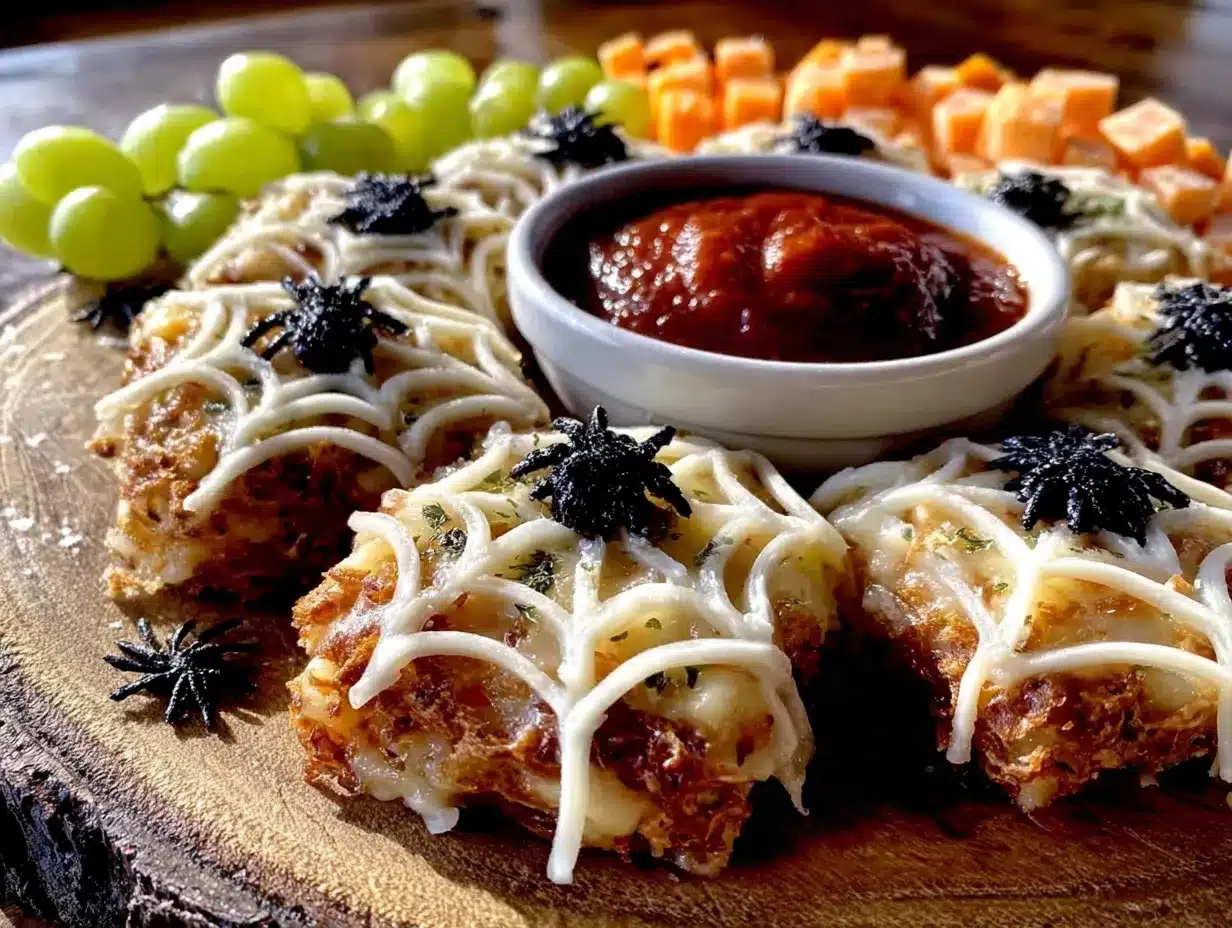
- Black olives (1 can, pitted) – These are your spiders. Use whole olives for the bodies and sliced olives for the legs.
- String cheese (2-3 sticks) – Peel them into thin strips to create the web strands. It’s surprisingly easy and looks amazing.
- Red bell pepper (1, cut into thin strips) – Adds a pop of color and can be used to create a “blood” effect if you’re feeling dramatic.
- Green grapes (1 cup) – Their round shape and green color break up the browns and oranges nicely.
For the Crackers and Dippers
- Crackers (about 2 cups of assorted shapes) – Use a mix of round, square, and rectangle crackers for variety. I like using Ritz and Wheat Thins.
- Breadsticks (4-6) – These can double as “bones” or just extra crunch.
- Pretzel sticks (1 cup) – Their salty crunch is perfect for dipping in mustard or cheese spreads.
For the Dips and Spreads
- Hummus (1/2 cup) – A smooth, neutral base that works with everything. I recommend roasted red pepper hummus for extra color.
- Honey mustard (1/4 cup) – Sweet and tangy, it pairs beautifully with the salty meats.
- Fig jam or grape jelly (1/4 cup) – Adds a touch of sweetness that cuts through the richness of the cheese.
One thing I’ve learned from making this board multiple times: don’t stress about exact quantities. Charcuterie is forgiving. If you run out of cheddar, throw in some pepper jack. If you don’t have prosciutto, use ham. The beauty of this recipe is its flexibility. For a gluten-free option, swap the crackers for rice cakes or veggie sticks. For a dairy-free version, use vegan cheese and skip the mozzarella pearls. The spiderweb design works with whatever you have on hand.
Equipment Needed
You don’t need fancy tools to pull this off. Here’s what I use every time:
- Large round platter or wooden board (at least 16 inches in diameter) – The round shape is essential for the spiderweb effect. A wooden cutting board or a large ceramic platter works perfectly. If you don’t have a round board, a square one can work—just adjust the web pattern.
- Small bowls (2-3) – For the dips and spreads. I like using ramekins or small ceramic bowls that match the Halloween theme.
- Cheese knife – For slicing the cheddar and gouda. A simple paring knife works in a pinch.
- Tongs or small spoons – For serving the dips and olives. Keeps everything tidy.
- Cutting board – For prepping the fruits and vegetables. Nothing fancy needed.
I’ve made this board on a cheap plastic platter from the dollar store, and it still looked great. The key is the arrangement, not the equipment. If you’re using a wooden board, just make sure it’s clean and dry before you start. Budget-friendly options are totally fine—I actually prefer a lighter board because it’s easier to carry to the party.
Preparation Method
Alright, let’s get into the fun part. This is where the magic happens. Follow these steps, and you’ll have a spiderweb that would make Charlotte proud.
- Start with the dips. Place your small bowls of hummus, honey mustard, and fig jam on the board first. Position them slightly off-center—this will be the “hub” of your spiderweb. I like to arrange them in a triangle pattern, about 2-3 inches apart. This gives you a natural center point to build around.
- Create the first ring of the web. Take your salami slices and arrange them in a loose circle around the dips, about 4 inches from the center. Overlap them slightly so they form a continuous ring. Don’t worry if they’re not perfectly even—the imperfection adds character. Press down gently so they stay in place.
- Add the cheese ring. Place your cheddar triangles and gouda slices in a second circle, about 2 inches outside the salami ring. Alternate the colors—orange cheddar next to yellow gouda—to create contrast. This ring should be slightly larger than the first one.
- Build the outer ring. Arrange your prosciutto ribbons and mozzarella pearls in a third circle, about 3 inches from the cheese ring. The prosciutto should be loosely folded, not flat. The mozzarella pearls can be clustered in small groups of 2-3. This ring defines the edge of your web.
- Create the web strands. This is the trickiest part, but it’s easier than it looks. Take your string cheese sticks and peel them into thin strips. You should get about 4-5 strips per stick. Lay these strips from the center dips outward to the edge of the board, like spokes on a wheel. Space them about 2 inches apart. You’ll need about 8-10 spokes total.
- Weave the web. Now, take additional string cheese strips and lay them in curved lines between the spokes, starting from the center and working outward. Each curve should connect two spokes, creating the classic web pattern. Don’t worry if some strips break—just overlap them. The web doesn’t have to be perfect. In fact, a slightly messy web looks more authentic.
- Add the spiders. Take your black olives and place them at various points on the web. For each spider, use a whole olive for the body and sliced olives for the legs. Arrange the legs so they look like they’re crawling. I usually place 3-4 spiders on the board, spaced evenly apart. One spider near the center, one near the edge, and one in the middle.
- Fill in the gaps. Now it’s time to add the grapes, red bell pepper strips, and pretzel sticks. Tuck them into the empty spaces between the web strands. The grapes can be clustered, the pepper strips can be curled, and the pretzels can be arranged in small bundles. This fills out the board and adds color.
- Arrange the crackers. Place your crackers around the outer edge of the board, leaning them against the cheese and meats. This gives guests easy access without disturbing the web. If you have breadsticks, place them on the outer edge like fallen logs.
- Final touches. Step back and look at your board. Are there any empty spots? Fill them with extra grapes or crackers. Is the web pattern visible? Adjust the string cheese strips if needed. Once you’re happy, it’s ready to serve.
A quick note: the whole process should take about 15-20 minutes. If you’re short on time, you can skip the weaving step and just arrange the ingredients in a web-like pattern. It won’t be as detailed, but it’ll still look great. I’ve done this while watching a movie, and it turned out fine.
Cooking Tips & Techniques
I’ve made this board about a dozen times now, and I’ve learned a few things the hard way. Here are my best tips:
- Don’t overthink the web. The first time I tried to make a perfect spiderweb, I spent 30 minutes rearranging string cheese strips. It drove me crazy. Now I just lay them out loosely and let the imperfections show. A messy web looks more natural and spooky anyway.
- Use room temperature cheese. Cold cheese is harder to slice and doesn’t taste as good. Take your cheese out of the fridge about 20 minutes before you start assembling. It’ll be softer and more flavorful.
- Keep the olives whole. I made the mistake of slicing all the olives once, and they turned into a mushy mess. Keep most of them whole for the spiders, and only slice a few for the legs. It’s easier and looks better.
- Prep everything before you start. Slice the cheese, wash the grapes, and peel the string cheese before you begin arranging. Once you start building the web, you don’t want to stop and wash your hands. Trust me on this.
- Multitask strategically. While the cheese is coming to room temperature, prep your vegetables and arrange the dips. This saves time and keeps your workflow smooth.
- Common mistake: overcrowding. It’s tempting to fill every inch of the board, but leave some empty space. The web pattern needs room to breathe. If the board looks too crowded, the web gets lost.
I once forgot to put the olives on until the very end, and I had to dig through the cheese to find spots for them. It was a mess. Now I always add the spiders right after the web strands. Learn from my mistakes, friends.
Variations & Adaptations
One of the best things about this board is how easy it is to customize. Here are some variations I’ve tried:
Vegetarian Version
Skip the salami and prosciutto, and double up on the cheese and vegetables. Add roasted red peppers, artichoke hearts, and marinated mushrooms for extra flavor. The web pattern works just as well without meat.
Spicy Twist
Use pepperoni instead of salami, and add jalapeño-stuffed olives for the spiders. Swap the honey mustard for a spicy sriracha mayo. The heat pairs surprisingly well with the cool mozzarella pearls.
Kid-Friendly Board
Replace the prosciutto with ham or turkey slices. Use cheddar cheese cut into Halloween shapes (pumpkins, ghosts, bats) using cookie cutters. Add candy corn or chocolate spiders for a sweet touch. My nephew’s eyes lit up when he saw the candy spiders crawling on the cheese.
Seasonal Adaptation
In the fall, swap the grapes for apple slices and add a small bowl of caramel dip. In the summer, use fresh figs and berries. The board adapts to whatever produce is in season, which keeps it feeling fresh year after year.
Dietary Restrictions
For a gluten-free board, use rice crackers or veggie sticks instead of wheat crackers. For a dairy-free version, use vegan cheese and skip the mozzarella pearls. I’ve tested both, and they work beautifully. Just make sure to check your labels for hidden allergens.
My personal favorite variation is the “Midnight Web” board, where I use all dark-colored ingredients—black olives, dark rye crackers, purple grapes, and aged gouda. It looks incredibly moody and dramatic, perfect for an adult Halloween party.
Serving & Storage Suggestions
This board is best served at room temperature, so take it out of the fridge about 20 minutes before guests arrive. The flavors are more pronounced, and the cheese is softer and easier to spread. I like to place the board on a large table where people can gather around it—it’s a conversation starter, so don’t hide it in a corner.
For presentation, I sometimes add a few decorative elements around the board: fake spiderwebs, plastic spiders, or a few autumn leaves. It adds to the spooky vibe without affecting the food. Just make sure the decorations don’t touch the food directly.
As for complementary dishes, this board pairs beautifully with a warm pumpkin soup or a bowl of chili. For drinks, a dry red wine or a dark beer works well with the salty meats and rich cheeses. If you’re serving kids, apple cider or sparkling water with a splash of cranberry juice is perfect.
Storage is straightforward. If you have leftovers (which is rare, but it happens), wrap the cheese and meats separately in plastic wrap and store them in the fridge. The crackers and pretzels can be kept in an airtight container at room temperature. The dips should be refrigerated in sealed containers. The board itself can be wiped clean with a damp cloth—just avoid soaking it if it’s wooden.
One thing I’ve noticed: the flavors actually develop overnight. The cheese absorbs the smoky notes from the salami, and the grapes get a subtle saltiness from the prosciutto. If you’re making this a day ahead, assemble the board without the crackers (they’ll get soggy) and add them just before serving.
Nutritional Information & Benefits
Let’s be honest—this is not a health food. But it’s not meant to be. It’s a festive treat for a special occasion, and there’s nothing wrong with that. That said, there are some nutritional highlights worth noting:
- Protein-rich : The meats and cheeses provide a solid amount of protein, which helps keep you full and satisfied. A serving of salami and cheddar gives you about 15 grams of protein.
- Healthy fats : Cheese and olives contain monounsaturated fats, which are good for heart health when eaten in moderation. The mozzarella pearls are lower in fat than hard cheeses, making them a lighter option.
- Vitamins and antioxidants : Grapes are rich in vitamin C and antioxidants, while red bell peppers provide a hefty dose of vitamin A. Even the olives have anti-inflammatory properties.
For those with dietary concerns, this board can be adapted to fit various needs. It’s naturally low-carb if you skip the crackers and breadsticks. For a lower-sodium version, choose low-sodium meats and cheeses. And for a dairy-free option, use vegan cheese and skip the mozzarella pearls.
I personally love that this board lets me indulge without guilt. It’s a once-a-year treat, and the memories made around it are worth every calorie. Just balance it out with a healthy breakfast the next day, and you’re golden.
Conclusion
This spooky Halloween spiderweb charcuterie board is more than just a snack—it’s an experience. It’s the kind of thing that makes people stop, smile, and grab their phones for a picture. And honestly, that’s what Halloween is all about: having fun, being a little silly, and sharing good food with the people you care about.
I love this recipe because it’s forgiving. You don’t need to be a professional chef or a Pinterest-perfect host to pull it off. All you need is a round board, some basic ingredients, and a willingness to have fun with it. The spiderweb doesn’t have to be perfect. The spiders don’t have to be symmetrical. What matters is that you made something with your own hands, and that’s always worth celebrating.
So go ahead—give it a try. Customize it with your favorite meats and cheeses. Add your own creepy touches. And when you’re done, come back and tell me how it went. I’d love to hear about your spiderweb adventures. Drop a comment below, share a photo, or tag me on social media. Let’s make this Halloween the tastiest one yet!
Frequently Asked Questions
Can I make this board ahead of time?
Yes, you can assemble the board up to 4 hours in advance. Just cover it loosely with plastic wrap and refrigerate. Add the crackers and breadsticks right before serving to keep them crunchy.
What if I don’t have a round platter?
A square or rectangular board works too. Just adjust the web pattern to fit the shape. You can create a diamond-shaped web or even a rectangular grid. The key is to keep the center dips as the focal point.
How do I keep the string cheese from breaking?
String cheese is surprisingly sturdy, but if it’s too cold, it can snap. Let it sit at room temperature for 5 minutes before peeling. If a strip breaks, just overlap the pieces—it looks like a natural web strand.
Can I use different meats?
Absolutely. Ham, turkey, roast beef, or even smoked salmon work well. Just make sure the slices are thin enough to arrange easily. The flavor profile will change, but the spiderweb design will still shine.
How many people does this board serve?
This board serves about 8-10 people as an appetizer. If it’s the main snack for a party, you might need to double the ingredients. I usually make two boards for larger gatherings—one savory and one sweet.
Pin This Recipe!
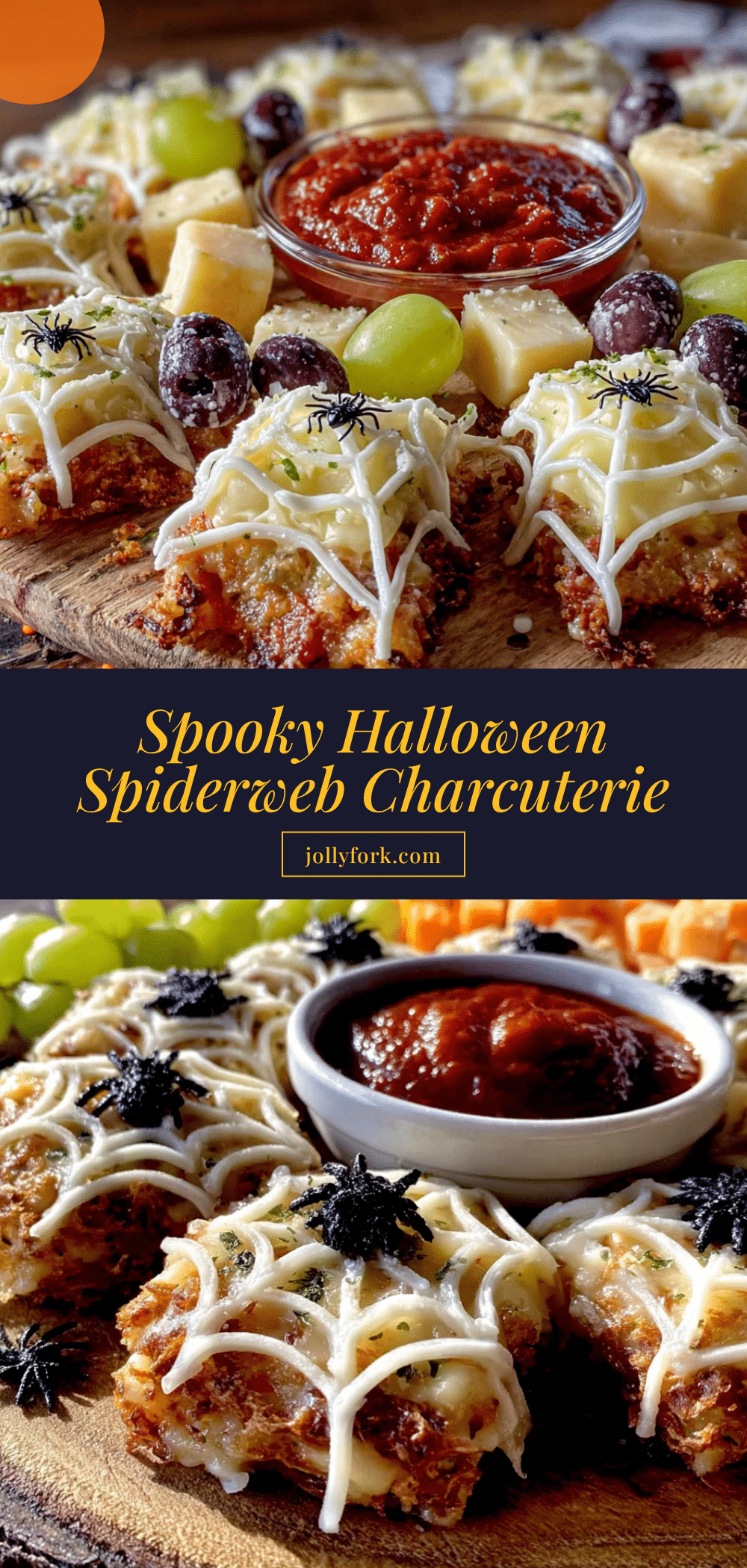
Spooky Halloween Spiderweb Charcuterie Board
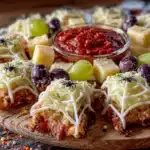
A fun and festive Halloween charcuterie board arranged in a spiderweb pattern, featuring salami, prosciutto, cheeses, olives, and string cheese strands. Perfect for parties and easy to assemble in under 20 minutes.
- Prep Time: 20 minutes
- Cook Time: 0 minutes
- Total Time: 20 minutes
- Yield: 8-10 servings 1x
- Category: Appetizer
- Cuisine: American
Ingredients
- 8–10 slices salami or pepperoni
- 4–6 slices prosciutto, thinly sliced
- 4–6 ounces cheddar cheese, cut into thin triangles or cubes
- 1 cup mozzarella pearls
- 4 ounces Gouda or Edam cheese, sliced
- 1 can black olives, pitted
- 2–3 sticks string cheese
- 1 red bell pepper, cut into thin strips
- 1 cup green grapes
- 2 cups assorted crackers (e.g., Ritz, Wheat Thins)
- 4–6 breadsticks
- 1 cup pretzel sticks
- 1/2 cup hummus (roasted red pepper recommended)
- 1/4 cup honey mustard
- 1/4 cup fig jam or grape jelly
Instructions
- Place small bowls of hummus, honey mustard, and fig jam on a large round platter, positioned slightly off-center in a triangle pattern to form the hub of the web.
- Arrange salami slices in a loose circle around the dips, about 4 inches from the center, overlapping slightly to form a continuous ring.
- Place cheddar triangles and Gouda slices in a second circle about 2 inches outside the salami ring, alternating colors for contrast.
- Arrange prosciutto ribbons and mozzarella pearls in a third circle about 3 inches from the cheese ring, with prosciutto loosely folded and mozzarella clustered in small groups.
- Peel string cheese sticks into thin strips (about 4-5 strips per stick) and lay them from the center dips outward to the edge like spokes on a wheel, spaced about 2 inches apart (8-10 spokes total).
- Lay additional string cheese strips in curved lines between the spokes, starting from the center and working outward, to create the classic web pattern. Overlap broken strips as needed.
- Place whole black olives at various points on the web for spider bodies, using sliced olives for legs arranged to look like crawling. Use 3-4 spiders spaced evenly.
- Fill empty spaces between web strands with grapes, red bell pepper strips, and pretzel sticks, clustering grapes and curling pepper strips.
- Arrange crackers around the outer edge of the board, leaning them against cheese and meats. Place breadsticks on the outer edge.
- Step back and check for empty spots, filling with extra grapes or crackers. Adjust string cheese strips if needed to ensure the web pattern is visible. Serve immediately.
Notes
Don’t overthink the web pattern—imperfections add character. Use room temperature cheese for easier slicing and better flavor. Keep most olives whole for spiders; slice only a few for legs. Prep all ingredients before starting assembly. Leave some empty space on the board so the web pattern is visible. For a gluten-free version, use rice crackers or veggie sticks. For dairy-free, use vegan cheese and skip mozzarella pearls.
Nutrition
- Serving Size: 1 serving (approxima
- Calories: 350
- Sugar: 12
- Sodium: 800
- Fat: 22
- Saturated Fat: 10
- Carbohydrates: 25
- Fiber: 3
- Protein: 15
Keywords: Halloween charcuterie board, spiderweb charcuterie, Halloween appetizer, spooky snack, party platter, easy Halloween recipe