The edges. That’s the whole point of this crispy air fryer salmon with lemon dill sauce. I’m talking about those craggy, browned, almost-burnt-looking bits that form along the corners of the fillet where the heat hits hardest. They shatter when you press them with a fork. They’re salty and concentrated and honestly, they’re better than the tender middle. I didn’t make this recipe for the sauce (though the sauce is great). I made it for those edges. Everything else is just support.
I stumbled onto this by accident, the way most good kitchen discoveries happen. I had a piece of salmon that was too thin for grilling and I was too impatient to wait for the oven to preheat. So I threw it in the air fryer, crossed my fingers, and walked away. When I came back, the kitchen smelled like a seaside diner and the salmon had this crust I’d never achieved before. Not dried out. Not overcooked. Just perfectly, aggressively crisp on the outside while staying completely tender inside. I stared at it for a solid ten seconds before eating it standing over the counter.
The thing about air fryer salmon is that it does something no pan or oven can replicate. It creates that dry, circulating heat that literally pulls moisture from the surface so fast it doesn’t have time to steam the fish. You get that crust without the fuss of flipping or the splatter of hot oil. And the lemon dill sauce? That came later, because something that crispy deserves a cooling, herby counterpart. This recipe stuck because it’s the kind of weeknight dinner that feels like you tried harder than you actually did. And honestly, that’s my favorite kind of cooking.
Why You’ll Love This Recipe
Let me be real with you. I’ve tested this recipe at least eight times to get the timing right. I’ve used thick fillets, thin fillets, frozen salmon that I thawed too quickly, and even that sad piece that was hiding in the back of the freezer for three months. Every single time, the air fryer delivered consistent results. That’s not luck. That’s the magic of concentrated heat and proper technique.
- Quick and Easy : We’re talking 10 minutes of cooking time. From fridge to plate in under 20 minutes. That’s faster than takeout delivery and about a thousand times better for you.
- Simple Ingredients : You need salmon, olive oil, salt, pepper, and a few pantry staples for the sauce. No weird ingredients that require a specialty grocery run.
- Perfect for Busy Weeknights : This is the recipe you make when you want something impressive but you’re running on fumes. It works for solo dinners, date nights, or feeding a small family.
- Unbelievably Crispy : The texture is what sets this apart. That crackling exterior gives way to buttery, flaky flesh. It’s the kind of contrast that makes you wonder why you ever cooked salmon any other way.
- Dietary Friendly : Naturally gluten-free, low-carb, and keto-approved. This recipe fits into most eating styles without any complicated substitutions.
What makes this different from every other salmon recipe out there? It’s the technique. Most recipes tell you to pat the salmon dry, but they don’t explain why it matters or what happens if you skip it. I’ll show you exactly how to get that crust without drying out the fish. And the lemon dill sauce isn’t an afterthought—it’s a bright, tangy counterpoint that makes the crispy edges sing. This isn’t just another version of air fryer salmon. It’s the one I’ve perfected through trial and error so you don’t have to make the same mistakes I did.
What Ingredients You Will Need
This recipe uses simple, wholesome ingredients that work together to create something greater than the sum of their parts. The salmon does the heavy lifting, but each component plays a specific role in building flavor and texture.
For the Salmon
- Salmon fillets (2 fillets, about 6 ounces each) — Look for fillets that are similar in thickness so they cook evenly. I prefer wild-caught when I can find it, but good-quality farmed salmon works beautifully too. The key is fresh-looking flesh with no fishy smell. If the fillets are thinner than an inch at the thickest part, reduce the cooking time by a minute or two.
- Olive oil (1 tablespoon) — You want a good quality extra virgin olive oil here. It helps the seasoning stick and promotes that golden crust. Don’t use spray oils for this step; they don’t distribute evenly and you’ll end up with patchy browning.
- Kosher salt (1 teaspoon) — I’m partial to Diamond Crystal for its clean taste and easy pinchability. The salt does more than season; it draws out surface moisture, which is essential for crispiness.
- Black pepper (½ teaspoon, freshly ground) — Freshly ground pepper has more aromatic punch than pre-ground. It’s a small detail that makes a difference.
- Garlic powder (½ teaspoon) — Not the same as garlic salt. We want the flavor without the extra sodium. This adds a subtle savory depth that complements the fish without overwhelming it.
- Paprika (½ teaspoon) — I use smoked paprika here for a hint of warmth that plays beautifully with the dill. Regular paprika works too if that’s what you have.
For the Lemon Dill Sauce
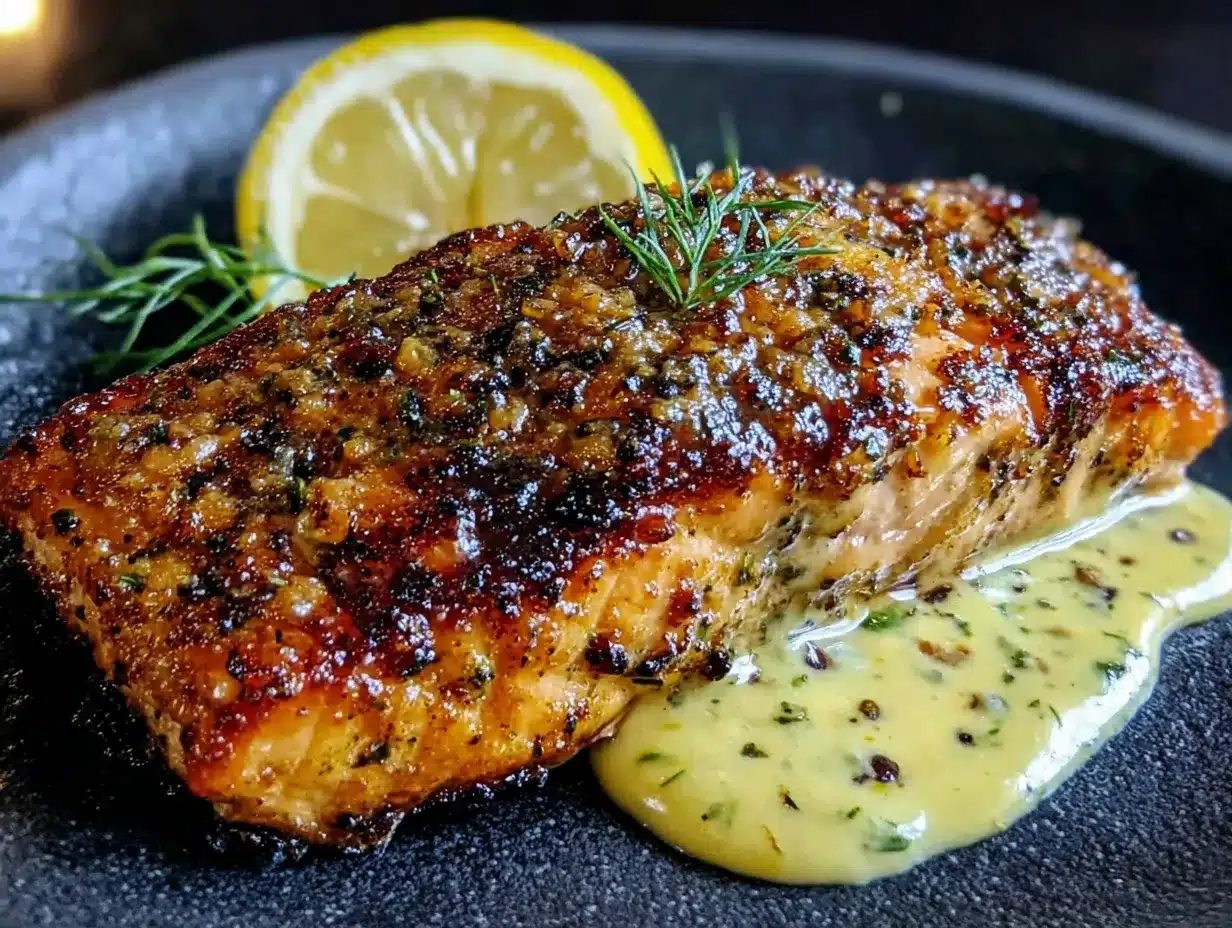
- Greek yogurt (½ cup, plain full-fat) — Full-fat gives you a creamier, more luxurious sauce. If you’re dairy-free, use a thick coconut yogurt, but avoid anything too runny.
- Fresh dill (2 tablespoons, chopped) — Fresh is non-negotiable here. Dried dill has a completely different flavor profile that’s more medicinal than bright. I grow dill in my garden during summer and freeze extra for winter.
- Lemon juice (1 tablespoon, freshly squeezed) — Bottled lemon juice tastes flat and slightly metallic. Trust me on this one. A fresh lemon makes the sauce sing.
- Lemon zest (1 teaspoon) — This is where the real lemon flavor lives. Don’t skip it. The oils in the zest carry concentrated citrus notes that juice alone can’t provide.
- Garlic (1 small clove, minced) — Use a microplane if you have one. You want the garlic to disappear into the sauce, not overpower it with sharp chunks.
- Salt (¼ teaspoon) — Just enough to wake up the other flavors.
For Garnish (Optional but Recommended)
- Fresh dill sprigs — For that restaurant-style presentation.
- Lemon wedges — Because an extra squeeze never hurts.
- Flaky sea salt — A sprinkle right before serving adds texture and a pop of salinity.
Equipment Needed
You don’t need a professional kitchen to make this recipe work. Here’s what you’ll actually use:
- Air fryer (any size will work, but a basket-style model is ideal for even cooking) — I use a 5.8-quart Cosori and it handles two fillets perfectly. If your air fryer is smaller, cook the fillets in batches rather than crowding them.
- Paper towels — The most important tool you didn’t think about. You need these to pat the salmon completely dry. This step determines whether you get crispy edges or steamed fish.
- Small bowl — For mixing the sauce ingredients.
- Microplane or fine grater — For zesting the lemon and mincing the garlic. A regular grater works but won’t give you the same fine texture.
- Tongs — For flipping the salmon without breaking the delicate flesh. Silicone-tipped tongs are gentle on the fish.
- Instant-read thermometer (optional but highly recommended) — Takes the guesswork out of doneness. Salmon is perfectly cooked at 125°F to 130°F for medium, or 135°F for well-done.
If you don’t have an air fryer yet, I understand the hesitation. I resisted buying one for years because I thought it was another countertop gadget I didn’t need. Then I got one as a gift and now I use it three times a week. It’s especially useful for recipes like these crispy air fryer buffalo cauliflower bites that also rely on that concentrated heat for texture. If you’re not ready to commit, you can make this salmon in a convection oven at 400°F, but you’ll need to add a few minutes and the crust won’t be quite as dramatic.
Preparation Method
This is where the magic happens. Follow these steps closely, especially the first one. I cannot overstate how much that step matters.
- Pat the salmon completely dry. This is not optional. Use paper towels and press firmly on both sides of each fillet. You want the surface to feel tacky, not wet. Any moisture on the surface will steam instead of crisp. I learned this the hard way after making sad, pale salmon for years. If you have time, let the salted fillets rest uncovered in the fridge for 10 minutes to dry the surface even further.
- Season the fillets. Drizzle the olive oil over both sides of the salmon and rub it in gently. In a small bowl, combine the kosher salt, black pepper, garlic powder, and paprika. Sprinkle this mixture evenly over both sides of each fillet. Don’t be shy with the seasoning—salmon is a robust fish that can handle bold flavors.
- Preheat your air fryer. Set it to 400°F (200°C) and let it run for 3 minutes. Preheating ensures the cooking chamber is hot from the moment the salmon goes in, which gives you that immediate sear on the surface. Some air fryers don’t require preheating, but I’ve found it makes a noticeable difference in crust development.
- Place the salmon in the air fryer basket. Arrange the fillets skin-side down (if your fillets have skin) with at least an inch of space between them. Air needs to circulate around each piece for even cooking. If they’re touching, they’ll steam each other. I made this mistake when I tried to cram three fillets into a small basket and ended up with unevenly cooked salmon.
- Cook for 6 minutes at 400°F. Don’t open the basket during this time. Let the heat do its work. At 6 minutes, the edges should be starting to brown and the top should look opaque around the edges but still slightly translucent in the center.
- Flip the fillets carefully. Use tongs to turn each fillet over. The skin should be golden and starting to crisp. If the skin sticks to the basket, give it another 30 seconds—it will release when it’s ready. Don’t force it.
- Cook for another 3 to 5 minutes. The total cooking time depends on the thickness of your fillets. For fillets that are about 1 inch thick at the thickest part, 3 minutes on the second side is perfect. For thicker fillets (1.5 inches), go with 5 minutes. The internal temperature should reach 125°F to 130°F for medium doneness. If you don’t have a thermometer, look for flesh that flakes easily with a fork but still looks moist and slightly translucent in the center.
- Rest the salmon. Transfer the fillets to a plate and let them rest for 2 minutes. This allows the juices to redistribute so they don’t run out when you cut into the fish. I know it’s tempting to dig in immediately, but those 2 minutes make a difference.
- Make the sauce while the salmon rests. In a small bowl, combine the Greek yogurt, fresh dill, lemon juice, lemon zest, minced garlic, and salt. Stir until smooth. Taste and adjust the seasoning—you might want more lemon or an extra pinch of salt. The sauce should be bright and tangy with a noticeable herbaceous note from the dill.
- Serve immediately. Place the salmon on plates, spoon the lemon dill sauce generously over the top, and garnish with fresh dill sprigs and lemon wedges. Sprinkle with flaky sea salt if you’re feeling fancy.
Cooking Tips and Techniques
I’ve made this recipe more times than I can count, and I’ve learned a few things along the way. Here are the tips that will save you from my early mistakes.
Don’t skip the drying step. I know I said this already, but I’m saying it again because it’s that important. Wet salmon steams. Dry salmon crisps. If you’re in a hurry, you can use a hair dryer on the cool setting to speed things up. Yes, I’ve done that. No, I’m not proud of it. But it worked.
Watch your air fryer temperature. Not all air fryers run at the same temperature. Some run hot, some run cool. If your salmon is browning too quickly on the outside but still raw in the center, lower the temperature to 375°F and add a minute or two of cooking time. If it’s not browning at all after 6 minutes, your air fryer might run cool, so bump the temperature to 425°F.
Use the right oil. Olive oil has a smoke point of around 375°F to 405°F, which works perfectly for air frying at 400°F. Avoid using butter or coconut oil for the initial coating because they burn at lower temperatures. If you want to add a pat of butter to the salmon after cooking, go for it. That’s a different kind of indulgence.
Don’t overcrowd the basket. This is the number one mistake people make with air fryers. If the fillets are touching, the air can’t circulate and you’ll end up with unevenly cooked salmon. Cook in batches if necessary. The extra 10 minutes is worth the perfect texture.
Make the sauce ahead of time. The lemon dill sauce actually gets better after sitting in the fridge for an hour or two. The flavors meld together and the garlic mellows out. Just give it a good stir before serving. This is a great strategy when you’re meal prepping or hosting guests.
Use the skin. If your salmon has skin, eat it. When cooked properly in the air fryer, the skin becomes incredibly crispy and almost bacon-like. It’s packed with healthy fats and adds another layer of texture. If you really don’t like skin, you can remove it after cooking—it will peel off easily when it’s crispy.
Variations and Adaptations
This recipe is forgiving and adaptable. Here are some ways to change it up based on what you have in your kitchen or what you’re craving.
Spicy Cajun Version — Replace the garlic powder and paprika with 1 teaspoon of Cajun seasoning. The smoky, spicy notes pair beautifully with the lemon dill sauce. I made this version for a game day gathering and it disappeared in minutes alongside these easy crockpot buffalo chicken sliders. The contrast between the spicy salmon and the cool sauce was a hit.
Herb Crust Version — After oiling the salmon, press a mixture of fresh chopped herbs (parsley, chives, and thyme work well) onto the surface before seasoning. The herbs will crisp up in the air fryer, creating a fragrant, textured crust. This is my go-to version when I have fresh herbs that need using up.
Dairy-Free Sauce — Swap the Greek yogurt for a thick coconut yogurt or a cashew cream. The sauce will have a slightly different flavor profile, but it will still be creamy and tangy. I’ve also used mashed avocado mixed with lemon juice and dill for a completely different but equally delicious sauce.
Lemon Garlic Butter Version — Skip the sauce and instead melt 2 tablespoons of butter with 1 minced garlic clove and a squeeze of lemon. Drizzle this over the salmon right after it comes out of the air fryer. The hot salmon will absorb the butter as it rests. This is the version I make when I want something rich and indulgent.
Sheet Pan Meal — Add vegetables to the air fryer basket alongside the salmon. Asparagus, broccoli florets, or green beans work well. Toss them in olive oil and salt, then add them to the basket for the last 6 to 8 minutes of cooking. Everything finishes at the same time and you have a complete meal with minimal cleanup.
Serving and Storage Suggestions
This salmon is best served immediately while the edges are still crackling and the sauce is cool and creamy. But I’ve also eaten it cold straight from the fridge and it’s still pretty great.
Serving Temperature — Serve the salmon warm, not piping hot. Letting it rest for 2 minutes brings it to the ideal temperature where the texture is at its peak. The lemon dill sauce should be served cold or at room temperature. The temperature contrast is part of what makes this dish so satisfying.
What to Serve With It — This salmon pairs beautifully with roasted potatoes, a simple green salad, or steamed rice. For a lighter meal, serve it over a bed of arugula with shaved Parmesan and a lemon vinaigrette. I’ve also served it alongside this cozy roasted butternut squash and apple fall salad for a dinner that feels both elegant and effortless.
Storage — Store leftover salmon in an airtight container in the refrigerator for up to 3 days. Keep the sauce separate to prevent the salmon from getting soggy. The salmon will lose its crispiness when stored, but it’s still delicious cold or gently reheated.
Reheating — The air fryer is actually the best way to reheat leftover salmon. Place it in the air fryer at 350°F for 2 to 3 minutes. This will bring back some of the crispiness without drying out the fish. Avoid the microwave, which will turn your beautiful crispy salmon into a sad, steamy mess.
Flavor Development — The lemon dill sauce actually improves after a day in the fridge. The flavors meld together and the garlic becomes less sharp. Make the sauce a day ahead if you’re planning a special meal. The salmon itself is best fresh, but I won’t judge you for eating leftovers cold over a salad the next day.
Nutritional Information and Benefits
Salmon is one of the most nutrient-dense foods you can eat, and this recipe keeps it that way without adding unnecessary calories or processed ingredients.
Estimated Nutritional Values (per serving, including sauce):
- Calories: 380
- Protein: 35g
- Fat: 22g (mostly healthy omega-3s)
- Carbohydrates: 4g
- Fiber: 0g
- Sugar: 2g
Health Benefits — Salmon is packed with omega-3 fatty acids, which support heart health, brain function, and reduce inflammation. The Greek yogurt in the sauce adds probiotics for gut health and calcium for bone strength. Fresh dill is rich in antioxidants and has been used traditionally for digestive health. This meal is naturally gluten-free, low-carb, and keto-friendly.
Dietary Considerations — This recipe is free from gluten, grains, and nuts. It contains dairy (from the Greek yogurt), but can easily be made dairy-free with a plant-based yogurt alternative. If you’re watching your sodium intake, reduce the salt to ½ teaspoon and use fresh herbs for flavor instead.
Personal Wellness Perspective — I love that this recipe lets me eat something that feels indulgent (crispy, saucy, satisfying) while still being genuinely good for me. It’s the kind of meal that doesn’t require a nap afterward. I feel energized and satisfied, not weighed down. That’s the sweet spot in my book.
Conclusion
This crispy air fryer salmon with lemon dill sauce has become my weeknight secret weapon. It’s the recipe I make when I want something that tastes like I spent an hour in the kitchen but actually took 20 minutes. It’s the recipe I serve to guests who think air fryers are just for frozen french fries. And it’s the recipe I turn to when I need a reminder that simple ingredients, treated with respect, can produce something genuinely extraordinary.
I want you to make this your own. Maybe you’ll add extra dill because you love that fresh flavor. Maybe you’ll double the garlic because you’re me and you believe there’s no such thing as too much garlic. Maybe you’ll skip the sauce entirely and just eat the salmon straight from the basket with nothing but salt and lemon. That’s fine. That’s the beauty of cooking—you get to decide.
Try this recipe and let me know how it turns out. Did the edges get as crispy as you hoped? Did the sauce hit that perfect balance of tangy and creamy? Drop a comment below and share your version. I read every single one, and I love hearing about the tweaks and adjustments you make. And if you take a photo, tag me—I want to see those crispy edges.
Until next time, happy cooking.
Frequently Asked Questions
Can I use frozen salmon for this recipe?
Yes, but you need to thaw it completely first and pat it extremely dry. Frozen salmon holds more moisture, so the drying step is even more important. I recommend thawing it in the refrigerator overnight for best results.
What if I don’t have an air fryer?
You can make this in a convection oven at 400°F. Place the salmon on a wire rack set over a baking sheet to allow air circulation. Cook for 8 to 10 minutes, flipping halfway through. The crust won’t be as dramatic, but it will still be delicious.
Can I make the lemon dill sauce ahead of time?
Absolutely. In fact, the sauce gets better after sitting in the fridge for a few hours. Make it up to 2 days in advance and give it a good stir before serving. The flavors will meld together beautifully.
How do I know when the salmon is done without a thermometer?
Look for flesh that flakes easily with a fork but still looks moist and slightly translucent in the center. If it’s completely opaque and falling apart, it’s overcooked. The edges should be golden and crispy while the center remains tender.
Can I use dried dill instead of fresh?
I really don’t recommend it. Dried dill has a completely different flavor that’s more medicinal and less bright. If you absolutely have to substitute, use half the amount and add a splash of extra lemon juice to compensate for the loss of freshness.
Pin This Recipe!
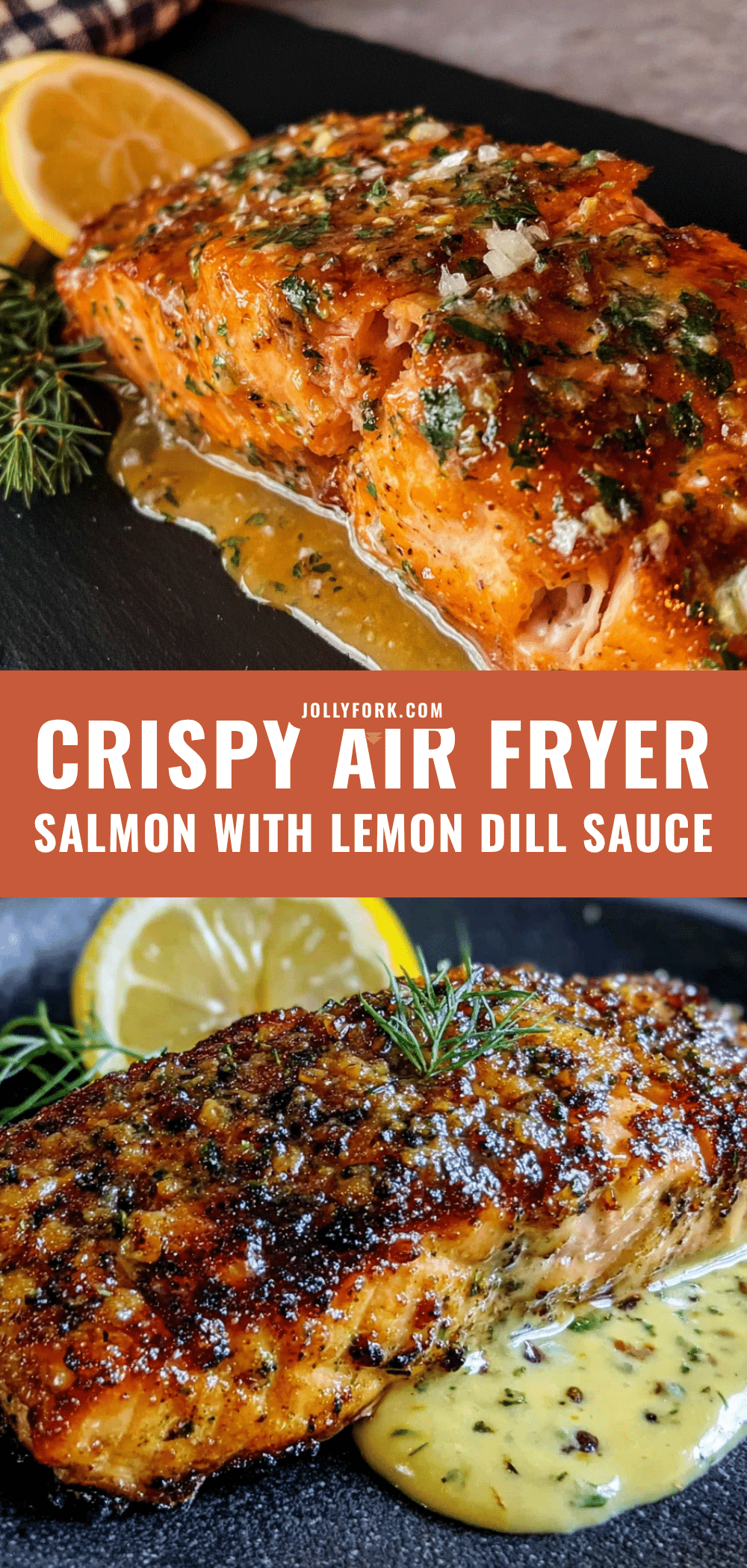
Crispy Air Fryer Salmon with Easy Lemon Dill Sauce
Perfectly crispy air fryer salmon with a bright, creamy lemon dill sauce. Ready in under 20 minutes, this weeknight dinner delivers crackling edges and tender, flaky flesh every time.
- Prep Time: 10 minutes
- Cook Time: 10 minutes
- Total Time: 20 minutes
- Yield: 2 servings 1x
- Category: Main Course
- Cuisine: American
Ingredients
- 2 salmon fillets (about 6 ounces each)
- 1 tablespoon olive oil
- 1 teaspoon kosher salt
- ½ teaspoon freshly ground black pepper
- ½ teaspoon garlic powder
- ½ teaspoon smoked paprika
- ½ cup plain full-fat Greek yogurt
- 2 tablespoons fresh dill, chopped
- 1 tablespoon freshly squeezed lemon juice
- 1 teaspoon lemon zest
- 1 small garlic clove, minced
- ¼ teaspoon salt
- Fresh dill sprigs for garnish (optional)
- Lemon wedges for serving (optional)
- Flaky sea salt for finishing (optional)
Instructions
- Pat the salmon completely dry with paper towels on both sides until the surface feels tacky.
- Drizzle olive oil over both sides of the fillets and rub in gently. In a small bowl, combine kosher salt, black pepper, garlic powder, and paprika. Sprinkle evenly over both sides of each fillet.
- Preheat the air fryer to 400°F (200°C) for 3 minutes.
- Place the salmon fillets skin-side down in the air fryer basket, leaving at least 1 inch of space between them.
- Cook for 6 minutes at 400°F without opening the basket.
- Carefully flip the fillets using tongs. Cook for another 3 to 5 minutes, depending on thickness, until the internal temperature reaches 125°F to 130°F for medium doneness.
- Transfer the salmon to a plate and let rest for 2 minutes.
- While the salmon rests, make the sauce: In a small bowl, combine Greek yogurt, fresh dill, lemon juice, lemon zest, minced garlic, and salt. Stir until smooth. Taste and adjust seasoning.
- Serve the salmon immediately with the lemon dill sauce spooned over the top. Garnish with fresh dill sprigs and lemon wedges, and sprinkle with flaky sea salt if desired.
Notes
Patting the salmon completely dry is essential for achieving crispy edges. If your air fryer runs hot, reduce temperature to 375°F. For thicker fillets (1.5 inches), cook up to 5 minutes on the second side. The lemon dill sauce can be made up to 2 days ahead and improves with time.
Nutrition
- Serving Size: 1 fillet with sauce
- Calories: 380
- Sugar: 2
- Sodium: 800
- Fat: 22
- Saturated Fat: 4
- Carbohydrates: 4
- Protein: 35
Keywords: air fryer salmon, crispy salmon, lemon dill sauce, quick salmon recipe, healthy salmon, gluten-free salmon, keto salmon, weeknight dinner