I was at the auto repair shop waiting on an oil change last December—a Tuesday, I think—when the shop owner, a guy named Frank who mostly grunted about tire rotations, started telling me about black-eyed pea soup. Frank. The man who once told me the best way to season a cast iron was to “just cook bacon in it forever.” He was wiping grease off his hands with a red rag and said, completely out of nowhere, “You need a good luck soup for New Year’s, right? Mine’s lighter than most. My wife’s a dietitian, she fixed it up.” Honestly, I almost laughed. Getting cooking advice from Frank felt like getting tax advice from a toddler. But he was so earnest, describing how the broth should be “brothy, not gloppy,” and how the peas should have a little bite left. So I wrote it down on the back of my receipt, right next to the estimated cost for new wiper blades.
That first batch I made, I overcooked the peas. They turned into gray mush. Frank would have been so disappointed. But the second time? It clicked. The broth was clean and savory, with a little kick from red pepper flakes, and the peas stayed perfectly tender. It wasn’t the heavy, ham-hock-laden soup I grew up with. It was lighter, brighter, and somehow felt like exactly what you want to eat on January 1st—something that feels good for you but still tastes like a celebration. Maybe you’ve been searching for a New Year’s recipe that doesn’t leave you feeling like you need a nap. This is it. I’ve been making it every year since, and I always think of Frank and his dietitian wife, two people I never expected to change my cooking game.
Why You’ll Love This Recipe
This isn’t just another bean soup recipe. I’ve tested this one at least eight times to get the texture just right, and I can tell you with confidence—it works. It’s the kind of recipe that makes you look like you spent hours in the kitchen, but really, it comes together with minimal fuss. Here’s why it stands out:
- Quick & Easy: Ready in about 45 minutes, most of which is hands-off simmering. Perfect for a busy New Year’s Day when you’d rather be relaxing.
- Simple Ingredients: You probably already have the pantry staples—onion, garlic, celery, broth. The only special trip might be for fresh black-eyed peas or a good quality canned version.
- Perfect for New Year’s Day: It’s a tradition in the South for a reason. Black-eyed peas are said to bring luck and prosperity. Starting the year with a bowl of this feels intentional and hopeful.
- Crowd-Pleaser: Even folks who think they don’t like beans end up coming back for seconds. It’s savory, slightly smoky, and deeply satisfying without being heavy.
- Unbelievably Delicious: The secret is in the simple broth—a good vegetable base, a touch of smoked paprika, and a squeeze of lemon at the end. It wakes everything up.
What makes this recipe different is the balance. Most black-eyed pea soups are weighed down with pork and heavy stock. This one uses a smart blend of aromatics and a little liquid smoke for depth, keeping it light enough that you can eat a big bowl and still have room for cornbread. It’s comfort food reimagined—healthier, faster, but with the same soul-soothing satisfaction. The first time I served it to my family, my husband said, “This is the best soup you’ve made all year.” And he’s not easy to impress.
What Ingredients You Will Need
This recipe uses simple, wholesome ingredients to deliver bold flavor and satisfying texture without the fuss. Most are pantry staples, which makes it easy to throw together even on a whim.
- Black-eyed peas, 1 pound dried (or 3 cans, drained and rinsed) — If using dried, look for peas that are uniform in size for even cooking. I prefer the brand Goya for canned, but any store brand works fine.
- Yellow onion, 1 large, diced — Adds a sweet, savory base. A white onion works too, but yellow gives a richer flavor.
- Celery ribs, 3, diced — Essential for that classic soup aroma. Don’t skip it—it adds a subtle freshness.
- Carrots, 2 medium, diced — Adds a touch of natural sweetness and color. Peel them if you prefer a smoother texture.
- Garlic cloves, 4, minced — Fresh garlic is non-negotiable here. The jarred stuff just won’t give you the same punch.
- Olive oil, 2 tablespoons — Use a good quality extra virgin for sautéing. It adds a fruity note that complements the peas.
- Vegetable broth, 6 cups — Low-sodium is best so you can control the salt. I like Pacific Foods or homemade if I have it.
- Smoked paprika, 1 teaspoon — This is the secret to the smoky flavor without using meat. Sweet paprika won’t give the same effect.
- Dried thyme, 1 teaspoon — Earthy and slightly minty, it pairs beautifully with the peas.
- Bay leaves, 2 — Adds a subtle depth that builds as the soup simmers. Remember to fish them out before serving.
- Red pepper flakes, ½ teaspoon (or to taste) — Gives a gentle warmth without overwhelming the dish. Skip it if you’re sensitive to heat.
- Lemon juice, from 1 lemon — Added at the very end, it brightens the entire soup. Don’t skip this step—it’s the magic touch.
- Salt and black pepper, to taste — Start with 1 teaspoon salt and ½ teaspoon pepper, then adjust.
- Fresh parsley, chopped, for garnish (optional) — Adds a pop of color and freshness. Flat-leaf parsley is best.
Substitution guidance: If you want a heartier version, you can add a cup of diced smoked turkey sausage or a ham hock during simmering. For a gluten-free option, this recipe is naturally gluten-free as written. If you’re avoiding nightshades, skip the smoked paprika and use a pinch of chipotle powder instead for a different kind of warmth.
Equipment Needed
You don’t need a fancy kitchen to make this soup. Here’s what you’ll need:
- Large pot or Dutch oven — A 5- to 6-quart pot is ideal. I use my enameled cast iron Le Creuset, but any heavy-bottomed pot works. The heavier the pot, the more even the heat distribution.
- Cutting board and sharp knife — A good chef’s knife makes dicing the veggies a breeze. A dull knife is just asking for a cut finger.
- Wooden spoon or silicone spatula — For stirring the aromatics. Wooden spoons are great because they don’t scratch your pots.
- Measuring cups and spoons — Accuracy matters, especially with the smoked paprika and salt.
- Colander — For rinsing the canned peas if you’re using them. If you’re using dried, you’ll need a bowl for soaking.
- Ladle — For serving. A deep ladle is best for getting all the good bits.
- Citrus juicer — Optional, but it makes squeezing the lemon much easier. I use a simple handheld one.
If you don’t have a Dutch oven, a regular stockpot works fine. Just keep an eye on the heat to prevent sticking. And honestly, a cheap wooden spoon from the grocery store works just as well as an expensive one. I’ve had mine for years, and it’s stained and cracked, but it’s my favorite.
Preparation Method
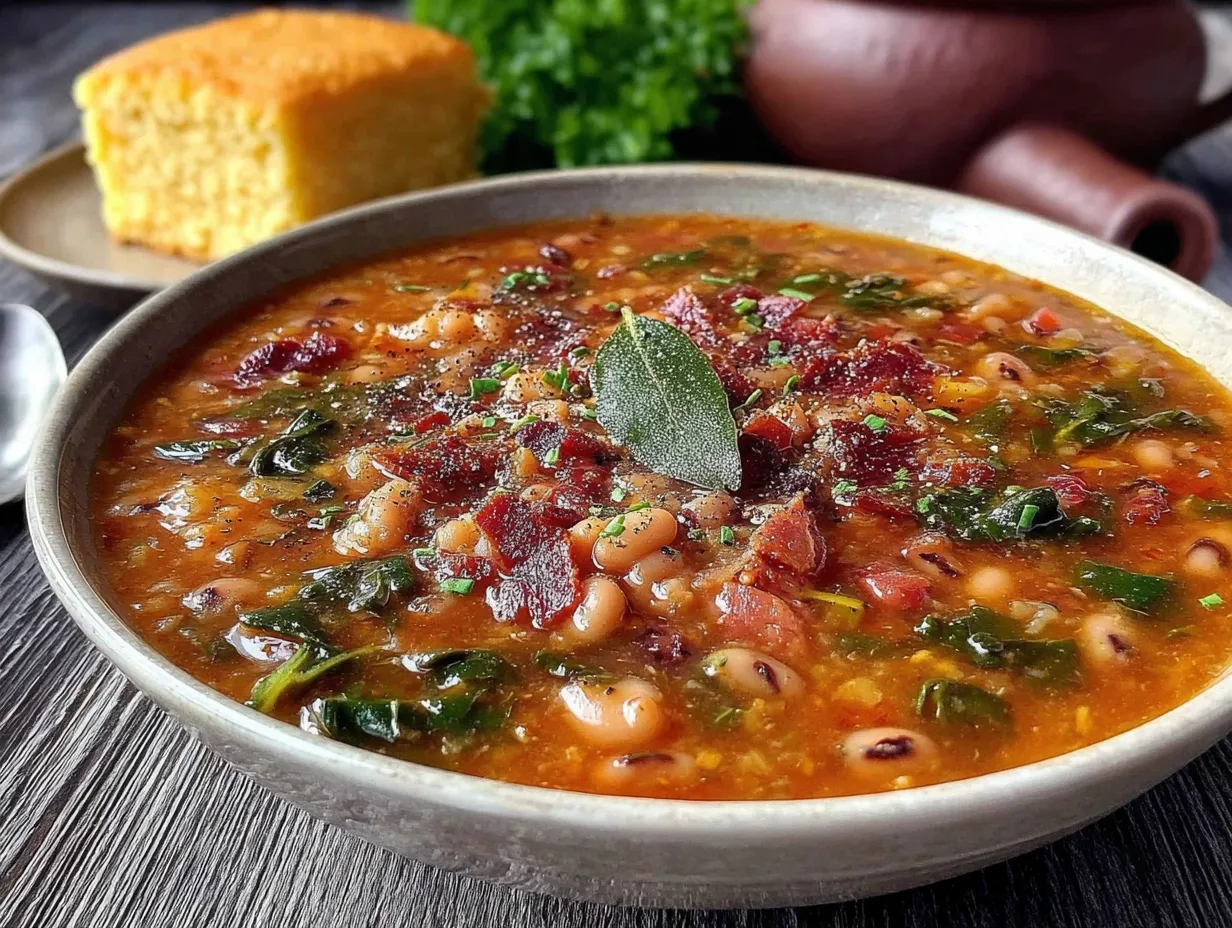
Let’s make some soup. This method works whether you’re using dried or canned peas, but I’ll note the differences.
- If using dried black-eyed peas, soak them first. Place the peas in a large bowl and cover with cold water by about 2 inches. Let them soak for at least 6 hours or overnight. This softens them and reduces cooking time. If you’re short on time, you can do a quick soak: bring the peas and water to a boil, turn off the heat, and let them sit for 1 hour. Drain and rinse before using. (If using canned, skip this step and just drain and rinse them.)
- Heat the olive oil in your large pot over medium heat. Once it shimmers—about 30 seconds—add the diced onion, celery, and carrots. Stir to coat them in oil. Cook for 6 to 8 minutes, stirring occasionally, until the vegetables are softened and the onion is translucent. You should see a little browning on the edges, but don’t let them burn. The smell at this stage is incredible—sweet and savory.
- Add the minced garlic, smoked paprika, dried thyme, and red pepper flakes. Stir constantly for about 1 minute until the garlic is fragrant. Be careful not to let the garlic burn, or it will turn bitter. The kitchen should smell like a cozy winter evening at this point.
- Pour in the vegetable broth and add the bay leaves. If you’re using dried peas, add them now. If you’re using canned, wait until step 6. Stir everything together, scraping up any browned bits from the bottom of the pot. That’s where a lot of flavor lives.
- Bring the soup to a boil, then reduce the heat to low. Cover the pot with the lid slightly ajar and let it simmer. If using dried peas, simmer for 45 minutes to 1 hour, or until the peas are tender but not mushy. Check them at the 40-minute mark—cooking times can vary based on the age of the peas. The broth should be flavorful and slightly thickened from the peas.
- If using canned black-eyed peas, add them now. After the soup has simmered for 30 minutes (with the aromatics), add the drained and rinsed canned peas. Simmer for another 15 minutes, just until they’re heated through. Canned peas are already cooked, so you don’t want to overdo it or they’ll fall apart.
- Remove the bay leaves and discard them. This is important—nobody wants to bite into a tough bay leaf.
- Season with salt and black pepper to taste. Start with 1 teaspoon salt and ½ teaspoon pepper, then adjust. Remember that the broth will concentrate as it simmers, so it’s better to under-salt early and add more at the end.
- Stir in the fresh lemon juice just before serving. This brightens the entire soup and balances the earthy peas. Taste it before and after—you’ll notice the difference immediately.
- Ladle into bowls and garnish with fresh parsley if desired. Serve hot with a side of crusty bread or cornbread.
Personal tip: I like to let the soup sit for about 10 minutes after it’s done cooking. The flavors meld together even more, and it cools down to the perfect eating temperature. Also, if the soup seems too thick, stir in a little extra broth or water to reach your desired consistency.
Cooking Tips & Techniques
I’ve made this soup enough times to know where things can go wrong. Here’s what I’ve learned the hard way:
Don’t skip the soak. The first time I made this with dried peas, I didn’t soak them long enough, and they were still crunchy after an hour of simmering. It was a sad, crunchy soup. Soaking overnight is ideal, but even a quick soak makes a huge difference.
Watch your heat. This soup should simmer gently—a lazy bubble, not a rolling boil. Boiling can make the peas break apart and turn the broth cloudy. If you see it boiling hard, turn the heat down. Low and slow is the way to go.
Taste as you go. I can’t stress this enough. The flavor changes as the soup cooks. You might need more salt, a pinch more smoked paprika, or an extra squeeze of lemon. Trust your palate. I once added too much red pepper flakes and had to make a second batch to dilute the heat. Learn from my mistake.
Use good broth. The broth is the backbone of this soup. If you use a watery, bland broth, the soup will be watery and bland. I recommend a low-sodium vegetable broth with a rich flavor. If you have homemade broth, even better. I’ve used Better Than Bouillon vegetable base in a pinch, and it works great.
Don’t rush the aromatics. That 6 to 8 minutes of sautéing the onions, celery, and carrots is not optional. It builds the flavor foundation. If you rush it, the soup will lack depth. I’ve been guilty of trying to save time here, and I always regret it.
Multitasking tip: While the soup simmers, make a batch of cornbread or toast some crusty bread. The soup is the star, but the bread is the supporting actor that makes the meal complete.
Variations & Adaptations
This recipe is flexible, and I’ve tried a few different versions over the years. Here are some of my favorites:
Smoky Turkey Sausage Version: Add 8 ounces of diced smoked turkey sausage after sautéing the aromatics. Cook it for 3 to 4 minutes until it’s browned, then proceed with the recipe. It adds a meaty depth without making the soup heavy. I did this for a Super Bowl party, and it was gone in 20 minutes.
Vegan & Gluten-Free: This recipe is already vegan and gluten-free as written, but for extra protein, stir in a cup of cooked quinoa or brown rice at the end. It makes the soup even more filling. I’ve also added a handful of chopped kale in the last 5 minutes of cooking for a nutritional boost.
Spicy Southwest Twist: Add a diced jalapeño (seeds removed if you want less heat) with the onions, and swap the smoked paprika for ancho chili powder. Stir in a can of diced tomatoes with green chiles (drained) at the same time as the broth. Top with avocado slices and a dollop of vegan sour cream. This version is my go-to when I’m craving something with a kick.
Slow Cooker Adaptation: Sauté the aromatics on the stovetop first, then transfer everything except the lemon juice and parsley to a slow cooker. Cook on low for 6 to 8 hours or on high for 3 to 4 hours. Add the lemon juice at the end. This is perfect for a busy New Year’s Day when you want the house to smell amazing without hovering over the stove.
Herb Lover’s Version: Stir in a tablespoon of fresh chopped rosemary or sage along with the thyme. It gives the soup an earthy, almost piney flavor that’s lovely on a cold day. I tried this after a friend brought me fresh herbs from her garden, and it was a happy accident.
Serving & Storage Suggestions
This soup is best served hot, straight from the pot, with a side of something crusty to soak up the broth. I love it with a slice of warm cornbread or a hunk of sourdough toast rubbed with garlic. For a lighter option, serve it with a simple green salad dressed with lemon vinaigrette.
For presentation, ladle the soup into deep bowls and garnish with a sprinkle of fresh parsley and a drizzle of olive oil. A crack of black pepper on top adds a nice finishing touch. If you’re serving a crowd, set out a bowl of hot sauce or red pepper flakes so everyone can adjust the heat to their liking.
Storage: This soup keeps beautifully in the refrigerator for up to 5 days. Let it cool completely before transferring to an airtight container. The flavors actually deepen overnight, so it might taste even better the next day. I often make a double batch just for leftovers.
Freezing: This soup freezes well for up to 3 months. Let it cool completely, then portion it into freezer-safe containers or zip-top bags. Leave a little room for expansion. To thaw, place it in the refrigerator overnight or reheat directly from frozen on the stovetop over low heat, adding a splash of broth or water to loosen it up.
Reheating: Reheat gently on the stovetop over medium-low heat, stirring occasionally. You can also microwave individual portions in 30-second bursts. If the soup has thickened too much, stir in a little broth or water until it reaches your desired consistency.
One thing I’ve noticed: the lemon flavor fades a bit after storage, so I like to add a fresh squeeze of lemon juice when reheating. It brings the soup back to life.
Nutritional Information & Benefits
This soup is not just delicious—it’s packed with nutrients that make you feel good about eating it. Here’s an approximate breakdown per serving (based on 6 servings):
- Calories: 220
- Protein: 11g
- Fiber: 8g
- Fat: 5g
- Carbohydrates: 35g
- Sodium: 480mg (varies with broth and added salt)
Black-eyed peas are a fantastic source of plant-based protein and fiber, which helps keep you full and supports healthy digestion. They’re also rich in folate, iron, and potassium. The carrots and celery add vitamins A and K, while the garlic and onions provide antioxidants that support immune health.
This recipe is naturally gluten-free, vegan, and dairy-free, making it suitable for a wide range of dietary needs. If you’re watching your sodium, use low-sodium broth and go easy on the added salt. The lemon juice helps brighten the flavor without needing extra salt.
From a wellness perspective, this soup is exactly the kind of meal I want to start the new year with—nourishing, satisfying, and full of ingredients that support overall health. It’s comfort food that works with your body, not against it.
Conclusion
This Light & Lucky Black-Eyed Pea Soup has become a New Year’s tradition in my house, and I hope it becomes one in yours too. It’s proof that you don’t need a complicated recipe or a long list of ingredients to make something truly memorable. Just a little patience, a few good vegetables, and the willingness to trust an unlikely source—like Frank the auto shop guy.
I love how this soup brings people together, whether it’s for a New Year’s gathering or a quiet weeknight dinner. It’s flexible enough to adapt to whatever you have on hand, and it always delivers on flavor. The best part? You can tweak it to make it your own. Add more spice, throw in some greens, or keep it simple. There’s no wrong way to do it.
So go ahead—make a pot of this soup, light a candle, and welcome the new year with a bowl of good luck. And when you do, I’d love to hear about it. Leave a comment below and tell me how it turned out, or share your own twist on the recipe. Let’s keep this tradition going, one bowl at a time.
Frequently Asked Questions
Can I use frozen black-eyed peas instead of dried or canned?
Absolutely. Frozen black-eyed peas are a great option and don’t require soaking. Add them directly to the soup after the aromatics have cooked, and simmer for about 20 to 25 minutes until tender. You may need to add a few extra minutes of cooking time, depending on the brand.
How can I make this soup thicker?
If you prefer a thicker soup, mash about a cup of the cooked peas against the side of the pot with a fork, then stir them back in. Alternatively, you can blend a cup of the soup in a blender until smooth and return it to the pot. This creates a creamier texture without adding any cream.
Can I make this soup in an Instant Pot?
Yes! Sauté the aromatics using the sauté function, then add the broth, soaked dried peas (or canned), and spices. Cook on high pressure for 10 minutes if using soaked dried peas, or 5 minutes for canned. Let the pressure release naturally for 10 minutes before quick releasing the rest. Stir in the lemon juice at the end.
Is this soup spicy?
The red pepper flakes add a gentle warmth, but it’s not spicy in an overwhelming way. If you’re sensitive to heat, you can reduce the amount to ¼ teaspoon or omit it entirely. For those who love spice, feel free to add more or serve with hot sauce on the side.
What can I serve with this soup for a complete meal?
This soup is hearty enough to be a meal on its own, but it pairs beautifully with cornbread, crusty bread, or a side salad. For a more substantial meal, serve it over rice or quinoa. A slice of roasted sweet potato or a simple grilled cheese sandwich also works wonderfully.
Pin This Recipe!
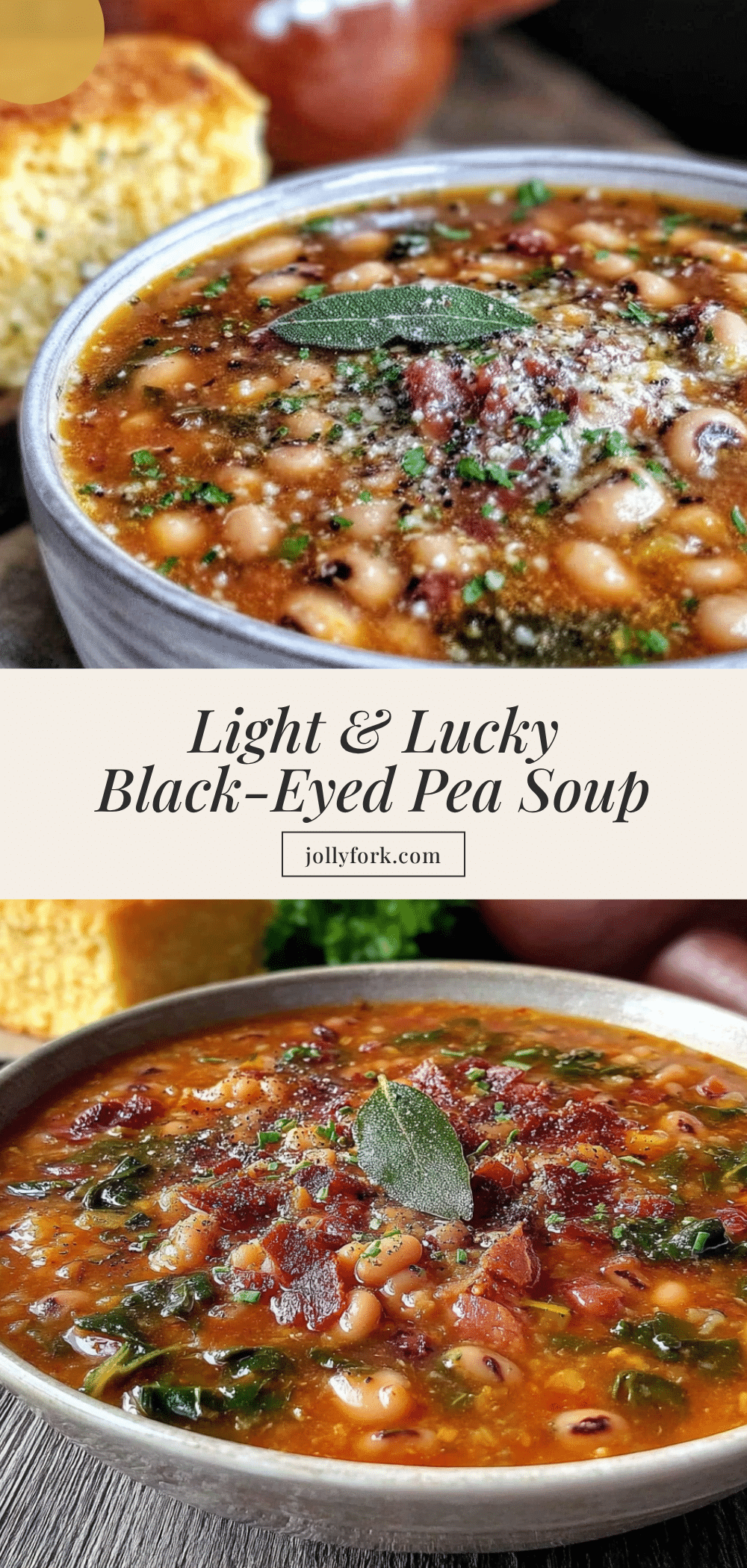
Light & Lucky Black-Eyed Pea Soup: Easy New Years Recipe

A light, savory black-eyed pea soup perfect for New Year’s Day, made with simple ingredients and a bright lemon finish. It’s a healthier take on a Southern tradition that’s quick to prepare and deeply satisfying.
- Prep Time: 15 minutes
- Cook Time: 45 minutes
- Total Time: 1 hour
- Yield: 6 servings 1x
- Category: Soup
- Cuisine: Southern
Ingredients
- 1 pound dried black-eyed peas (or 3 cans, drained and rinsed)
- 1 large yellow onion, diced
- 3 celery ribs, diced
- 2 medium carrots, diced
- 4 garlic cloves, minced
- 2 tablespoons olive oil
- 6 cups vegetable broth (low-sodium)
- 1 teaspoon smoked paprika
- 1 teaspoon dried thyme
- 2 bay leaves
- ½ teaspoon red pepper flakes (or to taste)
- Juice of 1 lemon
- Salt and black pepper to taste
- Fresh parsley, chopped, for garnish (optional)
Instructions
- If using dried black-eyed peas, soak them first: place in a large bowl, cover with cold water by 2 inches, and soak for at least 6 hours or overnight. For a quick soak, bring to a boil, turn off heat, and let sit for 1 hour. Drain and rinse. (If using canned, skip this step and just drain and rinse.)
- Heat olive oil in a large pot or Dutch oven over medium heat. Add diced onion, celery, and carrots. Cook for 6 to 8 minutes, stirring occasionally, until softened and onion is translucent.
- Add minced garlic, smoked paprika, dried thyme, and red pepper flakes. Stir constantly for about 1 minute until fragrant.
- Pour in vegetable broth and add bay leaves. If using dried peas, add them now. Stir, scraping up any browned bits from the bottom.
- Bring to a boil, then reduce heat to low. Cover with lid slightly ajar and simmer. If using dried peas, simmer for 45 minutes to 1 hour, until peas are tender but not mushy. Check at 40 minutes.
- If using canned black-eyed peas, add them after the soup has simmered for 30 minutes. Simmer for another 15 minutes until heated through.
- Remove bay leaves and discard.
- Season with salt and black pepper to taste (start with 1 teaspoon salt and ½ teaspoon pepper).
- Stir in fresh lemon juice just before serving.
- Ladle into bowls and garnish with fresh parsley if desired. Serve hot with crusty bread or cornbread.
Notes
For a heartier version, add diced smoked turkey sausage or a ham hock during simmering. For a gluten-free option, this recipe is naturally gluten-free as written. If avoiding nightshades, skip smoked paprika and use a pinch of chipotle powder. Let the soup sit for 10 minutes after cooking for flavors to meld. If too thick, stir in extra broth or water.
Nutrition
- Serving Size: 1 bowl (about 1.5 cu
- Calories: 220
- Sugar: 6
- Sodium: 480
- Fat: 5
- Saturated Fat: 0.5
- Carbohydrates: 35
- Fiber: 8
- Protein: 11
Keywords: black-eyed pea soup, New Year's recipe, lucky soup, vegan soup, gluten-free soup, easy soup