Third time this week I’ve made a pot of this honey garlic immunity soup, and the only thing that changed was the size of the ginger knob I grabbed from the fridge. The first batch was a Tuesday night experiment—throat scratchy, sinuses starting to complain, and a fridge that seemed to hold nothing but a head of garlic, a sad piece of ginger root, and half a jar of honey. By Friday, I was making it on purpose. Not because I was sick anymore, but because something about the way the broth turns silky and the garlic mellows into something almost sweet felt like the kitchen equivalent of a deep breath. You know that feeling when you take a sip of something and your shoulders just drop? That’s this soup.
I didn’t set out to write a recipe. I was just chopping and simmering on autopilot, the way you do when you’re tired and a little run-down and you need something to take care of you. But by the third batch, I started paying attention—how long the garlic needed to toast before it stopped being sharp, how the honey changed when it hit hot broth versus cold, the exact moment the ginger started to smell like medicine in the best way. I wrote it all down on a sticky note that’s now stuck to my spice cabinet, smudged with chicken stock. This is that note, turned into a real recipe.
It’s not fancy. It’s not complicated. But it’s the kind of soup that makes you feel like someone’s looking out for you, even if that someone is just you, standing over the stove with a ladle.
Why You’ll Love This Recipe
I’ve tested this soup through a full week of sniffles, a rainy weekend, and one particularly gloomy Wednesday that needed a serious mood adjustment. Here’s what I know for sure:
- Quick & Easy: From chopping board to bowl in about 35 minutes. No long simmering required—the flavors come together fast because we’re not trying to extract marrow or break down tough cuts of meat. This is speed comfort food at its finest.
- Simple Ingredients: You probably have most of this in your kitchen right now. Garlic, ginger, honey, chicken broth, onions, carrots, celery. That’s it. No weird health-food store finds, no obscure spices you’ll use once.
- Perfect for Sick Days: This is the soup you make when you feel crummy and need something that actually helps. The honey soothes a scratchy throat, the ginger settles an upset stomach, and the garlic brings serious immune-supporting compounds to the party.
- Crowd-Pleaser: I’ve served this to kids, picky eaters, and friends who “don’t really like soup,” and every single person went back for seconds. The honey balances the garlic and ginger so nothing tastes harsh or medicinal.
- Unbelievably Comforting: The broth is silky and rich without being heavy. It’s the kind of soup that makes you close your eyes after the first spoonful and just breathe for a second.
What makes this different from other immunity soups? I spent years making versions that were either too harsh (raw garlic blasting your taste buds) or too sweet (basically honey water with vegetables). This one hits the sweet spot—the garlic is gently toasted before the liquid goes in, which tames its bite while keeping all the good stuff intact. The honey goes in at the very end, off the heat, so you get the full benefit of its natural enzymes. And the ginger? We’re using enough that you feel it, but not so much that it burns. It’s the Goldilocks of immunity soups, and I’m genuinely proud of it.
What Ingredients You Will Need
This recipe leans on a short list of everyday ingredients, each one pulling its weight. No fancy powders or obscure health boosters here—just real food that happens to be really good at supporting your immune system.
- Olive oil, 2 tablespoons. Use a good-quality extra virgin for the best flavor, but regular olive oil works fine. You’re using it to sweat the vegetables and toast the garlic, so it doesn’t need to be the fancy stuff from Italy.
- Yellow onion, 1 large, diced. Sweet and mild once cooked. White or red onion can substitute in a pinch, but yellow gives the most balanced flavor for this broth.
- Carrots, 3 medium, peeled and diced. They add natural sweetness and a boatload of vitamin A. I like to dice them small—about ¼-inch pieces—so they soften quickly and blend into the broth.
- Celery stalks, 2, diced. That classic soup backbone flavor. Don’t skip it, even if you’re tempted. It adds depth you’ll miss if it’s gone.
- Garlic cloves, 8 to 10 large, minced. Yes, that much. Don’t be scared. The toasting step tames the raw bite, and the honey balances everything out. I recommend using fresh garlic here—pre-minced jarred stuff won’t give you the same aromatic punch.
- Fresh ginger root, a 2-inch piece, peeled and grated or minced. Look for ginger that’s firm and smooth-skinned, not wrinkly. I use a microplane to grate it fine so it melts into the broth, but mincing works too if you want little bits of ginger in every spoonful.
- Chicken broth, 6 cups. Use a good-quality low-sodium broth so you can control the salt. I like Pacific Foods or Swanson for consistent flavor. Vegetable broth works beautifully for a vegetarian version.
- Honey, 3 tablespoons, plus more for serving. Raw, unfiltered honey is ideal here—it retains more of its natural enzymes and antibacterial properties. But any honey you have will work. Just don’t use the stuff that comes in a plastic bear and tastes like sugar syrup.
- Fresh lemon juice, from 1 lemon. Added at the end for brightness. It wakes up all the flavors and adds a dose of vitamin C. Roll the lemon on the counter before cutting to get more juice out.
- Salt, 1 teaspoon, plus more to taste. I use fine sea salt. Start with less and adjust at the end—broths vary in saltiness.
- Black pepper, ½ teaspoon, freshly ground. Adds a gentle warmth that complements the ginger.
- Optional add-ins: Cooked shredded chicken (about 2 cups) for protein, or ½ cup small pasta like orzo or ditalini for heartiness. Red pepper flakes for heat, if that’s your thing.
Equipment Needed
You don’t need much to pull this soup together, which is part of the beauty. Here’s what you’ll want on hand:
- Large heavy-bottomed pot or Dutch oven (5 to 6 quarts). I use my enameled cast-iron Le Creuset for soups—it holds heat evenly and makes the garlic toast without scorching. A stainless steel stockpot works great too. Just avoid thin-bottomed pots that create hot spots.
- Chef’s knife and cutting board. A sharp knife makes dicing the vegetables feel effortless. If your knife is dull, this is the recipe that will make you finally sharpen it.
- Microplane or fine grater for the ginger. Not strictly necessary—you can mince it with a knife—but a microplane turns ginger into a paste that dissolves into the broth, which is honestly lovely.
- Wooden spoon or silicone spatula for stirring. Wood won’t scratch your pot and handles the heat well.
- Ladle for serving. A deep, wide ladle makes portioning soup feel ceremonial in the best way.
- Measuring spoons and liquid measuring cup. Eyeballing honey is risky—it’s sticky and easy to overpour. Measure it for consistent sweetness.
If you don’t have a Dutch oven, no worries. Any pot that holds at least 5 quarts and has a tight-fitting lid will do the job. I’ve made this in a beat-up aluminum stockpot at a friend’s cabin and it came out just as good.
Preparation Method

Let’s make some soup. I’ll walk you through each step like we’re in the kitchen together, because honestly, that’s how I learned—standing next to someone who’d done it a hundred times before.
- Prep your vegetables first. Dice the onion, carrots, and celery into roughly equal-sized pieces—about ¼ inch. Mince the garlic. Peel and grate the ginger. Having everything ready before you turn on the heat makes the process smooth and prevents that panicked scramble when something starts to burn. Trust me on this one.
- Heat the olive oil in your large pot over medium heat. Give it about a minute—the oil should shimmer but not smoke. If it starts smoking, your heat’s too high; turn it down and start over.
- Sauté the aromatics. Add the diced onion, carrots, and celery to the pot. Stir to coat them in oil, then let them cook for 5 to 7 minutes, stirring occasionally. You want them to soften and the onion to turn translucent, but not brown. If they start browning, lower the heat. This is called “sweating” the vegetables, and it builds the foundation of flavor for the whole soup.
- Toast the garlic and ginger. Push the vegetables to the sides of the pot, making a little well in the center. Add the minced garlic and grated ginger directly to the oil in that well. Stir them around for 30 to 60 seconds—just until they become fragrant. The garlic should smell nutty and sweet, not sharp or burnt. This toasting step is the secret to taming garlic’s bite while keeping all its immune-boosting properties. If the garlic starts to turn brown, pull the pot off the heat immediately.
- Add the broth. Pour in the 6 cups of chicken broth, scraping the bottom of the pot with your wooden spoon to release any flavorful bits that stuck. This is called deglazing, and it’s where all that toasty garlic flavor gets incorporated into the liquid.
- Season and simmer. Add the salt and black pepper. Bring the soup to a gentle boil, then reduce the heat to low, cover the pot, and let it simmer for 15 minutes. The soup should be bubbling lazily, not furiously. This gives the vegetables time to soften completely and the flavors to meld together.
- Remove from heat and add honey and lemon. This step matters: take the pot off the heat completely before adding the honey. High heat can destroy honey’s beneficial enzymes and antibacterial properties. Stir in the 3 tablespoons of honey and the fresh lemon juice until the honey is fully dissolved. Taste the broth—it should be savory with a gentle sweetness and a warm tingle from the ginger. Adjust salt if needed.
- Add optional protein or pasta. If you’re adding cooked shredded chicken, stir it in now and let it warm through for 2 to 3 minutes. If you’re adding small pasta, cook it separately according to package directions and add it to individual bowls—otherwise it’ll soak up all the broth and turn mushy overnight.
- Ladle and serve. Pour the soup into bowls and drizzle each serving with an extra teaspoon of honey if you want more sweetness. A squeeze of lemon on top brightens it even further. Serve hot, with crusty bread or crispy brown sugar roasted sweet potato wedges on the side for dipping.
Cooking Tips & Techniques
I’ve made enough pots of soup to fill a swimming pool, and I’ve learned most lessons the hard way—by burning, oversalting, or just making something that tasted fine but not great. Here’s what I wish someone had told me sooner:
Don’t boil the garlic. This is the biggest mistake people make with garlic-heavy soups. If you add raw garlic directly to boiling broth, it releases sulfur compounds that taste bitter and harsh. That’s why we toast it gently in oil first—it mellows the flavor while preserving the good stuff. If you forget and dump it in raw, add it early in the simmer and cook it for at least 20 minutes to soften the bite.
Honey goes in last, off the heat. I cannot stress this enough. Honey contains natural enzymes that support immune function, but those enzymes break down at temperatures above 95°F (35°C). Adding honey to a hot but not boiling soup preserves its benefits. Plus, the flavor stays bright and floral instead of cooking into something flat and one-note.
Grate your ginger, don’t chop it. A microplane turns ginger into a pulp that dissolves into the broth, giving you flavor in every sip without biting into a fibrous chunk. If you don’t have a microplane, peel the ginger and slice it into thin coins—they’ll infuse the broth and you can fish them out before serving.
Taste and adjust at the end, not the beginning. Broths vary wildly in salt content. What tastes perfectly seasoned at the start might be way too salty after simmering and reducing. Always season lightly early on, then adjust right before serving. This is the difference between good soup and great soup.
Make extra and freeze it. This soup freezes beautifully for up to 3 months. Let it cool completely, then portion into freezer-safe containers. Leave an inch of headspace for expansion. Thaw overnight in the fridge and reheat gently on the stove—don’t microwave it, or the honey flavor gets weird.
Variations & Adaptations
This recipe is a starting point, not a rigid formula. Here are some ways I’ve tweaked it depending on what I had in the fridge or who I was feeding:
- Vegetarian/Vegan Version: Swap the chicken broth for a good-quality vegetable broth. Add a can of drained chickpeas or white beans for protein and body. Use maple syrup instead of honey to keep it fully plant-based—it has a different flavor profile but works beautifully with the ginger.
- Spicy Immunity Kick: Add ½ teaspoon of red pepper flakes along with the garlic and ginger. Or throw in a sliced fresh Thai chili for serious heat. The spice combines with the ginger to create a warming sensation that’s incredibly soothing when you’re congested.
- Noodle Soup: Cook 4 ounces of rice noodles or soba noodles separately and add them to the bowls before ladling the broth over. This turns it into a more substantial meal. Don’t add noodles to the pot—they’ll soak up all the liquid and turn into a starchy mess.
- Coconut Turmeric Twist: Replace 1 cup of the broth with full-fat coconut milk and add 1 teaspoon of ground turmeric along with the ginger. The coconut adds richness, and turmeric pairs beautifully with the black pepper for anti-inflammatory benefits. This version is ridiculously good and feels like a hug in a bowl.
- Quick Version: Use pre-chopped mirepoix from the grocery store and jarred minced ginger. Skip the toasting step and just simmer everything together for 20 minutes. It won’t be as nuanced, but it’ll still be delicious and comforting when you’re short on time and energy.
Serving & Storage Suggestions
This soup is best served piping hot, straight from the pot, with a slice of good bread for dunking. I like to garnish each bowl with a drizzle of extra honey, a squeeze of lemon, and a sprinkle of fresh parsley or cilantro if I have it. The herbs add a pop of color and freshness that cuts through the richness.
For a complete meal, serve alongside a simple green salad or a fresh Mediterranean chickpea and cucumber salad for crunch and contrast. If you’re feeling indulgent, a creamy garlic parmesan alfredo sauce drizzled over crusty bread makes an incredible dipping companion—yes, really.
Storage: Let the soup cool completely before transferring to airtight containers. It keeps in the refrigerator for up to 5 days. The flavors actually deepen overnight, so day-two soup is even better than day-one soup.
Freezing: Portion into freezer-safe containers, leaving 1 inch of headspace. Freeze for up to 3 months. Thaw in the refrigerator overnight or run the container under warm water to release the frozen block, then reheat in a pot over medium-low heat. If the soup looks separated after thawing, a quick whisk will bring it back together.
Reheating: Warm gently on the stovetop over medium-low heat, stirring occasionally. Don’t boil it—the honey flavor can turn flat. If the soup thickened in the fridge (from the vegetables releasing starches), add a splash of broth or water to thin it out.
Nutritional Information & Benefits
Per serving (about 1½ cups, without optional add-ins):
- Calories: 185
- Fat: 7g
- Carbohydrates: 22g
- Fiber: 3g
- Sugar: 14g (from honey and vegetables, mostly natural)
- Protein: 6g
- Sodium: 680mg (varies with broth)
- Vitamin A: 120% DV
- Vitamin C: 25% DV
This soup is packed with ingredients that actually support immune function. Garlic contains allicin, a compound with antimicrobial properties that may help fight off colds. Ginger has anti-inflammatory effects and can soothe nausea and digestive upset. Honey is a natural cough suppressant and contains antioxidants. And the carrots provide a hefty dose of vitamin A, which is essential for maintaining healthy mucous membranes—your body’s first line of defense against pathogens.
If you’re watching your sodium, use low-sodium broth and go easy on the added salt. For a lower-carb version, skip the optional pasta or add extra vegetables instead. This recipe is naturally gluten-free and dairy-free as written.
Conclusion
This honey garlic immunity soup has become my go-to for every cold snap, every scratchy throat, every day when I just need something warm and reassuring. It’s not a magic cure—no soup is—but it’s real food that makes you feel cared for, and sometimes that’s exactly what you need.
I love that this recipe is flexible enough to adapt to whatever you have on hand and forgiving enough to survive a distracted cook. I’ve made it while half-asleep, while chatting on the phone, while chasing a toddler around the kitchen, and it’s never let me down. The honey and garlic do their quiet work, the ginger warms you from the inside, and the broth wraps around everything like a soft blanket.
I’d love to hear how this soup turns out for you. Did you add something unexpected? Serve it with a favorite side? Make it for someone who needed a little comfort? Drop a comment below and tell me about it—I read every single one, and your tweaks might inspire someone else’s next pot of soup.
Now go make some broth. Your future sick-day self will thank you.
Frequently Asked Questions
Can I use raw honey in this soup?
Absolutely, and I actually recommend it. Raw, unfiltered honey retains more of its natural enzymes and antibacterial properties than processed honey. Just remember to add it after you’ve removed the pot from the heat—high temperatures can destroy those beneficial compounds. If you only have regular honey, it’ll still taste great, you just won’t get quite as many immune-supporting benefits.
Can I make this soup in a slow cooker or Instant Pot?
Yes, with a few adjustments. For a slow cooker, sauté the vegetables, garlic, and ginger on the stovetop first (this step is non-negotiable for flavor), then transfer everything except the honey and lemon to the slow cooker. Cook on low for 4 to 6 hours or high for 2 to 3 hours. Stir in the honey and lemon at the end. For an Instant Pot, use the sauté function for the aromatics, then pressure cook on high for 5 minutes with a quick release. Same rule—honey and lemon go in after cooking.
How long does this soup keep in the fridge?
It keeps well for up to 5 days in an airtight container in the refrigerator. The flavors actually get better after a day or two as the garlic and ginger continue to meld with the broth. Just reheat gently on the stovetop or in the microwave, and add a splash of broth or water if it’s thickened too much from the vegetables.
Can I freeze this soup with the honey already in it?
Yes, you can freeze it with the honey, and it works perfectly. The honey may cause the soup to separate slightly upon thawing, but a good stir or whisk will bring it back together. I recommend freezing in individual portions so you can pull out exactly what you need. Thaw overnight in the fridge and reheat gently. Avoid microwaving on high—it can make the honey flavor taste flat.
Is this soup safe for children?
Yes, with one important caveat: honey should not be given to infants under 12 months old due to the risk of botulism. For older children, this soup is generally well-tolerated and actually quite popular—the honey balances the garlic and ginger so it’s not too spicy or strong. If your child is sensitive to spice, reduce the ginger to a 1-inch piece and skip the black pepper. You can also blend the soup smooth with an immersion blender for a creamy, kid-friendly texture.
Pin This Recipe!
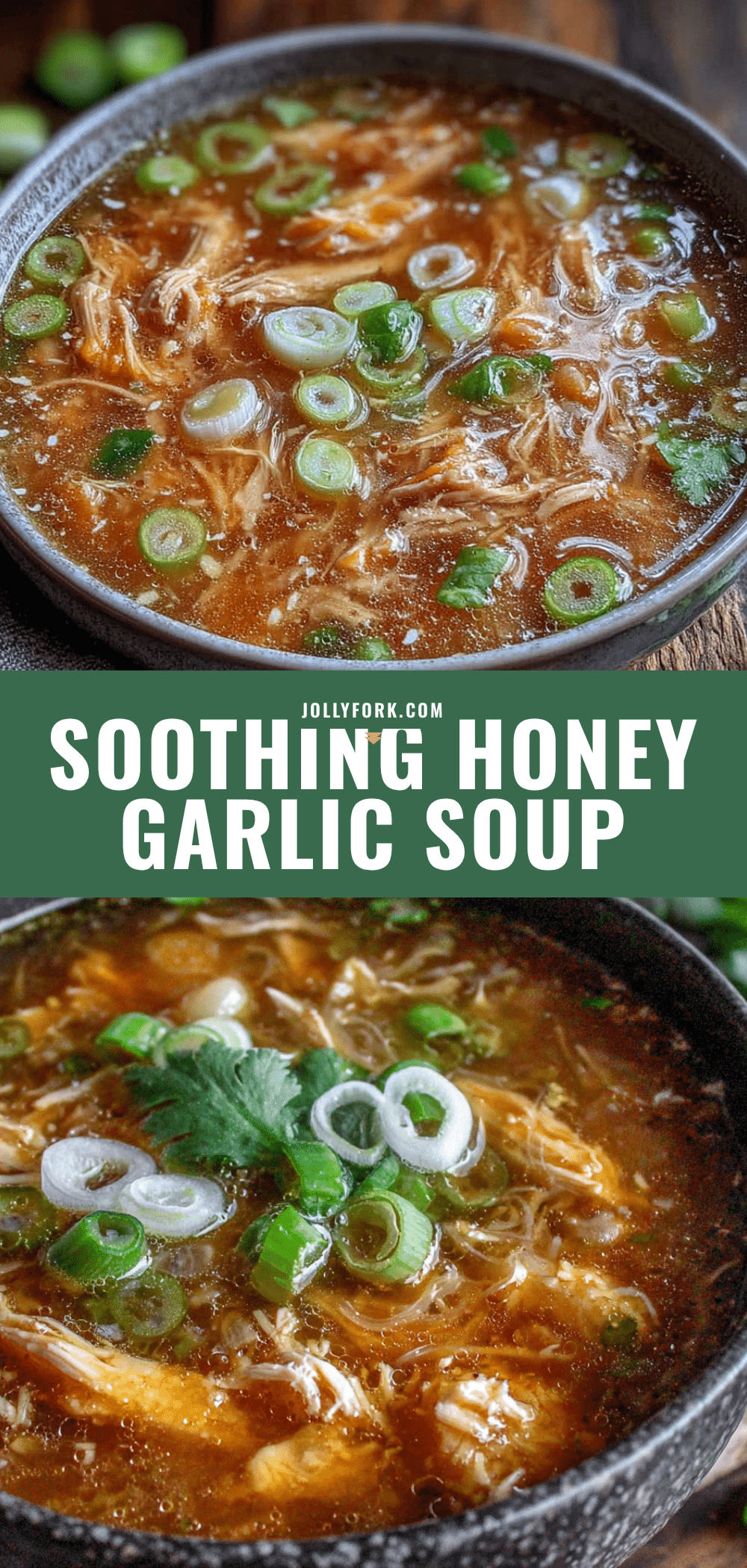
Soothing Honey Garlic Immunity Soup with Ginger

A quick and comforting soup made with honey, garlic, and ginger that soothes scratchy throats and supports immune function. Ready in about 35 minutes with simple ingredients.
- Prep Time: 10 minutes
- Cook Time: 25 minutes
- Total Time: 35 minutes
- Yield: 4 servings 1x
- Category: Soup
- Cuisine: American
Ingredients
- 2 tablespoons olive oil
- 1 large yellow onion, diced
- 3 medium carrots, peeled and diced
- 2 celery stalks, diced
- 8 to 10 large garlic cloves, minced
- 2-inch piece fresh ginger root, peeled and grated or minced
- 6 cups low-sodium chicken broth
- 3 tablespoons honey (raw, unfiltered preferred)
- Fresh lemon juice from 1 lemon
- 1 teaspoon fine sea salt, plus more to taste
- ½ teaspoon freshly ground black pepper
- Optional: 2 cups cooked shredded chicken
- Optional: ½ cup small pasta (orzo or ditalini)
- Optional: red pepper flakes for heat
Instructions
- Prep your vegetables first: dice onion, carrots, and celery into ¼-inch pieces. Mince garlic. Peel and grate ginger.
- Heat olive oil in a large pot over medium heat until shimmering.
- Add onion, carrots, and celery. Sauté for 5 to 7 minutes, stirring occasionally, until softened and onion is translucent (do not brown).
- Push vegetables to sides of pot. Add minced garlic and grated ginger to the center. Toast for 30 to 60 seconds until fragrant (do not burn).
- Pour in chicken broth, scraping bottom of pot to deglaze.
- Add salt and black pepper. Bring to a gentle boil, then reduce heat to low, cover, and simmer for 15 minutes.
- Remove pot from heat. Stir in honey and fresh lemon juice until honey is dissolved. Adjust salt to taste.
- If adding cooked chicken, stir in and let warm for 2 to 3 minutes. If adding pasta, cook separately and add to individual bowls.
- Ladle into bowls. Drizzle with extra honey and squeeze of lemon if desired. Serve hot with crusty bread.
Notes
Add honey off heat to preserve enzymes. Grate ginger for best texture. Soup freezes well for up to 3 months. For vegetarian version, use vegetable broth and maple syrup instead of honey.
Nutrition
- Serving Size: 1½ cups
- Calories: 185
- Sugar: 14
- Sodium: 680
- Fat: 7
- Saturated Fat: 1
- Carbohydrates: 22
- Fiber: 3
- Protein: 6
Keywords: immunity soup, honey garlic soup, ginger soup, cold remedy soup, healthy soup, easy soup recipe