The butcher paper was still damp when I peeled it back. I’d grabbed the thick-cut pork chops on a whim, not really sure what I was going to do with them. It was one of those afternoons where the light gets low and golden, and the air outside smells like wet leaves and something faintly smoky from a neighbor’s fireplace. I had a half-gallon of apple cider in the fridge from the farmers’ market, the good unfiltered kind that looks like cloudy honey. And honestly, I was tired. Not the bone-tired you get from a long week, but the quiet tired that comes from wanting a meal that feels like a hug.
So I did what I always do when I’m not sure. I pulled out my heavy-bottomed Dutch oven, the one with the chipped enamel on the lid, and I started browning the chops. That sizzle, that smell. It changes everything. The onions went in next, then the garlic, then the cider. I let it bubble and reduce until the whole kitchen smelled like autumn in a pot. I wasn’t following a recipe. I was just cooking by feel, letting the ingredients tell me what they wanted to become. And what they became was these tender apple cider braised pork chops. Fork-tender, with that sweet-savory thing that makes you slow down and actually taste your food. It’s the kind of meal that doesn’t need a side dish to be complete, though you’ll probably want one anyway. It’s the kind of meal that makes you remember why you love to cook in the first place.
Why You’ll Love This Recipe
Let me tell you why this one sticks. I’ve made these tender apple cider braised pork chops at least a dozen times since that first accidental afternoon, and they’ve never let me down. Not once. That’s the kind of track record that earns a permanent spot in my dinner rotation.
- One-Pan Wonder: Everything happens in a single Dutch oven or heavy skillet. Less cleanup, more time to actually enjoy your evening. You know how it is.
- Simple Ingredients: You probably already have most of this in your pantry. No fancy trips to specialty stores. Just good, honest food.
- Fork-Tender Every Time: The braising method breaks down the meat until it practically falls apart. No dry, tough pork chops here. Ever.
- Perfect for Fall: But honestly? I make these year-round. The apple cider gives it a subtle sweetness that works with any season.
- Crowd-Pleaser: I’ve served these to picky eaters, to fancy dinner guests, and to my own tired self on a Tuesday. Everyone loves them.
What makes this recipe different from all the other pork chop recipes out there? It’s the technique. Instead of searing and serving, we’re building layers of flavor through browning, deglazing, and slow braising. The apple cider reduces into a silky, savory sauce that clings to the meat. It’s not just another pork chop dinner. It’s the one you’ll actually look forward to making. The one that makes you close your eyes after the first bite and forget about the rest of your day for a minute.
What Ingredients You Will Need
This recipe uses simple, wholesome ingredients to deliver that deep, comforting flavor. Most of these are pantry staples, especially if you cook regularly. Let me walk you through each one.
- Pork Chops (4 thick-cut, bone-in, about 1 to 1.5 inches thick): Bone-in chops are key here. They stay juicier during the long braise and add so much flavor to the sauce. If you can only find boneless, they’ll work, just reduce the cooking time by about 10 minutes. I usually get mine from the butcher counter at my local grocery store.
- Apple Cider (2 cups, unfiltered if you can find it): This is the star of the show. The unfiltered kind has more body and a richer apple flavor. Don’t use apple juice. It’s too thin and sweet. The cider needs that slight tang to balance the dish.
- Chicken Broth (1 cup, low-sodium): Adds depth to the braising liquid without making it too salty. You can use vegetable broth if that’s what you have. Or even a splash of white wine with water in a pinch.
- Yellow Onion (1 large, thinly sliced): They melt into the sauce as they cook, giving it a sweet, savory foundation. I like yellow for its balance, but a sweet onion would work beautifully too.
- Garlic (4 cloves, minced): Because garlic makes everything better. Fresh is non-negotiable here. The jarred stuff just won’t give you that same punch.
- Apple Cider Vinegar (1 tablespoon): This brightens the whole dish. It cuts through the richness of the pork and the sweetness of the cider. Don’t skip it.
- Dijon Mustard (1 tablespoon): Adds a subtle tang and helps emulsify the sauce. It’s the secret weapon for that silky finish. I use Grey Poupon, but any good Dijon will do.
- Fresh Thyme (4 sprigs, plus more for garnish): Earthy and aromatic. It pairs beautifully with the apple and pork. If you only have dried, use about 1 teaspoon.
- Fresh Rosemary (2 sprigs): Another earthy herb that loves pork. It adds a piney, almost floral note that makes the dish feel special.
- Bay Leaves (2): They add a subtle, almost tea-like depth to the braising liquid. Remember to remove them before serving.
- Unsalted Butter (2 tablespoons): For searing the chops and enriching the sauce. Unsalted lets you control the salt level.
- Olive Oil (1 tablespoon): Helps prevent the butter from burning during the sear. A good extra virgin is fine here.
- Salt and Black Pepper (to taste): Kosher salt is my go-to for cooking. It dissolves evenly and has a clean flavor. Freshly cracked black pepper is worth the extra effort.
- All-Purpose Flour (2 tablespoons): For a quick slurry to thicken the sauce at the end. You can skip this if you prefer a thinner sauce, but I like it to coat the back of a spoon.
Equipment Needed
You don’t need a professional kitchen to pull this off. Just a few key pieces.
- Dutch Oven or Heavy-Bottomed Pot: This is your best friend for braising. It holds heat evenly and goes from stovetop to oven without a fuss. I use a 5.5-quart Le Creuset, but any heavy pot with a tight-fitting lid works. A deep cast-iron skillet with a lid or foil cover would also work in a pinch.
- Sharp Chef’s Knife: For slicing the onions and mincing the garlic. A dull knife is more dangerous than a sharp one. Trust me on this.
- Cutting Board: Wood or plastic, doesn’t matter. Just make sure it’s stable.
- Tongs: For flipping the pork chops without piercing them. Piercing lets the juices escape. Tongs are the way.
- Measuring Cups and Spoons: For accuracy. Especially with the cider and broth.
- Small Bowl: For mixing the flour slurry. You can also use a fork or small whisk.
- Wooden Spoon or Spatula: For stirring the onions and scraping up the browned bits from the bottom of the pot. Those bits are pure flavor.
Preparation Method
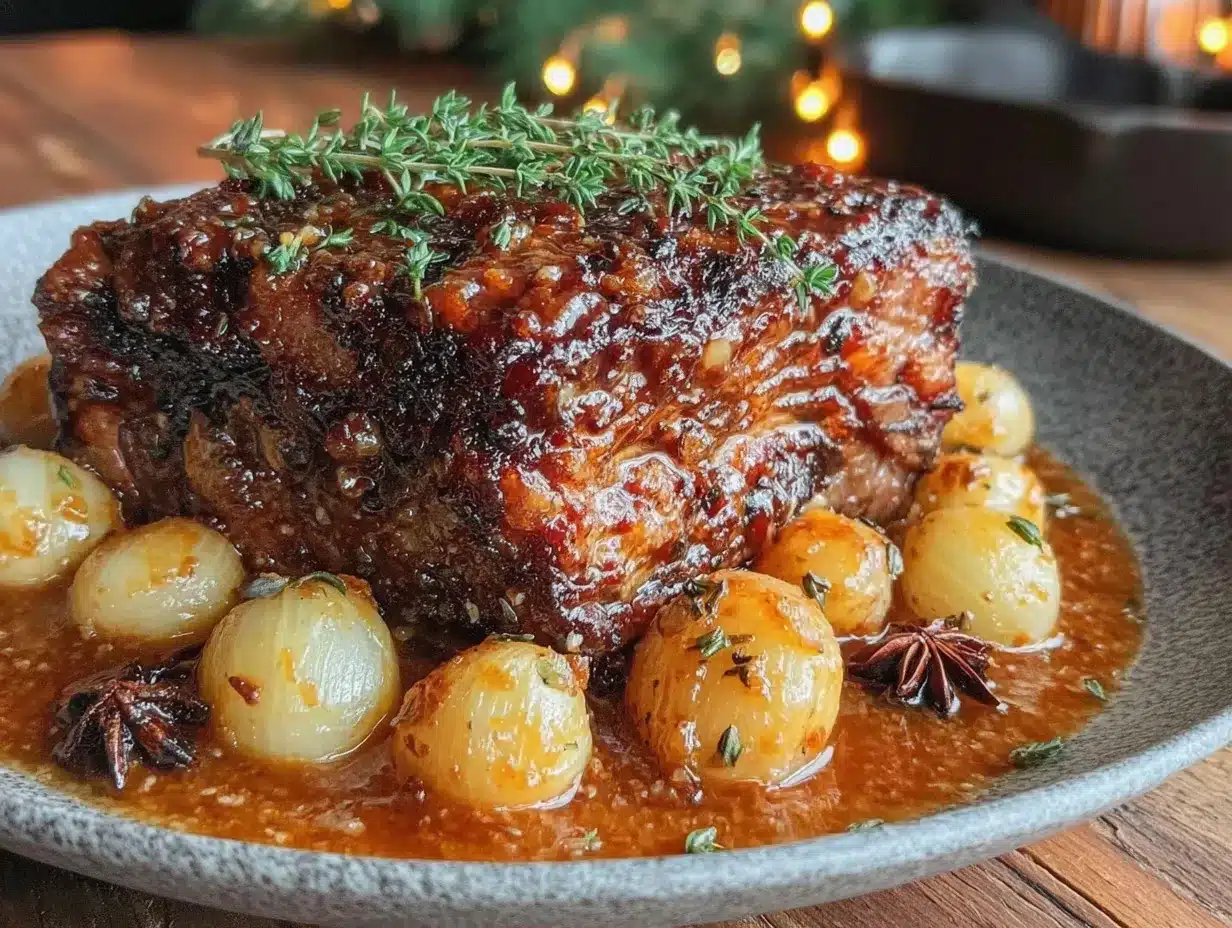
Alright, let’s get cooking. This is the part where the magic happens. Take your time with each step. It’s worth it.
- Prep the Pork Chops (5 minutes): Take the pork chops out of the fridge about 20 minutes before you start. Pat them completely dry with paper towels. This is crucial for a good sear. Season generously on all sides with salt and pepper. Don’t be shy. Most of that seasoning will stay in the pan and flavor the sauce.
- Sear the Chops (8-10 minutes): Heat your Dutch oven over medium-high heat. Add the butter and olive oil. Once the butter stops foaming, carefully place the pork chops in the pan. Don’t crowd them. Sear for 3-4 minutes per side, until they’re a deep golden brown. The crust is flavor. Use your tongs to flip them. Don’t move them around while they’re searing. Let that crust form. Transfer the seared chops to a plate and set aside.
- Cook the Aromatics (5-7 minutes): Reduce the heat to medium. Add the sliced onions to the pot. There should be enough fat left from the sear. If it looks dry, add a splash more olive oil. Cook the onions, stirring occasionally, until they’re soft and translucent, about 5 minutes. Scrape up any browned bits from the bottom of the pot as you stir. That’s pure gold. Add the minced garlic and cook for another minute until fragrant. Don’t let the garlic burn.
- Build the Braising Liquid (3 minutes): Pour in the apple cider and chicken broth. Use your wooden spoon to scrape up every last bit of fond from the bottom of the pot. That’s where the deep flavor lives. Add the apple cider vinegar, Dijon mustard, fresh thyme sprigs, rosemary sprigs, and bay leaves. Stir everything together. Let it come to a gentle simmer. Taste the liquid. It should be slightly sweet, a little tangy, and very savory. Adjust the salt and pepper if needed.
- Braise the Chops (45-60 minutes): Preheat your oven to 325°F (160°C). Return the seared pork chops to the pot, nestling them into the liquid. They should be mostly submerged. If they’re not, add a little more broth or water. Bring the liquid back to a simmer on the stovetop. Then cover the pot with the lid and transfer it to the preheated oven. Braise for 45-60 minutes, or until the pork is fork-tender. The meat should pull apart easily with a fork. Check at the 45-minute mark. Cooking time will vary depending on the thickness of your chops.
- Finish the Sauce (5 minutes): Carefully remove the pot from the oven. Use your tongs to transfer the pork chops back to a plate. Cover them loosely with foil to keep warm. Place the pot back on the stovetop over medium heat. Remove and discard the thyme sprigs, rosemary sprigs, and bay leaves. In a small bowl, whisk together the flour with 2 tablespoons of cold water until smooth. Slowly pour the slurry into the simmering sauce, whisking constantly. Let it cook for 2-3 minutes until the sauce thickens to your liking. It should coat the back of a spoon. Taste and adjust seasoning one last time.
- Serve (2 minutes): Return the pork chops to the pot, spooning the sauce over the top. Garnish with fresh thyme leaves. Serve immediately.
Cooking Tips & Techniques
I’ve learned a few things the hard way so you don’t have to. Here are the tricks that make these tender apple cider braised pork chops turn out perfect every time.
- Don’t Skip the Sear: I know it’s tempting to just throw everything in the pot and call it a day. But that browned crust is where the deepest flavor comes from. It’s non-negotiable. Take the extra 8 minutes.
- Low and Slow is the Way: Braising is not a quick process, and that’s the point. The low heat in the oven breaks down the connective tissue in the pork, making it incredibly tender. Don’t rush it by cranking up the heat. You’ll end up with tough, dry meat.
- Patience with the Sauce: That sauce is liquid gold. If it’s too thin at the end, let it simmer uncovered for a few extra minutes to reduce. If it’s too thick, add a splash of broth. The flour slurry is just a helper, not a crutch.
- Make it Ahead: This is one of those recipes that tastes even better the next day. The flavors meld and deepen overnight. Make it on a Sunday and enjoy it for Monday’s dinner. Just reheat gently on the stovetop.
- The Mistake I Made: The first time I made this, I used boneless, thin-cut pork chops. Disaster. They were dry and tough within 30 minutes. Thick-cut, bone-in chops are the only way to go for braising. Learn from my failure.
Variations & Adaptations
This recipe is a fantastic base. Feel free to make it your own. Here are some ways I’ve played with it.
- Apple and Sage: Swap the rosemary for fresh sage leaves. Add them with the onions. Sage and apple are a classic fall pairing that works beautifully here.
- Spiced Cider: Add a cinnamon stick, a star anise, and a few cloves to the braising liquid. It gives the sauce a warm, holiday-spice flavor that’s incredible with the pork.
- Dairy-Free Version: Use a good olive oil instead of butter for searing. The sauce will still be rich and delicious. Coconut oil would also work, but it will add a subtle coconut flavor.
- Slow Cooker Adaptation: Sear the chops and cook the onions on the stovetop as directed. Then transfer everything to a slow cooker. Cook on low for 6-8 hours or on high for 3-4 hours. Thicken the sauce on the stovetop before serving.
- Gluten-Free Option: Use cornstarch or arrowroot powder instead of flour for the slurry. Mix 1 tablespoon of cornstarch with 2 tablespoons of cold water and add it to the simmering sauce. It works just as well.
Serving & Storage Suggestions
These tender apple cider braised pork chops are a complete meal on their own, but they love company. Here’s how I like to serve them.
- Serving Temperature: Serve them hot, straight from the pot. The sauce should be warm and silky. Let the chops rest for a few minutes after braising so the juices redistribute.
- What to Serve With: Mashed potatoes are a classic choice. They soak up that gorgeous sauce perfectly. A side of roasted Brussels sprouts or a simple green salad with a tangy vinaigrette would also be wonderful. For a cozy fall meal, try serving them alongside some cozy roasted butternut squash and apple fall salad. The sweetness of the squash and apple echoes the flavors in the pork beautifully.
- Storage: Store leftovers in an airtight container in the refrigerator for up to 4 days. The flavors will actually get better overnight as the pork continues to soak up the sauce.
- Freezing: This braise freezes wonderfully. Let it cool completely, then transfer to a freezer-safe container. It will keep for up to 3 months. Thaw overnight in the refrigerator before reheating.
- Reheating: Reheat gently on the stovetop over low heat, adding a splash of broth or water if the sauce has thickened too much. You can also reheat in a 300°F oven, covered, for about 20 minutes. Avoid the microwave if you can. It can make the pork tough.
Nutritional Information & Benefits
This is comfort food that also happens to be pretty good for you. Pork is a great source of protein, B vitamins, and minerals like zinc and selenium. The apple cider provides antioxidants and a touch of natural sweetness without refined sugar. The onions and garlic are packed with immune-boosting compounds. It’s a balanced meal that satisfies your soul and your body.
Here’s an approximate breakdown per serving (based on 4 servings):
- Calories: 450-550
- Protein: 35-40g
- Fat: 25-30g
- Carbohydrates: 15-20g
- Fiber: 1-2g
- Sugar: 8-10g (naturally occurring from the cider and onions)
Please note these are estimates. Actual values will vary based on the specific ingredients and portion sizes you use. If you have specific dietary needs, I recommend calculating with your own ingredients.
Frequently Asked Questions
Can I use apple juice instead of apple cider?
I wouldn’t recommend it. Apple juice is thinner and much sweeter. It won’t give you the same depth of flavor or body in the sauce. Stick with apple cider for the best results. If you’re in a pinch, you can use a mix of apple juice and a splash of apple cider vinegar to mimic the tang.
Can I make this in a slow cooker?
Absolutely! Follow the steps for searing the chops and cooking the onions on the stovetop. Then transfer everything to your slow cooker. Cook on low for 6-8 hours or on high for 3-4 hours. Thicken the sauce on the stovetop before serving.
My pork chops are thin. Can I still make this recipe?
You can, but you’ll need to adjust the cooking time significantly. Thin chops will cook much faster and can dry out easily. I recommend checking for tenderness after about 20-25 minutes in the oven. You might also consider a different cooking method, like pan-searing and serving immediately, for thin chops.
How do I know when the pork chops are done?
The best way to tell is with a meat thermometer. The internal temperature should reach 145°F (63°C) for safe consumption. But for braised pork chops, you’re looking for fork-tenderness. The meat should pull apart easily with a fork. That’s the sign of a successful braise.
Can I skip the flour slurry?
Sure. The sauce will be thinner, but it will still be delicious. If you prefer a thicker sauce, you can let it simmer uncovered for 10-15 minutes after removing the pork to reduce and concentrate the flavors. The slurry is just a shortcut to a thicker sauce.
Conclusion
These tender apple cider braised pork chops are more than just a recipe. They’re a reminder that the best meals often come from simple ingredients and a little bit of patience. They’re the kind of dinner that makes you want to light a candle, pour a glass of something good, and actually sit down at the table. The kind that turns an ordinary Tuesday into something a little more special.
I hope you give them a try. And when you do, don’t be afraid to make them your own. Add more herbs, swap in a different kind of apple cider, serve them with your favorite sides. That’s what cooking is all about. If you make them, I’d love to hear how they turned out. Leave a comment below, tag me in your photos, or just send me a note. Happy cooking, friend.
Pin This Recipe!
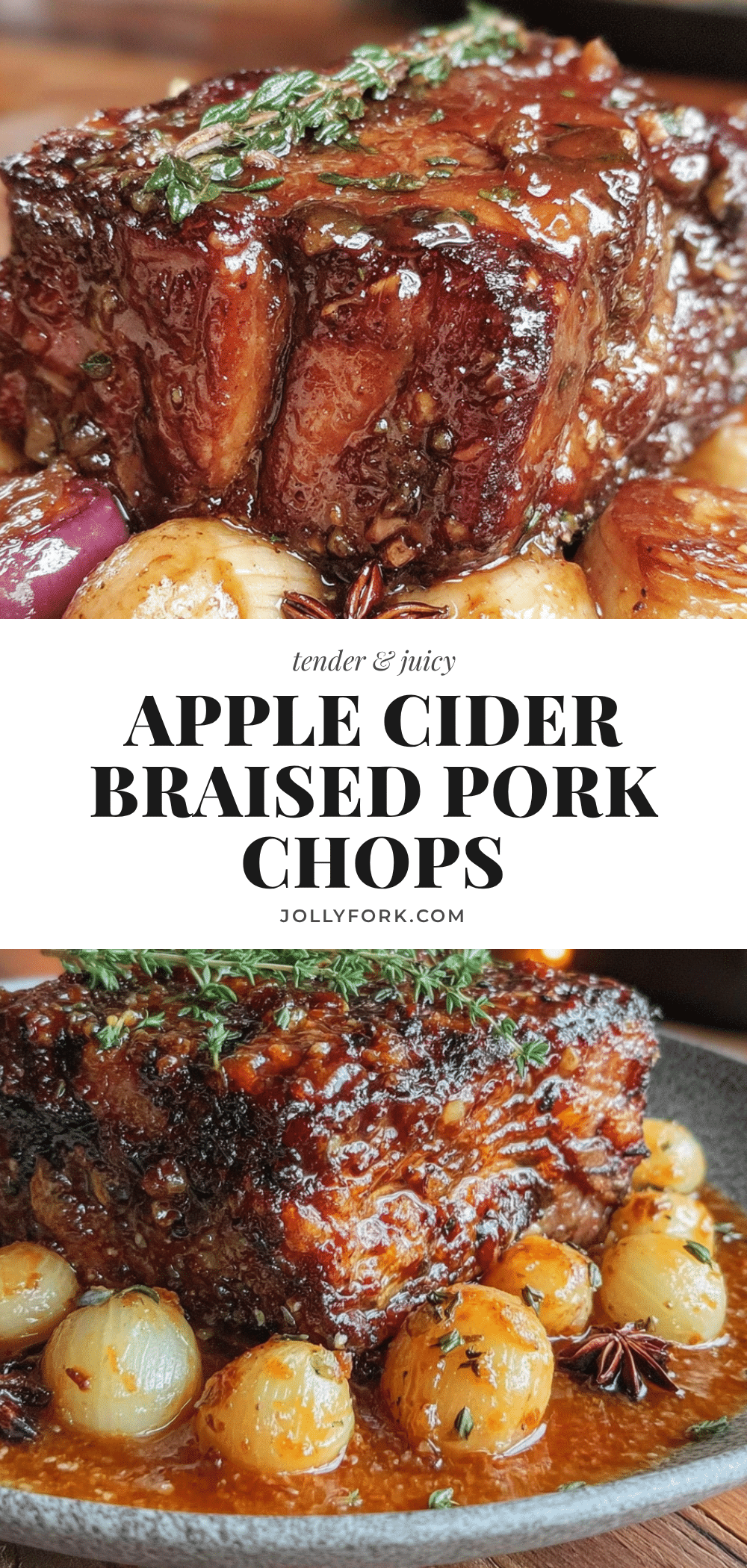
Tender Apple Cider Braised Pork Chops: Easy One-Pan Dinner
Fork-tender pork chops braised in a sweet and savory apple cider sauce, all made in one pan. This comforting fall-inspired dinner is easy to make and perfect for cozy nights in.
- Prep Time: 15 minutes
- Cook Time: 1 hour 10 minutes
- Total Time: 1 hour 25 minutes
- Yield: 4 servings 1x
- Category: Main Course
- Cuisine: American
Ingredients
- 4 thick-cut bone-in pork chops (about 1 to 1.5 inches thick)
- 2 cups apple cider (unfiltered preferred)
- 1 cup low-sodium chicken broth
- 1 large yellow onion, thinly sliced
- 4 cloves garlic, minced
- 1 tablespoon apple cider vinegar
- 1 tablespoon Dijon mustard
- 4 sprigs fresh thyme, plus more for garnish
- 2 sprigs fresh rosemary
- 2 bay leaves
- 2 tablespoons unsalted butter
- 1 tablespoon olive oil
- Salt and black pepper to taste
- 2 tablespoons all-purpose flour
Instructions
- Prep the Pork Chops: Take the pork chops out of the fridge about 20 minutes before cooking. Pat them completely dry with paper towels. Season generously on all sides with salt and pepper.
- Sear the Chops: Heat a Dutch oven over medium-high heat. Add the butter and olive oil. Once the butter stops foaming, carefully place the pork chops in the pan. Sear for 3-4 minutes per side until deep golden brown. Transfer to a plate and set aside.
- Cook the Aromatics: Reduce heat to medium. Add the sliced onions to the pot. Cook, stirring occasionally, until soft and translucent, about 5 minutes. Add the minced garlic and cook for another minute until fragrant.
- Build the Braising Liquid: Pour in the apple cider and chicken broth. Scrape up any browned bits from the bottom of the pot. Add the apple cider vinegar, Dijon mustard, thyme sprigs, rosemary sprigs, and bay leaves. Stir and bring to a gentle simmer. Adjust salt and pepper if needed.
- Braise the Chops: Preheat oven to 325°F (160°C). Return the seared pork chops to the pot, nestling them into the liquid. Bring the liquid back to a simmer on the stovetop. Cover the pot and transfer to the preheated oven. Braise for 45-60 minutes until fork-tender.
- Finish the Sauce: Carefully remove the pot from the oven. Transfer the pork chops to a plate and cover loosely with foil. Place the pot back on the stovetop over medium heat. Remove and discard the thyme sprigs, rosemary sprigs, and bay leaves. In a small bowl, whisk together the flour with 2 tablespoons of cold water until smooth. Slowly pour the slurry into the simmering sauce, whisking constantly. Cook for 2-3 minutes until the sauce thickens. Taste and adjust seasoning.
- Serve: Return the pork chops to the pot, spooning the sauce over the top. Garnish with fresh thyme leaves. Serve immediately.
Notes
For best results, use thick-cut bone-in pork chops. The braising liquid can be made ahead and the dish tastes even better the next day. For a gluten-free version, substitute cornstarch for the flour slurry. If using boneless chops, reduce cooking time by about 10 minutes.
Nutrition
- Serving Size: 1 pork chop with sau
- Calories: 500
- Sugar: 9
- Sodium: 600
- Fat: 28
- Saturated Fat: 10
- Carbohydrates: 18
- Fiber: 2
- Protein: 38
Keywords: apple cider braised pork chops, one-pan pork chops, fall pork recipe, braised pork chops, easy pork chop dinner