Late October, and the only thing I want is this creamy butternut squash mac and cheese with crispy sage. The light outside has that thin, golden quality that happens right before the clocks fall back, and my kitchen counter is covered in flour dust and a single, very large butternut squash that I bought on impulse at the farmers market. I didn’t have a plan for it. I just knew I wanted something that felt like a hug in a bowl.
I started roasting the squash without really thinking about where I was going with it. The smell of caramelizing squash filled the whole house, and suddenly regular mac and cheese felt too plain. I wanted that sweetness. I wanted something that would make the whole kitchen smell like Thanksgiving had crashed into a cozy Tuesday night. So I grabbed my box of cavatappi, a block of sharp white cheddar, and that bundle of sage I’d been ignoring in the fridge.
This wasn’t some elaborate recipe development session. It was just me, a squash, and a craving for something deeply comforting. The first time I made it, I burnt the sage (honestly, it happens to the best of us). The second time, I nailed it. And that version—the one where the crispy sage crunches against the velvety, cheesy sauce—is the one I kept making. It’s the one you’re getting today.
There’s something about a dish that manages to be both indulgent and secretly packed with vegetables. It feels a little bit like cheating the system, in the best way. This isn’t a recipe that tries to hide the squash. It celebrates it. The squash makes the sauce silky without needing a ton of heavy cream, and it gives the whole dish a subtle, earthy sweetness that pairs perfectly with the salty, crispy sage on top. Trust me on this one.
Why You’ll Love This Recipe
Look, I’ve tested a lot of mac and cheese recipes over the years. Some are too dry, some are a gluey mess, and some just taste like boxed noodles with extra steps. This one is different. This creamy butternut squash mac and cheese hits that perfect sweet spot between comfort food and something that feels just a little bit special.
- Quick & Easy: From start to finish, you’re looking at about 45 minutes. Most of that is hands-off time while the squash roasts or the pasta boils.
- Simple Ingredients: No fancy cheese shops required. A good sharp cheddar, some Parmesan, and your favorite pasta shape are all you need. Oh, and the squash, of course.
- Perfect for Fall Gatherings: This dish shines at Thanksgiving, Friendsgiving, or just a random Wednesday when you need something warm and satisfying. It pairs beautifully with a fall harvest charcuterie board for a casual get-together.
- Crowd-Pleaser: I’ve served this to kids, to picky eaters, and to my uncle who swears he hates squash. Every single person went back for seconds. It’s magic.
- Unbelievably Delicious: The texture is what gets you. The sauce is velvety smooth, coating every single piece of pasta. The crispy sage on top adds that perfect little crunch and a pop of savory flavor that makes the whole thing sing.
What makes this recipe different from all the other butternut squash mac and cheese recipes out there? It’s the technique. I don’t just puree the squash and call it a day. I roast it first, which concentrates the flavor and brings out all that natural sweetness. Then I blend it into a béchamel-style sauce with just the right amount of cheese. It’s not watery, it’s not grainy—it’s perfect. And let’s be honest, anything topped with crispy fried sage leaves is automatically more impressive.
What Ingredients You Will Need
This recipe uses simple, wholesome ingredients to deliver bold flavor and satisfying texture without any fuss. Most of these are pantry staples or easy to find at your local grocery store.
- Butternut Squash (1 medium, about 2-3 pounds): You’ll need about 3 cups of cubed squash. I prefer to buy a whole squash and roast it myself for the best flavor, but pre-cut cubes from the store work in a pinch. Look for one that feels heavy for its size with firm, unblemished skin.
- Olive Oil (2 tablespoons): For roasting the squash. A good quality extra virgin olive oil adds a little fruity note, but regular olive oil works just fine.
- Salt and Black Pepper: To taste. Don’t be shy with the salt—it brings out the sweetness of the squash and seasons the sauce.
- Elbow Macaroni or Cavatappi (1 pound): I love cavatappi for this recipe because the corkscrew shape catches all that creamy sauce. Elbow macaroni, shells, or even rigatoni work beautifully too. Gluten-free pasta works well if you need it.
- Unsalted Butter (3 tablespoons): For the roux. Using unsalted butter lets you control the salt level in the final dish.
- All-Purpose Flour (3 tablespoons): This thickens the cheese sauce. A simple roux is the secret to a smooth, non-grainy sauce.
- Whole Milk (2 cups): Whole milk gives the sauce the richest texture. You can use 2% in a pinch, but the sauce will be slightly less creamy. For a dairy-free version, unsweetened oat milk works surprisingly well.
- Heavy Cream (1/2 cup): This adds that luxurious, velvety finish. You can substitute with half-and-half if you want to lighten it up a bit.
- Sharp White Cheddar Cheese (2 cups, freshly grated): Please, I’m begging you—grate your own cheese. Pre-shredded cheese has anti-caking agents that prevent it from melting smoothly. Sharp white cheddar gives the best flavor, but yellow cheddar works too.
- Parmesan Cheese (1/2 cup, freshly grated): Adds a salty, nutty depth that balances the sweetness of the squash.
- Fresh Sage Leaves (about 20-25 leaves): This is non-negotiable. The crispy sage is what takes this dish from good to unforgettable. Do not use dried sage here—it just won’t work the same way.
- Butter (2 tablespoons, for frying sage): You’ll fry the sage leaves in butter until they’re crisp and fragrant. It takes about 60 seconds.
- Nutmeg (1/4 teaspoon, freshly grated if possible): A tiny pinch of nutmeg is the secret ingredient that makes cheese sauces taste even cheesier. It’s a classic pairing with both butternut squash and béchamel.
- Garlic Powder (1/2 teaspoon): Adds a subtle savory note without overpowering the dish.
- Optional: Pinch of Cayenne Pepper or Red Pepper Flakes: For a tiny kick of heat that cuts through the richness. Totally optional, but I love it.
Equipment Needed
You don’t need a fancy kitchen to pull this off. Here’s what you’ll need:
- Baking Sheet: For roasting the squash. A rimmed baking sheet works best to catch any juices.
- Large Pot: For boiling the pasta. You’ll also use this to make the sauce if you’re doing it the stovetop way.
- Medium Saucepan: For making the roux and cheese sauce.
- Blender or Immersion Blender: To puree the roasted squash into a silky smooth paste. An immersion blender is easier to clean, but a regular blender works great too.
- Large Skillet: For frying the sage leaves. A non-stick skillet makes cleanup a breeze.
- Box Grater or Microplane: For grating your cheese and nutmeg. Freshly grated cheese really does make a difference.
- Wooden Spoon or Silicone Spatula: For stirring the roux and sauce without scratching your pans.
- 9×13 Baking Dish (optional): If you want to bake the mac and cheese for a crispy top. I usually skip this step because I prefer it creamy straight from the pot, but it’s a nice option if you’re feeding a crowd.
Preparation Method
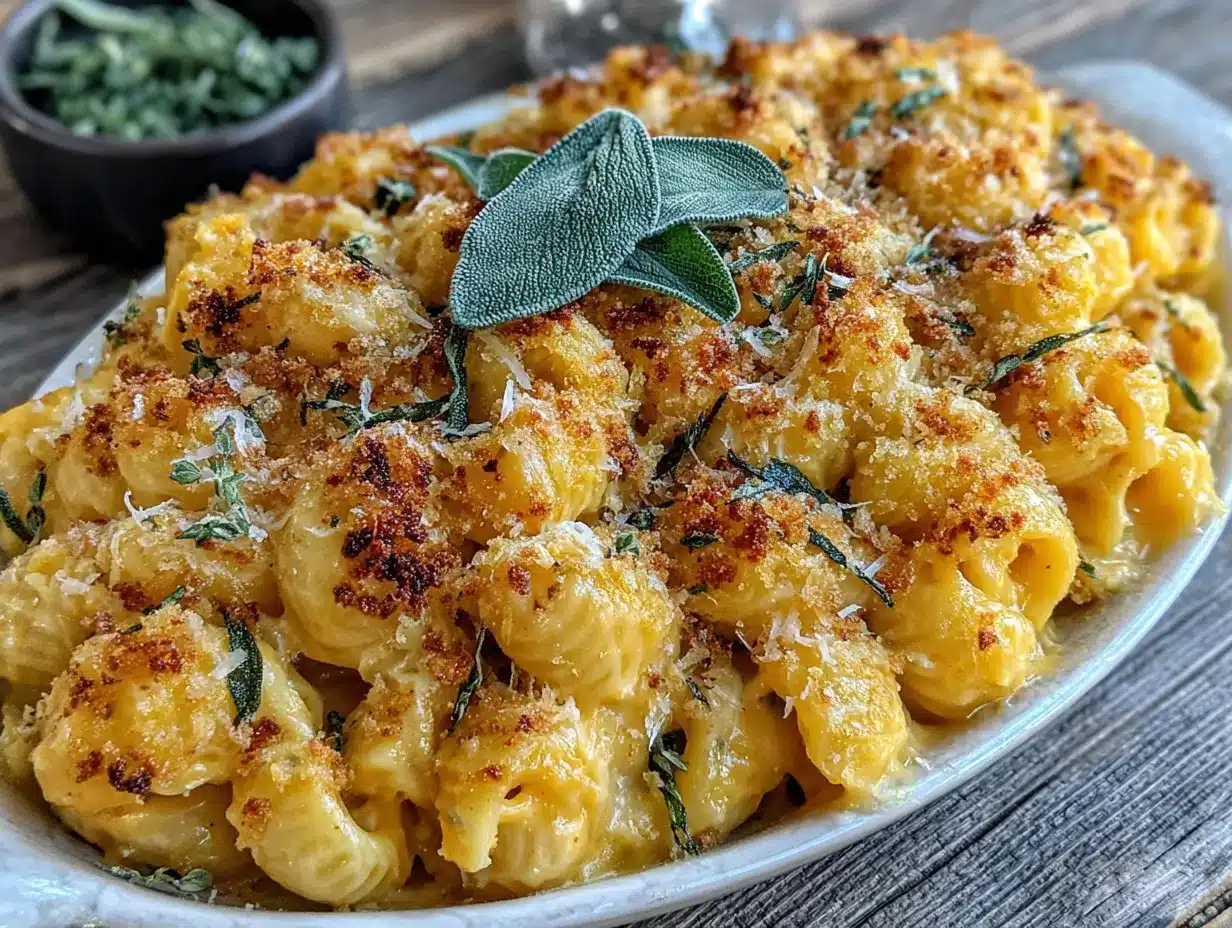
Alright, let’s get cooking. This creamy butternut squash mac and cheese comes together in a few simple steps. Take your time with the roux—it’s the foundation of the whole sauce.
- Preheat and Prep: Preheat your oven to 400°F (200°C). Peel your butternut squash, scoop out the seeds, and cut it into 1-inch cubes. Toss the cubes with 2 tablespoons of olive oil, a generous pinch of salt, and some black pepper. Spread them in a single layer on your baking sheet.
- Roast the Squash: Roast the squash for 25-30 minutes, flipping halfway through, until it’s tender and the edges are starting to caramelize and turn golden. You want it soft enough that you can easily pierce it with a fork. Let it cool slightly, then transfer it to your blender. Add about 1/4 cup of water or milk and blend until completely smooth. Set aside.
- Cook the Pasta: While the squash is roasting, bring a large pot of generously salted water to a boil. Cook your pasta according to the package directions until al dente—firm to the bite. Reserve about 1 cup of pasta water before draining. Drain the pasta and set it aside. Do not rinse it; you want that starch to help the sauce stick.
- Make the Roux: In a medium saucepan, melt 3 tablespoons of unsalted butter over medium heat. Once it’s foaming, whisk in 3 tablespoons of all-purpose flour. Cook this mixture, stirring constantly, for about 1-2 minutes. You’re looking for a pale golden color—don’t let it brown. This cooks out the raw flour taste.
- Build the Sauce: Slowly pour in the 2 cups of whole milk, whisking constantly to prevent lumps. Then add the 1/2 cup of heavy cream. Keep whisking until the mixture thickens, about 3-5 minutes. It should be thick enough to coat the back of a spoon.
- Add the Squash and Cheese: Reduce the heat to low. Whisk in the smooth butternut squash puree until fully incorporated. The sauce will turn a beautiful golden-orange color. Now, add the 2 cups of grated sharp white cheddar and 1/2 cup of grated Parmesan, a handful at a time, whisking until each addition is melted and smooth before adding the next. Stir in the 1/4 teaspoon of nutmeg, 1/2 teaspoon of garlic powder, and a pinch of cayenne if you’re using it. Taste and adjust salt and pepper.
- Combine Pasta and Sauce: Add the drained pasta to the pot with the cheese sauce. Stir gently until every piece of pasta is coated in that luscious, creamy sauce. If the sauce seems too thick, add a splash of the reserved pasta water to loosen it up. The pasta will continue to absorb liquid as it sits.
- Fry the Sage: In a small skillet, melt 2 tablespoons of butter over medium heat. Once it’s bubbling, add the sage leaves in a single layer. Fry for about 30-60 seconds per side, until they turn bright green and become crisp. Be careful—they burn quickly. Transfer them to a paper towel-lined plate to drain and sprinkle with a tiny pinch of salt.
- Serve: Spoon the mac and cheese into bowls, top with the crispy sage leaves, and serve immediately. If you want a baked version, transfer the mac and cheese to a greased 9×13 dish, top with extra cheese and breadcrumbs, and bake at 375°F for 15-20 minutes until bubbly.
Cooking Tips & Techniques
I’ve made this recipe more times than I can count, and I’ve learned a few things along the way. Here are my best tips to make sure your creamy butternut squash mac and cheese turns out perfectly every single time.
Don’t skip roasting the squash. I know it’s tempting to just boil or steam it to save time, but roasting concentrates the flavor and brings out a natural sweetness that you just can’t get any other way. The caramelized edges add depth to the sauce that makes people wonder what your secret is.
Grate your own cheese. I said it before, but it bears repeating. Pre-shredded cheese is coated in cellulose and other anti-caking agents that prevent it from melting smoothly. You’ll end up with a grainy, clumpy sauce instead of that silky, velvety texture we’re after. Spend the two extra minutes grating a block of cheese. Your sauce will thank you.
Watch your heat with the roux. The first time I made a roux, I got distracted and let it brown. It gave the whole sauce a slightly nutty, toasted flavor that wasn’t bad, but it wasn’t what I wanted for this dish. For this recipe, you want a blonde roux—cooked just enough to remove the raw flour taste, but not so long that it darkens.
Reserve that pasta water. It’s full of starch, which helps the sauce cling to the pasta and keeps it from getting gluey. If your sauce feels too thick after you’ve added the pasta, a splash of pasta water will loosen it up perfectly without thinning out the flavor.
Fry sage at the last minute. Crispy sage is best when it’s fresh. It will lose its crunch if it sits around for too long. Fry it right before you’re ready to serve, and don’t be tempted to make it ahead of time. Also, make sure your sage leaves are completely dry before they hit the butter, or they’ll sputter and steam instead of crisping up.
Variations & Adaptations
One of the best things about this recipe is how adaptable it is. Here are a few ways to make it your own.
- Make it Gluten-Free: Use your favorite gluten-free pasta and substitute the all-purpose flour with a 1:1 gluten-free flour blend or cornstarch. For cornstarch, use 1 tablespoon mixed with 2 tablespoons of cold water to make a slurry, and whisk it into the milk mixture instead of making a traditional roux.
- Make it Dairy-Free: Use unsweetened oat milk or cashew milk in place of the whole milk, and a dairy-free butter substitute. For the cheese, there are some excellent dairy-free cheddar shreds on the market now. The sauce won’t be quite as rich, but it’s still delicious.
- Add Some Protein: Leftover shredded rotisserie chicken, crumbled cooked bacon, or crispy pancetta are all incredible additions. Stir them in right before serving. This also makes it a more complete meal.
- Change the Cheese: Sharp white cheddar is my go-to, but Gruyère, Fontina, or even a smoky Gouda would be amazing. Smoked Gouda adds a whole other layer of flavor that pairs beautifully with the squash.
- Add a Crunchy Topping: If you’re baking it, mix 1/2 cup of panko breadcrumbs with 2 tablespoons of melted butter and sprinkle it over the top before baking. It adds a wonderful golden, crunchy crust.
- Spice It Up: Add a pinch of smoked paprika or chipotle powder to the sauce for a smoky, slightly spicy kick. A little goes a long way.
Serving & Storage Suggestions
This creamy butternut squash mac and cheese is best served immediately, straight from the pot, while the sauce is still hot and the sage is perfectly crispy. I like to serve it in shallow bowls with a little extra cracked black pepper on top.
It pairs beautifully with a simple green salad dressed with a tangy vinaigrette to cut through the richness. It’s also a fantastic side dish for a herb butter roasted turkey breast or a brown sugar bourbon sweet potato casserole if you’re planning a full fall feast. For a cozy weeknight dinner, serve it alongside a simple roasted chicken or a creamy tomato basil soup.
Storage: Leftovers can be stored in an airtight container in the refrigerator for up to 4 days. The sauce will thicken as it sits, so don’t be alarmed.
Reheating: The best way to reheat this is on the stovetop over low heat. Add a splash of milk or water and stir gently until it’s creamy again. You can also reheat it in the microwave in 30-second intervals, stirring between each, but the texture won’t be quite as good. For the crispy sage, just make a fresh batch—it takes less than a minute.
Freezing: This recipe freezes surprisingly well. Let it cool completely, then transfer it to a freezer-safe container. It will keep for up to 3 months. Thaw overnight in the refrigerator and reheat on the stovetop with a splash of milk. I don’t recommend freezing it with the crispy sage topping—add that fresh when you serve it.
Nutritional Information & Benefits
I’m not a nutritionist, but I can tell you that this recipe packs a surprising amount of goodness into a comfort food classic. The butternut squash is the star here, and it’s loaded with vitamin A, vitamin C, and fiber. It’s also lower in calories and carbs than a traditional cream-based sauce, so you get that luxurious texture without quite as much guilt.
Here are approximate nutritional values per serving (based on 8 servings):
- Calories: ~450
- Fat: 22g
- Carbohydrates: 48g
- Fiber: 4g
- Protein: 16g
- Vitamin A: 150% of the Daily Value
- Vitamin C: 25% of the Daily Value
This dish is vegetarian-friendly and can easily be made gluten-free or dairy-free with the substitutions mentioned above. It contains dairy and gluten in its standard form. The combination of complex carbohydrates from the pasta and squash, along with protein and fat from the cheese, makes it a surprisingly balanced meal that will keep you full and satisfied.
Conclusion
This creamy butternut squash mac and cheese with crispy sage is more than just a recipe—it’s the kind of dish that makes you slow down and actually enjoy your meal. It’s comforting without being heavy, indulgent without being over-the-top, and it just so happens to be packed with vegetables. Honestly, what more could you ask for?
I love how versatile it is. You can dress it up for a holiday dinner or keep it simple for a Tuesday night. You can add bacon, swap the cheese, or pile on the crispy sage. It’s forgiving and it’s flexible, and it always, always delivers.
If you make this recipe, I’d love to hear about it. Leave a comment below and let me know how it turned out, or tag me in your photos if you share them online. Did you add anything? Change anything? Burn the sage like I did the first time? Tell me all about it. And if you’re looking for more fall comfort food, don’t miss my cozy slow cooker apple cider or my cinnamon apple fall cake with caramel drizzle for dessert.
Go make some magic with that squash. You’ve got this.
Frequently Asked Questions
Can I use frozen butternut squash instead of fresh?
Yes, you can! Frozen butternut squash cubes work in a pinch. Roast them straight from frozen (you might need to add 5-10 minutes to the roasting time) or steam them until tender. The flavor won’t be quite as concentrated as roasted fresh squash, but it’s a great shortcut when you’re short on time.
Why did my cheese sauce turn out grainy?
Grainy cheese sauce is usually caused by one of two things: using pre-shredded cheese or overheating the sauce. Pre-shredded cheese contains starches that prevent smooth melting, and if you let the sauce boil after adding the cheese, it can cause the proteins to seize up. Always grate your own cheese and keep the heat low when melting it in.
Can I make this recipe ahead of time?
Absolutely. You can make the entire dish (without the crispy sage topping) up to 2 days in advance. Store it in the refrigerator in a baking dish. When you’re ready to serve, reheat it in a 350°F oven for about 20 minutes, or until bubbly. Add the fresh crispy sage right before serving.
What can I use instead of sage?
If you’re not a fan of sage, you can top this mac and cheese with crispy fried rosemary, thyme, or even a sprinkle of toasted breadcrumbs and Parmesan. The sage is traditional and pairs beautifully with the squash, but it’s not the only option. Fried prosciutto or bacon bits also make a fantastic substitute.
How do I make the sauce thinner or thicker?
If your sauce is too thick, stir in a splash of reserved pasta water, milk, or even a little chicken or vegetable broth until it reaches your desired consistency. If it’s too thin, let it simmer over low heat for a few more minutes to reduce and thicken. You can also mix 1 teaspoon of cornstarch with 2 teaspoons of cold water and whisk it into the simmering sauce.
Pin This Recipe!
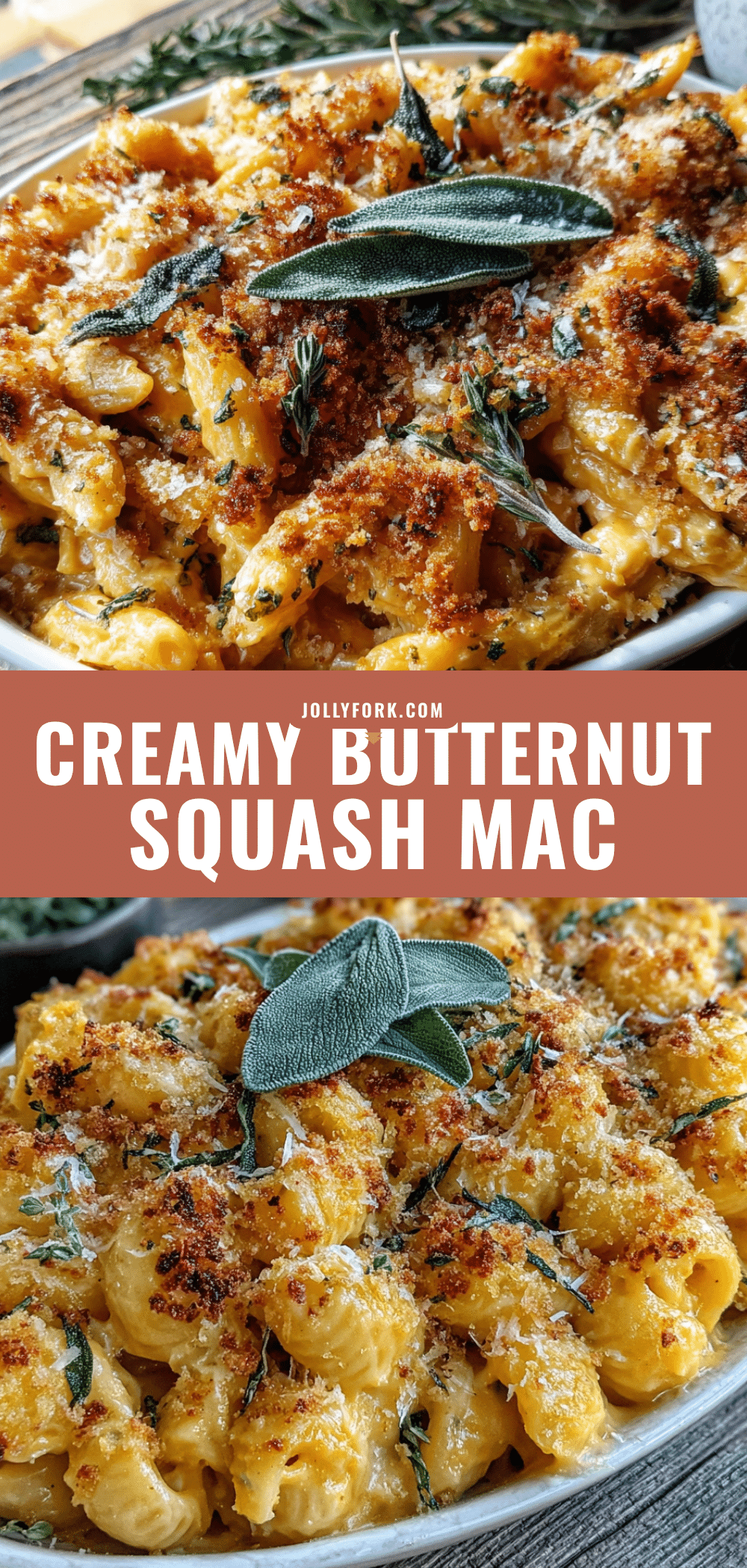
Creamy Butternut Squash Mac and Cheese: Easy Fall Recipe

This creamy butternut squash mac and cheese with crispy sage is the ultimate fall comfort food. Roasted squash is blended into a velvety cheese sauce, then topped with crispy fried sage for a dish that’s both indulgent and secretly packed with vegetables.
- Prep Time: 15 minutes
- Cook Time: 30 minutes
- Total Time: 45 minutes
- Yield: 8 servings 1x
- Category: Main Course
- Cuisine: American
Ingredients
- 1 medium butternut squash (about 2–3 pounds), peeled, seeded, and cut into 1-inch cubes
- 2 tablespoons olive oil
- Salt and black pepper to taste
- 1 pound elbow macaroni or cavatappi
- 3 tablespoons unsalted butter
- 3 tablespoons all-purpose flour
- 2 cups whole milk
- 1/2 cup heavy cream
- 2 cups sharp white cheddar cheese, freshly grated
- 1/2 cup Parmesan cheese, freshly grated
- 20–25 fresh sage leaves
- 2 tablespoons butter (for frying sage)
- 1/4 teaspoon nutmeg, freshly grated if possible
- 1/2 teaspoon garlic powder
- Optional: pinch of cayenne pepper or red pepper flakes
Instructions
- Preheat oven to 400°F (200°C). Toss cubed butternut squash with olive oil, salt, and pepper. Spread in a single layer on a baking sheet.
- Roast squash for 25-30 minutes, flipping halfway, until tender and edges are caramelized. Let cool slightly, then transfer to a blender with 1/4 cup water or milk and blend until smooth. Set aside.
- Cook pasta in a large pot of generously salted water until al dente. Reserve 1 cup pasta water, then drain pasta (do not rinse).
- In a medium saucepan, melt 3 tablespoons butter over medium heat. Whisk in flour and cook for 1-2 minutes until pale golden (blonde roux).
- Slowly whisk in milk and heavy cream. Continue whisking until thickened, about 3-5 minutes.
- Reduce heat to low. Whisk in butternut squash puree until fully incorporated. Gradually add cheddar and Parmesan, whisking until smooth. Stir in nutmeg, garlic powder, and cayenne (if using). Season with salt and pepper to taste.
- Add drained pasta to the sauce and stir to coat. If too thick, add reserved pasta water a splash at a time.
- In a small skillet, melt 2 tablespoons butter over medium heat. Fry sage leaves for 30-60 seconds per side until bright green and crisp. Transfer to paper towels and sprinkle with a pinch of salt.
- Serve mac and cheese in bowls topped with crispy sage leaves. For a baked version, transfer to a greased 9×13 dish, top with extra cheese and breadcrumbs, and bake at 375°F for 15-20 minutes until bubbly.
Notes
Don’t skip roasting the squash—it concentrates the flavor. Grate your own cheese for a smooth sauce. Fry sage at the last minute for maximum crunch. Reserve pasta water to adjust sauce consistency.
Nutrition
- Serving Size: 1 serving (about 1 c
- Calories: 450
- Sugar: 8
- Sodium: 580
- Fat: 22
- Saturated Fat: 12
- Carbohydrates: 48
- Fiber: 4
- Protein: 16
Keywords: butternut squash mac and cheese, fall mac and cheese, creamy mac and cheese, crispy sage, vegetarian mac and cheese, easy fall recipe